talk-data.com talk-data.com

Topic

BI

Business Intelligence (BI)

data_visualization reporting analytics

1211

tagged

Activity Trend

111 peak/qtr
2020-Q1 2026-Q1

Activities

1211 activities · Newest first

Exam Ref 70-778 Analyzing and Visualizing Data by Using Microsoft Power BI

Prepare for Microsoft Exam 70-778-and help demonstrate your real-world mastery of Power BI data analysis and visualization. Designed for experienced BI professionals and data analysts ready to advance their status, Exam Ref focuses on the critical thinking and decision-making acumen needed for success at the MCSA level. Focus on the expertise measured by these objectives: Consume and transform data by using Power BI Desktop Model and visualize data Configure dashboards, reports, and apps in the Power BI Service This Microsoft Exam Ref: Organizes its coverage by exam objectives Features strategic, what-if scenarios to challenge you Assumes you have experience consuming and transforming data, modeling and visualizing data, and configuring dashboards using Excel and Power BI

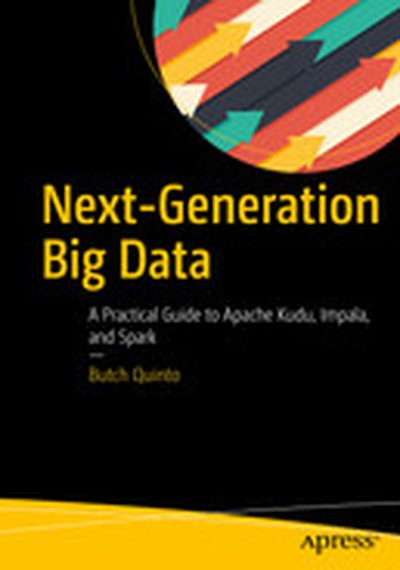
Next-Generation Big Data: A Practical Guide to Apache Kudu, Impala, and Spark

Utilize this practical and easy-to-follow guide to modernize traditional enterprise data warehouse and business intelligence environments with next-generation big data technologies. Next-Generation Big Data takes a holistic approach, covering the most important aspects of modern enterprise big data. The book covers not only the main technology stack but also the next-generation tools and applications used for big data warehousing, data warehouse optimization, real-time and batch data ingestion and processing, real-time data visualization, big data governance, data wrangling, big data cloud deployments, and distributed in-memory big data computing. Finally, the book has an extensive and detailed coverage of big data case studies from Navistar, Cerner, British Telecom, Shopzilla, Thomson Reuters, and Mastercard. What You’ll Learn Install Apache Kudu, Impala, and Spark to modernize enterprise data warehouse and business intelligence environments, complete with real-world, easy-to-follow examples, and practical advice Integrate HBase, Solr, Oracle, SQL Server, MySQL, Flume, Kafka, HDFS, and Amazon S3 with Apache Kudu, Impala, and Spark Use StreamSets, Talend, Pentaho, and CDAP for real-time and batch data ingestion and processing Utilize Trifacta, Alteryx, and Datameer for data wrangling and interactive data processing Turbocharge Spark with Alluxio, a distributed in-memory storage platform Deploy big data in the cloud using Cloudera Director Perform real-time data visualization and time series analysis using Zoomdata, Apache Kudu, Impala, and Spark Understand enterprise big data topics such as big data governance, metadata management, data lineage, impact analysis, and policy enforcement, and how to use Cloudera Navigator to perform common data governance tasks Implement big data use cases such as big data warehousing, data warehouse optimization, Internet of Things, real-time data ingestion and analytics, complex event processing, and scalable predictive modeling Study real-world big data case studies from innovative companies, including Navistar, Cerner, British Telecom, Shopzilla, Thomson Reuters, and Mastercard Who This Book Is For BI and big data warehouse professionals interested in gaining practical and real-world insight into next-generation big data processing and analytics using Apache Kudu, Impala, and Spark; and those who want to learn more about other advanced enterprise topics

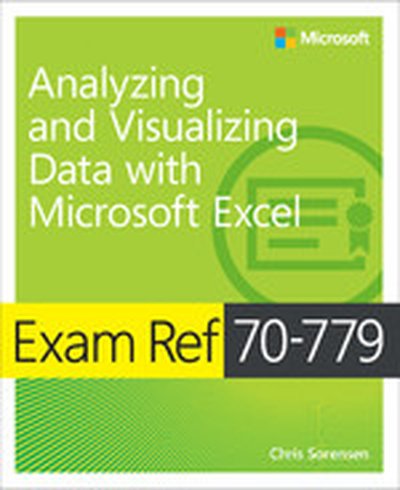
Exam Ref 70-779 Analyzing and Visualizing Data with Microsoft Excel

Prepare for Microsoft Exam 70-779 and help demonstrate your real-world mastery of Microsoft Excel data analysis and visualization. Designed for BI professionals, data analysts, and others who analyze business data with Excel, this Exam Ref focuses on the critical thinking and decision-making acumen needed for success at the MCSA level. Focus on the expertise measured by these objectives: Consume and transform data by using Microsoft Excel Model data, from building and optimizing data models through creating performance KPIs, actual and target calculations, and hierarchies Visualize data, including creating and managing PivotTables and PivotCharts, and interacting with PowerBI This Microsoft Exam Ref: Organizes its coverage by exam objectives Features strategic, what-if scenarios to challenge you Assumes you have a strong understanding of how to use Microsoft Excel to perform data analysis

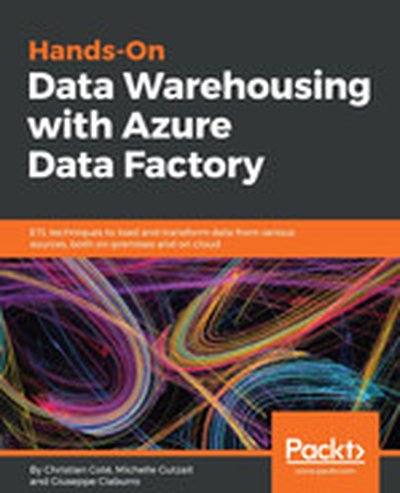
Hands-On Data Warehousing with Azure Data Factory

Dive into the world of ETL (Extract, Transform, Load) with 'Hands-On Data Warehousing with Azure Data Factory'. This book guides readers through the essential techniques for working with Azure Data Factory and SQL Server Integration Services to design, implement, and optimize ETL solutions for both on-premises and cloud data environments. What this Book will help me do Understand and utilize Azure Data Factory and SQL Server Integration Services to build ETL solutions. Design scalable and high-performance ETL architectures tailored to modern data problems. Integrate various Azure services, such as Azure Data Lake Analytics, Machine Learning, and Databricks Spark, into your workflows. Troubleshoot and optimize ETL pipelines and address common challenges in data processing. Create insightful Power BI dashboards to visualize and interact with data from your ETL workflows. Author(s) Authors None Cote, Michelle Gutzait, and Giuseppe Ciaburro bring a wealth of experience in data engineering and cloud technologies to this practical guide. Combining expertise in Azure ecosystem and hands-on Data Warehousing, they deliver actionable insights for working professionals. Who is it for? This book is crafted for software professionals working in data engineering, especially those specializing in ETL processes. Readers with a foundational knowledge of SQL Server and cloud infrastructures will benefit most. If you aspire to implement state-of-the-art ETL pipelines or enhance existing workflows with ADF and SSIS, this book is an ideal resource.

In this podcast, Justin Borgman talks about his journey of starting a data science start, doing an exit, and jumping on another one. The session is filled with insights for leadership, looking for entrepreneurial wisdom to get on a data-driven journey.

Timeline: 0:28 Justin's journey. 3:22 Taking the plunge to start a new company. 5:49 Perception vs. reality of starting a data warehouse company. 8:15 Bringing in something new to the IT legacy. 13:20 Getting your first few customers. 16:16 Right moment for a data warehouse company to look for a new venture. 18:20 Right person to have as a co-founder. 20:29 Advantages of going seed vs. series A. 22:13 When is a company ready for seeding or series A? 24:40 Who's a good adviser? 26:35 Exiting Teradata. 28:54 Teradata to starting a new company. 31:24 Excitement of starting something from scratch. 32:24 What is Starburst? 37:15 Presto, a great engine for cloud platforms. 40:30 How can a company get started with Presto. 41:50 Health of enterprise data. 44:15 Where does Presto not fit in? 45:19 Future of enterprise data. 46:36 Drawing parallels between proprietary space and open source space. 49:02 Does align with open-source gives a company a better chance in seeding. 51:44 John's ingredients for success. 54:05 John's favorite reads. 55:01 Key takeaways.

Paul's Recommended Read: The Outsiders Paperback – S. E. Hinton amzn.to/2Ai84Gl

Podcast Link: https://futureofdata.org/running-a-data-science-startup-one-decision-at-a-time-futureofdata-podcast/

Justin's BIO: Justin has spent the better part of a decade in senior executive roles building new businesses in the data warehousing and analytics space. Before co-founding Starburst, Justin was Vice President and General Manager at Teradata (NYSE: TDC), where he was responsible for the company’s portfolio of Hadoop products. Prior to joining Teradata, Justin was co-founder and CEO of Hadapt, the pioneering "SQL-on-Hadoop" company that transformed Hadoop from file system to analytic database accessible to anyone with a BI tool. Teradata acquired Hadapt in 2014.

Justin earned a BS in Computer Science from the University of Massachusetts at Amherst and an MBA from the Yale School of Management.

About #Podcast:

FutureOfData podcast is a conversation starter to bring leaders, influencers, and lead practitioners to discuss their journey to create the data-driven future.

Want to sponsor? Email us @ [email protected]

Keywords:

FutureOfData #DataAnalytics #Leadership #Podcast #BigData #Strategy

Summary

Business Intelligence software is often cumbersome and requires specialized knowledge of the tools and data to be able to ask and answer questions about the state of the organization. Metabase is a tool built with the goal of making the act of discovering information and asking questions of an organizations data easy and self-service for non-technical users. In this episode the CEO of Metabase, Sameer Al-Sakran, discusses how and why the project got started, the ways that it can be used to build and share useful reports, some of the useful features planned for future releases, and how to get it set up to start using it in your environment.

Preamble

Hello and welcome to the Data Engineering Podcast, the show about modern data management When you’re ready to build your next pipeline you’ll need somewhere to deploy it, so check out Linode. With private networking, shared block storage, node balancers, and a 40Gbit network, all controlled by a brand new API you’ve got everything you need to run a bullet-proof data platform. Go to dataengineeringpodcast.com/linode to get a $20 credit and launch a new server in under a minute. For complete visibility into the health of your pipeline, including deployment tracking, and powerful alerting driven by machine-learning, DataDog has got you covered. With their monitoring, metrics, and log collection agent, including extensive integrations and distributed tracing, you’ll have everything you need to find and fix performance bottlenecks in no time. Go to dataengineeringpodcast.com/datadog today to start your free 14 day trial and get a sweet new T-Shirt. Go to dataengineeringpodcast.com to subscribe to the show, sign up for the newsletter, read the show notes, and get in touch. Your host is Tobias Macey and today I’m interviewing Sameer Al-Sakran about Metabase, a free and open source tool for self service business intelligence

Interview

Introduction How did you get involved in the area of data management? The current goal for most companies is to be “data driven”. How would you define that concept?

How does Metabase assist in that endeavor?

What is the ratio of users that take advantage of the GUI query builder as opposed to writing raw SQL?

What level of complexity is possible with the query builder?

What have you found to be the typical use cases for Metabase in the context of an organization? How do you manage scaling for large or complex queries? What was the motivation for using Clojure as the language for implementing Metabase? What is involved in adding support for a new data source? What are the differentiating features of Metabase that would lead someone to choose it for their organization? What have been the most challenging aspects of building and growing Metabase, both from a technical and business perspective? What do you have planned for the future of Metabase?

Contact Info

Sameer

salsakran on GitHub @sameer_alsakran on Twitter LinkedIn

Metabase

Website @metabase on Twitter metabase on GitHub

Parting Question

From your perspective, what is the biggest gap in the tooling or technology for data management today?

Links

Expa Metabase Blackjet Hadoop Imeem Maslow’s Hierarchy of Data Needs 2 Sided Marketplace Honeycomb Interview Excel Tableau Go-JEK Clojure React Python Scala JVM Redash How To Lie With Data Stripe Braintree Payments

The intro and outro music is from The Hug by The Freak Fandango Orchestra / CC BY-SA Support Data Engineering Podcast

Summary

The information about how data is acquired and processed is often as important as the data itself. For this reason metadata management systems are built to track the journey of your business data to aid in analysis, presentation, and compliance. These systems are frequently cumbersome and difficult to maintain, so Octopai was founded to alleviate that burden. In this episode Amnon Drori, CEO and co-founder of Octopai, discusses the business problems he witnessed that led him to starting the company, how their systems are able to provide valuable tools and insights, and the direction that their product will be taking in the future.

Preamble

Hello and welcome to the Data Engineering Podcast, the show about modern data management When you’re ready to build your next pipeline you’ll need somewhere to deploy it, so check out Linode. With private networking, shared block storage, node balancers, and a 200Gbit network, all controlled by a brand new API you’ve got everything you need to run a bullet-proof data platform. Go to dataengineeringpodcast.com/linode to get a $20 credit and launch a new server in under a minute. For complete visibility into the health of your pipeline, including deployment tracking, and powerful alerting driven by machine-learning, DataDog has got you covered. With their monitoring, metrics, and log collection agent, including extensive integrations and distributed tracing, you’ll have everything you need to find and fix performance bottlenecks in no time. Go to dataengineeringpodcast.com/datadog today to start your free 14 day trial and get a sweet new T-Shirt. Go to dataengineeringpodcast.com to subscribe to the show, sign up for the newsletter, read the show notes, and get in touch. Your host is Tobias Macey and today I’m interviewing Amnon Drori about OctopAI and the benefits of metadata management

Interview

Introduction How did you get involved in the area of data management? What is OctopAI and what was your motivation for founding it? What are some of the types of information that you classify and collect as metadata? Can you talk through the architecture of your platform? What are some of the challenges that are typically faced by metadata management systems? What is involved in deploying your metadata collection agents? Once the metadata has been collected what are some of the ways in which it can be used? What mechanisms do you use to ensure that customer data is segregated?

How do you identify and handle sensitive information during the collection step?

What are some of the most challenging aspects of your technical and business platforms that you have faced? What are some of the plans that you have for OctopAI going forward?

Contact Info

Amnon

LinkedIn @octopai_amnon on Twitter

OctopAI

@OctopaiBI on Twitter Website

Parting Question

From your perspective, what is the biggest gap in the tooling or technology for data management today?

Links

OctopAI Metadata Metadata Management Data Integrity CRM (Customer Relationship Management) ERP (Enterprise Resource Planning) Business Intelligence ETL (Extract, Transform, Load) Informatica SAP Data Governance SSIS (SQL Server Integration Services) Vertica Airflow Luigi Oozie GDPR (General Data Privacy Regulation) Root Cause Analysis

The intro and outro music is from The Hug by The Freak Fandango Orchestra / CC BY-SA Support Data Engineering Podcast
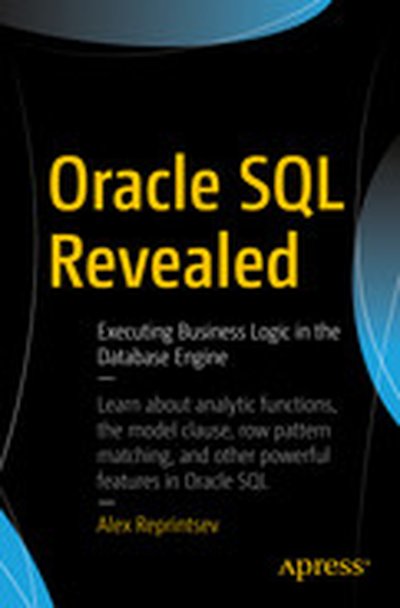
Oracle SQL Revealed: Executing Business Logic in the Database Engine

Write queries using little-known, but powerful, SQL features implemented in Oracle's database engine. You will be able to take advantage of Oracle’s power in implementing business logic, thereby maximizing return from your company’s investment in Oracle Database products. Important features and aspects of SQL covered in this book include the model clause, row pattern matching, analytic and aggregate functions, and recursive subquery factoring, just to name a few. The focus is on implementing business logic in pure SQL, with a comparison of different approaches that can be used to write SELECT statements to return results that drive good decision making and competitive action in the marketplace. This book covers features that are often not well known, and sometimes not implemented in competing products. Chapters on query transformation and logical execution order provide a grasp of the big picture in which the individual SQL features described in the other chapters are executed. Also included are a discussion on when to use the procedural capabilities from PL/SQL, and a series of examples showing different mixes of SQL features being applied in common types of queries that you are likely to encounter. What You Will Learn Gain competitive advantage from Oracle SQL Know when to step up to PL/SQL versus staying in SQL Become familiar with query transformations and join mechanics Apply the model clause and analytic functions to business intelligence queries Make use of features that are specific to Oracle Database, such as row pattern matching Understand the pros and cons of different SQL approaches to solving common query tasks Traverse hierarchies using CONNECT BY and recursive subquery factoring Who This Book Is For Database programmers withsome Oracle Database experience. The book is also for SQL developers who are moving to the Oracle Database platform or want to learn unique features of its query engine. Both audiences will learn to apply the full power of Oracle’s own SQL dialect to commonly encountered types of business questions and query challenges.

In this podcast, Wayne Eckerson and James Serra discuss myths of modern data management. Some of the myths discussed include 'all you need is a data lake', 'the data warehouse is dead', 'we don’t need OLAP cubes anymore', 'cloud is too expensive and latency is too slow', 'you should always use a NoSQL product over a RDBMS.'

Serra is big data and data warehousing solutions architect at Microsoft with over thirty years of IT experience. He is a popular blogger and speaker and has presented at dozens of Microsoft PASS and other events. Prior to Microsoft, Serra was an independent data warehousing and business intelligence architect and developer.

Beginning DAX with Power BI: The SQL Pro’s Guide to Better Business Intelligence

Attention all SQL Pros, DAX is not just for writing Excel-based formulas! Get hands-on learning and expert advice on how to use the vast capabilities of the DAX language to solve common data modeling challenges. Beginning DAX with Power BI teaches key concepts such as mapping techniques from SQL to DAX, filtering, grouping, joining, pivoting, and using temporary tables, all aimed at the SQL professional. Join author Philip Seamark as he guides you on a journey through typical business data transformation scenarios and challenges, and teaches you, step-by-step, how to resolve challenges using DAX. Tips, tricks, and shortcuts are included and explained, along with examples of the SQL equivalent, in order to accelerate learning. Examples in the book range from beginner to advanced, with plenty of detailed explanation when walking through each scenario. What You’ll Learn Turbocharge your Power BI model by adding advanced DAX programming techniques Know when to use calculated measures versus calculated columns Generate new tables on the fly from existing data Optimize, monitor, and tune Power BI to improve performance of your models Discover new ideas, tricks, and time-saving techniques for better models Who This Book Is For Business intelligence developers, business analysts, or any SQL user who wants to use Power BI as a reporting tool. A solid understanding of SQL is recommended, as examples throughout the book include the DAX equivalents to SQL problem/solution scenarios.

Mastering Microsoft Power BI

Dive right into the powerful world of Microsoft Power BI with this comprehensive guide. This book takes you through every step of mastering Power BI, from data modeling to creating actionable visualizations. You'll find clear explanations and practical steps to improve your data analytics and enhance business decision-making. What this Book will help me do Learn to connect and transform data using Power Query M Language to create clean, structured datasets. Understand how to design scalable and performance-optimized Power BI Data Models for effective analytics. Develop professional, visually appealing and interactive reports and dashboards to convey insights confidently. Implement best practices for managing Power BI solutions, including deployment, version control, and monitoring. Gain practical knowledge to administer Power BI across organizational structures, ensuring security and efficiency. Author(s) None Powell is a seasoned expert in business intelligence and a passionate educator in the field of data analytics. With extensive hands-on experience in Microsoft Power BI, None has supported many organizations in unlocking the potential of their data. The approachable writing style reflects a real-world yet proficient understanding of Power BI's capabilities. Who is it for? This book is ideal for business intelligence professionals looking to deepen their expertise in Microsoft Power BI. Readers already familiar with basic BI concepts and Power BI will gain significant technical depth. It suits professionals keen to enhance their data modeling, visualization, and analytics skills. If you're aiming to create impactful dashboards and benefit from advanced insights, this book is for you.

In this podcast, Henry Eckerson interviews Dave Wells on the current health and future of the data warehouse. Wells acknowledges that data warehouses are struggling, but argues they are still necessary and cannot be replaced by data lakes. He then explains what the role of the modern data warehouse should be, practical steps forward for evolving the data warehouse, and much more.

Wells is an advisory consultant, educator, and industry analyst dedicated to building meaningful connections throughout the path from data to business value. He works at the intersection of information management and business management, driving business impact through analytics, business intelligence, and active data management. More than forty years of information systems experience combined with over ten years of business management give him a unique perspective about the connections among business, information, data, and technology. Knowledge sharing and skill building are Dave’s passions, carried out through consulting, speaking, teaching, and writing.

He is now the practice director of data management at Eckerson Group, cofounder and director of education at eLearningCurve, and a faculty member at The Data Warehousing Institute.

Mastering Qlik Sense

Mastering Qlik Sense is a comprehensive guide designed to empower you to utilize Qlik Sense for advanced data analytics and dynamic visualizations. This book provides detailed insights into creating seamless Business Intelligence solutions tailored to your needs. Whether you're building dashboards, optimizing data models, or exploring Qlik Cloud functionalities, this book has you covered. What this Book will help me do Build interactive and insightful dashboards using Qlik Sense's intuitive tools. Learn to model data efficiently and apply best practices for optimized performance. Master the Qlik Sense APIs and create advanced custom extensions. Understand enterprise security measures including role-based access controls. Gain expertise in migrating from QlikView to Qlik Sense effectively Author(s) Juan Ignacio Vitantonio is an experienced expert in Business Intelligence solutions and data analytics. With a profound understanding of Qlik technologies, Juan has developed and implemented impactful BI solutions across various industries. His writing reflects his practical knowledge and passion for empowering users with actionable insights into data. Who is it for? This book is perfect for BI professionals, data analysts, and organizations aiming to leverage Qlik Sense for advanced analytics. Ideal for those with a foundational grasp of Qlik Sense, it also provides comprehensive guidance for QlikView users transitioning to Qlik Sense. If you want to improve your BI solutions and data-driven decision-making skills, this book is for you.

SQL Server 2017 Developer???s Guide

"SQL Server 2017 Developer's Guide" provides a comprehensive approach to learning and utilizing the new features introduced in SQL Server 2017. From advanced Transact-SQL to integrating R and Python into your database projects, this book equips you with the knowledge to design and develop efficient database applications tailored to modern requirements. What this Book will help me do Master new features in SQL Server 2017 to enhance database application development. Implement In-Memory OLTP and columnstore indexes for optimal performance. Utilize JSON support in SQL Server to integrate modern data formats. Leverage R and Python integration to apply advanced data analytics and machine learning. Learn Linux and container deployment options to expand SQL Server usage scenarios. Author(s) The authors of "SQL Server 2017 Developer's Guide" are industry veterans with extensive experience in database design, business intelligence, and advanced analytics. They bring a practical, hands-on writing style that helps developers apply theoretical concepts effectively. Their commitment to teaching is evident in the clear and detailed guidance provided throughout the book. Who is it for? This book is ideal for database developers and solution architects aiming to build robust database applications with SQL Server 2017. It's a valuable resource for business intelligence developers or analysts seeking to harness SQL Server 2017's advanced features. Some familiarity with SQL Server and T-SQL is recommended to fully leverage the insights provided by this book.

In this podcast, Bill Schmarzo talks about the ingredients of successful data science practice, team, and executives. Bill shared his insights on what some leaders in the industries are doing and some challenges seen in the successful deployment. Bill shared his key take on ingredients for some of the successful hires. This podcast is great for growth mindset executives willing to learn about creating a successful data science practice.

Timeline: 0:29 Bill's journey. 5:05:00 Bill's current role. 7:04 Data science adoption challenges for businesses. 9:33 The good side of data science adoption. 11:22 How is data science changing business. 14:34 Strategies behind distributed IT. 18:35 Analysing the current amount of data. 21:50 Who should own the idea of data science? 24:34 The right background for a CDO. 25:52 Bias in IT. 29:35 Hacks to keep yourself bias-free. 31:58 Team vs. tool for putting together a good data-driven practice. 34:54 Value cycle in data science. 37:10 Maturity model. 39:17 Convincing culture heavy businesses to adopt data. 42:47 Keeping oneself sane during the technological disruption. 46:20 Hiring the right talent. 51:46 Ingredients of a good data science hire. 56:00 Bill's success mantra. 59:07 Bill's favorite reads. 1:00:36 Closing remarks.

Bill's Recommended Read: Moneyball: The Art of Winning an Unfair Game by Michael Lewis http://amzn.to/2FqBFg8 Big Data MBA: Driving Business Strategies with Data Science by Bill Schmarzo http://amzn.to/2tlZAvP

Podcast Link: https://futureofdata.org/schmarzo-dellemc-on-ingredients-of-healthy-datascience-practice-futureofdata-podcast/

Bill's BIO: Bill Schmarzo is the CTO for the Big Data Practice, where he is responsible for working with organizations to help them identify where and how to start their big data journeys. He's written several white papers, is an avid blogger, and is a frequent speaker on the use of Big Data and data science to power the organization's key business initiatives. He is a University of San Francisco School of Management Fellow, where he teaches the "Big Data MBA" course.

Bill has over three decades of experience in data warehousing, BI, and analytics. Bill authored EMC's Vision Workshop methodology that links an organization's strategic business initiatives with their supporting data and analytic requirements and co-authored with Ralph Kimball a series of articles on analytic applications. Bill has served on The Data Warehouse Institute's faculty as the head of the analytic applications curriculum.

Bill holds a master's degree in Business Administration from the University of Iowa and a Bachelor of Science degree in Mathematics, Computer Science, and Business Administration from Coe College.

About #Podcast:

FutureOfData podcast is a conversation starter to bring leaders, influencers, and lead practitioners to discuss their journey to create the data-driven future.

Wanna Join? If you or any you know wants to join in, Register your interest @ http://play.analyticsweek.com/guest/

Want to sponsor? Email us @ [email protected]

Keywords:

FutureOfData #DataAnalytics #Leadership #Podcast #BigData #Strategy

Mastering Apache Solr 7.x

"Mastering Apache Solr 7.x" is your practical guide to building, advancing, and optimizing enterprise search solutions using Solr 7. With this book, you will harness the robust features of Solr, implement efficient search capabilities, and tackle complex business intelligence problems to achieve unparalleled search performance. What this Book will help me do Develop and implement efficient schemas using the Solr Schema API. Optimize enterprise search performance with advanced querying and scoring techniques. Implement fault-tolerant and distributed search systems using SolrCloud. Leverage Apache Tika for seamless data indexing and content extraction. Utilize programming languages like JavaScript, Python, and Ruby to integrate with Solr. Author(s) With years of experience in search technologies and deep expertise in Apache Solr, authors None Nair, None Mehta, and Dharmesh Vasoya bring together a wealth of knowledge in this book. Their collaborative insights equip readers to master advanced Solr features, sharing practical examples and real-world applications with a passion for clarity and efficiency. Who is it for? This book is ideal for software developers, data engineers, and database architects who aim to design and implement effective enterprise search systems. It is tailored for readers with prior experience in Apache Solr or Java programming, focusing on those eager to enhance their search solution expertise. Achieve your advanced search system goals here.

In this episode, Wayne Eckerson and Mike Masciandaro discuss keys to creating successful reports that users will love and use. Masciandaro provides in-depth explanations of each key (easy, drill, monitor, accurate, relevant, timely, responsive, and secure).

Masciandaro is a veteran business intelligence practitioner who recently retired from an illustrious career at Dow Chemical as director of BI. During that time, Mike saw and did just about everything there is to do in the world of BI, data, and analytics. He is now intent on sharing his hard-won knowledge with others.

In this episode, Wayne Eckerson and Lenin Gali discuss the past and future of the cloud and big data.

Gali is a data analytics practitioner who has always been on the leading edge of where business and technology intersect. He was one of the first to move data analytics to the cloud when he was BI director at ShareThis, a social media based services provider. He was instrumental in defining an enterprise analytics strategy, developing a data platform that brought games and business data together to enable thousands of data users to build better games and services by using Hadoop & Teradata while at Ubisoft. He is now spearheading the creation of a Hadoop-based data analytics platform at Quotient, a digital marketing technology firm in the retail industry.

In this episode, Mike Masciandaro and Wayne Eckerson discuss how to partner with the business and ensure high levels of customer satisfaction and adoption.

Mike is a veteran business intelligence practitioner who recently retired from an illustrious career at Dow Chemical. Mike has seen and done just about everything there is to do in the world of BI, data, and analytics. He is now intent on sharing his hard-won knowledge with others.

Dewayne Washington is back this week for part II of his Secrets of Data Analytics Leaders podcast with Eckerson Group. In part I, Dewayne and I discussed the role of the CIO. In this episode we discuss the keys to IT success.

Washington is a senior consultant with 20+ years of experience in BI and Analytics in over two dozen verticals. He is the former BI manager at Dallas/Fortworth International Airport and the current CIO at The Business of Intelligence. He is also the author of the book Get In The Stream, the ultimate guide to customer adoption, and his Data Warehousing and Mobile Solutions implementations have been featured in CIO Magazine and the Wall Street Journal. Washington is also a sought-after speaker and mentor for organizations striving to leverage BI and Analytics to meet business goals, thus earning him the title, BI Pharaoh.