talk-data.com talk-data.com

Topic

Cloud Computing

infrastructure saas iaas

96

tagged

Activity Trend

471 peak/qtr
2020-Q1 2026-Q1

Activities

Showing filtered results

Filtering by: O'Reilly Data Science Books ×
Exam Ref PL-900 Microsoft Power Platform Fundamentals

Prepare for Microsoft Exam PL-900: Demonstrate your real-world knowledge of the fundamentals of Microsoft Power Platform, including its business value, core components, and the capabilities and advantages of Power BI, Power Apps, Power Automate, and Power Virtual Agents. Designed for business users, functional consultants, and other professionals, this Exam Ref focuses on the critical thinking and decision-making acumen needed for success at the Microsoft Certified: Power Platform Fundamentals level. Focus on the expertise measured by these objectives: Describe the business value of Power Platform Identify the Core Components of Power Platform Demonstrate the capabilities of Power BI Demonstrate the capabilities of Power Apps Demonstrate the capabilities of Power Automate Demonstrate the capabilities of Power Virtual Agents This Microsoft Exam Ref: Organizes its coverage by exam objectives Features strategic, what-if scenarios to challenge you Assumes you are a business user, functional consultant, or other professional who wants to improve productivity by automating business processes, analyzing data, creating simple app experiences, or developing business enhancements to Microsoft cloud solutions. About the Exam Exam PL-900 focuses on knowledge needed to describe the value of Power Platform services and of extending solutions; describe Power Platform administration and security; describe Common Data Service, Connectors, and AI Builder; identify common Power BI components; connect to and consume data; build basic dashboards with Power BI; identify common Power Apps components; build basic canvas and model-driven apps; describe Power Apps portals; identify common Power Automate components; build basic flows; describe Power Virtual Agents capabilities; and build and publish basic chatbots. About Microsoft Certification Passing this exam fulfills your requirements for the Microsoft Certified: Power Platform Fundamentals certification, demonstrating your understanding of Power Platforms core capabilitiesfrom business value and core product capabilities to building simple apps, connecting data sources, automating basic business processes, creating dashboards, and creating chatbots. With this certification, you can move on to earn specialist certifications covering more advanced aspects of Power Apps and Power BI, including Microsoft Certified: Power Platform App Maker Associate and Power Platform Data Analyst Associate. See full details at: microsoft.com/learn
Self-Service AI with Power BI Desktop: Machine Learning Insights for Business

This book explains how you can enrich the data you have loaded into Power BI Desktop by accessing a suite of Artificial Intelligence (AI) features. These AI features are built into Power BI Desktop and help you to gain new insights from existing data. Some of the features are automated and are available to you at the click of a button or through writing Data Analysis Expressions (DAX). Other features are available through writing code in either the R, Python, or M languages. This book opens up the entire suite of AI features to you with clear examples showing when they are best applied and how to invoke them on your own datasets. No matter if you are a business user, analyst, or data scientist – Power BI has AI capabilities tailored to you. This book helps you learn what types of insights Power BI is capable of delivering automatically. You will learn how to integrate and leverage the use of the R and Python languages for statistics, how to integrate with Cognitive Services andAzure Machine Learning Services when loading data, how to explore your data by asking questions in plain English ... and more! There are AI features for discovering your data, characterizing unexplored datasets, and building what-if scenarios. There’s much to like and learn from this book whether you are a newcomer to Power BI or a seasoned user. Power BI Desktop is a freely available tool for visualization and analysis. This book helps you to get the most from that tool by exploiting some of its latest and most advanced features. What You Will Learn Ask questions in natural language and get answers from your data Let Power BI explain why a certain data point differs from the rest Have Power BI show key influencers over categories of data Access artificial intelligence features available in the Azure cloud Walk the same drill down path in different parts of your hierarchy Load visualizations to add smartness to your reports Simulate changes in data and immediately see the consequences Know your data, even before you build your first report Create new columns by giving examples of the data that you need Transform and visualize your data with the help of R and Python scripts Who This Book Is For For the enthusiastic Power BI user who wants to apply state-of-the-art artificial intelligence (AI) features to gain new insights from existing data. For end-users and IT professionals who are not shy of jumping into a new world of machine learning and are ready to make that step and take a deeper look into their data. For those wanting to step up their game from doing simple reporting and visualizations by making the move into diagnostic and predictive analysis.

Advanced R 4 Data Programming and the Cloud: Using PostgreSQL, AWS, and Shiny

Program for data analysis using R and learn practical skills to make your work more efficient. This revised book explores how to automate running code and the creation of reports to share your results, as well as writing functions and packages. It includes key R 4 features such as a new color palette for charts, an enhanced reference counting system, and normalization of matrix and array types where matrix objects now formally inherit from the array class, eliminating inconsistencies. Advanced R 4 Data Programming and the Cloud is not designed to teach advanced R programming nor to teach the theory behind statistical procedures. Rather, it is designed to be a practical guide moving beyond merely using R; it shows you how to program in R to automate tasks. This book will teach you how to manipulate data in modern R structures and includes connecting R to databases such as PostgreSQL, cloud services such as Amazon Web Services (AWS), and digital dashboards such as Shiny. Each chapter also includes a detailed bibliography with references to research articles and other resources that cover relevant conceptual and theoretical topics. What You Will Learn Write and document R functions using R 4 Make an R package and share it via GitHub or privately Add tests to R code to ensure it works as intended Use R to talk directly to databases and do complex data management Run R in the Amazon cloud Deploy a Shiny digital dashboard Generate presentation-ready tables and reports using R Who This Book Is For Working professionals, researchers, and students who are familiar with R and basic statistical techniques such as linear regression and who want to learn how to take their R coding and programming to the next level.

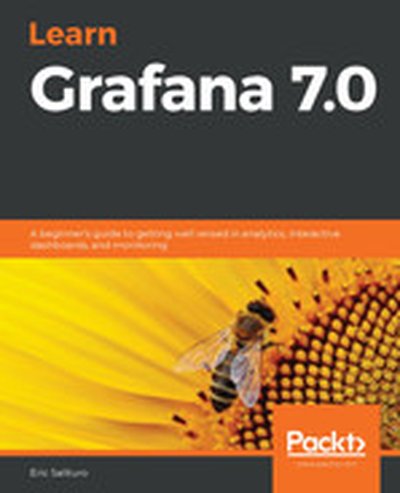
Learn Grafana 7.0

"Learn Grafana 7.0" is the ultimate beginner's guide to leveraging Grafana's capabilities for analytics and interactive dashboards. You'll master real-time data monitoring, visualization, and learn how to query and explore metrics with a hands-on approach to Grafana 7.0's new features. What this Book will help me do Learn to install and configure Grafana from scratch, preparing you for real-world data analysis tasks. Navigate and utilize the Graph panel in Grafana effectively, ensuring clear and actionable visual insights. Incorporate advanced dashboard features such as annotations, templates, and links to enhance data monitoring. Integrate Grafana with major cloud providers like AWS and Azure for robust monitoring solutions. Implement secure user authentication and fine-tuned permissions for managing teams and sharing insights safely. Author(s) None Salituro, the author of "Learn Grafana 7.0," is an experienced data visualization expert with years of experience in software development and analytics. Salituro focuses on creating understandable and accessible resources for developers and analysts of all skill levels, bringing a hands-on practical approach to technical learning. Who is it for? This book is perfect for data analysts, business intelligence developers, and administrators looking to build skills in data visualization and monitoring with Grafana 7.0. If you're eager to create interactive dashboards and learn practical applications of Grafana's features, this book is for you. Beginners to Grafana are fully accommodated, though familiarity with data visualization principles is beneficial. For those seeking to monitor cloud services like AWS with Grafana, this book is indispensable.

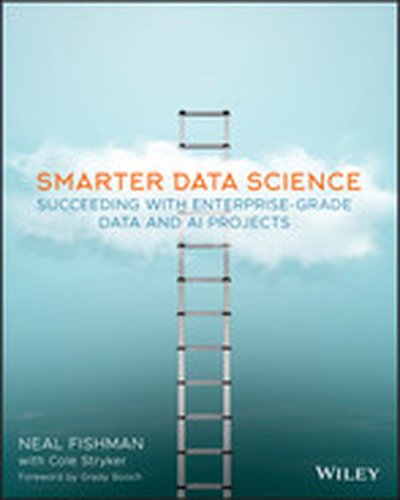
Smarter Data Science

Organizations can make data science a repeatable, predictable tool, which business professionals use to get more value from their data Enterprise data and AI projects are often scattershot, underbaked, siloed, and not adaptable to predictable business changes. As a result, the vast majority fail. These expensive quagmires can be avoided, and this book explains precisely how. Data science is emerging as a hands-on tool for not just data scientists, but business professionals as well. Managers, directors, IT leaders, and analysts must expand their use of data science capabilities for the organization to stay competitive. Smarter Data Science helps them achieve their enterprise-grade data projects and AI goals. It serves as a guide to building a robust and comprehensive information architecture program that enables sustainable and scalable AI deployments. When an organization manages its data effectively, its data science program becomes a fully scalable function that’s both prescriptive and repeatable. With an understanding of data science principles, practitioners are also empowered to lead their organizations in establishing and deploying viable AI. They employ the tools of machine learning, deep learning, and AI to extract greater value from data for the benefit of the enterprise. By following a ladder framework that promotes prescriptive capabilities, organizations can make data science accessible to a range of team members, democratizing data science throughout the organization. Companies that collect, organize, and analyze data can move forward to additional data science achievements: Improving time-to-value with infused AI models for common use cases Optimizing knowledge work and business processes Utilizing AI-based business intelligence and data visualization Establishing a data topology to support general or highly specialized needs Successfully completing AI projects in a predictable manner Coordinating the use of AI from any compute node. From inner edges to outer edges: cloud, fog, and mist computing When they climb the ladder presented in this book, businesspeople and data scientists alike will be able to improve and foster repeatable capabilities. They will have the knowledge to maximize their AI and data assets for the benefit of their organizations.

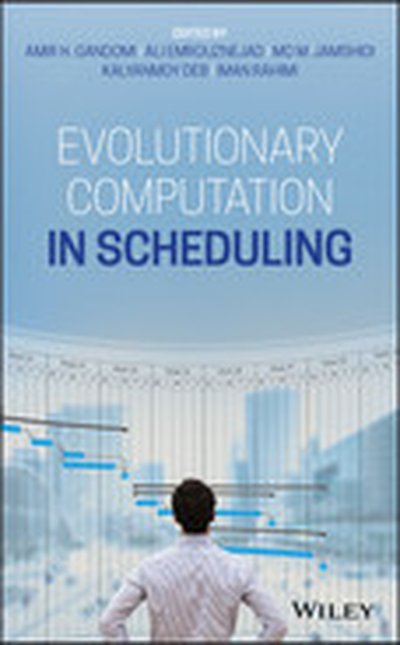
Evolutionary Computation in Scheduling

Presents current developments in the field of evolutionary scheduling and demonstrates the applicability of evolutionary computational techniques to solving scheduling problems This book provides insight into the use of evolutionary computations (EC) in real-world scheduling, showing readers how to choose a specific evolutionary computation and how to validate the results using metrics and statistics. It offers a spectrum of real-world optimization problems, including applications of EC in industry and service organizations such as healthcare scheduling, aircraft industry, school timetabling, manufacturing systems, and transportation scheduling in the supply chain. It also features problems with different degrees of complexity, practical requirements, user constraints, and MOEC solution approaches. Evolutionary Computation in Scheduling starts with a chapter on scientometric analysis to analyze scientific literature in evolutionary computation in scheduling. It then examines the role and impacts of ant colony optimization (ACO) in job shop scheduling problems, before presenting the application of the ACO algorithm in healthcare scheduling. Other chapters explore task scheduling in heterogeneous computing systems and truck scheduling using swarm intelligence, application of sub-population scheduling algorithm in multi-population evolutionary dynamic optimization, task scheduling in cloud environments, scheduling of robotic disassembly in remanufacturing using the bees algorithm, and more. This book: Provides a representative sampling of real-world problems currently being tackled by practitioners Examines a variety of single-, multi-, and many-objective problems that have been solved using evolutionary computations, including evolutionary algorithms and swarm intelligence Consists of four main parts: Introduction to Scheduling Problems, Computational Issues in Scheduling Problems, Evolutionary Computation, and Evolutionary Computations for Scheduling Problems Evolutionary Computation in Scheduling is ideal for engineers in industries, research scholars, advanced undergraduates and graduate students, and faculty teaching and conducting research in Operations Research and Industrial Engineering.

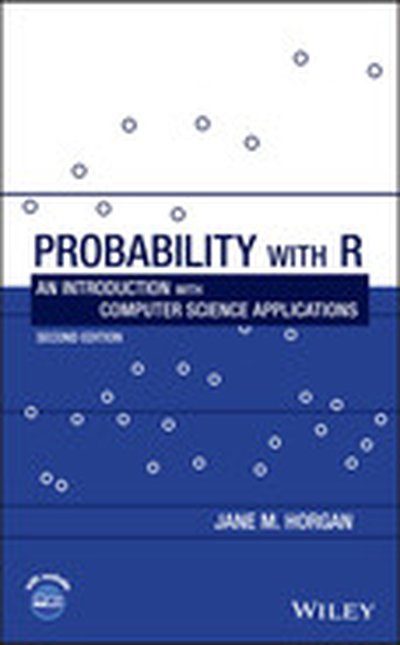
Probability with R, 2nd Edition

Provides a comprehensive introduction to probability with an emphasis on computing-related applications This self-contained new and extended edition outlines a first course in probability applied to computer-related disciplines. As in the first edition, experimentation and simulation are favoured over mathematical proofs. The freely down-loadable statistical programming language R is used throughout the text, not only as a tool for calculation and data analysis, but also to illustrate concepts of probability and to simulate distributions. The examples in Probability with R: An Introduction with Computer Science Applications, Second Edition cover a wide range of computer science applications, including: testing program performance; measuring response time and CPU time; estimating the reliability of components and systems; evaluating algorithms and queuing systems. Chapters cover: The R language; summarizing statistical data; graphical displays; the fundamentals of probability; reliability; discrete and continuous distributions; and more. This second edition includes: improved R code throughout the text, as well as new procedures, packages and interfaces; updated and additional examples, exercises and projects covering recent developments of computing; an introduction to bivariate discrete distributions together with the R functions used to handle large matrices of conditional probabilities, which are often needed in machine translation; an introduction to linear regression with particular emphasis on its application to machine learning using testing and training data; a new section on spam filtering using Bayes theorem to develop the filters; an extended range of Poisson applications such as network failures, website hits, virus attacks and accessing the cloud; use of new allocation functions in R to deal with hash table collision, server overload and the general allocation problem. The book is supplemented with a Wiley Book Companion Site featuring data and solutions to exercises within the book. Primarily addressed to students of computer science and related areas, Probability with R: An Introduction with Computer Science Applications, Second Edition is also an excellent text for students of engineering and the general sciences. Computing professionals who need to understand the relevance of probability in their areas of practice will find it useful.

Prepare Your Data for Tableau: A Practical Guide to the Tableau Data Prep Tool

Focus on the most important and most often overlooked factor in a successful Tableau project—data. Without a reliable data source, you will not achieve the results you hope for in Tableau. This book does more than teach the mechanics of data preparation. It teaches you: how to look at data in a new way, to recognize the most common issues that hinder analytics, and how to mitigate those factors one by one. Tableau can change the course of business, but the old adage of "garbage in, garbage out" is the hard truth that hides behind every Tableau sales pitch. That amazing sales demo does not work as well with bad data. The unfortunate reality is that almost all data starts out in a less-than-perfect state. Data prep is hard. Traditionally, we were forced into the world of the database where complex ETL (Extract, Transform, Load) operations created by the data team did all the heavy lifting for us. Fortunately, we have moved past those days. With the introduction of the Tableau Data Prep tool you can now handle most of the common Data Prep and cleanup tasks on your own, at your desk, and without the help of the data team. This essential book will guide you through: The layout and important parts of the Tableau Data Prep tool Connecting to data Data quality and consistency The shape of the data. Is the data oriented in columns or rows? How to decide? Why does it matter? What is the level of detail in the source data? Why is that important? Combining source data to bring in more fields and rows Saving the data flow and the results of our data prep work Common cleanup and setup tasks in Tableau Desktop What You Will Learn Recognize data sources that are good candidates for analytics in Tableau Connect tolocal, server, and cloud-based data sources Profile data to better understand its content and structure Rename fields, adjust data types, group data points, and aggregate numeric data Pivot data Join data from local, server, and cloud-based sources for unified analytics Review the steps and results of each phase of the Data Prep process Output new data sources that can be reviewed in Tableau or any other analytics tool Who This Book Is For Tableau Desktop users who want to: connect to data, profile the data to identify common issues, clean up those issues, join to additional data sources, and save the newly cleaned, joined data so that it can be used more effectively in Tableau

SAS for R Users

BRIDGES THE GAP BETWEEN SAS AND R, ALLOWING USERS TRAINED IN ONE LANGUAGE TO EASILY LEARN THE OTHER SAS and R are widely-used, very different software environments. Prized for its statistical and graphical tools, R is an open-source programming language that is popular with statisticians and data miners who develop statistical software and analyze data. SAS (Statistical Analysis System) is the leading corporate software in analytics thanks to its faster data handling and smaller learning curve. SAS for R Users enables entry-level data scientists to take advantage of the best aspects of both tools by providing a cross-functional framework for users who already know R but may need to work with SAS. Those with knowledge of both R and SAS are of far greater value to employers, particularly in corporate settings. Using a clear, step-by-step approach, this book presents an analytics workflow that mirrors that of the everyday data scientist. This up-to-date guide is compatible with the latest R packages as well as SAS University Edition. Useful for anyone seeking employment in data science, this book: Instructs both practitioners and students fluent in one language seeking to learn the other Provides command-by-command translations of R to SAS and SAS to R Offers examples and applications in both R and SAS Presents step-by-step guidance on workflows, color illustrations, sample code, chapter quizzes, and more Includes sections on advanced methods and applications Designed for professionals, researchers, and students, SAS for R Users is a valuable resource for those with some knowledge of coding and basic statistics who wish to enter the realm of data science and business analytics. AJAY OHRI is the founder of analytics startup Decisionstats.com. His research interests include spreading open source analytics, analyzing social media manipulation with mechanism design, simpler interfaces to cloud computing, investigating climate change, and knowledge flows. He currently advises startups in analytics off shoring, analytics services, and analytics. He is the author of Python for R Users: A Data Science Approach (Wiley), R for Business Analytics, and R for Cloud Computing.

Practical Data Science with Python 3: Synthesizing Actionable Insights from Data

Gain insight into essential data science skills in a holistic manner using data engineering and associated scalable computational methods. This book covers the most popular Python 3 frameworks for both local and distributed (in premise and cloud based) processing. Along the way, you will be introduced to many popular open-source frameworks, like, SciPy, scikitlearn, Numba, Apache Spark, etc. The book is structured around examples, so you will grasp core concepts via case studies and Python 3 code. As data science projects gets continuously larger and more complex, software engineering knowledge and experience is crucial to produce evolvable solutions. You'll see how to create maintainable software for data science and how to document data engineering practices. This book is a good starting point for people who want to gain practical skills to perform data science. All the code willbe available in the form of IPython notebooks and Python 3 programs, which allow you to reproduce all analyses from the book and customize them for your own purpose. You'll also benefit from advanced topics like Machine Learning, Recommender Systems, and Security in Data Science. Practical Data Science with Python will empower you analyze data, formulate proper questions, and produce actionable insights, three core stages in most data science endeavors. What You'll Learn Play the role of a data scientist when completing increasingly challenging exercises using Python 3 Work work with proven data science techniques/technologies Review scalable software engineering practices to ramp up data analysis abilities in the realm of Big Data Apply theory of probability, statistical inference, and algebra to understand the data sciencepractices Who This Book Is For Anyone who would like to embark into the realm of data science using Python 3.

Data Science with Python and Dask

Dask is a native parallel analytics tool designed to integrate seamlessly with the libraries you’re already using, including Pandas, NumPy, and Scikit-Learn. With Dask you can crunch and work with huge datasets, using the tools you already have. And Data Science with Python and Dask is your guide to using Dask for your data projects without changing the way you work! About the Technology An efficient data pipeline means everything for the success of a data science project. Dask is a flexible library for parallel computing in Python that makes it easy to build intuitive workflows for ingesting and analyzing large, distributed datasets. Dask provides dynamic task scheduling and parallel collections that extend the functionality of NumPy, Pandas, and Scikit-learn, enabling users to scale their code from a single laptop to a cluster of hundreds of machines with ease. About the Book Data Science with Python and Dask teaches you to build scalable projects that can handle massive datasets. After meeting the Dask framework, you’ll analyze data in the NYC Parking Ticket database and use DataFrames to streamline your process. Then, you’ll create machine learning models using Dask-ML, build interactive visualizations, and build clusters using AWS and Docker. What's Inside Working with large, structured and unstructured datasets Visualization with Seaborn and Datashader Implementing your own algorithms Building distributed apps with Dask Distributed Packaging and deploying Dask apps About the Reader For data scientists and developers with experience using Python and the PyData stack. About the Author Jesse Daniel is an experienced Python developer. He taught Python for Data Science at the University of Denver and leads a team of data scientists at a Denver-based media technology company. We interviewed Jesse as a part of our Six Questions series. Check it out here. Quotes The most comprehensive coverage of Dask to date, with real-world examples that made a difference in my daily work. - Al Krinker, United States Patent and Trademark Office An excellent alternative to PySpark for those who are not on a cloud platform. The author introduces Dask in a way that speaks directly to an analyst. - Jeremy Loscheider, Panera Bread A greatly paced introduction to Dask with real-world datasets. - George Thomas, R&D Architecture Manhattan Associates The ultimate resource to quickly get up and running with Dask and parallel processing in Python. - Gustavo Patino, Oakland University William Beaumont School of Medicine

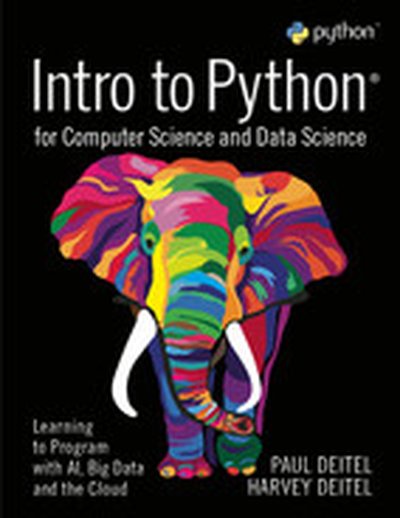
Intro to Python for Computer Science and Data Science: Learning to Program with AI, Big Data and The Cloud

This is the eBook of the printed book and may not include any media, website access codes, or print supplements that may come packaged with the bound book. For introductory-level Python programming and/or data-science courses. A groundbreaking, flexible approach to computer science and data science The Deitels’ Introduction to Python for Computer Science and Data Science: Learning to Program with AI, Big Data and the Cloud offers a unique approach to teaching introductory Python programming, appropriate for both computer-science and data-science audiences. Providing the most current coverage of topics and applications, the book is paired with extensive traditional supplements as well as Jupyter Notebooks supplements. Real-world datasets and artificial-intelligence technologies allow students to work on projects making a difference in business, industry, government and academia. Hundreds of examples, exercises, projects (EEPs), and implementation case studies give students an engaging, challenging and entertaining introduction to Python programming and hands-on data science. Related Content Video: Python Fundamentals Live courses: Python Full Throttle with Paul Deitel: A One-Day, Fast-Paced, Code-Intensive Python Presentation Python® Data Science Full Throttle with Paul Deitel: Introductory Artificial Intelligence (AI), Big Data and Cloud Case Studies The book’s modular architecture enables instructors to conveniently adapt the text to a wide range of computer-science and data-science courses offered to audiences drawn from many majors. Computer-science instructors can integrate as much or as little data-science and artificial-intelligence topics as they’d like, and data-science instructors can integrate as much or as little Python as they’d like. The book aligns with the latest ACM/IEEE CS-and-related computing curriculum initiatives and with the Data Science Undergraduate Curriculum Proposal sponsored by the National Science Foundation.

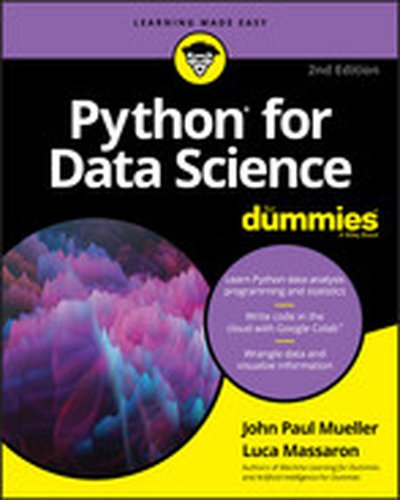
Python for Data Science For Dummies, 2nd Edition

The fast and easy way to learn Python programming and statistics Python is a general-purpose programming language created in the late 1980s—and named after Monty Python—that's used by thousands of people to do things from testing microchips at Intel, to powering Instagram, to building video games with the PyGame library. Python For Data Science For Dummies is written for people who are new to data analysis, and discusses the basics of Python data analysis programming and statistics. The book also discusses Google Colab, which makes it possible to write Python code in the cloud. Get started with data science and Python Visualize information Wrangle data Learn from data The book provides the statistical background needed to get started in data science programming, including probability, random distributions, hypothesis testing, confidence intervals, and building regression models for prediction.

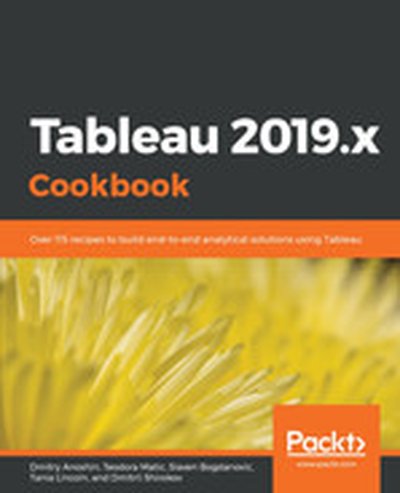
Tableau 2019.x Cookbook

Discover the ultimate guide to Tableau 2019.x that offers over 115 practical recipes to tackle business intelligence and data analysis challenges. This book takes you from the basics to advanced techniques, empowering you to create insightful dashboards, leverage powerful analytics, and seamlessly integrate with modern cloud data platforms. What this Book will help me do Master both basic and advanced functionalities of Tableau Desktop to effectively analyze and visualize data. Understand how to create impactful dashboards and compelling data stories for drive decision-making. Deploy advanced analytical tools including R-based forecasting and statistical techniques with Tableau. Set up and utilize Tableau Server in multi-node environments on Linux and Windows. Utilize Tableau Prep to efficiently clean, shape, and transform data for seamless integration into Tableau workflows. Author(s) The authors of the Tableau 2019.x Cookbook are recognized industry professionals with rich expertise in business intelligence, data analytics, and Tableau's ecosystem. Dmitry Anoshin and his co-authors bring hands-on experience from various industries to provide actionable insights. They focus on delivering practical solutions through structured learning paths. Who is it for? This book is tailored for data analysts, BI developers, and professionals equipped with some knowledge of Tableau wanting to enhance their skills. If you're aiming to solve complex analytics challenges or want to fully utilize the capabilities of Tableau products, this book offers the guidance and knowledge you need.

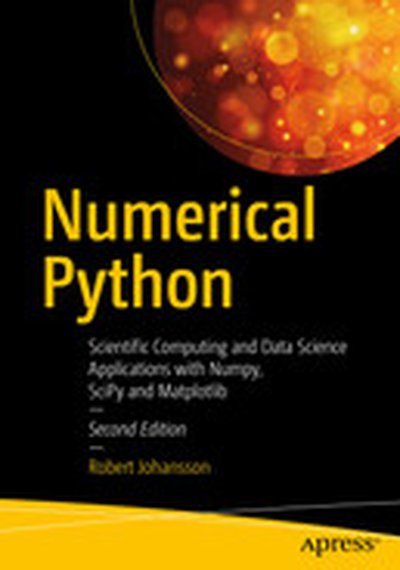
Numerical Python: Scientific Computing and Data Science Applications with Numpy, SciPy and Matplotlib

Leverage the numerical and mathematical modules in Python and its standard library as well as popular open source numerical Python packages like NumPy, SciPy, FiPy, matplotlib and more. This fully revised edition, updated with the latest details of each package and changes to Jupyter projects, demonstrates how to numerically compute solutions and mathematically model applications in big data, cloud computing, financial engineering, business management and more. Numerical Python, Second Edition, presents many brand-new case study examples of applications in data science and statistics using Python, along with extensions to many previous examples. Each of these demonstrates the power of Python for rapid development and exploratory computing due to its simple and high-level syntax and multiple options for data analysis. After reading this book, readers will be familiar with many computing techniques including array-based and symbolic computing, visualization and numerical file I/O, equation solving, optimization, interpolation and integration, and domain-specific computational problems, such as differential equation solving, data analysis, statistical modeling and machine learning. What You'll Learn Work with vectors and matrices using NumPy Plot and visualize data with Matplotlib Perform data analysis tasks with Pandas and SciPy Review statistical modeling and machine learning with statsmodels and scikit-learn Optimize Python code using Numba and Cython Who This Book Is For Developers who want to understand how to use Python and its related ecosystem for numerical computing.

Microsoft Power BI Complete Reference

Design, develop, and master efficient Power BI solutions for impactful business insights Key Features Get to grips with the fundamentals of Microsoft Power BI Combine data from multiple sources, create visuals, and publish reports across platforms Understand Power BI concepts with real-world use cases Book Description Microsoft Power BI Complete Reference Guide gets you started with business intelligence by showing you how to install the Power BI toolset, design effective data models, and build basic dashboards and visualizations that make your data come to life. In this Learning Path, you will learn to create powerful interactive reports by visualizing your data and learn visualization styles, tips and tricks to bring your data to life. You will be able to administer your organization's Power BI environment to create and share dashboards. You will also be able to streamline deployment by implementing security and regular data refreshes. Next, you will delve deeper into the nuances of Power BI and handling projects. You will get acquainted with planning a Power BI project, development, and distribution of content, and deployment. You will learn to connect and extract data from various sources to create robust datasets, reports, and dashboards. Additionally, you will learn how to format reports and apply custom visuals, animation and analytics to further refine your data. By the end of this Learning Path, you will learn to implement the various Power BI tools such as on-premises gateway together along with staging and securely distributing content via apps. This Learning Path includes content from the following Packt products: Microsoft Power BI Quick Start Guide by Devin Knight et al. Mastering Microsoft Power BI by Brett Powell What you will learn Connect to data sources using both import and DirectQuery options Leverage built-in and custom visuals to design effective reports Administer a Power BI cloud tenant for your organization Deploy your Power BI Desktop files into the Power BI Report Server Build efficient data retrieval and transformation processes Who this book is for Microsoft Power BI Complete Reference Guide is for those who want to learn and use the Power BI features to extract maximum information and make intelligent decisions that boost their business. If you have a basic understanding of BI concepts and want to learn how to apply them using Microsoft Power BI, then Learning Path is for you. It consists of real-world examples on Power BI and goes deep into the technical issues, covers additional protocols, and much more.

2017 Data Science Salary Survey

Get a clear picture of the salaries and bonuses data science professionals around the world receive, as well as the tools and cloud providers they use, the tasks they perform, and how interpersonal ("soft") skills might affect their pay. The fifth edition of O’Reilly’s online Data Science Salary Survey provides complete results from nearly 800 participants from 69 different countries, 42 different US states, and Washington, DC. With five years of data, the survey’s results are consistent enough to reliably identify changes and trends. The survey asked specific questions about industry, team, and company size, but also posed questions such as, "How easy is it to move to another position?" or "What is your next career step?" You can plug in your own data points to the survey model and see how you compare to other data science professionals in your industry. With this report, you’ll learn: Where data scientists make the highest salaries—by country and by US state Tools that respondents most commonly use on the job, and tools that contribute most to salary Activities that contribute to higher earnings How gender and bargaining skills affect salaries when all other factors are equal Salary differences between those using open source tools vs those using proprietary tools How the increase in respondents outside of the US signal a rise in international companies starting and growing data organizations Participate in the 2018 Survey: Spend just 5 to 10 minutes and take the anonymous salary survey here: https://www.oreilly.com/ideas/take-the-​data-science-salary-survey.

Pro Power BI Architecture: Sharing, Security, and Deployment Options for Microsoft Power BI Solutions

Architect and deploy a Power BI solution. This book will help you understand the many available options and choose the best combination for hosting, developing, sharing, and deploying a Power BI solution within your organization. Pro Power BI Architecture provides detailed examples and explains the different methods available for sharing and securing Power BI content so that only intended recipients can see it. Commonly encountered problems you will learn to handle include content unexpectedly changing while users are in the process of creating reports and building analysis, methods of sharing analyses that don’t cover all the requirements of your business or organization, and inconsistent security models. The knowledge provided in this book will allow you to choose an architecture and deployment model that suits the needs of your organization, ensuring that you do not spend your time maintaining your solution but onusing it for its intended purpose and gaining business value from mining and analyzing your organization’s data. What You'll Learn Architect and administer enterprise-level Power BI solutions Choose the right sharing method for your Power BI solution Create and manage environments for development, testing, and production Implement row level security in multiple ways to secure your data Save money by choosing the right licensing plan Select a suitable connection type—Live Connection, DirectQuery, or Scheduled Refresh—for your use case Set up a Power BI gateway to bridge between on-premises data sources and the Power BI cloud service Who This Book Is For Data analysts, developers, architects, and managers who want to leverage Power BI for their reporting solution

Learning Apache Drill

Get up to speed with Apache Drill, an extensible distributed SQL query engine that reads massive datasets in many popular file formats such as Parquet, JSON, and CSV. Drill reads data in HDFS or in cloud-native storage such as S3 and works with Hive metastores along with distributed databases such as HBase, MongoDB, and relational databases. Drill works everywhere: on your laptop or in your largest cluster. In this practical book, Drill committers Charles Givre and Paul Rogers show analysts and data scientists how to query and analyze raw data using this powerful tool. Data scientists today spend about 80% of their time just gathering and cleaning data. With this book, you’ll learn how Drill helps you analyze data more effectively to drive down time to insight. Use Drill to clean, prepare, and summarize delimited data for further analysis Query file types including logfiles, Parquet, JSON, and other complex formats Query Hadoop, relational databases, MongoDB, and Kafka with standard SQL Connect to Drill programmatically using a variety of languages Use Drill even with challenging or ambiguous file formats Perform sophisticated analysis by extending Drill’s functionality with user-defined functions Facilitate data analysis for network security, image metadata, and machine learning

Microsoft Power BI Quick Start Guide

Uncover the power of Microsoft Power BI with this accessible and practical guide. This book introduces you to the concepts of data modeling, transformation, and visualization, ensuring that you can build effective dashboards and gain valuable insights. You'll be empowered to productively utilize Power BI in your organization to achieve your analytics goals. What this Book will help me do Connect to various data sources and harness the capabilities of the Query Editor. Transform and clean data for analysis, learning to use languages like M and R. Build robust data models with relationships and powerful DAX expressions. Create impactful reports with efficient and custom visualizations in Power BI. Deploy and administer Power BI solutions both in the cloud and on-premise. Author(s) The authors, Devin Knight, Mitchell Pearson, and Manuel Quintana, are seasoned experts in Business Intelligence and Power BI. They bring years of experience simplifying complex data challenges. Their writing is approachable and hands-on, equipping readers with the skills to solve real-world problems. Who is it for? This book is perfectly suited for professionals in Business Intelligence roles, data analysts, or those aiming to adopt Power BI solutions. Whether you're new to Power BI or have basic BI knowledge, this guide will take you from fundamentals to advanced implementations. Ideal for anyone aiming to unlock actionable insights from their data.