talk-data.com talk-data.com

Topic

S3

Amazon S3

object_storage cloud_storage aws

104

tagged

Activity Trend

11 peak/qtr
2020-Q1 2026-Q1

Activities

104 activities · Newest first

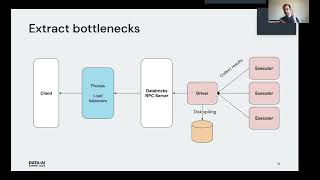
Cloud Fetch: High-bandwidth Connectivity With BI Tools

Business Intelligence (BI) tools such as Tableau and Microsoft Power BI are notoriously slow at extracting large query results from traditional data warehouses because they typically fetch the data in a single thread through a SQL endpoint that becomes a data transfer bottleneck. Data analysts can connect their BI tools to Databricks SQL endpoints to query data in tables through an ODBC/JDBC protocol integrated in our Simba drivers. With Cloud Fetch, which we released in Databricks Runtime 8.3 and Simba ODBC 2.6.17 driver, we introduce a new mechanism for fetching data in parallel via cloud storage such as AWS S3 and Azure Data Lake Storage to bring the data faster to BI tools. In our experiments using Cloud Fetch, we observed a 10x speed-up in extract performance due to parallelism.

Connect with us: Website: https://databricks.com Facebook: https://www.facebook.com/databricksinc Twitter: https://twitter.com/databricks LinkedIn: https://www.linkedin.com/company/data... Instagram: https://www.instagram.com/databricksinc/

IBM TS7700 Release 5.2.2 Guide

This IBM® Redbooks® publication covers IBM TS7700 R5.2. The IBM TS7700 is part of a family of IBM Enterprise tape products. This book is intended for system architects and storage administrators who want to integrate their storage systems for optimal operation. Building on 25 years of experience, the R5.2 release includes many features that enable improved performance, usability, and security. Highlights include IBM TS7700 Advanced Object Store, an all flash TS7770, grid resiliency enhancements, and Logical WORM retention. By using the same hierarchical storage techniques, the TS7700 (TS7770 and TS7760) can also off load to object storage. Because object storage is cloud-based and accessible from different regions, the TS7700 Cloud Storage Tier support essentially allows the cloud to be an extension of the grid. As of this writing, the TS7700C supports the ability to off load to IBM Cloud® Object Storage, Amazon S3, and RSTOR. This publication explains features and concepts that are specific to the IBM TS7700 as of release R5.2. The R5.2 microcode level provides IBM TS7700 Cloud Storage Tier enhancements, IBM DS8000® Object Storage enhancements, Management Interface dual control security, and other smaller enhancements. The R5.2 microcode level can be installed on the IBM TS7770 and IBM TS7760 models only. Note: The latest Release 5.2 was split into two phases: R5.2 Phase 1 (also referred to as and ) R5.2 Phase 2 ( and R) TS7700 provides tape virtualization for the IBM z environment. Off loading to physical tape behind a TS7700 is used by hundreds of organizations around the world. Tape virtualization can help satisfy the following requirements in a data processing environment. New and existing capabilities of the TS7700 5.2.2 release includes the following highlights: Eight-way Grid Cloud, which consists of up to three generations of TS7700 Synchronous and asynchronous replication of virtual tape and TCT objects Grid access to all logical volume and object data that is independent of where it exists An all-flash TS7770 option for improved performance Full Advanced Object Store Grid Cloud support of DS8000 Transparent Cloud Tier Full AES256 encryption for data that is in-flight and at-rest Tight integration with IBM Z® and DFSMS policy management DS8000 Object Store AES256 in-flight encryption and compression Regulatory compliance through Logical WORM and LWORM Retention support Cloud Storage Tier support for archive, logical volume version, and disaster recovery Optional integration with physical tape 16 Gb IBM FICON® throughput that exceeds 5 GBps per TS7700 cluster Grid Resiliency Support with Control Unit Initiated Reconfiguration (CUIR) support IBM Z hosts view up to 3,968 common devices per TS7700 grid TS7770 Cache On-demand feature that is based capacity licensing TS7770 support of SSD within the VED server The TS7700T writes data by policy to physical tape through attachment to high-capacity, high-performance IBM TS1160, IBM TS1150, and IBM TS1140 tape drives that are installed in an IBM TS4500 or TS3500 tape library. The TS7770 models are based on high-performance and redundant IBM POWER9™ technology. They provide improved performance for most IBM Z tape workloads when compared to the previous generations of IBM TS7700.

We the Data Engineering Team here at WB Games implemented an internal Redshift Loader DAG(s) on Airflow that allow us to ingest data in near real-time at scale into Redshift, taking into account variable load on the DB and been able to quickly catch up data loads in case of various DB outages or high usage scenarios. Highlights: Handle any type of Redshift outages and system delays dynamically between multiple sources(S3) to sinks(Redshift). Auto tuning data copies for faster data backfill in case of delay without overwhelming commit queue. Supports schema evolution on Game data dynamically. Maintain data quality to ensure we do not create data gaps or dupes. Provide embedded custom metrics for deeper insights and anomaly detection. Airflow config based Declarative Dag implementation.

Imagine if you could chain together SQL models using nothing but python, write functions that treat Snowflake tables like dataframes and dataframes like SQL tables. Imagine if you could write a SQL airflow DAG using only python or without using any python at all. With Astro SDK, we at Astronomer have gone back to the drawing board around fundamental questions of what DAG writing could look like. Our goal is to empower Data Engineers, Data Scientists, and even the Business Analysts to write Airflow DAGs with code that reflects the data movement, instead of the system configuration. Astro will allow each group to focus on producing value in their respective fields with minimal knowledge of Airflow and high amounts of flexibility between SQL or python-based systems. This is way beyond just a new way of writing DAGs. This is a universal agnostic data transfer system. Users can run the exact same code against different databases (snowflake, bigquery, etc.) and datastores (GCS, S3, etc.) with no changes except to the connection IDs. Users will be able to promote a SQL flow from their dev postgres to their prod snowflake with a single variable change. We are ecstatic to reveal over eight months of work around building a new open-source project that will significantly improve your DAG authoring experience!

Modern Data Engineering with Apache Spark: A Hands-On Guide for Building Mission-Critical Streaming Applications

Leverage Apache Spark within a modern data engineering ecosystem. This hands-on guide will teach you how to write fully functional applications, follow industry best practices, and learn the rationale behind these decisions. With Apache Spark as the foundation, you will follow a step-by-step journey beginning with the basics of data ingestion, processing, and transformation, and ending up with an entire local data platform running Apache Spark, Apache Zeppelin, Apache Kafka, Redis, MySQL, Minio (S3), and Apache Airflow. Apache Spark applications solve a wide range of data problems from traditional data loading and processing to rich SQL-based analysis as well as complex machine learning workloads and even near real-time processing of streaming data. Spark fits well as a central foundation for any data engineering workload. This book will teach you to write interactive Spark applications using Apache Zeppelin notebooks, write and compilereusable applications and modules, and fully test both batch and streaming. You will also learn to containerize your applications using Docker and run and deploy your Spark applications using a variety of tools such as Apache Airflow, Docker and Kubernetes. ​Reading this book will empower you to take advantage of Apache Spark to optimize your data pipelines and teach you to craft modular and testable Spark applications. You will create and deploy mission-critical streaming spark applications in a low-stress environment that paves the way for your own path to production. ​ What You Will Learn Simplify data transformation with Spark Pipelines and Spark SQL Bridge data engineering with machine learning Architect modular data pipeline applications Build reusable application components and libraries Containerize your Spark applications for consistency and reliability Use Docker and Kubernetes to deploy your Spark applications Speed up application experimentation using Apache Zeppelin and Docker Understand serializable structured data and data contracts Harness effective strategies for optimizing data in your data lakes Build end-to-end Spark structured streaming applications using Redis and Apache Kafka Embrace testing for your batch and streaming applications Deploy and monitor your Spark applications Who This Book Is For Professional software engineers who want to take their current skills and apply them to new and exciting opportunities within the data ecosystem, practicing data engineers who are looking for a guiding light while traversing the many challenges of moving from batch to streaming modes, data architects who wish to provide clear and concise direction for how best to harness anduse Apache Spark within their organization, and those interested in the ins and outs of becoming a modern data engineer in today's fast-paced and data-hungry world

Serverless Analytics with Amazon Athena

Delve into the serverless world of Amazon Athena with the comprehensive book 'Serverless Analytics with Amazon Athena'. This guide introduces you to the power of Athena, showing you how to efficiently query data in Amazon S3 using SQL without the hassle of managing infrastructure. With clear instructions and practical examples, you'll master querying structured, unstructured, and semi-structured data seamlessly. What this Book will help me do Effectively query and analyze both structured and unstructured data stored in S3 using Amazon Athena. Integrate Athena with other AWS services to create powerful, secure, and cost-efficient data workflows. Develop ETL pipelines and machine learning workflows leveraging Athena's compatibility with AWS Glue. Monitor and troubleshoot Athena queries for consistent performance and build scalable serverless data solutions. Implement security best practices and optimize costs when managing your Athena-driven data solutions. Author(s) None Virtuoso, along with co-authors Mert Turkay Hocanin None and None Wishnick, brings a wealth of experience in cloud solutions, serverless technologies, and data engineering. They excel in demystifying complex technical topics and have a passion for empowering readers with practical skills and knowledge. Who is it for? This book is tailored for business intelligence analysts, application developers, and system administrators who want to harness Amazon Athena for seamless, cost-efficient data analytics. It suits individuals with basic SQL knowledge looking to expand their capabilities in querying and processing data. Whether you're managing growing datasets or building data-driven applications, this book provides the know-how to get it right.

Summary The vast majority of data tools and platforms that you hear about are designed for working with structured, text-based data. What do you do when you need to manage unstructured information, or build a computer vision model? Activeloop was created for exactly that purpose. In this episode Davit Buniatyan, founder and CEO of Activeloop, explains why he is spending his time and energy on building a platform to simplify the work of getting your unstructured data ready for machine learning. He discusses the inefficiencies that teams run into from having to reprocess data multiple times, his work on the open source Hub library to solve this problem for everyone, and his thoughts on the vast potential that exists for using computer vision to solve hard and meaningful problems.

Announcements

Hello and welcome to the Data Engineering Podcast, the show about modern data management When you’re ready to build your next pipeline, or want to test out the projects you hear about on the show, you’ll need somewhere to deploy it, so check out our friends at Linode. With their managed Kubernetes platform it’s now even easier to deploy and scale your workflows, or try out the latest Helm charts from tools like Pulsar and Pachyderm. With simple pricing, fast networking, object storage, and worldwide data centers, you’ve got everything you need to run a bulletproof data platform. Go to dataengineeringpodcast.com/linode today and get a $100 credit to try out a Kubernetes cluster of your own. And don’t forget to thank them for their continued support of this show! Are you bored with writing scripts to move data into SaaS tools like Salesforce, Marketo, or Facebook Ads? Hightouch is the easiest way to sync data into the platforms that your business teams rely on. The data you’re looking for is already in your data warehouse and BI tools. Connect your warehouse to Hightouch, paste a SQL query, and use their visual mapper to specify how data should appear in your SaaS systems. No more scripts, just SQL. Supercharge your business teams with customer data using Hightouch for Reverse ETL today. Get started for free at dataengineeringpodcast.com/hightouch. Have you ever had to develop ad-hoc solutions for security, privacy, and compliance requirements? Are you spending too much of your engineering resources on creating database views, configuring database permissions, and manually granting and revoking access to sensitive data? Satori has built the first DataSecOps Platform that streamlines data access and security. Satori’s DataSecOps automates data access controls, permissions, and masking for all major data platforms such as Snowflake, Redshift and SQL Server and even delegates data access management to business users, helping you move your organization from default data access to need-to-know access. Go to dataengineeringpodcast.com/satori today and get a $5K credit for your next Satori subscription. Your host is Tobias Macey and today I’m interviewing Davit Buniatyan about Activeloop, a platform for hosting and delivering datasets optimized for machine learning

Interview

Introduction How did you get involved in the area of data management? Can you describe what Activeloop is and the story behind it? How does the form and function of data storage introduce friction in the development and deployment of machine learning projects? How does the work that you are doing at Activeloop compare to vector databases such as Pinecone? You have a focus on image oriented data and computer vision projects. How does the specific applications of ML/DL influence the format and interactions with the data? Can you describe how the Activeloop platform is architected?

How have the design and goals of the system changed or evolved since you began working on it?

What are the feature and performance tradeoffs between self-managed storage locations (e.g. S3, GCS) and the Activeloop platform? What is the process for sourcing, processing, and storing

In Apache Airflow, Xcom is the default mechanism for passing data between tasks in a DAG. In practice, this has been restricted to small data elements, since the Xcom data is persisted in the Airflow metadatabase and is constrained by database and performance limitations. With the new TaskFlow API introduced in Airflow 2.0, it is seamless to pass data between tasks and the use of Xcom is invisible. However, the ability to pass data is restricted to a relatively small set of data types which can be natively converted in JSON. This tutorial describes how to go beyond these limitations by developing and deploying a Custom Xcom backend within Airflow to enable the sharing of large and varied data elements such as Pandas data frames between tasks in a data pipeline, using a cloud storage such as Google Storage or Amazon S3.

Summary There is a lot of attention on the database market and cloud data warehouses. While they provide a measure of convenience, they also require you to sacrifice a certain amount of control over your data. If you want to build a warehouse that gives you both control and flexibility then you might consider building on top of the venerable PostgreSQL project. In this episode Thomas Richter and Joshua Drake share their advice on how to build a production ready data warehouse with Postgres.

Announcements

Hello and welcome to the Data Engineering Podcast, the show about modern data management When you’re ready to build your next pipeline, or want to test out the projects you hear about on the show, you’ll need somewhere to deploy it, so check out our friends at Linode. With their managed Kubernetes platform it’s now even easier to deploy and scale your workflows, or try out the latest Helm charts from tools like Pulsar and Pachyderm. With simple pricing, fast networking, object storage, and worldwide data centers, you’ve got everything you need to run a bulletproof data platform. Go to dataengineeringpodcast.com/linode today and get a $100 credit to try out a Kubernetes cluster of your own. And don’t forget to thank them for their continued support of this show! Firebolt is the fastest cloud data warehouse. Visit dataengineeringpodcast.com/firebolt to get started. The first 25 visitors will receive a Firebolt t-shirt. Atlan is a collaborative workspace for data-driven teams, like Github for engineering or Figma for design teams. By acting as a virtual hub for data assets ranging from tables and dashboards to SQL snippets & code, Atlan enables teams to create a single source of truth for all their data assets, and collaborate across the modern data stack through deep integrations with tools like Snowflake, Slack, Looker and more. Go to dataengineeringpodcast.com/atlan today and sign up for a free trial. If you’re a data engineering podcast listener, you get credits worth $3000 on an annual subscription Your host is Tobias Macey and today I’m interviewing Thomas Richter and Joshua Drake about using Postgres as your data warehouse

Interview

Introduction How did you get involved in the area of data management? Can you start by establishing a working definition of what constitutes a data warehouse for the purpose of this discussion?

What are the limitations for out-of-the-box Postgres when trying to use it for these workloads?

There are a large and growing number of options for data warehouse style workloads. How would you categorize the different systems and what is PostgreSQL’s position in that ecosystem?

What do you see as the motivating factors for a team or organization to select from among those categories?

Why would someone want to use Postgres as their data warehouse platform rather than using a purpose-built engine? What is the cost/performance equation for Postgres as compared to other data warehouse solutions? For someone who wants to turn Postgres into a data warehouse engine, what are their options?

What are the relative tradeoffs of the different open source and commercial offerings? (e.g. Citus, cstore_fdw, zedstore, Swarm64, Greenplum, etc.)

One of the biggest areas of growth right now is in the "cloud data warehouse" market where storage and compute are decoupled. What are the options for making that possible with Postgres? (e.g. using foreign data wrappers for interacting with data lake storage (S3, HDFS, Alluxio, etc.)) What areas of work are happening in the Postgres community for upcoming releases to make it more easily suited to data warehouse/analytical workloads? What are some of the most interesting, innovative, or unexpected ways that you have seen Postgres used in analytical contexts? What are the most interesting, unexpected, or challenging lessons that you have learned from your own experiences of building analytical systems with Postgres? When is Postgres the wrong choice fo

IBM TS7700 Release 5.1 Guide

This IBM® Redbooks® publication covers IBM TS7700 R5.1. The IBM TS7700 is part of a family of IBM Enterprise tape products. This book is intended for system architects and storage administrators who want to integrate their storage systems for optimal operation. Building on over 20 years of virtual tape experience, the TS7770 supports the ability to store virtual tape volumes in an object store. The TS7700 supported off loading to physical tape for over two decades. Off loading to physical tape behind a TS7700 is utilized by hundreds of organizations around the world. By using the same hierarchical storage techniques, the TS7700 (TS7770 and TS7760) can also off load to object storage. Because object storage is cloud-based and accessible from different regions, the TS7700 Cloud Storage Tier support essentially allows the cloud to be an extension of the grid. As of this writing, the TS7700C supports the ability to off load to IBM Cloud® Object Storage and Amazon S3. This publication explains features and concepts that are specific to the IBM TS7700 as of release R5.1. The R5.1 microcode level provides IBM TS7700 Cloud Storage Tier enhancements, IBM DS8000® Object Storage enhancements, Management Interface dual control security, and other smaller enhancements. The R5.1 microcode level can be installed on the IBM TS7770 and IBM TS7760 models only. TS7700 provides tape virtualization for the IBM z environment. Tape virtualization can help satisfy the following requirements in a data processing environment: Improved reliability and resiliency Reduction in the time that is needed for the backup and restore process Reduction of services downtime that is caused by physical tape drive and library outages Reduction in cost, time, and complexity by moving primary workloads to virtual tape Increased efficient procedures for managing daily batch, backup, recall, and restore processing On-premises and off-premises object store cloud storage support as an alternative to physical tape for archive and disaster recovery New and existing capabilities of the TS7700 5.1 include the following highlights: Eight-way Grid Cloud, which consists of up to three generations of TS7700 Synchronous and asynchronous replication Full AES256 encryption for replication data that is in-flight and at-rest Tight integration with IBM Z and DFSMS policy management Optional target for DS8000 Transparent Cloud Tier using DFSMS DS8000 Object Store AES256 in-flight encryption and compression Optional Cloud Storage Tier support for archive and disaster recovery 16 Gb IBM FICON® throughput up to 5 GBps per TS7700 cluster IBM Z hosts view up to 3,968 common devices per TS7700 grid Grid access to all data independent of where it exists TS7770 Cache On-demand feature that is based capacity licensing TS7770 support of SSD within the VED server The TS7700T writes data by policy to physical tape through attachment to high-capacity, high-performance IBM TS1150, and IBM TS1140 tape drives that are installed in an IBM TS4500 or TS3500 tape library. The TS7770 models are based on high-performance and redundant IBM POWER9™ technology. They provide improved performance for most IBM Z tape workloads when compared to the previous generations of IBM TS7700.

Озеро данных в S3 хранилище на основе Dremio OSS и Redshift Spectrum - Игорь Сухоруков

Big Data Days Онсайт и онлайн 22-25 ноября, 2022 Узнать больше о конференции: https://bit.ly/30YNt99 Присоединяйтесь к нашей следующей конференции Big Data Days 22-25 ноября в 2022 г. Здесь вы сможете получить знания от мировых экспертов, выступающих с техническими докладами и практическими мастер-классами в области Big Data, High Load, Data Science, Machine Learning и AI. В этом году конференция будет проходить в гибридной форме, это позволит вам послушать доклады и посетить мастер-классы онсайт и онлайн.

Summary Data lakes are gaining popularity due to their flexibility and reduced cost of storage. Along with the benefits there are some additional complexities to consider, including how to safely integrate new data sources or test out changes to existing pipelines. In order to address these challenges the team at Treeverse created LakeFS to introduce version control capabilities to your storage layer. In this episode Einat Orr and Oz Katz explain how they implemented branching and merging capabilities for object storage, best practices for how to use versioning primitives to introduce changes to your data lake, how LakeFS is architected, and how you can start using it for your own data platform.

Announcements

Hello and welcome to the Data Engineering Podcast, the show about modern data management When you’re ready to build your next pipeline, or want to test out the projects you hear about on the show, you’ll need somewhere to deploy it, so check out our friends at Linode. With their managed Kubernetes platform it’s now even easier to deploy and scale your workflows, or try out the latest Helm charts from tools like Pulsar and Pachyderm. With simple pricing, fast networking, object storage, and worldwide data centers, you’ve got everything you need to run a bulletproof data platform. Go to dataengineeringpodcast.com/linode today and get a $60 credit to try out a Kubernetes cluster of your own. And don’t forget to thank them for their continued support of this show! Are you bogged down by having to manually manage data access controls, repeatedly move and copy data, and create audit reports to prove compliance? How much time could you save if those tasks were automated across your cloud platforms? Immuta is an automated data governance solution that enables safe and easy data analytics in the cloud. Our comprehensive data-level security, auditing and de-identification features eliminate the need for time-consuming manual processes and our focus on data and compliance team collaboration empowers you to deliver quick and valuable data analytics on the most sensitive data to unlock the full potential of your cloud data platforms. Learn how we streamline and accelerate manual processes to help you derive real results from your data at dataengineeringpodcast.com/immuta. Today’s episode of the Data Engineering Podcast is sponsored by Datadog, a SaaS-based monitoring and analytics platform for cloud-scale infrastructure, applications, logs, and more. Datadog uses machine-learning based algorithms to detect errors and anomalies across your entire stack—which reduces the time it takes to detect and address outages and helps promote collaboration between Data Engineering, Operations, and the rest of the company. Go to dataengineeringpodcast.com/datadog today to start your free 14 day trial. If you start a trial and install Datadog’s agent, Datadog will send you a free T-shirt. Your host is Tobias Macey and today I’m interviewing Einat Orr and Oz Katz about their work at Treeverse on the LakeFS system for versioning your data lakes the same way you version your code.

Interview

Introduction How did you get involved in the area of data management? Can you start by giving an overview of what LakeFS is and why you built it?

There are a number of tools and platforms that support data virtualization and data versioning. How does LakeFS compare to the available options? (e.g. Alluxio, Denodo, Pachyderm, DVC, etc.)

What are the primary use cases that LakeFS enables? For someone who wants to use LakeFS what is involved in getting it set up? How is LakeFS implemented?

How has the design of the system changed or evolved since you began working on it? What assumptions did you have going into it which have since been invalidated or modified?

How does the workflow for an engineer or analyst change from working directly against S3 to running against the LakeFS interface? How do you handle merge conflicts and resolution?

What

Learning Spark, 2nd Edition

Data is bigger, arrives faster, and comes in a variety of formatsâ??and it all needs to be processed at scale for analytics or machine learning. But how can you process such varied workloads efficiently? Enter Apache Spark. Updated to include Spark 3.0, this second edition shows data engineers and data scientists why structure and unification in Spark matters. Specifically, this book explains how to perform simple and complex data analytics and employ machine learning algorithms. Through step-by-step walk-throughs, code snippets, and notebooks, youâ??ll be able to: Learn Python, SQL, Scala, or Java high-level Structured APIs Understand Spark operations and SQL Engine Inspect, tune, and debug Spark operations with Spark configurations and Spark UI Connect to data sources: JSON, Parquet, CSV, Avro, ORC, Hive, S3, or Kafka Perform analytics on batch and streaming data using Structured Streaming Build reliable data pipelines with open source Delta Lake and Spark Develop machine learning pipelines with MLlib and productionize models using MLflow

BigQuery is GCP’s serverless, highly scalable and cost-effective cloud data warehouse that can analyze petabytes of data at super fast speeds. Amazon S3 is one of the oldest and most popular cloud storage offerings. Folks with data in S3 often want to use BigQuery to gain insights into their data. Using Apache Airflow, they can build pipelines to seamlessly orchestrate that connection. In this talk, Leah walks through how they created an easily configurable pipeline to extract data. When a team at work mentioned wanting to set up a repeatable process for migrating data stored in S3 to BigQuery, Leah knew using Cloud Composer (GCP-hosted Airflow) was the right tool for the job, but she didn’t have much experience with the proprietary file types the data used. Luckily, one of her colleagues did have experience with that proprietary file type, though they hadn’t worked with Airflow. Leah and her colleague teamed up to build a reusable, easily configurable solution for the team. She will walk you through their problem, the solution, and the process they took for coming to that solution, highlighting resources that were especially useful to a first-time Airflow user.

Summary The landscape of data management and processing is rapidly changing and evolving. There are certain foundational elements that have remained steady, but as the industry matures new trends emerge and gain prominence. In this episode Astasia Myers of Redpoint Ventures shares her perspective as an investor on which categories she is paying particular attention to for the near to medium term. She discusses the work being done to address challenges in the areas of data quality, observability, discovery, and streaming. This is a useful conversation to gain a macro perspective on where businesses are looking to improve their capabilities to work with data.

Announcements

Hello and welcome to the Data Engineering Podcast, the show about modern data management What are the pieces of advice that you wish you had received early in your career of data engineering? If you hand a book to a new data engineer, what wisdom would you add to it? I’m working with O’Reilly on a project to collect the 97 things that every data engineer should know, and I need your help. Go to dataengineeringpodcast.com/97things to add your voice and share your hard-earned expertise. When you’re ready to build your next pipeline, or want to test out the projects you hear about on the show, you’ll need somewhere to deploy it, so check out our friends at Linode. With their managed Kubernetes platform it’s now even easier to deploy and scale your workflows, or try out the latest Helm charts from tools like Pulsar to get you up and running in no time. With simple pricing, fast networking, S3 compatible object storage, and worldwide data centers, you’ve got everything you need to run a bulletproof data platform. Go to dataengineeringpodcast.com/linode today and get a $60 credit to try out a Kubernetes cluster of your own. And don’t forget to thank them for their continued support of this show! You listen to this show because you love working with data and want to keep your skills up to date. Machine learning is finding its way into every aspect of the data landscape. Springboard has partnered with us to help you take the next step in your career by offering a scholarship to their Machine Learning Engineering career track program. In this online, project-based course every student is paired with a Machine Learning expert who provides unlimited 1:1 mentorship support throughout the program via video conferences. You’ll build up your portfolio of machine learning projects and gain hands-on experience in writing machine learning algorithms, deploying models into production, and managing the lifecycle of a deep learning prototype. Springboard offers a job guarantee, meaning that you don’t have to pay for the program until you get a job in the space. The Data Engineering Podcast is exclusively offering listeners 20 scholarships of $500 to eligible applicants. It only takes 10 minutes and there’s no obligation. Go to dataengineeringpodcast.com/springboard and apply today! Make sure to use the code AISPRINGBOARD when you enroll. Your host is Tobias Macey and today I’m interviewing Astasia Myers about the trends in the data industry that she sees as an investor at Redpoint Ventures

Interview

Introduction How did you get involved in the area of data management? Can you start by giving an overview of Redpoint Ventures and your role there? From an investor perspective, what is most appealing about the category of data-oriented businesses? What are the main sources of information that you rely on to keep up to date with what is happening in the data industry?

What is your personal heuristic for determining the relevance of any given piece of information to decide whether it is worthy of further investigation?

As someone who works closely with a variety of companies across different industry verticals and different areas of focus, what are some of the common trends that you have identified in the data ecosystem? In your article that covers the trends you are keeping an eye on for 2020 you call out 4 in particular, data quality, data catalogs, observability of what influences critical business indicators, and streaming data. Taking those in turn:

What are the driving factors that influence data quality, and what elements of that problem space are being addressed by the companies you are watching?

What are the unsolved areas that you see as being viable for newcomers?

What are the challenges faced by businesses in establishing and maintaining data catalogs?

What approaches are being taken by the companies who are trying to solve this problem?

What shortcomings do you see in the available products?

For gaining visibility into the forces that impact the key performance indicators (KPI) of businesses, what is lacking in the current approaches?

What additional information needs to be tracked to provide the needed context for making informed decisions about what actions to take to improve KPIs? What challenges do businesses in this observability space face to provide useful access and analysis to this collected data?

Streaming is an area that has been growing rapidly over the past few years, with many open source and commercial options. What are the major business opportunities that you see to make streaming more accessible and effective?

What are the main factors that you see as driving this growth in the need for access to streaming data?

With your focus on these trends, how does that influence your investment decisions and where you spend your time? What are the unaddressed markets or product categories that you see which would be lucrative for new businesses? In most areas of technology now there is a mix of open source and commercial solutions to any given problem, with varying levels of maturity and polish between them. What are your views on the balance of this relationship in the data ecosystem?

For data in particular, there is a strong potential for vendor lock-in which can cause potential customers to avoid adoption of commercial solutions. What has been your experience in that regard with the companies that you work with?

Contact Info

@AstasiaMyers on Twitter @astasia on Medium LinkedIn

Parting Question

From your perspective, what is the biggest gap in the tooling or technology for data management today?

Closing Announcements

Thank you for listening! Don’t forget to check out our other show, Podcast.init to learn about the Python language, its community, and the innovative ways it is being used. Visit the site to subscribe to the show, sign up for the mailing list, and read the show notes. If you’ve learned something or tried out a project from the show then tell us about it! Email [email protected]) with your story. To help other people find the show please leave a review on iTunes and tell your friends and co-workers Join the community in the new Zulip chat workspace at dataengineeringpodcast.com/chat

Links

Redpoint Ventures 4 Data Trends To Watch in 2020 Seagate Western Digital Pure Storage Cisco Cohesity Looker

Podcast Episode

DGraph

Podcast Episode

Dremio

Podcast Episode

SnowflakeDB

Podcast Episode

Thoughspot Tibco Elastic Splunk Informatica Data Council DataCoral Mattermost Bitwarden Snowplow

Podcast Interview Interview About Snowplow Infrastructure

CHAOSSEARCH

Podcast Episode

Kafka Streams Pulsar

Podcast Interview Followup Podcast Interview

Soda Toro Great Expectations Alation Collibra Amundsen DataHub Netflix Metacat Marquez

Podcast Episode

LDAP == Lightweight Directory Access Protocol Anodot Databricks Flink

a…

Summary There are a number of platforms available for object storage, including self-managed open source projects. But what goes on behind the scenes of the companies that run these systems at scale so you don’t have to? In this episode Will Smith shares the journey that he and his team at Linode recently completed to bring a fast and reliable S3 compatible object storage to production for your benefit. He discusses the challenges of running object storage for public usage, some of the interesting ways that it was stress tested internally, and the lessons that he learned along the way.

Announcements

Hello and welcome to the Data Engineering Podcast, the show about modern data management When you’re ready to build your next pipeline, or want to test out the projects you hear about on the show, you’ll need somewhere to deploy it, so check out our friends at Linode. With 200Gbit private networking, scalable shared block storage, a 40Gbit public network, fast object storage, and a brand new managed Kubernetes platform, you’ve got everything you need to run a fast, reliable, and bullet-proof data platform. And for your machine learning workloads, they’ve got dedicated CPU and GPU instances. Go to dataengineeringpodcast.com/linode today to get a $20 credit and launch a new server in under a minute. And don’t forget to thank them for their continued support of this show! You listen to this show to learn and stay up to date with what’s happening in databases, streaming platforms, big data, and everything else you need to know about modern data management. For even more opportunities to meet, listen, and learn from your peers you don’t want to miss out on this year’s conference season. We have partnered with organizations such as O’Reilly Media, Corinium Global Intelligence, ODSC, and Data Council. Go to dataengineeringpodcast.com/conferences to learn more about these and other events, and take advantage of our partner discounts to save money when you register today. Your host is Tobias Macey and today I’m interviewing Will Smith about his work on building object storage for the Linode cloud platform

Interview

Introduction How did you get involved in the area of data management? Can you start by giving an overview of the current state of your object storage product?

What was the motivating factor for building and managing your own object storage system rather than building an integration with another offering such as Wasabi or Backblaze?

What is the scale and scope of usage that you had to design for? Can you describe how your platform is implemented?

What was your criteria for deciding whether to use an available platform such as Ceph or MinIO vs building your own from scratch? How have your initial assumptions about the operability and maintainability of your installation been challenged or updated since it has been released to the public?

What have been the biggest challenges that you have faced in designing and deploying a system that can meet the scale and reliability requirements of Linode? What are the most important capabilities for the underlying hardware that you are running on? What supporting systems and tools are you using to manage the availability and durability of your object storage? How did you approach the rollout of Linode’s object storage to gain the confidence that you needed to feel comfortable with full scale usage? What are some of the benefits that you have gained internally at Linode from having an object storage system available to your product teams? What are your thoughts on the state of the S3 API as a de facto standard for object storage? What is your main focus now that object storage is being rolled out to more data centers?

Contact Info

Dorthu on GitHub dorthu22 on Twitter LinkedIn Website

Parting Question

From your perspective, what is the biggest gap in the tooling or technology for data management today?

Links

Linode Object Storage Xen Hypervisor KVM (Linux K

IBM TS7700 R5.0 Cloud Storage Tier Guide

Building on over 20 years of virtual tape experience, the TS7700 (TS7760, TS7770) now supports the ability to store virtual tape volumes in an object store. This IBM® Redpaper publication helps you set up and configure the cloud object storage support for IBM Cloud™ Object Storage (COS) or Amazon Simple Storage Service (Amazon S3). The TS7700 supported off loading to physical tape for over two decades. Off loading to physical tape behind a TS7700 is used by hundreds of organizations around the world. By using the same hierarchical storage techniques, the TS7700 can also off load to object storage. Because object storage is cloud-based and accessible from different regions, the TS7700 Cloud Storage Tier support essentially allows the cloud to be an extension of the grid. In this IBM Redpaper publication, we provide a brief overview of cloud technology with an emphasis on Object Storage. Object Storage is used by a broad set of technologies, including those technologies that are exclusive to IBM Z®. The aim of this publication is to provide a basic understanding of cloud, Object Storage, and different ways it can be integrated into your environment. This Redpaper is intended for system architects and storage administrators with TS7700 experience who want to add the support of a Cloud Storage Tier to their TS7700 solution. Note: As of this writing, the TS7700C supports the ability to offload to on-premise cloud with IBM Cloud Object Storage and public cloud with Amazon S3.

Achieving Hybrid Cloud Cyber Resiliency with IBM Spectrum Virtualize for Public Cloud

This document is intended to facilitate the approach of achieving the Cyber Resiliency solution for IBM® Spectrum Virtualize for Public Cloud. This solution is designed to protect the data on IBM Spectrum™ Virtualize storage in a hybrid multicloud environment by deploying cloud backup to Amazon S3 using the function Transparent Cloud Tiering .

Summary One of the biggest challenges in building reliable platforms for processing event pipelines is managing the underlying infrastructure. At Snowplow Analytics the complexity is compounded by the need to manage multiple instances of their platform across customer environments. In this episode Josh Beemster, the technical operations lead at Snowplow, explains how they manage automation, deployment, monitoring, scaling, and maintenance of their streaming analytics pipeline for event data. He also shares the challenges they face in supporting multiple cloud environments and the need to integrate with existing customer systems. If you are daunted by the needs of your data infrastructure then it’s worth listening to how Josh and his team are approaching the problem.

Announcements

Hello and welcome to the Data Engineering Podcast, the show about modern data management When you’re ready to build your next pipeline, or want to test out the projects you hear about on the show, you’ll need somewhere to deploy it, so check out our friends at Linode. With 200Gbit private networking, scalable shared block storage, a 40Gbit public network, fast object storage, and a brand new managed Kubernetes platform, you’ve got everything you need to run a fast, reliable, and bullet-proof data platform. And for your machine learning workloads, they’ve got dedicated CPU and GPU instances. Go to dataengineeringpodcast.com/linode today to get a $20 credit and launch a new server in under a minute. And don’t forget to thank them for their continued support of this show! You listen to this show to learn and stay up to date with what’s happening in databases, streaming platforms, big data, and everything else you need to know about modern data management. For even more opportunities to meet, listen, and learn from your peers you don’t want to miss out on this year’s conference season. We have partnered with organizations such as O’Reilly Media, Corinium Global Intelligence, ODSC, and Data Council. Upcoming events include the Software Architecture Conference in NYC, Strata Data in San Jose, and PyCon US in Pittsburgh. Go to dataengineeringpodcast.com/conferences to learn more about these and other events, and take advantage of our partner discounts to save money when you register today. Your host is Tobias Macey and today I’m interviewing Josh Beemster about how Snowplow manages deployment and maintenance of their managed service in their customer’s cloud accounts.

Interview

Introduction How did you get involved in the area of data management? Can you start by giving an overview of the components in your system architecture and the nature of your managed service? What are some of the challenges that are inherent to private SaaS nature of your managed service? What elements of your system require the most attention and maintenance to keep them running properly? Which components in the pipeline are most subject to variability in traffic or resource pressure and what do you do to ensure proper capacity? How do you manage deployment of the full Snowplow pipeline for your customers?

How has your strategy for deployment evolved since you first began Soffering the managed service? How has the architecture of the pipeline evolved to simplify operations?

How much customization do you allow for in the event that the customer has their own system that they want to use in place of one of your supported components?

What are some of the common difficulties that you encounter when working with customers who need customized components, topologies, or event flows?

How does that reflect in the tooling that you use to manage their deployments?

What types of metrics do you track and what do you use for monitoring and alerting to ensure that your customers pipelines are running smoothly? What are some of the most interesting/unexpected/challenging lessons that you have learned in the process of working with and on Snowplow? What are some lessons that you can generalize for management of data infrastructure more broadly? If you could start over with all of Snowplow and the infrastructure automation for it today, what would you do differently? What do you have planned for the future of the Snowplow product and infrastructure management?

Contact Info

LinkedIn jbeemster on GitHub @jbeemster1 on Twitter

Parting Question

From your perspective, what is the biggest gap in the tooling or technology for data management today?

Closing Announcements

Thank you for listening! Don’t forget to check out our other show, Podcast.init to learn about the Python language, its community, and the innovative ways it is being used. Visit the site to subscribe to the show, sign up for the mailing list, and read the show notes. If you’ve learned something or tried out a project from the show then tell us about it! Email [email protected]) with your story. To help other people find the show please leave a review on iTunes and tell your friends and co-workers Join the community in the new Zulip chat workspace at dataengineeringpodcast.com/chat

Links

Snowplow Analytics

Podcast Episode

Terraform Consul Nomad Meltdown Vulnerability Spectre Vulnerability AWS Kinesis Elasticsearch SnowflakeDB Indicative S3 Segment AWS Cloudwatch Stackdriver Apache Kafka Apache Pulsar Google Cloud PubSub AWS SQS AWS SNS AWS Redshift Ansible AWS Cloudformation Kubernetes AWS EMR

The intro and outro music is from The Hug by The Freak Fandango Orchestra / CC BY-SA

Support Data Engineering Podcast

Mastering Large Datasets with Python

Modern data science solutions need to be clean, easy to read, and scalable. In Mastering Large Datasets with Python, author J.T. Wolohan teaches you how to take a small project and scale it up using a functionally influenced approach to Python coding. You’ll explore methods and built-in Python tools that lend themselves to clarity and scalability, like the high-performing parallelism method, as well as distributed technologies that allow for high data throughput. The abundant hands-on exercises in this practical tutorial will lock in these essential skills for any large-scale data science project. About the Technology Programming techniques that work well on laptop-sized data can slow to a crawl—or fail altogether—when applied to massive files or distributed datasets. By mastering the powerful map and reduce paradigm, along with the Python-based tools that support it, you can write data-centric applications that scale efficiently without requiring codebase rewrites as your requirements change. About the Book Mastering Large Datasets with Python teaches you to write code that can handle datasets of any size. You’ll start with laptop-sized datasets that teach you to parallelize data analysis by breaking large tasks into smaller ones that can run simultaneously. You’ll then scale those same programs to industrial-sized datasets on a cluster of cloud servers. With the map and reduce paradigm firmly in place, you’ll explore tools like Hadoop and PySpark to efficiently process massive distributed datasets, speed up decision-making with machine learning, and simplify your data storage with AWS S3. What's Inside An introduction to the map and reduce paradigm Parallelization with the multiprocessing module and pathos framework Hadoop and Spark for distributed computing Running AWS jobs to process large datasets About the Reader For Python programmers who need to work faster with more data. About the Author J. T. Wolohan is a lead data scientist at Booz Allen Hamilton, and a PhD researcher at Indiana University, Bloomington. Quotes A clear and efficient path to mastery of the map and reduce paradigm for developers of all levels. - Justin Fister, GrammarBot An amazing book for anybody looking to add parallel processing and the map/reduce pattern to their toolkit. - Gary Bake, Radius Payment Solutions Learn fundamentals of MapReduce and other core concepts and save money on expensive hardware! - Al Krinker, USPTO A comprehensive guide to the fundamentals of efficient Python data processing. - Craig Pfeifer, MITRE Corporation