talk-data.com talk-data.com

Topic

SQL

Structured Query Language (SQL)

database_language data_manipulation data_definition programming_language

780

tagged

Activity Trend

107 peak/qtr
2020-Q1 2026-Q1

Activities

Showing filtered results

Filtering by: O'Reilly Data Engineering Books ×
Snowflake Recipes: A Problem-Solution Approach to Implementing Modern Data Pipelines

Explore Snowflake’s core concepts and unique features that differentiates it from industry competitors, such as, Azure Synapse and Google BigQuery. This book provides recipes for architecting and developing modern data pipelines on the Snowflake data platform by employing progressive techniques, agile practices, and repeatable strategies. You’ll walk through step-by-step instructions on ready-to-use recipes covering a wide range of the latest development topics. Then build scalable development pipelines and solve specific scenarios common to all modern data platforms, such as, data masking, object tagging, data monetization, and security best practices. Throughout the book you’ll work with code samples for Amazon Web Services, Microsoft Azure, and Google Cloud Platform. There’s also a chapter devoted to solving machine learning problems with Snowflake. Authors Dillon Dayton and John Eipe are both Snowflake SnowPro Core certified, specializing in data and digital services, and understand the challenges of finding the right solution to complex problems. The recipes in this book are based on real world use cases and examples designed to help you provide quality, performant, and secured data to solve business initiatives. What You’ll Learn Handle structured and un- structured data in Snowflake. Apply best practices and different options for data transformation. Understand data application development. Implement data sharing, data governance and security. Who This book Is For Data engineers, scientists and analysts moving into Snowflake, looking to build data apps. This book expects basic knowledge in Cloud (AWS or Azure or GCP), SQL and Python
Snowflake Data Engineering

A practical introduction to data engineering on the powerful Snowflake cloud data platform. Data engineers create the pipelines that ingest raw data, transform it, and funnel it to the analysts and professionals who need it. The Snowflake cloud data platform provides a suite of productivity-focused tools and features that simplify building and maintaining data pipelines. In Snowflake Data Engineering, Snowflake Data Superhero Maja Ferle shows you how to get started. In Snowflake Data Engineering you will learn how to: Ingest data into Snowflake from both cloud and local file systems Transform data using functions, stored procedures, and SQL Orchestrate data pipelines with streams and tasks, and monitor their execution Use Snowpark to run Python code in your pipelines Deploy Snowflake objects and code using continuous integration principles Optimize performance and costs when ingesting data into Snowflake Snowflake Data Engineering reveals how Snowflake makes it easy to work with unstructured data, set up continuous ingestion with Snowpipe, and keep your data safe and secure with best-in-class data governance features. Along the way, you’ll practice the most important data engineering tasks as you work through relevant hands-on examples. Throughout, author Maja Ferle shares design tips drawn from her years of experience to ensure your pipeline follows the best practices of software engineering, security, and data governance. About the Technology Pipelines that ingest and transform raw data are the lifeblood of business analytics, and data engineers rely on Snowflake to help them deliver those pipelines efficiently. Snowflake is a full-service cloud-based platform that handles everything from near-infinite storage, fast elastic compute services, inbuilt AI/ML capabilities like vector search, text-to-SQL, code generation, and more. This book gives you what you need to create effective data pipelines on the Snowflake platform. About the Book Snowflake Data Engineering guides you skill-by-skill through accomplishing on-the-job data engineering tasks using Snowflake. You’ll start by building your first simple pipeline and then expand it by adding increasingly powerful features, including data governance and security, adding CI/CD into your pipelines, and even augmenting data with generative AI. You’ll be amazed how far you can go in just a few short chapters! What's Inside Ingest data from the cloud, APIs, or Snowflake Marketplace Orchestrate data pipelines with streams and tasks Optimize performance and cost About the Reader For software developers and data analysts. Readers should know the basics of SQL and the Cloud. About the Author Maja Ferle is a Snowflake Subject Matter Expert and a Snowflake Data Superhero who holds the SnowPro Advanced Data Engineer and the SnowPro Advanced Data Analyst certifications. Quotes An incredible guide for going from zero to production with Snowflake. - Doyle Turner, Microsoft A must-have if you’re looking to excel in the field of data engineering. - Isabella Renzetti, Data Analytics Consultant & Trainer Masterful! Unlocks the true potential of Snowflake for modern data engineers. - Shankar Narayanan, Microsoft Valuable insights will enhance your data engineering skills and lead to cost-effective solutions. A must read! - Frédéric L’Anglais, Maxa Comprehensive, up-to-date and packed with real-life code examples. - Albert Nogués, Danone

Aerospike: Up and Running

If you're a developer looking to build a distributed, resilient, scalable, high-performance application, you may be evaluating distributed SQL and NoSQL solutions. Perhaps you're considering the Aerospike database. This practical book shows developers, architects, and engineers how to get the highly scalable and extremely low-latency Aerospike database up and running. You will learn how to power your globally distributed applications and take advantage of Aerospike's hybrid memory architecture with the real-time performance of in-memory plus dependable persistence. After reading this book, you'll be able to build applications that can process up to tens of millions of transactions per second for millions of concurrent users on any scale of data. This practical guide provides: Step-by-step instructions on installing and connecting to Aerospike A clear explanation of the programming models available All the advice you need to develop your Aerospike application Coverage of issues such as administration, connectors, consistency, and security Code examples and tutorials to get you up and running quickly And more

Databricks Data Intelligence Platform: Unlocking the GenAI Revolution

This book is your comprehensive guide to building robust Generative AI solutions using the Databricks Data Intelligence Platform. Databricks is the fastest-growing data platform offering unified analytics and AI capabilities within a single governance framework, enabling organizations to streamline their data processing workflows, from ingestion to visualization. Additionally, Databricks provides features to train a high-quality large language model (LLM), whether you are looking for Retrieval-Augmented Generation (RAG) or fine-tuning. Databricks offers a scalable and efficient solution for processing large volumes of both structured and unstructured data, facilitating advanced analytics, machine learning, and real-time processing. In today's GenAI world, Databricks plays a crucial role in empowering organizations to extract value from their data effectively, driving innovation and gaining a competitive edge in the digital age. This book will not only help you master the Data Intelligence Platform but also help power your enterprise to the next level with a bespoke LLM unique to your organization. Beginning with foundational principles, the book starts with a platform overview and explores features and best practices for ingestion, transformation, and storage with Delta Lake. Advanced topics include leveraging Databricks SQL for querying and visualizing large datasets, ensuring data governance and security with Unity Catalog, and deploying machine learning and LLMs using Databricks MLflow for GenAI. Through practical examples, insights, and best practices, this book equips solution architects and data engineers with the knowledge to design and implement scalable data solutions, making it an indispensable resource for modern enterprises. Whether you are new to Databricks and trying to learn a new platform, a seasoned practitioner building data pipelines, data science models, or GenAI applications, or even an executive who wants to communicate the value of Databricks to customers, this book is for you. With its extensive feature and best practice deep dives, it also serves as an excellent reference guide if you are preparing for Databricks certification exams. What You Will Learn Foundational principles of Lakehouse architecture Key features including Unity Catalog, Databricks SQL (DBSQL), and Delta Live Tables Databricks Intelligence Platform and key functionalities Building and deploying GenAI Applications from data ingestion to model serving Databricks pricing, platform security, DBRX, and many more topics Who This Book Is For Solution architects, data engineers, data scientists, Databricks practitioners, and anyone who wants to deploy their Gen AI solutions with the Data Intelligence Platform. This is also a handbook for senior execs who need to communicate the value of Databricks to customers. People who are new to the Databricks Platform and want comprehensive insights will find the book accessible.

Azure SQL Revealed: The Next-Generation Cloud Database with AI and Microsoft Fabric

Access detailed content and examples on Azure SQL, a set of cloud services that allows for SQL Server to be deployed in the cloud. This book teaches the fundamentals of deployment, configuration, security, performance, and availability of Azure SQL from the perspective of these same tasks and capabilities in SQL Server. This distinct approach makes this book an ideal learning platform for readers familiar with SQL Server on-premises who want to migrate their skills toward providing cloud solutions to an enterprise market that is increasingly cloud-focused. If you know SQL Server, you will love this book. You will be able to take your existing knowledge of SQL Server and translate that knowledge into the world of cloud services from the Microsoft Azure platform, and in particular into Azure SQL. This book provides information never seen before about the history and architecture of Azure SQL. Author Bob Ward is a leading expert with access to and support from the Microsoft engineering team that built Azure SQL and related database cloud services. He presents powerful, behind-the-scenes insights into the workings of one of the most popular database cloud services in the industry. This book also brings you the latest innovations for Azure SQL including Azure Arc, Hyperscale, generative AI applications, Microsoft Copilots, and integration with the Microsoft Fabric. What You Will Learn Know the history of Azure SQL Deploy, configure, and connect to Azure SQL Choose the correct way to deploy SQL Server in Azure Migrate existing SQL Server instances to Azure SQL Monitor and tune Azure SQL’s performance to meet your needs Ensure your data and application are highly available Secure your data from attack and theft Learn the latest innovations for Azure SQL including Hyperscale Learn how to harness the power of AI for generative data-driven applications and Microsoft Copilots for assistance Learn how to integrate Azure SQL with the unified data platform, the Microsoft Fabric Who This Book Is For This book is designed to teach SQL Server in the Azure cloud to the SQL Server professional. Anyone who operates, manages, or develops applications for SQL Server will benefit from this book. Readers will be able to translate their current knowledge of SQL Server—especially of SQL Server 2019 and 2022—directly to Azure. This book is ideal for database professionals looking to remain relevant as their customer base moves into the cloud.

In-Memory Analytics with Apache Arrow - Second Edition

Dive into efficient data handling with 'In-Memory Analytics with Apache Arrow.' This book explores Apache Arrow, a powerful open-source project that revolutionizes how tabular and hierarchical data are processed. You'll learn to streamline data pipelines, accelerate analysis, and utilize high-performance tools for data exchange. What this Book will help me do Understand and utilize the Apache Arrow in-memory data format for your data analysis needs. Implement efficient and high-speed data pipelines using Arrow subprojects like Flight SQL and Acero. Enhance integration and performance in analysis workflows by using tools like Parquet and Snowflake with Arrow. Master chaining and reusing computations across languages and environments with Arrow's cross-language support. Apply in real-world scenarios by integrating Apache Arrow with analytics systems like Dremio and DuckDB. Author(s) Matthew Topol, the author of this book, brings 15 years of technical expertise in the realm of data processing and analysis. Having worked across various environments and languages, Matthew offers insights into optimizing workflows using Apache Arrow. His approachable writing style ensures that complex topics are comprehensible. Who is it for? This book is tailored for developers, data engineers, and data scientists eager to enhance their analytic toolset. Whether you're a beginner or have experience in data analysis, you'll find the concepts actionable and transformative. If you are curious about improving the performance and capabilities of your analytic pipelines or tools, this book is for you.

Big Data on Kubernetes

Big Data on Kubernetes is your comprehensive guide to leveraging Kubernetes for scalable and efficient big data solutions. You will learn key concepts of Kubernetes architecture and explore tools like Apache Spark, Airflow, and Kafka. Gain hands-on experience building complete data pipelines to tackle real-world data challenges. What this Book will help me do Understand Kubernetes architecture and learn to deploy and manage clusters. Build and orchestrate big data pipelines using Spark, Airflow, and Kafka. Develop scalable and resilient data solutions with Docker and Kubernetes. Integrate and optimize data tools for real-time ingestion and processing. Apply concepts to hands-on projects addressing actual big data scenarios. Author(s) Neylson Crepalde is an experienced data specialist with extensive knowledge of Kubernetes and big data solutions. With deep practical experience, Neylson brings real-world insights to his writing. His approach emphasizes actionable guidance and relatable problem-solving with a strong foundation in scalable architecture. Who is it for? This book is ideal for data engineers, BI analysts, data team leaders, and tech managers familiar with Python, SQL, and YAML. Targeted at professionals seeking to develop or expand their expertise in scalable big data solutions, it provides practical insights into Docker, Kubernetes, and prominent big data tools.

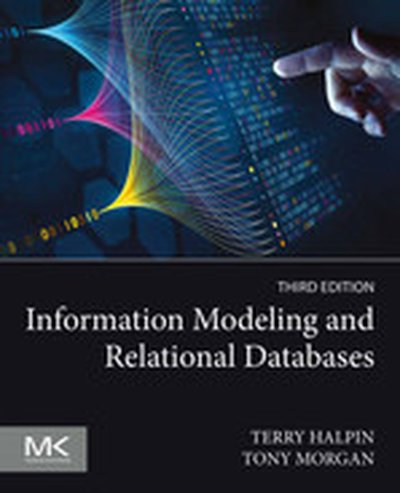
Information Modeling and Relational Databases, 3rd Edition

Information Modeling and Relational Databases, Third Edition, provides an introduction to ORM (Object-Role Modeling) and much more. In fact, it is the only book to go beyond introductory coverage and provide all of the in-depth instruction you need to transform knowledge from domain experts into a sound database design. This book is intended for anyone with a stake in the accuracy and efficacy of databases: systems analysts, information modelers, database designers and administrators, and programmers. Dr. Terry Halpin and Dr. Tony Morgan, pioneers in the development of ORM, blend conceptual information with practical instruction that will let you begin using ORM effectively as soon as possible. The all-new Third Edition includes coverage of advances and improvements in ORM and UML, nominalization, relational mapping, SQL, XML, data interchange, NoSQL databases, ontological modeling, and post-relational databases. Supported by examples, exercises, and useful background information, the authors’ step-by-step approach teaches you to develop a natural-language-based ORM model, and then, where needed, abstract ER and UML models from it. This book will quickly make you proficient in the modeling technique that is proving vital to the development of accurate and efficient databases that best meet real business objectives. "This book is an excellent introduction to both information modeling in ORM and relational databases. The book is very clearly written in a step-by-step manner and contains an abundance of well-chosen examples illuminating practice and theory in information modeling. I strongly recommend this book to anyone interested in conceptual modeling and databases." — Dr. Herman Balsters, Director of the Faculty of Industrial Engineering, University of Groningen, The Netherlands Presents the most in-depth coverage of object-role modeling, including a thorough update of the book for the latest versions of ORM, ER, UML, OWL, and BPMN modeling. Includes clear coverage of relational database concepts as well as the latest developments in SQL, XML, information modeling, data exchange, and schema transformation. Case studies and a large number of class-tested exercises are provided for many topics. Includes all-new chapters on data file formats and NoSQL databases.

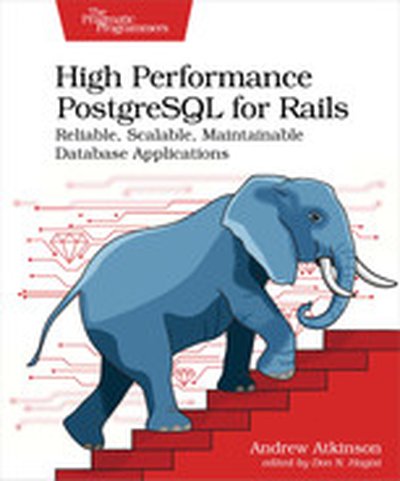
High Performance PostgreSQL for Rails

Build faster, more reliable Rails apps by taking the best advanced PostgreSQL and Active Record capabilities, and using them to solve your application scale and growth challenges. Gain the skills needed to comfortably work with multi-terabyte databases, and with complex Active Record, SQL, and specialized Indexes. Develop your skills with PostgreSQL on your laptop, then take them into production, while keeping everything in sync. Make slow queries fast, perform any schema or data migration without errors, use scaling techniques like read/write splitting, partitioning, and sharding, to meet demanding workload requirements from Internet scale consumer apps to enterprise SaaS. Deepen your firsthand knowledge of high-scale PostgreSQL databases and Ruby on Rails applications with dozens of practical and hands-on exercises. Unlock the mysteries surrounding complex Active Record. Make any schema or data migration change confidently, without downtime. Grow your experience with modern and exclusive PostgreSQL features like SQL Merge, Returning, and Exclusion constraints. Put advanced capabilities like Full Text Search and Publish Subscribe mechanisms built into PostgreSQL to work in your Rails apps. Improve the quality of the data in your database, using the advanced and extensible system of types and constraints to reduce and eliminate application bugs. Tackle complex topics like how to improve query performance using specialized indexes. Discover how to effectively use built-in database functions and write your own, administer replication, and make the most of partitioning and foreign data wrappers. Use more than 40 well-supported open source tools to extend and enhance PostgreSQL and Ruby on Rails. Gain invaluable insights into database administration by conducting advanced optimizations - including high-impact database maintenance - all while solving real-world operational challenges. Take your new skills into production today and then take your PostgreSQL and Rails applications to a whole new level of reliability and performance. What You Need: A computer running macOS, Linux, or Windows and WSL2 PostgreSQL version 16, installed by package manager, compiled, or running with Docker An Internet connection

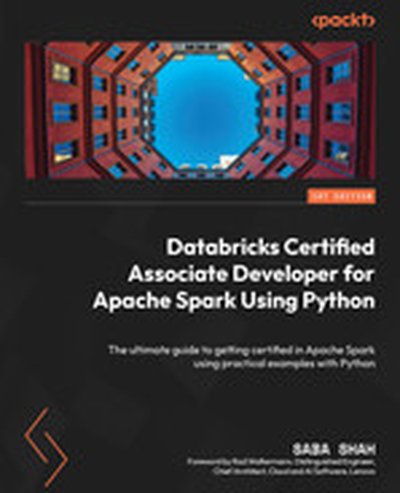
Databricks Certified Associate Developer for Apache Spark Using Python

This book serves as the ultimate preparation for aspiring Databricks Certified Associate Developers specializing in Apache Spark. Deep dive into Spark's components, its applications, and exam techniques to achieve certification and expand your practical skills in big data processing and real-time analytics using Python. What this Book will help me do Deeply understand Apache Spark's core architecture for building big data applications. Write optimized SQL queries and leverage Spark DataFrame API for efficient data manipulation. Apply advanced Spark functions, including UDFs, to solve complex data engineering tasks. Use Spark Streaming capabilities to implement real-time and near-real-time processing solutions. Get hands-on preparation for the certification exam with mock tests and practice questions. Author(s) Saba Shah is a seasoned data engineer with extensive experience working at Databricks and leading data science teams. With her in-depth knowledge of big data applications and Spark, she delivers clear, actionable insights in this book. Her approach emphasizes practical learning and real-world applications. Who is it for? This book is ideal for data professionals such as engineers and analysts aiming to achieve Databricks certification. It is particularly helpful for individuals with moderate Python proficiency who are keen to understand Spark from scratch. If you're transitioning into big data roles, this guide prepares you comprehensively.

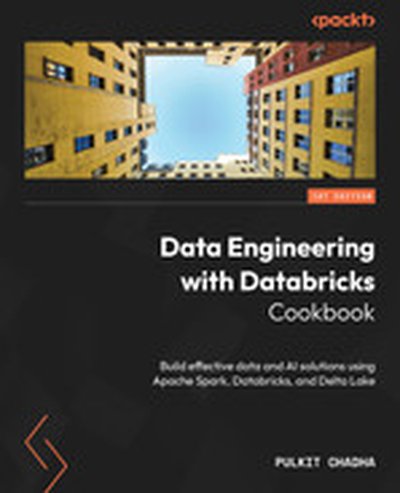
Data Engineering with Databricks Cookbook

In "Data Engineering with Databricks Cookbook," you'll learn how to efficiently build and manage data pipelines using Apache Spark, Delta Lake, and Databricks. This recipe-based guide offers techniques to transform, optimize, and orchestrate your data workflows. What this Book will help me do Master Apache Spark for data ingestion, transformation, and analysis. Learn to optimize data processing and improve query performance with Delta Lake. Manage streaming data processing with Spark Structured Streaming capabilities. Implement DataOps and DevOps workflows tailored for Databricks. Enforce data governance policies using Unity Catalog for scalable solutions. Author(s) Pulkit Chadha, the author of this book, is a Senior Solutions Architect at Databricks. With extensive experience in data engineering and big data applications, he brings practical insights into implementing modern data solutions. His educational writings focus on empowering data professionals with actionable knowledge. Who is it for? This book is ideal for data engineers, data scientists, and analysts who want to deepen their knowledge in managing and transforming large datasets. Readers should have an intermediate understanding of SQL, Python programming, and basic data architecture concepts. It is especially well-suited for professionals working with Databricks or similar cloud-based data platforms.

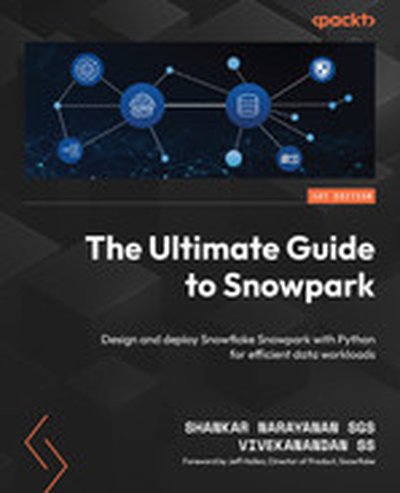
The Ultimate Guide to Snowpark

The Ultimate Guide to Snowpark serves as a comprehensive resource to help you master the Snowflake Snowpark framework using Python. You'll learn how to manage data engineering, data science, and data applications in Snowpark, coupled with practical implementations and examples. By following this guide, you'll gain the skills needed to efficiently process and analyze data in the Snowflake Data Cloud. What this Book will help me do Master Snowpark with Python for data engineering, data science, and data application workloads. Develop and deploy robust data pipelines using Snowpark in Python. Design, implement, and produce machine learning models using Snowpark. Learn to monetize and operationalize Snowflake-native applications. Effectively adopt Snowpark in production for scalable, efficient data solutions. Author(s) Shankar Narayanan SGS and Vivekanandan SS are experienced professionals in data engineering and Snowflake technologies. Shankar has extensive experience in utilizing Snowflake Snowpark to manage and enhance data solutions. Vivekanandan brings expertise in the intersection of Python programming and cloud-based data processing. Together, their combined knowledge and approachable writing style make this book an invaluable resource to readers. Who is it for? This book is designed for data engineers, data scientists, developers, and seasoned data practitioners. Ideal candidates are those looking to expand their skills in implementing Snowpark solutions using Python. A prior understanding of SQL, Python programming, and familiarity with Snowflake is beneficial for readers to fully leverage the techniques presented.

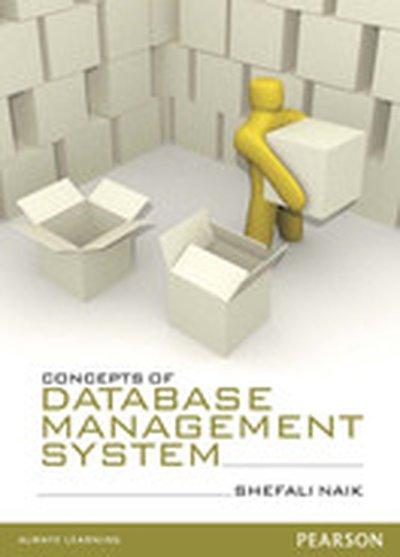
Concept Of Database Management System by Pearson

Concepts of Database Management System is designed to meet the syllabi requirements of undergraduate students of computer applications and computer science. It describes the concepts in an easy-to-understand language with sufficient number of examples. The overview of emerging trends in databases is thoroughly explained. A brief introduction to PL/SQL, MS-Access and Oracle is discussed to help students get a flavor of different types of database management systems.

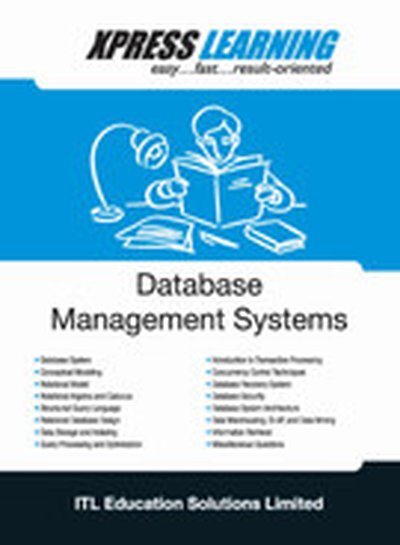
Database Management Systems by Pearson

Express Learning is a series of books designed as quick reference guides to important undergraduate computer courses. The organized and accessible format of these books allows students to learn important concepts in an easy-to-understand, question-and-answer format. These portable learning tools have been designed as one-stop references for students to understand and master the subjects by themselves.

Features –

• Designed as a student-friendly self-learning guide. The book is written in a clear, concise, and lucid manner. • Easy-to-understand question-and-answer format. • Includes previously asked as well as new questions organized in chapters. • All types of questions including MCQs, short and long questions are covered. • Solutions to numerical questions asked at examinations are provided. • All ideas and concepts are presented with clear examples. • Text is well structured and well supported with suitable diagrams. • Inter-chapter dependencies are kept to a minimum

Book Contents –

1: Database System 2: Conceptual Modelling 3: Relational Model 4: Relational Algebra and Calculus 5: Structured Query Language 6: Relational Database Design 7: Data Storage and Indexing 8: Query Processing and Optimization 9: Introduction to Transaction Processing 10: Concurrency Control Techniques 11: Database Recovery System 12: Database Security 13: Database System Architecture 14: Data Warehousing, OLAP, and Data Mining 15: Information Retrieval 16: Miscellaneous Questions

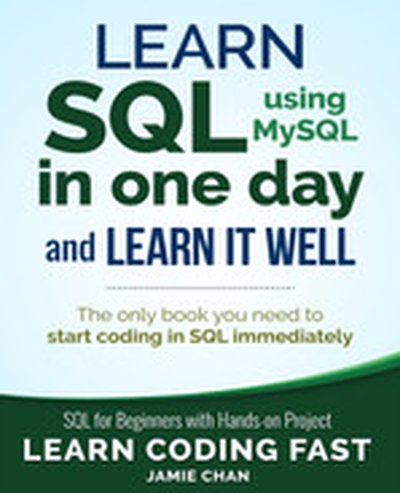
Learn SQL using MySQL in One Day and Learn It Well

"Learn SQL using MySQL in One Day and Learn It Well" is your hands-on guide to mastering SQL efficiently using MySQL. This book takes you from understanding basic database concepts to executing advanced queries and implementing essential features like triggers and routines. With a project-based approach, you will confidently manage databases and unlock the potential of data. What this Book will help me do Understand database concepts and relational data architecture. Design and define tables to organize and store data effectively. Perform advanced SQL queries to manipulate and analyze data efficiently. Implement database triggers, views, and routines for advanced management. Apply practical skills in SQL through a comprehensive hands-on project. Author(s) Jamie Chan is a professional instructor and technical writer with extensive experience in database management and software development. Known for a clear and engaging teaching style, Jamie has authored numerous books focusing on hands-on learning. Jamie approaches pedagogy with the goal of making technical subjects accessible and practical for all learners. Who is it for? This book is designed for beginners eager to learn SQL and MySQL from scratch. It is perfect for professionals or students who want relevant and actionable skills in database management. Whether you're looking to enhance career prospects or leverage database tools for personal projects, this book is your practical starting point. Basic computer literacy is all that's needed.

Azure Data Factory by Example: Practical Implementation for Data Engineers

Data engineers who need to hit the ground running will use this book to build skills in Azure Data Factory v2 (ADF). The tutorial-first approach to ADF taken in this book gets you working from the first chapter, explaining key ideas naturally as you encounter them. From creating your first data factory to building complex, metadata-driven nested pipelines, the book guides you through essential concepts in Microsoft’s cloud-based ETL/ELT platform. It introduces components indispensable for the movement and transformation of data in the cloud. Then it demonstrates the tools necessary to orchestrate, monitor, and manage those components. This edition, updated for 2024, includes the latest developments to the Azure Data Factory service: Enhancements to existing pipeline activities such as Execute Pipeline, along with the introduction of new activities such as Script, and activities designed specifically to interact with Azure Synapse Analytics. Improvements to flow control provided by activity deactivation and the Fail activity. The introduction of reusable data flow components such as user-defined functions and flowlets. Extensions to integration runtime capabilities including Managed VNet support. The ability to trigger pipelines in response to custom events. Tools for implementing boilerplate processes such as change data capture and metadata-driven data copying. What You Will Learn Create pipelines, activities, datasets, and linked services Build reusable components using variables, parameters, and expressions Move data into and around Azure services automatically Transform data natively using ADF data flows and Power Query data wrangling Master flow-of-control and triggers for tightly orchestrated pipeline execution Publish and monitor pipelines easily and with confidence Who This Book Is For Data engineers and ETL developers taking their first steps in Azure Data Factory, SQL Server Integration Services users making the transition toward doing ETL in Microsoft’s Azure cloud, and SQL Server database administrators involved in data warehousing and ETL operations

Learn T-SQL Querying - Second Edition

Troubleshoot query performance issues, identify anti-patterns in your code, and write efficient T-SQL queries with this guide for T-SQL developers Key Features A definitive guide to mastering the techniques of writing efficient T-SQL code Learn query optimization fundamentals, query analysis, and how query structure impacts performance Discover insightful solutions to detect, analyze, and tune query performance issues Purchase of the print or Kindle book includes a free PDF eBook Book Description Data professionals seeking to excel in Transact-SQL for Microsoft SQL Server and Azure SQL Database often lack comprehensive resources. Learn T-SQL Querying second edition focuses on indexing queries and crafting elegant T-SQL code enabling data professionals gain mastery in modern SQL Server versions (2022) and Azure SQL Database. The book covers new topics like logical statement processing flow, data access using indexes, and best practices for tuning T-SQL queries. Starting with query processing fundamentals, the book lays a foundation for writing performant T-SQL queries. You’ll explore the mechanics of the Query Optimizer and Query Execution Plans, learning to analyze execution plans for insights into current performance and scalability. Using dynamic management views (DMVs) and dynamic management functions (DMFs), you’ll build diagnostic queries. The book covers indexing and delves into SQL Server’s built-in tools to expedite resolution of T-SQL query performance and scalability issues. Hands-on examples will guide you to avoid UDF pitfalls and understand features like predicate SARGability, Query Store, and Query Tuning Assistant. By the end of this book, you‘ll have developed the ability to identify query performance bottlenecks, recognize anti-patterns, and avoid pitfalls What you will learn Identify opportunities to write well-formed T-SQL statements Familiarize yourself with the Cardinality Estimator for query optimization Create efficient indexes for your existing workloads Implement best practices for T-SQL querying Explore Query Execution Dynamic Management Views Utilize the latest performance optimization features in SQL Server 2017, 2019, and 2022 Safeguard query performance during upgrades to newer versions of SQL Server Who this book is for This book is for database administrators, database developers, data analysts, data scientists and T-SQL practitioners who want to master the art of writing efficient T-SQL code and troubleshooting query performance issues through practical examples. A basic understanding of T-SQL syntax, writing queries in SQL Server, and using the SQL Server Management Studio tool will be helpful to get started.

PostgreSQL Query Optimization: The Ultimate Guide to Building Efficient Queries

Write optimized queries. This book helps you write queries that perform fast and deliver results on time. You will learn that query optimization is not a dark art practiced by a small, secretive cabal of sorcerers. Any motivated professional can learn to write efficient queries from the get-go and capably optimize existing queries. You will learn to look at the process of writing a query from the database engine’s point of view, and know how to think like the database optimizer. The book begins with a discussion of what a performant system is and progresses to measuring performance and setting performance goals. It introduces different classes of queries and optimization techniques suitable to each, such as the use of indexes and specific join algorithms. You will learn to read and understand query execution plans along with techniques for influencing those plans for better performance. The book also covers advanced topics such as the use of functions and procedures, dynamic SQL, and generated queries. All of these techniques are then used together to produce performant applications, avoiding the pitfalls of object-relational mappers. This second edition includes new examples using Postgres 15 and the newest version of the PostgresAir database. It includes additional details and clarifications about advanced topics, and covers configuration parameters in greater depth. Finally, it makes use of advancements in NORM, using automatically generated functions. What You Will Learn Identify optimization goals in OLTP and OLAP systems Read and understand PostgreSQL execution plans Distinguish between short queries and long queries Choose the right optimization technique for each query type Identify indexes that will improve query performance Optimize full table scans Avoid the pitfalls of object-relational mapping systems Optimize the entire application rather than just database queries Who This Book Is For IT professionals working in PostgreSQL who want to develop performant and scalable applications, anyone whose job title contains the words “database developer” or “database administrator" or who is a backend developer charged with programming database calls, and system architects involved in the overall design of application systems running against a PostgreSQL database

PostgreSQL 16 Administration Cookbook

This cookbook is a comprehensive guide to mastering PostgreSQL 16 database administration. With over 180 practical recipes, this book covers everything from query performance and backup strategies to replication and high availability. You'll gain hands-on expertise in solving real-world challenges while leveraging the new and improved features of PostgreSQL 16. What this Book will help me do Perform efficient batch processing with Postgres' SQL MERGE statement. Implement parallel transaction processes using logical replication. Enhance database backups and recovery with advanced compression techniques. Monitor and fine-tune database performance for optimal operation. Apply new PostgreSQL 16 features for secure and reliable databases. Author(s) The team of authors, including Gianni Ciolli, Boriss Mejías, Jimmy Angelakos, Vibhor Kumar, and Simon Riggs, bring years of experience in PostgreSQL database management and development. Their expertise spans professional system administration, academic research, and contributions to PostgreSQL development. Their collaborative insights enrich this comprehensive guide. Who is it for? This book is ideal for PostgreSQL database administrators seeking advanced techniques, data architects managing PostgreSQL in production, and developers interested in mastering PostgreSQL 16. Whether you're an experienced DBA upgrading to PostgreSQL 16 or a newcomer looking for practical recipes, this book provides valuable strategies and solutions.

Data Exploration and Preparation with BigQuery

In "Data Exploration and Preparation with BigQuery," Michael Kahn provides a hands-on guide to understanding and utilizing Google's powerful data warehouse solution, BigQuery. This comprehensive book equips you with the skills needed to clean, transform, and analyze large datasets for actionable business insights. What this Book will help me do Master the process of exploring and assessing the quality of datasets. Learn SQL for performing efficient and advanced data transformations in BigQuery. Optimize the performance of BigQuery queries for speed and cost-effectiveness. Discover best practices for setting up and managing BigQuery resources. Apply real-world case studies to analyze data and derive meaningful insights. Author(s) Michael Kahn is an experienced data engineer and author specializing in big data solutions and technologies. With years of hands-on experience working with Google Cloud Platform and BigQuery, he has assisted organizations in optimizing their data pipelines for effective decision-making. His accessible writing style ensures complex topics become approachable, enabling readers of various skill levels to succeed. Who is it for? This book is tailored for data analysts, data engineers, and data scientists who want to learn how to effectively use BigQuery for data exploration and preparation. Whether you're new to BigQuery or looking to deepen your expertise in working with large datasets, this book provides clear guidance and practical examples to achieve your goals.