talk-data.com talk-data.com

Topic

Spark

Apache Spark

big_data distributed_computing analytics

581

tagged

Activity Trend

71 peak/qtr
2020-Q1 2026-Q1

Activities

581 activities · Newest first

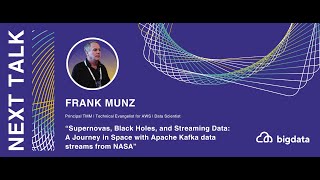
Frank Munz: A Journey in Space with Apache Kafka data streams from NASA

🌟 Session Overview 🌟

Session Name: Supernovas, Black Holes, and Streaming Data: A Journey in Space with Apache Kafka data streams from NASA Speaker: Frank Munz Session Description: In this fun, hands-on, and in-depth How-To, we explore NASA's GCN project, which publishes various events in space as Kafka topics.

The focus of my talk is on end-to-end data engineering, from consuming the data and ELT-ing the stream, to using generative AI tools for analytics.

We will analyze GCN data in real time, specifically targeting the data stream from exploding supernovas. This data triggers dozens of terrestrial telescopes to potentially reposition and point toward the event.

The speaker will kick off the session by contrasting various ways of ingesting and transforming the data, discussing their trade-offs: Should you use a declarative data pipeline, or can a data analyst manage with SQL only? Alternatively, when would it be better to follow the classic approach of orchestrating Spark notebooks to get the data ingested?

He will answer the question: Does a data engineer working with streaming data benefit from generative AI-based tools and assistants today? Is it worth it, or is it just hype?

The demo is easy to replicate at home, and Frank will share the notebooks in a GitHub repository so you can analyze real NASA data yourself!

This session is ideal for data engineers, data architects who enjoy some coding, generative AI enthusiasts, or anyone fascinated by technology and the sparkling stars in the night sky.

While the focus is clearly on tech, the demo will run on the open-source and open-standards-based Databricks Intelligence Platform (so inevitably, you'll get a high-level overview here too).

🚀 About Big Data and RPA 2024 🚀

Unlock the future of innovation and automation at Big Data & RPA Conference Europe 2024! 🌟 This unique event brings together the brightest minds in big data, machine learning, AI, and robotic process automation to explore cutting-edge solutions and trends shaping the tech landscape. Perfect for data engineers, analysts, RPA developers, and business leaders, the conference offers dual insights into the power of data-driven strategies and intelligent automation. 🚀 Gain practical knowledge on topics like hyperautomation, AI integration, advanced analytics, and workflow optimization while networking with global experts. Don’t miss this exclusive opportunity to expand your expertise and revolutionize your processes—all from the comfort of your home! 📊🤖✨

📅 Yearly Conferences: Curious about the evolution of QA? Check out our archive of past Big Data & RPA sessions. Watch the strategies and technologies evolve in our videos! 🚀 🔗 Find Other Years' Videos: 2023 Big Data Conference Europe https://www.youtube.com/playlist?list=PLqYhGsQ9iSEpb_oyAsg67PhpbrkCC59_g 2022 Big Data Conference Europe Online https://www.youtube.com/playlist?list=PLqYhGsQ9iSEryAOjmvdiaXTfjCg5j3HhT 2021 Big Data Conference Europe Online https://www.youtube.com/playlist?list=PLqYhGsQ9iSEqHwbQoWEXEJALFLKVDRXiP

💡 Stay Connected & Updated 💡

Don’t miss out on any updates or upcoming event information from Big Data & RPA Conference Europe. Follow us on our social media channels and visit our website to stay in the loop!

🌐 Website: https://bigdataconference.eu/, https://rpaconference.eu/ 👤 Facebook: https://www.facebook.com/bigdataconf, https://www.facebook.com/rpaeurope/ 🐦 Twitter: @BigDataConfEU, @europe_rpa 🔗 LinkedIn: https://www.linkedin.com/company/73234449/admin/dashboard/, https://www.linkedin.com/company/75464753/admin/dashboard/ 🎥 YouTube: http://www.youtube.com/@DATAMINERLT
Marcin Szymaniuk: Optimising Apache Spark and SQL for Improved Performance

🌟 Session Overview 🌟

Session Name: Optimising Apache Spark and SQL for Improved Performance Speaker: Marcin Szymaniuk Session Description: Discover the diverse world of big data scenarios where Apache Spark shines. In 2023, while Spark has optimized its delivery, some elements still need a keen understanding and manual oversight. This is where Marcin comes in. After extensive testing and experimenting, he's pinpointed vital areas where your insight matters most, and he'll guide you through them all, case by case. Navigating the technical complexities of Apache Spark? No problem! Marcin will wrap up by delving into the finer details beyond SQL, presenting them in an easily digestible manner. Learn how to tackle your most pressing Apache Spark issues and optimize it for maximum business value.

Marcin is bringing you comprehensive solutions, demystifying the backend, and enabling you to harness the power of Spark without being an AI master. In a nutshell, he'll share top insights from TantusData's extensive experience with Apache Spark to help you steer clear of pitfalls—all in a single, engaging presentation. 🚀 About Big Data and RPA 2024 🚀

Unlock the future of innovation and automation at Big Data & RPA Conference Europe 2024! 🌟 This unique event brings together the brightest minds in big data, machine learning, AI, and robotic process automation to explore cutting-edge solutions and trends shaping the tech landscape. Perfect for data engineers, analysts, RPA developers, and business leaders, the conference offers dual insights into the power of data-driven strategies and intelligent automation. 🚀 Gain practical knowledge on topics like hyperautomation, AI integration, advanced analytics, and workflow optimization while networking with global experts. Don’t miss this exclusive opportunity to expand your expertise and revolutionize your processes—all from the comfort of your home! 📊🤖✨

📅 Yearly Conferences: Curious about the evolution of QA? Check out our archive of past Big Data & RPA sessions. Watch the strategies and technologies evolve in our videos! 🚀 🔗 Find Other Years' Videos: 2023 Big Data Conference Europe https://www.youtube.com/playlist?list=PLqYhGsQ9iSEpb_oyAsg67PhpbrkCC59_g 2022 Big Data Conference Europe Online https://www.youtube.com/playlist?list=PLqYhGsQ9iSEryAOjmvdiaXTfjCg5j3HhT 2021 Big Data Conference Europe Online https://www.youtube.com/playlist?list=PLqYhGsQ9iSEqHwbQoWEXEJALFLKVDRXiP

💡 Stay Connected & Updated 💡

Don’t miss out on any updates or upcoming event information from Big Data & RPA Conference Europe. Follow us on our social media channels and visit our website to stay in the loop!

🌐 Website: https://bigdataconference.eu/, https://rpaconference.eu/ 👤 Facebook: https://www.facebook.com/bigdataconf, https://www.facebook.com/rpaeurope/ 🐦 Twitter: @BigDataConfEU, @europe_rpa 🔗 LinkedIn: https://www.linkedin.com/company/73234449/admin/dashboard/, https://www.linkedin.com/company/75464753/admin/dashboard/ 🎥 YouTube: http://www.youtube.com/@DATAMINERLT
Stephen Batifol: Supercharge Spark: Unleashing Big Data Potential with Milvus for RAG systems

🌟 Session Overview 🌟

Session Name: Supercharge Spark: Unleashing Big Data Potential with Milvus for RAG systems Speaker: Stephen Batifol Session Description: Apache Spark dominates the big data processing world, but efficient vector similarity search on massive datasets remains a bottleneck. This talk will show how you can seamlessly integrate Milvus with Spark to unlock the true power of vector similarity search.

We'll explore how Milvus integrates with Spark, enabling efficient vector search within Spark workflows. Real-world applications showcasing the combined power of Spark and Milvus in tackling complex similarity search challenges will be presented. Finally, we'll shed light on the significant performance gains achieved through this integration.

Whether you're dealing with recommendation systems, image retrieval, or any other application requiring vector similarity search, this talk will equip you with the knowledge to leverage Spark and Milvus to their maximum potential.

Join us on this exploration of how Spark and Milvus can enhance your big data processing capabilities with fast similarity search even at scale!

🚀 About Big Data and RPA 2024 🚀

Unlock the future of innovation and automation at Big Data & RPA Conference Europe 2024! 🌟 This unique event brings together the brightest minds in big data, machine learning, AI, and robotic process automation to explore cutting-edge solutions and trends shaping the tech landscape. Perfect for data engineers, analysts, RPA developers, and business leaders, the conference offers dual insights into the power of data-driven strategies and intelligent automation. 🚀 Gain practical knowledge on topics like hyperautomation, AI integration, advanced analytics, and workflow optimization while networking with global experts. Don’t miss this exclusive opportunity to expand your expertise and revolutionize your processes—all from the comfort of your home! 📊🤖✨

📅 Yearly Conferences: Curious about the evolution of QA? Check out our archive of past Big Data & RPA sessions. Watch the strategies and technologies evolve in our videos! 🚀 🔗 Find Other Years' Videos: 2023 Big Data Conference Europe https://www.youtube.com/playlist?list=PLqYhGsQ9iSEpb_oyAsg67PhpbrkCC59_g 2022 Big Data Conference Europe Online https://www.youtube.com/playlist?list=PLqYhGsQ9iSEryAOjmvdiaXTfjCg5j3HhT 2021 Big Data Conference Europe Online https://www.youtube.com/playlist?list=PLqYhGsQ9iSEqHwbQoWEXEJALFLKVDRXiP

💡 Stay Connected & Updated 💡

Don’t miss out on any updates or upcoming event information from Big Data & RPA Conference Europe. Follow us on our social media channels and visit our website to stay in the loop!

🌐 Website: https://bigdataconference.eu/, https://rpaconference.eu/ 👤 Facebook: https://www.facebook.com/bigdataconf, https://www.facebook.com/rpaeurope/ 🐦 Twitter: @BigDataConfEU, @europe_rpa 🔗 LinkedIn: https://www.linkedin.com/company/73234449/admin/dashboard/, https://www.linkedin.com/company/75464753/admin/dashboard/ 🎥 YouTube: http://www.youtube.com/@DATAMINERLT
We’re improving DataFramed, and we need your help! We want to hear what you have to say about the show, and how we can make it more enjoyable for you—find out more here. Edge computing is poised to transform industries by bringing computation and data storage closer to the source of data generation. This shift unlocks new types of value creation with data & AI and allows for a privacy-first and deeply personalized use of AI on our devices. What will the edge computing transition look like? How do you ensure applications are edge-ready, and what is the role of AI in the transition?  Derek Collison is the founder and CEO at Synadia. He is an industry veteran, entrepreneur and pioneer in large-scale distributed systems and cloud computing. Derek founded Synadia Communications and Apcera, and has held executive positions at Google, VMware, and TIBCO Software. He is also an active angel investor and a technology futurist around Artificial Intelligence, Machine Learning, IOT and Cloud Computing. Justyna Bak is VP of Marketing at Synadia. Justyna is a versatile executive bridging Marketing, Sales and Product, a spark-plug for innovation at startups and Fortune 100 and a tech expert in Data Analytics and AI, AppDev and Networking. She is an astute influencer, panelist and presenter (Google, HBR) and a respected leader in Silicon Valley and Europe. In the episode, Richie, Derek, and Justyna explore the transition from cloud to edge computing, the benefits of reduced latency, real-time decision-making in industries like manufacturing and retail, the role of AI at the edge, and the future of edge-native applications, and much more. Links Mentioned in the Show: SynadiaConnect with Derek and JustynaCourse: Understanding Cloud ComputingRelated Episode: The Database is the Operating System with Mike Stonebraker, CTO & Co-Founder At DBOSRewatch sessions from RADAR: Forward Edition New to DataCamp? Learn on the go using the DataCamp mobile appEmpower your business with world-class data and AI skills with DataCamp for business

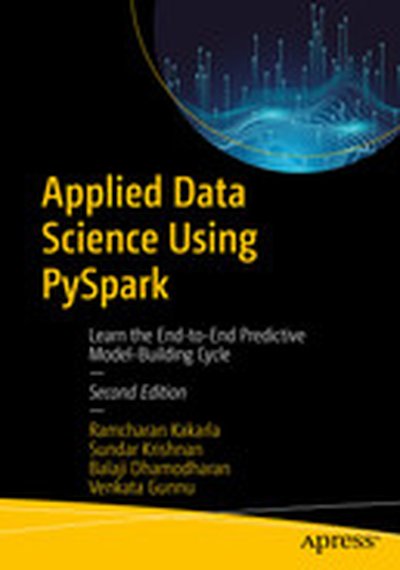
Applied Data Science Using PySpark: Learn the End-to-End Predictive Model-Building Cycle

This comprehensive guide, featuring hand-picked examples of daily use cases, will walk you through the end-to-end predictive model-building cycle using the latest techniques and industry tricks. In Chapters 1, 2, and 3, we will begin by setting up the environment and covering the basics of PySpark, focusing on data manipulation. Chapter 4 delves into the art of variable selection, demonstrating various techniques available in PySpark. In Chapters 5, 6, and 7, we explore machine learning algorithms, their implementations, and fine-tuning techniques. Chapters 8 and 9 will guide you through machine learning pipelines and various methods to operationalize and serve models using Docker/API. Chapter 10 will demonstrate how to unlock the power of predictive models to create a meaningful impact on your business. Chapter 11 introduces some of the most widely used and powerful modeling frameworks to unlock real value from data. In this new edition, you will learn predictive modeling frameworks that can quantify customer lifetime values and estimate the return on your predictive modeling investments. This edition also includes methods to measure engagement and identify actionable populations for effective churn treatments. Additionally, a dedicated chapter on experimentation design has been added, covering steps to efficiently design, conduct, test, and measure the results of your models. All code examples have been updated to reflect the latest stable version of Spark. You will: Gain an overview of end-to-end predictive model building Understand multiple variable selection techniques and their implementations Learn how to operationalize models Perform data science experiments and learn useful tips

We’re improving DataFramed, and we need your help! We want to hear what you have to say about the show, and how we can make it more enjoyable for you—find out more here. Staying ahead means knowing what’s happening right now—not minutes or hours later. Real-time analytics promises to help teams react faster, make informed choices, and even predict issues before they arise. But implementing these systems is no small feat, and it requires careful alignment between technical capabilities and business needs. How do you ensure that real-time data actually drives impact? And what should organizations consider to make sure their real-time analytics investments lead to tangible benefits? Zuzanna Stamirowska is the CEO of Pathway.com - the fastest data processing engine on the market which makes real-time intelligence possible. Zuzanna is also the author of the state-of-the-art forecasting model for maritime trade published by the National Academy of Sciences of the USA. While working on this project she saw that the digitization of traditional industries was slowed down by the lack of a software infrastructure capable of doing automated reasoning on top of data streams, in real time. This was the spark to launch Pathway. She holds a Master’s degree in Economics and Public Policy from Sciences Po, Ecole Polytechnique, and ENSAE, as well as a PhD in Complexity Science.. Hélène Stanway is Independent Advisor & Consultant at HMLS Consulting Ltd. Hélène is an award-winning and highly effective insurance leader with a proven track record in emerging technologies, innovation, operations, data, change, and digital transformation. Her passion for actively combining the human element, design, and innovation alongside technology has enabled companies in the global insurance market to embrace change by achieving their desired strategic goals, improving processes, increasing efficiency, and deploying relevant tools. With a special passion for IoT and Sensor Technology, Hélène is a perpetual learner, driven to help delegates succeed.  In the episode, Richie, Zuzanna and Hélène explore real-time analytics, their operational impact, use-cases of real-time analytics across industries, the benefits of adopting real-time analytics, the key roles and stakeholders you need to make that happen, operational challenges, strategies for effective adoption, the real-time of the future, common pitfalls, and much more.  Links Mentioned in the Show:

Pathway

Connect with Zuzanna and HélèneLiArticle: What are digital twins and why do we need them?Course: Time Series Analysis in Power BIRelated Episode: How Real Time Data Accelerates Business Outcomes with George TrujilloSign up to RADAR: Forward Edition New to DataCamp? Learn on the go using the DataCamp mobile appEmpower your business with world-class data

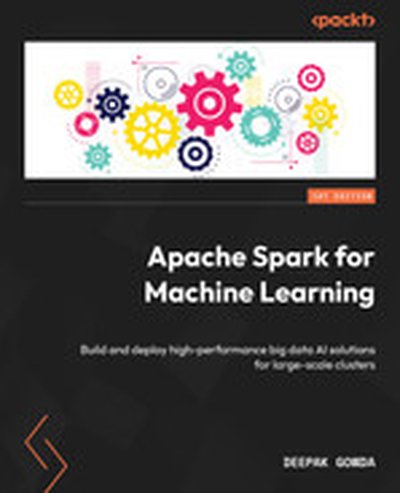
Apache Spark for Machine Learning

Dive into the power of Apache Spark as a tool for handling and processing big data required for machine learning. With this book, you will explore how to configure, execute, and deploy machine learning algorithms using Spark's scalable architecture and learn best practices for implementing real-world big data solutions. What this Book will help me do Understand the integration of Apache Spark with large-scale infrastructures for machine learning applications. Employ data processing techniques for preprocessing and feature engineering efficiently with Spark. Master the implementation of advanced supervised and unsupervised learning algorithms using Spark. Learn to deploy machine learning models within Spark ecosystems for optimized performance. Discover methods for analyzing big data trends and machine learning model tuning for improved accuracy. Author(s) The author, Deepak Gowda, is an experienced data scientist with over ten years of expertise in machine learning and big data. His career spans industries such as supply chain, cybersecurity, and more where he has utilized Apache Spark extensively. Deepak's teaching style is marked by clarity and practicality, making complex concepts approachable. Who is it for? Apache Spark for Machine Learning is tailored for data engineers, machine learning practitioners, and computer science students looking to advance their ability to process, analyze, and model using large datasets. If you're already familiar with basic machine learning and want to scale your solutions using Spark, this book is ideal for your studies and professional growth.

Building Modern Data Applications Using Databricks Lakehouse

This book, "Building Modern Data Applications Using Databricks Lakehouse," provides a comprehensive guide for data professionals to master the Databricks platform. You'll learn to effectively build, deploy, and monitor robust data pipelines with Databricks' Delta Live Tables, empowering you to manage and optimize cloud-based data operations effortlessly. What this Book will help me do Understand the foundations and concepts of Delta Live Tables and its role in data pipeline development. Learn workflows to process and transform real-time and batch data efficiently using the Databricks lakehouse architecture. Master the implementation of Unity Catalog for governance and secure data access in modern data applications. Deploy and automate data pipeline changes using CI/CD, leveraging tools like Terraform and Databricks Asset Bundles. Gain advanced insights in monitoring data quality and performance, optimizing cloud costs, and managing DataOps tasks effectively. Author(s) Will Girten, the author, is a seasoned Solutions Architect at Databricks with over a decade of experience in data and AI systems. With a deep expertise in modern data architectures, Will is adept at simplifying complex topics and translating them into actionable knowledge. His books emphasize real-time application and offer clear, hands-on examples, making learning engaging and impactful. Who is it for? This book is geared towards data engineers, analysts, and DataOps professionals seeking efficient strategies to implement and maintain robust data pipelines. If you have a basic understanding of Python and Apache Spark and wish to delve deeper into the Databricks platform for streamlining workflows, this book is tailored for you.

It’s time for another episode of Data Engineering Central Podcast, our third one! Topics in this episode … * Should you use DuckDB or Polars? * Small Engineering Changes (PR Reviews) * Daft vs Spark on Databricks with Unity Catalog (Delta Lake) * Primary and Foreign keys in the Lake House Enjoy!

This is a public episode. If you'd like to discuss this with other subscribers or get access to bonus episodes, visit dataengineeringcentral.substack.com/subscribe

Face To Face
by Antony Marlow (Cynozure Group) , Helen Mannion (Prospore Leadership and Data AI Strategies) , Paula Rudkin

Struggle to get the investment you need for business-critical data management projects? It can feel like you’re banging your head against a wall to get the business to appreciate its importance. But, as a profession, we need to better explain the foundational role it plays in delivering business outcomes. 

Join Helen Mannion, Chief Data Officer at Specsavers, Paula Rudkin, Partner & Head of Data Management at Knight Frank and Antony Marlow, Director of Data Management at Cynozure as together they aim to create the spark that ignites the fire for how we better engage, communicate and relate to our business colleagues on this topic. 

Expect to take away ideas, different approaches and be inspired to embrace a new way of getting data management the look-in your business needs to enable its success.

Join us as we dive deep into the world of spatial analytics and discover how to leverage location data to its fullest potential. Whether you're working with massive datasets in a Spark environment, harnessing the power of cloud data warehouses like Snowflake, Redshift, or BigQuery, or analysing live data feeds in real time, this session will equip you with the tools and knowledge to:

• Uncover hidden patterns and trends in your data that traditional analytics might miss.

• Gain a deeper understanding of your customers and their behaviours.

• Optimise operations and improve efficiency.

• Make data-driven decisions with confidence.

Don't miss this opportunity to learn how spatial analytics can revolutionise your data platform and drive your business forward.

Welcome to the Data Engineering Central Podcast —— a no-holds-barred discussion on the Data Landscape. Welcome to Episode 01 In today’s episode we will talk about the following topics from the Data Engineering perspective … * Snowflake vs Databricks. * Is Apache Spark being replaced?? * Notebooks in Production. Bad.

This is a public episode. If you'd like to discuss this with other subscribers or get access to bonus episodes, visit dataengineeringcentral.substack.com/subscribe

DuckDB in Action

Dive into DuckDB and start processing gigabytes of data with ease—all with no data warehouse. DuckDB is a cutting-edge SQL database that makes it incredibly easy to analyze big data sets right from your laptop. In DuckDB in Action you’ll learn everything you need to know to get the most out of this awesome tool, keep your data secure on prem, and save you hundreds on your cloud bill. From data ingestion to advanced data pipelines, you’ll learn everything you need to get the most out of DuckDB—all through hands-on examples. Open up DuckDB in Action and learn how to: Read and process data from CSV, JSON and Parquet sources both locally and remote Write analytical SQL queries, including aggregations, common table expressions, window functions, special types of joins, and pivot tables Use DuckDB from Python, both with SQL and its "Relational"-API, interacting with databases but also data frames Prepare, ingest and query large datasets Build cloud data pipelines Extend DuckDB with custom functionality Pragmatic and comprehensive, DuckDB in Action introduces the DuckDB database and shows you how to use it to solve common data workflow problems. You won’t need to read through pages of documentation—you’ll learn as you work. Get to grips with DuckDB's unique SQL dialect, learning to seamlessly load, prepare, and analyze data using SQL queries. Extend DuckDB with both Python and built-in tools such as MotherDuck, and gain practical insights into building robust and automated data pipelines. About the Technology DuckDB makes data analytics fast and fun! You don’t need to set up a Spark or run a cloud data warehouse just to process a few hundred gigabytes of data. DuckDB is easily embeddable in any data analytics application, runs on a laptop, and processes data from almost any source, including JSON, CSV, Parquet, SQLite and Postgres. About the Book DuckDB in Action guides you example-by-example from setup, through your first SQL query, to advanced topics like building data pipelines and embedding DuckDB as a local data store for a Streamlit web app. You’ll explore DuckDB’s handy SQL extensions, get to grips with aggregation, analysis, and data without persistence, and use Python to customize DuckDB. A hands-on project accompanies each new topic, so you can see DuckDB in action. What's Inside Prepare, ingest and query large datasets Build cloud data pipelines Extend DuckDB with custom functionality Fast-paced SQL recap: From simple queries to advanced analytics About the Reader For data pros comfortable with Python and CLI tools. About the Authors Mark Needham is a blogger and video creator at @‌LearnDataWithMark. Michael Hunger leads product innovation for the Neo4j graph database. Michael Simons is a Java Champion, author, and Engineer at Neo4j. Quotes I use DuckDB every day, and I still learned a lot about how DuckDB makes things that are hard in most databases easy! - Jordan Tigani, Founder, MotherDuck An excellent resource! Unlocks possibilities for storing, processing, analyzing, and summarizing data at the edge using DuckDB. - Pramod Sadalage, Director, Thoughtworks Clear and accessible. A comprehensive resource for harnessing the power of DuckDB for both novices and experienced professionals. - Qiusheng Wu, Associate Professor, University of Tennessee Excellent! The book all we ducklings have been waiting for! - Gunnar Morling, Decodable

Perhaps the biggest complaint about generative AI is hallucination. If the text you want to generate involves facts, for example, a chatbot that answers questions, then hallucination is a problem. The solution to this is to make use of a technique called retrieval augmented generation, where you store facts in a vector database and retrieve the most appropriate ones to send to the large language model to help it give accurate responses. So, what goes into building vector databases and how do they improve LLM performance so much? Ram Sriharsha is currently the CTO at Pinecone. Before this role, he was the Director of Engineering at Pinecone and previously served as Vice President of Engineering at Splunk. He also worked as a Product Manager at Databricks. With a long history in the software development industry, Ram has held positions as an architect, lead product developer, and senior software engineer at various companies. Ram is also a long time contributor to Apache Spark.  In the episode, Richie and Ram explore common use-cases for vector databases, RAG in chatbots, steps to create a chatbot, static vs dynamic data, testing chatbot success, handling dynamic data, choosing language models, knowledge graphs, implementing vector databases, innovations in vector data bases, the future of LLMs and much more.  Links Mentioned in the Show: PineconeWebinar - Charting the Path: What the Future Holds for Generative AICourse - Vector Databases for Embeddings with PineconeRelated Episode: The Power of Vector Databases and Semantic Search with Elan Dekel, VP of Product at PineconeRewatch sessions from RADAR: AI Edition New to DataCamp? Learn on the go using the DataCamp mobile app Empower your business with world-class data and AI skills with DataCamp for business

The Data Product Management In Action podcast, brought to you by Soda and executive producer Scott Hirleman, is a platform for data product management practitioners to share insights and experiences. We've released a special edition series of minisodes of our podcast. Recorded live at Data Connect 2024, our host Michael Toland engages in short, sweet, informative, and delightful conversations with five prevelant practitioners who are forging their way forward in data and technology.

About our host Michael Toland: Michael is a Product Management Coach and Consultant with Pathfinder Product, a Test Double Operation. Since 2016, Michael has worked on large-scale system modernizations and migration initiatives at Verizon. Outside his professional career, Michael serves as the Treasurer for the New Leaders Council, mentors with Venture for America, sings with the Columbus Symphony, and writes satire for his blog Dignified Product. He is excited to discuss data product management with the podcast audience. Connect with Michael on LinkedIn About our guest Jean-Georges Perrin: Jean-Georges “jgp” Perrin is the Chief Innovation Officer at AbeaData, where he focuses on developing cutting-edge data tooling. He chairs the Open Data Contract Standard (ODCS) at the Linux Foundation's Bitol project, co-founded the AIDA User Group, and has authored several influential books, including Implementing Data Mesh (O'Reilly) and Spark in Action, 2nd Edition (Manning). With over 25 years in IT, Jean-Georges is recognized as a Lifetime IBM Champion, a PayPal Champion, and a Data Mesh MVP. His expertise spans data engineering, governance, and the industrialization of data science. Outside of tech, he enjoys exploring Upstate New York and New England with his family. Connect with J-GP on LinkedIn.  All views and opinions expressed are those of the individuals and do not necessarily reflect their employers or anyone else. Join the conversation on LinkedIn. Apply to be a guest or nominate a practitioner.  Do you love what you're listening to? Please rate and review the podcast, and share it with fellow practitioners you know. Your support helps us reach more listeners and continue providing valuable insights!

Big Data on Kubernetes

Big Data on Kubernetes is your comprehensive guide to leveraging Kubernetes for scalable and efficient big data solutions. You will learn key concepts of Kubernetes architecture and explore tools like Apache Spark, Airflow, and Kafka. Gain hands-on experience building complete data pipelines to tackle real-world data challenges. What this Book will help me do Understand Kubernetes architecture and learn to deploy and manage clusters. Build and orchestrate big data pipelines using Spark, Airflow, and Kafka. Develop scalable and resilient data solutions with Docker and Kubernetes. Integrate and optimize data tools for real-time ingestion and processing. Apply concepts to hands-on projects addressing actual big data scenarios. Author(s) Neylson Crepalde is an experienced data specialist with extensive knowledge of Kubernetes and big data solutions. With deep practical experience, Neylson brings real-world insights to his writing. His approach emphasizes actionable guidance and relatable problem-solving with a strong foundation in scalable architecture. Who is it for? This book is ideal for data engineers, BI analysts, data team leaders, and tech managers familiar with Python, SQL, and YAML. Targeted at professionals seeking to develop or expand their expertise in scalable big data solutions, it provides practical insights into Docker, Kubernetes, and prominent big data tools.

OpenLineage is an open standard for lineage data collection, integrated into the Airflow codebase, facilitating lineage collection across providers like Google, Amazon, and more. Atlan Data Catalog is a 3rd generation active metadata platform that is a single source of trust unifying cataloging, data discovery, lineage, and governance experience. We will demonstrate what OpenLineage is and how, with minimal and intuitive setup across Airlfow and Atlan, it presents unified workflows view, efficient cross-platform lineage collection, including column level, in various technologies (Python, Spark, dbt, SQL etc.) and clouds (AWS, Azure, GCP, etc.) - all orchestrated by Airflow. This integration enables further use case unlocks on automated metadata management by making the operational pipelines dataset-aware for self-service exploration. It also will demonstrate real world challenges and resolutions for lineage consumers in improving audit and compliance accuracy through column-level lineage traceability across the data estate. The talk will also briefly overview the most recent OpenLineage developments and planned future enhancements.

This talk will explore ASAPP’s use of Apache Airflow to streamline and optimize our machine learning operations (MLOps). Key highlights include: Integrating with our custom Spark solution for achieving speedup, efficiency, and cost gains for generative AI transcription, summarization and intent categorization pipelines Different design patterns of integrating with efficient LLM servers - like TGI/vllm/tensor-RT for Summarization pipelines with/without Spark. An overview of batched LLM inference using Airflow as opposed to real time inference outside of it [Tentative] Possible extension of this scaffolding to Reinforcement Learning from Human Feedback (RLHF) and Reinforcement Learning from AI Feedback (RLAIF) for fine-tuning LLMs, using Airflow as the orchestrator. Additionally, the talk will cover ASAPP’s MLOps journey with Airflow over the past few years, including an overview of our cloud infrastructure, various data backends, and sources. The primary focus will be on the machine learning workflows at ASAPP, rather than the data workflows, providing a detailed look at how Airflow enhances our MLOps processes.

Imagine a world where writing Airflow tasks in languages like Go, R, Julia, or maybe even Rust is not just a dream but a native capability. Say goodbye to BashOperators; welcome to the future of Airflow task execution. Here’s what you can expect to learn from this session: Multilingual Tasks: Explore how we empower DAG authors to write tasks in any language while retaining seamless access to Airflow Variables and Connections. Simplified Development and Testing: Discover how a standardized interface for task execution promises to streamline development efforts and elevate code maintainability. Enhanced Scalability and Remote Workers: Learn how enabling tasks to run on remote workers opens up possibilities for seamless deployment on diverse platforms, including Windows and remote Spark or Ray clusters. Experience the convenience of effortless deployments as we unlock new avenues for Airflow usage. Join us as we embark on an exploratory journey to shape the future of Airflow task execution. Your insights and contributions are invaluable as we refine this vision together. Let’s chart a course towards a more versatile, efficient, and accessible Airflow ecosystem.

This usecase shows how we deal with data of different varieties from different sources. Each source sends data in different layout, timings, structures, location patterns sizes. The goal is to process the files within SLA and send them out. This a complex multi step processing pipeline that involves multiple spark jobs, api based integrations with microservices, resolving unique ids, deduplication and filtering. Note that this is an event driven system, but not a streaming data system. The files are of gigabyte scale, and each day the data being processed is of terabyte scale. We will be talking about how to make DAG creation and business logic building a “low-code no-code process” so that non technical analysts can write business logic and light developers can deploy DAGs without much manual effort. Every aspect is either source specific or source-agnostic configuration driven. Airflow was chosen to enable easy DAG building, scaling, monitoring, troubleshooting and rerunning.