talk-data.com talk-data.com

Topic

SQL

Structured Query Language (SQL)

database_language data_manipulation data_definition programming_language

1751

tagged

Activity Trend

107 peak/qtr
2020-Q1 2026-Q1

Activities

1751 activities · Newest first

“Last week was a great year in GenAI,” jokes Mark Ramsey—and it’s a great philosophy to have as LLM tools especially continue to evolve at such a rapid rate. This week, you’ll get to hear my fun and insightful chat with Mark from Ramsey International about the world of large language models (LLMs) and how we make useful UXs out of them in the enterprise. 

Mark shared some fascinating insights about using a company’s website information (data) as a place to pilot a LLM project, avoiding privacy landmines, and how re-ranking of models leads to better LLM response accuracy. We also talked about the importance of real human testing to ensure LLM chatbots and AI tools truly delight users. From amusing anecdotes about the spinning beach ball on macOS to envisioning a future where AI-driven chat interfaces outshine traditional BI tools, this episode is packed with forward-looking ideas and a touch of humor.

Highlights/ Skip to:

(0:50) Why is the world of GenAI evolving so fast? (4:20) How Mark thinks about UX in an LLM application (8:11) How Mark defines “Specialized GenAI?” (12:42) Mark’s consulting work with GenAI / LLMs these days (17:29) How GenAI can help the healthcare industry (30:23) Uncovering users’ true feelings about LLM applications (35:02) Are UIs moving backwards as models progress forward? (40:53) How will GenAI impact data and analytics teams? (44:51) Will LLMs be able to consistently leverage RAG and produce proper SQL? (51:04) Where can find more from Mark and Ramsey International

Quotes from Today’s Episode “With [GenAI], we have a solution that we’ve built to try to help organizations, and build workflows. We have a workflow that we can run and ask the same question [to a variety of GenAI models] and see how similar the answers are. Depending on the complexity of the question, you can see a lot of variability between the models… [and] we can also run the same question against the different versions of the model and see how it’s improved. Folks want a human-like experience interacting with these models.. [and] if the model can start responding in just a few seconds, that gives you much more of a conversational type of experience.” - Mark Ramsey (2:38) “[People] don’t understand when you interact [with GenAI tools] and it brings tokens back in that streaming fashion, you’re actually seeing inside the brain of the model. Every token it produces is then displayed on the screen, and it gives you that typewriter experience back in the day. If someone has to wait, and all you’re seeing is a logo spinning, from a UX experience standpoint… people feel like the model is much faster if it just starts to produce those results in that streaming fashion. I think in a design, it’s extremely important to take advantage of that [...] as opposed to waiting to the end and delivering the results some models support that, and other models don’t.”- Mark Ramsey (4:35) "All of the data that’s on the website is public information. We’ve done work with several organizations on quickly taking the data that’s on their website, packaging it up into a vector database, and making that be the source for questions that their customers can ask. [Organizations] publish a lot of information on their websites, but people really struggle to get to it. We’ve seen a lot of interest in vectorizing website data, making it available, and having a chat interface for the customer. The customer can ask questions, and it will take them directly to the answer, and then they can use the website as the source information.” - Mark Ramsey (14:04) “I’m not skeptical at all. I’ve changed much of my [AI chatbot searches] to Perplexity, and I think it’s doing a pretty fantastic job overall in terms of quality. It’s returning an answer with citations, so you have a sense of where it’s sourcing the information from. I think it’s important from a user experience perspective. This is a replacement for broken search, as I really don’t want to read all the web pages and PDFs you have that might be about my chiropractic care query to answer my actual [healthcare] question.” - Brian O’Neill (19:22)

“We’ve all had great experience with customer service, and we’ve all had situations where the customer service was quite poor, and we’re going to have that same thing as we begin to [release more] chatbots. We need to make sure we try to alleviate having those bad experiences, and have an exit. If someone is running into a situation where they’d rather talk to a live person, have that ability to route them to someone else. That’s why the robustness of the model is extremely important in the implementation… and right now, organizations like OpenAI and Anthropic are significantly better at that [human-like] experience.” - Mark Ramsey (23:46) "There’s two aspects of these models: the training aspect and then using the model to answer questions. I recommend to organizations to always augment their content and don’t just use the training data. You’ll still get that human-like experience that’s built into the model, but you’ll eliminate the hallucinations. If you have a model that has been set up correctly, you shouldn’t have to ask questions in a funky way to get answers.” - Mark Ramsey (39:11) “People need to understand GenAI is not a predictive algorithm. It is not able to run predictions, it struggles with some math, so that is not the focus for these models. What’s interesting is that you can use the model as a step to get you [the answers]. A lot of the models now support functions… when you ask a question about something that is in a database, it actually uses its knowledge about the schema of the database. It can build the query, run the query to get the data back, and then once it has the data, it can reformat the data into something that is a good response back." - Mark Ramsey (42:02)

Links Mark on LinkedIn Ramsey International Email: mark [at] ramsey.international Ramsey International's YouTube Channel

DuckDB in Action

Dive into DuckDB and start processing gigabytes of data with ease—all with no data warehouse. DuckDB is a cutting-edge SQL database that makes it incredibly easy to analyze big data sets right from your laptop. In DuckDB in Action you’ll learn everything you need to know to get the most out of this awesome tool, keep your data secure on prem, and save you hundreds on your cloud bill. From data ingestion to advanced data pipelines, you’ll learn everything you need to get the most out of DuckDB—all through hands-on examples. Open up DuckDB in Action and learn how to: Read and process data from CSV, JSON and Parquet sources both locally and remote Write analytical SQL queries, including aggregations, common table expressions, window functions, special types of joins, and pivot tables Use DuckDB from Python, both with SQL and its "Relational"-API, interacting with databases but also data frames Prepare, ingest and query large datasets Build cloud data pipelines Extend DuckDB with custom functionality Pragmatic and comprehensive, DuckDB in Action introduces the DuckDB database and shows you how to use it to solve common data workflow problems. You won’t need to read through pages of documentation—you’ll learn as you work. Get to grips with DuckDB's unique SQL dialect, learning to seamlessly load, prepare, and analyze data using SQL queries. Extend DuckDB with both Python and built-in tools such as MotherDuck, and gain practical insights into building robust and automated data pipelines. About the Technology DuckDB makes data analytics fast and fun! You don’t need to set up a Spark or run a cloud data warehouse just to process a few hundred gigabytes of data. DuckDB is easily embeddable in any data analytics application, runs on a laptop, and processes data from almost any source, including JSON, CSV, Parquet, SQLite and Postgres. About the Book DuckDB in Action guides you example-by-example from setup, through your first SQL query, to advanced topics like building data pipelines and embedding DuckDB as a local data store for a Streamlit web app. You’ll explore DuckDB’s handy SQL extensions, get to grips with aggregation, analysis, and data without persistence, and use Python to customize DuckDB. A hands-on project accompanies each new topic, so you can see DuckDB in action. What's Inside Prepare, ingest and query large datasets Build cloud data pipelines Extend DuckDB with custom functionality Fast-paced SQL recap: From simple queries to advanced analytics About the Reader For data pros comfortable with Python and CLI tools. About the Authors Mark Needham is a blogger and video creator at @‌LearnDataWithMark. Michael Hunger leads product innovation for the Neo4j graph database. Michael Simons is a Java Champion, author, and Engineer at Neo4j. Quotes I use DuckDB every day, and I still learned a lot about how DuckDB makes things that are hard in most databases easy! - Jordan Tigani, Founder, MotherDuck An excellent resource! Unlocks possibilities for storing, processing, analyzing, and summarizing data at the edge using DuckDB. - Pramod Sadalage, Director, Thoughtworks Clear and accessible. A comprehensive resource for harnessing the power of DuckDB for both novices and experienced professionals. - Qiusheng Wu, Associate Professor, University of Tennessee Excellent! The book all we ducklings have been waiting for! - Gunnar Morling, Decodable

podcast_episode
by Val Kroll , Julie Hoyer , Tim Wilson (Analytics Power Hour - Columbus (OH) , Katie Bauer (GlossGenius) , Moe Kiss (Canva) , Michael Helbling (Search Discovery)

Broadly writ, we're all in the business of data work in some form, right? It's almost like we're all swimming around in a big data lake, and our peers are swimming around it, too, and so are our business partners. There might be some HiPPOs and some SLOTHs splashing around in the shallow end, and the contours of the lake keep changing. Is lifeguarding…or writing SQL…or prompt engineering to get AI to write SQL…or identifying business problems a job or a skill? Does it matter? Aren't we all just trying to get to the Insights Water Slide? Katie Bauer, Head of Data at Gloss Genius and thought-provoker at Wrong But Useful, joined Michael, Julie, and Val for a much less metaphorically tortured exploration of the ever-shifting landscape in which the modern data professional operates. Or swims. Or sinks? For complete show notes, including links to items mentioned in this episode and a transcript of the show, visit the show page.

0:00

hi everyone Welcome to our event this event is brought to you by data dos club which is a community of people who love

0:06

data and we have weekly events and today one is one of such events and I guess we

0:12

are also a community of people who like to wake up early if you're from the states right Christopher or maybe not so

0:19

much because this is the time we usually have uh uh our events uh for our guests

0:27

and presenters from the states we usually do it in the evening of Berlin time but yes unfortunately it kind of

0:34

slipped my mind but anyways we have a lot of events you can check them in the

0:41

description like there's a link um I don't think there are a lot of them right now on that link but we will be

0:48

adding more and more I think we have like five or six uh interviews scheduled so um keep an eye on that do not forget

0:56

to subscribe to our YouTube channel this way you will get notified about all our future streams that will be as awesome

1:02

as the one today and of course very important do not forget to join our community where you can hang out with

1:09

other data enthusiasts during today's interview you can ask any question there's a pin Link in live chat so click

1:18

on that link ask your question and we will be covering these questions during the interview now I will stop sharing my

1:27

screen and uh there is there's a a message in uh and Christopher is from

1:34

you so we actually have this on YouTube but so they have not seen what you wrote

1:39

but there is a message from to anyone who's watching this right now from Christopher saying hello everyone can I

1:46

call you Chris or you okay I should go I should uh I should look on YouTube then okay yeah but anyways I'll you don't

1:53

need like you we'll need to focus on answering questions and I'll keep an eye

1:58

I'll be keeping an eye on all the question questions so um

2:04

yeah if you're ready we can start I'm ready yeah and you prefer Christopher

2:10

not Chris right Chris is fine Chris is fine it's a bit shorter um

2:18

okay so this week we'll talk about data Ops again maybe it's a tradition that we talk about data Ops every like once per

2:25

year but we actually skipped one year so because we did not have we haven't had

2:31

Chris for some time so today we have a very special guest Christopher Christopher is the co-founder CEO and

2:37

head chef or hat cook at data kitchen with 25 years of experience maybe this

2:43

is outdated uh cuz probably now you have more and maybe you stopped counting I

2:48

don't know but like with tons of years of experience in analytics and software engineering Christopher is known as the

2:55

co-author of the data Ops cookbook and data Ops Manifesto and it's not the

3:00

first time we have Christopher here on the podcast we interviewed him two years ago also about data Ops and this one

3:07

will be about data hops so we'll catch up and see what actually changed in in

3:13

these two years and yeah so welcome to the interview well thank you for having

3:19

me I'm I'm happy to be here and talking all things related to data Ops and why

3:24

why why bother with data Ops and happy to talk about the company or or what's changed

3:30

excited yeah so let's dive in so the questions for today's interview are prepared by Johanna berer as always

3:37

thanks Johanna for your help so before we start with our main topic for today

3:42

data Ops uh let's start with your ground can you tell us about your career Journey so far and also for those who

3:50

have not heard have not listened to the previous podcast maybe you can um talk

3:55

about yourself and also for those who did listen to the previous you can also maybe give a summary of what has changed

4:03

in the last two years so we'll do yeah so um my name is Chris so I guess I'm

4:09

a sort of an engineer so I spent about the first 15 years of my career in

4:15

software sort of working and building some AI systems some non- AI systems uh

4:21

at uh Us's NASA and MIT linol lab and then some startups and then um

4:30

Microsoft and then about 2005 I got I got the data bug uh I think you know my

4:35

kids were small and I thought oh this data thing was easy and I'd be able to go home uh for dinner at 5 and life

4:41

would be fine um because I was a big you started your own company right and uh it didn't work out that way

4:50

and um and what was interesting is is for me it the problem wasn't doing the

4:57

data like I we had smart people who did data science and data engineering the act of creating things it was like the

5:04

systems around the data that were hard um things it was really hard to not have

5:11

errors in production and I would sort of driving to work and I had a Blackberry at the time and I would not look at my

5:18

Blackberry all all morning I had this long drive to work and I'd sit in the parking lot and take a deep breath and

5:24

look at my Blackberry and go uh oh is there going to be any problems today and I'd be and if there wasn't I'd walk and

5:30

very happy um and if there was I'd have to like rce myself um and you know and

5:36

then the second problem is the team I worked for we just couldn't go fast enough the customers were super

5:42

demanding they didn't care they all they always thought things should be faster and we are always behind and so um how

5:50

do you you know how do you live in that world where things are breaking left and right you're terrified of making errors

5:57

um and then second you just can't go fast enough um and it's preh Hadoop era

6:02

right it's like before all this big data Tech yeah before this was we were using

6:08

uh SQL Server um and we actually you know we had smart people so we we we

6:14

built an engine in SQL Server that made SQL Server a column or

6:20

database so we built a column or database inside of SQL Server um so uh

6:26

in order to make certain things fast and and uh yeah it was it was really uh it's not

6:33

bad I mean the principles are the same right before Hadoop it's it's still a database there's still indexes there's

6:38

still queries um things like that we we uh at the time uh you would use olap

6:43

engines we didn't use those but you those reports you know are for models it's it's not that different um you know

6:50

we had a rack of servers instead of the cloud um so yeah and I think so what what I

6:57

took from that was uh it's just hard to run a team of people to do do data and analytics and it's not

7:05

really I I took it from a manager perspective I started to read Deming and

7:11

think about the work that we do as a factory you know and in a factory that produces insight and not automobiles um

7:18

and so how do you run that factory so it produces things that are good of good

7:24

quality and then second since I had come from software I've been very influenced

7:29

by by the devops movement how you automate deployment how you run in an agile way how you

7:35

produce um how you how you change things quickly and how you innovate and so

7:41

those two things of like running you know running a really good solid production line that has very low errors

7:47

um and then second changing that production line at at very very often they're kind of opposite right um and so

7:55

how do you how do you as a manager how do you technically approach that and

8:00

then um 10 years ago when we started data kitchen um we've always been a profitable company and so we started off

8:07

uh with some customers we started building some software and realized that we couldn't work any other way and that

8:13

the way we work wasn't understood by a lot of people so we had to write a book and a Manifesto to kind of share our our

8:21

methods and then so yeah we've been in so we've been in business now about a little over 10

8:28

years oh that's cool and uh like what

8:33

uh so let's talk about dat offs and you mentioned devops and how you were inspired by that and by the way like do

8:41

you remember roughly when devops as I think started to appear like when did people start calling these principles

8:49

and like tools around them as de yeah so agile Manifesto well first of all the I

8:57

mean I had a boss in 1990 at Nasa who had this idea build a

9:03

little test a little learn a lot right that was his Mantra and then which made

9:09

made a lot of sense um and so and then the sort of agile software Manifesto

9:14

came out which is very similar in 2001 and then um the sort of first real

9:22

devops was a guy at Twitter started to do automat automated deployment you know

9:27

push a button and that was like 200 Nish and so the first I think devops

9:33

Meetup was around then so it's it's it's been 15 years I guess 6 like I was

9:39

trying to so I started my career in 2010 so I my first job was a Java

9:44

developer and like I remember for some things like we would just uh SFTP to the

9:52

machine and then put the jar archive there and then like keep our fingers crossed that it doesn't break uh uh like

10:00

it was not really the I wouldn't call it this way right you were deploying you

10:06

had a Dey process I put it yeah

10:11

right was that so that was documented too it was like put the jar on production cross your

10:17

fingers I think there was uh like a page on uh some internal Viki uh yeah that

10:25

describes like with passwords and don't like what you should do yeah that was and and I think what's interesting is

10:33

why that changed right and and we laugh at it now but that was why didn't you

10:38

invest in automating deployment or a whole bunch of automated regression

10:44

tests right that would run because I think in software now that would be rare

10:49

that people wouldn't use C CD they wouldn't have some automated tests you know functional

10:56

regression tests that would be the

podcast_episode
by Jordan Goldmeier (Booz Allen Hamilton; The Perduco Group; EY; Excel TV; Wake Forest University; Anarchy Data) , Adel (DataFramed)

Excel often gets unfair criticism from data practitioners, many of us will remember a time when Excel was looked down upon—why would anyone use Excel when we have powerful tools like Python, R, SQL, or BI tools? However,  like it or not, Excel is here to stay, and there’s a meme, bordering on reality, that Excel is carrying a large chunk of the world’s GDP. But when it really comes down to it, can you do data science in Excel? Jordan Goldmeier is an entrepreneur, a consultant, a best-selling author of four books on data, and a digital nomad. He started his career as a data scientist in the defense industry for Booz Allen Hamilton and The Perduco Group, before moving into consultancy with EY, and then teaching people how to use data at Excel TV, Wake Forest University, and now Anarchy Data. He also has a newsletter called The Money Making Machine, and he's on a mission to create 100 entrepreneurs.  In the episode, Adel and Jordan explore excel in data science, excel’s popularity, use cases for Excel in data science, the impact of GenAI on Excel, Power Query and data transformation, advanced Excel features, Excel for prototyping and generating buy-in, the limitations of Excel and what other tools might emerge in its place, and much more.  Links Mentioned in the Show: Data Smart: Using Data Science to Transform Information Into Insight by Jordan Goldmeier[Webinar] Developing a Data Mindset: How to Think, Speak, and Understand Data[Course] Data Analysis in ExcelRelated Episode: Do Spreadsheets Need a Rethink? With Hjalmar Gislason, CEO of GRIDRewatch sessions from RADAR: AI Edition New to DataCamp? Learn on the go using the DataCamp mobile appEmpower your business with world-class data and AI skills with DataCamp for business

Big Data on Kubernetes

Big Data on Kubernetes is your comprehensive guide to leveraging Kubernetes for scalable and efficient big data solutions. You will learn key concepts of Kubernetes architecture and explore tools like Apache Spark, Airflow, and Kafka. Gain hands-on experience building complete data pipelines to tackle real-world data challenges. What this Book will help me do Understand Kubernetes architecture and learn to deploy and manage clusters. Build and orchestrate big data pipelines using Spark, Airflow, and Kafka. Develop scalable and resilient data solutions with Docker and Kubernetes. Integrate and optimize data tools for real-time ingestion and processing. Apply concepts to hands-on projects addressing actual big data scenarios. Author(s) Neylson Crepalde is an experienced data specialist with extensive knowledge of Kubernetes and big data solutions. With deep practical experience, Neylson brings real-world insights to his writing. His approach emphasizes actionable guidance and relatable problem-solving with a strong foundation in scalable architecture. Who is it for? This book is ideal for data engineers, BI analysts, data team leaders, and tech managers familiar with Python, SQL, and YAML. Targeted at professionals seeking to develop or expand their expertise in scalable big data solutions, it provides practical insights into Docker, Kubernetes, and prominent big data tools.

Send us a text Welcome to the cozy corner of the tech world where ones and zeros mingle with casual chit-chat. Datatopics Unplugged is your go-to spot for relaxed discussions around tech, news, data, and society. Dive into conversations that should flow as smoothly as your morning coffee (but don't), where industry insights meet laid-back banter. Whether you're a data aficionado or just someone curious about the digital age, pull up a chair, relax, and let's get into the heart of data, unplugged style! Bookmarklet Maker: Discover how to automate tasks with the Bookmarklet Maker, a tool for turning scripts into handy browser bookmarks. RouteLLM Framework: Explore the RouteLLM framework by LMSys and Anyscale, designed to optimize the cost-performance ratio of LLM routers. Learn more about this collaboration at LMSys and Anyscale. Q for SQL on CSV/TSV: Meet Q, a command-line tool that lets you run SQL queries directly on CSV or TSV files, simplifying data exploration from your terminal. DuckDB Community Extensions: Check out the latest updates in DuckDB's community extensions and see how this database system is evolving. Apple Intelligence and AI Maximalism: Explore Apple's AI strategy, their avoidance of chat UIs, risk management with OpenAI, and the shift of compute costs to users. Being Glue: Delve into the challenges of being "Glue" at work. Explore why women are more likely to take on non-promotable work and how this affects career progression and workplace dynamics.

Information Modeling and Relational Databases, 3rd Edition

Information Modeling and Relational Databases, Third Edition, provides an introduction to ORM (Object-Role Modeling) and much more. In fact, it is the only book to go beyond introductory coverage and provide all of the in-depth instruction you need to transform knowledge from domain experts into a sound database design. This book is intended for anyone with a stake in the accuracy and efficacy of databases: systems analysts, information modelers, database designers and administrators, and programmers. Dr. Terry Halpin and Dr. Tony Morgan, pioneers in the development of ORM, blend conceptual information with practical instruction that will let you begin using ORM effectively as soon as possible. The all-new Third Edition includes coverage of advances and improvements in ORM and UML, nominalization, relational mapping, SQL, XML, data interchange, NoSQL databases, ontological modeling, and post-relational databases. Supported by examples, exercises, and useful background information, the authors’ step-by-step approach teaches you to develop a natural-language-based ORM model, and then, where needed, abstract ER and UML models from it. This book will quickly make you proficient in the modeling technique that is proving vital to the development of accurate and efficient databases that best meet real business objectives. "This book is an excellent introduction to both information modeling in ORM and relational databases. The book is very clearly written in a step-by-step manner and contains an abundance of well-chosen examples illuminating practice and theory in information modeling. I strongly recommend this book to anyone interested in conceptual modeling and databases." — Dr. Herman Balsters, Director of the Faculty of Industrial Engineering, University of Groningen, The Netherlands Presents the most in-depth coverage of object-role modeling, including a thorough update of the book for the latest versions of ORM, ER, UML, OWL, and BPMN modeling. Includes clear coverage of relational database concepts as well as the latest developments in SQL, XML, information modeling, data exchange, and schema transformation. Case studies and a large number of class-tested exercises are provided for many topics. Includes all-new chapters on data file formats and NoSQL databases.

OpenLineage is an open standard for lineage data collection, integrated into the Airflow codebase, facilitating lineage collection across providers like Google, Amazon, and more. Atlan Data Catalog is a 3rd generation active metadata platform that is a single source of trust unifying cataloging, data discovery, lineage, and governance experience. We will demonstrate what OpenLineage is and how, with minimal and intuitive setup across Airlfow and Atlan, it presents unified workflows view, efficient cross-platform lineage collection, including column level, in various technologies (Python, Spark, dbt, SQL etc.) and clouds (AWS, Azure, GCP, etc.) - all orchestrated by Airflow. This integration enables further use case unlocks on automated metadata management by making the operational pipelines dataset-aware for self-service exploration. It also will demonstrate real world challenges and resolutions for lineage consumers in improving audit and compliance accuracy through column-level lineage traceability across the data estate. The talk will also briefly overview the most recent OpenLineage developments and planned future enhancements.

Balyasny Asset Management (BAM) is a diversified global investment firm founded in 2001 with over $20 billion in assets under management. As dbt took hold at BAM, we had multiple teams building dbt projects against Snowflake, Redshift, and SQL Server. The common question was: How can we quickly and easily productionise our projects? Airflow is the orchestrator of choice at BAM, but our dbt users ranged from Airflow power users to people who’d never heard of Airflow before. We built a single solution on top of Cosmos that allowed us to: Decouple the dbt project from the Airflow repository Have each dbt node run as a separate Airflow task Allow users to run dbt with little to no Airflow knowledge Enable users to have fine-grained control over how dbt is run and to combine it with other Airflow tasks Provide observability, monitoring, and alerting.

dbt became the de facto for data teams building reliable and trustworthy SQL code leveraging a modern data stack architecture. The dbt logic needs to be orchestrated, and jobs scheduled to meet business expectations. That’s where Airflow comes into play. In this quick introduction session, you’ll gonna learn: How to leverage dbt-Core & Airflow to orchestrate pipelines Write DAGs in a Pythonic way Apply best practices on your jobs

At Wix more often than not business analysts build workflows themselves to avoid data engineers being a bottleneck. But how do you enable them to create SQL ETLs starting when dependencies are ready and sending emails or refreshing Tableau reports when the work is done? One simple answer may be to use Airflow. The problem is every BA cannot be expected to know Python and Git so well that they will create thousands of DAGs easily. To bridge this gap we have built a web-based IDE, called Quix, that allows simple notebook-like development of Trino SQL workflows and converts them to Airflow DAGs when a user hits the “schedule” button. During the talk we will go through the problems of building a reliable and extendable DAG generating tool, why we preferred Airflow over Apache Oozie and also tricks (sharding, HA-mode, etc) allowing Airflow to run 8000 active DAGs on a single cluster in k8s.

Getting Started with DuckDB

Unlock the full potential of DuckDB with 'Getting Started with DuckDB,' your guide to mastering data analysis efficiently. By reading this book, you'll discover how to load, transform, and query data using DuckDB, leveraging its unique capabilities for processing large datasets. Gain hands-on experience with SQL, Python, and R to enhance your data science and engineering workflows. What this Book will help me do Effectively load and manage various types of data in DuckDB for seamless processing. Gain hands-on experience writing and optimizing SQL queries tailored for analytical tasks. Integrate DuckDB capabilities into Python and R workflows for streamlined data analysis. Understand DuckDB's optimizations and extensions for specialized data applications. Explore the broader ecosystem of data tools that complement DuckDB's capabilities. Author(s) Simon Aubury and Ned Letcher are seasoned experts in the field of data analytics and engineering. With extensive experience in using both SQL and programming languages like Python and R, they bring practical insights into the innovative uses of DuckDB. They have designed this book to provide a hands-on and approachable way to learn DuckDB, making complex concepts accessible. Who is it for? This book is well-suited for data analysts aiming to accelerate their data analysis workflows, data engineers looking for effective tools for data processing, and data scientists searching for a versatile library for scalable data manipulation. Prior exposure to SQL and programming in Python or R will be beneficial for readers to maximize their learning.

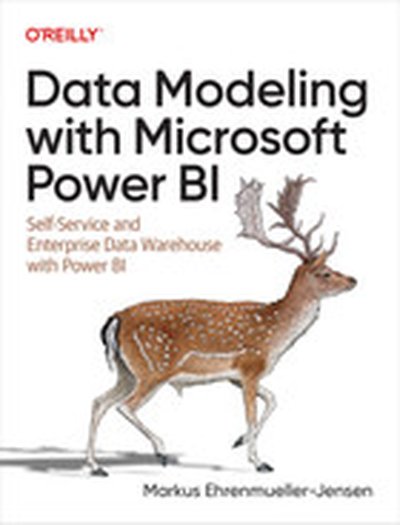
Data Modeling with Microsoft Power BI

Data modeling is the single most overlooked feature in Power BI Desktop, yet it's what sets Power BI apart from other tools on the market. This practical book serves as your fast-forward button for data modeling with Power BI, Analysis Services tabular, and SQL databases. It serves as a starting point for data modeling, as well as a handy refresher. Author Markus Ehrenmueller-Jensen, founder of Savory Data, shows you the basic concepts of Power BI's semantic model with hands-on examples in DAX, Power Query, and T-SQL. If you're looking to build a data warehouse layer, chapters with T-SQL examples will get you started. You'll begin with simple steps and gradually solve more complex problems. This book shows you how to: Normalize and denormalize with DAX, Power Query, and T-SQL Apply best practices for calculations, flags and indicators, time and date, role-playing dimensions and slowly changing dimensions Solve challenges such as binning, budget, localized models, composite models, and key value with DAX, Power Query, and T-SQL Discover and tackle performance issues by applying solutions in DAX, Power Query, and T-SQL Work with tables, relations, set operations, normal forms, dimensional modeling, and ETL

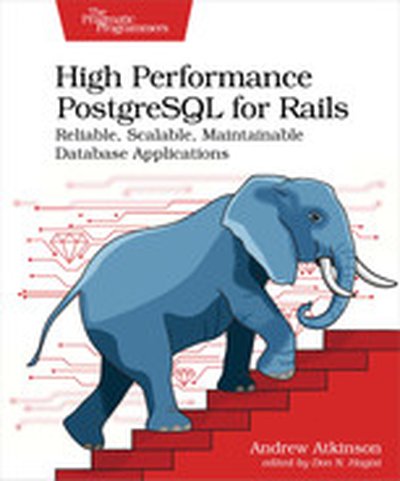
High Performance PostgreSQL for Rails

Build faster, more reliable Rails apps by taking the best advanced PostgreSQL and Active Record capabilities, and using them to solve your application scale and growth challenges. Gain the skills needed to comfortably work with multi-terabyte databases, and with complex Active Record, SQL, and specialized Indexes. Develop your skills with PostgreSQL on your laptop, then take them into production, while keeping everything in sync. Make slow queries fast, perform any schema or data migration without errors, use scaling techniques like read/write splitting, partitioning, and sharding, to meet demanding workload requirements from Internet scale consumer apps to enterprise SaaS. Deepen your firsthand knowledge of high-scale PostgreSQL databases and Ruby on Rails applications with dozens of practical and hands-on exercises. Unlock the mysteries surrounding complex Active Record. Make any schema or data migration change confidently, without downtime. Grow your experience with modern and exclusive PostgreSQL features like SQL Merge, Returning, and Exclusion constraints. Put advanced capabilities like Full Text Search and Publish Subscribe mechanisms built into PostgreSQL to work in your Rails apps. Improve the quality of the data in your database, using the advanced and extensible system of types and constraints to reduce and eliminate application bugs. Tackle complex topics like how to improve query performance using specialized indexes. Discover how to effectively use built-in database functions and write your own, administer replication, and make the most of partitioning and foreign data wrappers. Use more than 40 well-supported open source tools to extend and enhance PostgreSQL and Ruby on Rails. Gain invaluable insights into database administration by conducting advanced optimizations - including high-impact database maintenance - all while solving real-world operational challenges. Take your new skills into production today and then take your PostgreSQL and Rails applications to a whole new level of reliability and performance. What You Need: A computer running macOS, Linux, or Windows and WSL2 PostgreSQL version 16, installed by package manager, compiled, or running with Docker An Internet connection

Announcing Databricks Clean Rooms with Live Demo. Presented by Matei Zaharia and Darshana Sivakumar

Speakers: Matei Zaharia, Original Creator of Apache Spark™ and MLflow; Chief Technologist, Databricks Darshana Sivakumar, Staff Product Manager, Databricks

Organizations are looking for ways to securely exchange their data and collaborate with external partners to foster data-driven innovations. In the past, organizations had limited data sharing solutions, relinquishing control over how their sensitive data was shared with partners and little to no visibility into how their data was consumed. This created the risk for potential data misuse and data privacy breaches. Customers who tried using other clean room solutions have told us these solutions are limited and do not meet their needs, as they often require all parties to copy their data into the same platform, do not allow sophisticated analysis beyond basic SQL queries, and have limited visibility or control over their data.

Organizations need an open, flexible, and privacy-safe way to collaborate on data, and Databricks Clean Rooms meets these critical needs.

See a demo of Databricks Clean Rooms, now in Public Preview on AWS + Azure

The Best Data Warehouse is a Lakehouse

Reynold Xin, Co-founder and Chief Architect at Databricks, presented during Data + AI Summit 2024 on Databricks SQL and its advancements and how to drive performance improvements with the Databricks Data Intelligence Platform.

Speakers: Reynold Xin, Co-founder and Chief Architect, Databricks Pearl Ubaru, Technical Product Engineer, Databricks

Main Points and Key Takeaways (AI-generated summary)

Introduction of Databricks SQL: - Databricks SQL was announced four years ago and has become the fastest-growing product in Databricks history. - Over 7,000 customers, including Shell, AT&T, and Adobe, use Databricks SQL for data warehousing.

Evolution from Data Warehouses to Lakehouses: - Traditional data architectures involved separate data warehouses (for business intelligence) and data lakes (for machine learning and AI). - The lakehouse concept combines the best aspects of data warehouses and data lakes into a single package, addressing issues of governance, storage formats, and data silos.

Technological Foundations: - To support the lakehouse, Databricks developed Delta Lake (storage layer) and Unity Catalog (governance layer). - Over time, lakehouses have been recognized as the future of data architecture.

Core Data Warehousing Capabilities: - Databricks SQL has evolved to support essential data warehousing functionalities like full SQL support, materialized views, and role-based access control. - Integration with major BI tools like Tableau, Power BI, and Looker is available out-of-the-box, reducing migration costs.

Price Performance: - Databricks SQL offers significant improvements in price performance, which is crucial given the high costs associated with data warehouses. - Databricks SQL scales more efficiently compared to traditional data warehouses, which struggle with larger data sets.

Incorporation of AI Systems: - Databricks has integrated AI systems at every layer of their engine, improving performance significantly. - AI systems automate data clustering, query optimization, and predictive indexing, enhancing efficiency and speed.

Benchmarks and Performance Improvements: - Databricks SQL has seen dramatic improvements, with some benchmarks showing a 60% increase in speed compared to 2022. - Real-world benchmarks indicate that Databricks SQL can handle high concurrency loads with consistent low latency.

User Experience Enhancements: - Significant efforts have been made to improve the user experience, making Databricks SQL more accessible to analysts and business users, not just data scientists and engineers. - New features include visual data lineage, simplified error messages, and AI-driven recommendations for error fixes.

AI and SQL Integration: - Databricks SQL now supports AI functions and vector searches, allowing users to perform advanced analysis and query optimizations with ease. - The platform enables seamless integration with AI models, which can be published and accessed through the Unity Catalog.

Conclusion: - Databricks SQL has transformed into a comprehensive data warehousing solution that is powerful, cost-effective, and user-friendly. - The lakehouse approach is presented as a superior alternative to traditional data warehouses, offering better performance and lower costs.

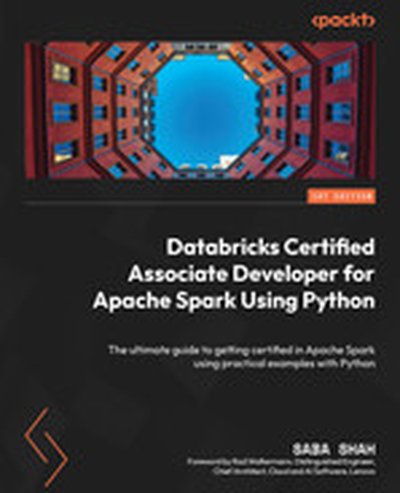
Databricks Certified Associate Developer for Apache Spark Using Python

This book serves as the ultimate preparation for aspiring Databricks Certified Associate Developers specializing in Apache Spark. Deep dive into Spark's components, its applications, and exam techniques to achieve certification and expand your practical skills in big data processing and real-time analytics using Python. What this Book will help me do Deeply understand Apache Spark's core architecture for building big data applications. Write optimized SQL queries and leverage Spark DataFrame API for efficient data manipulation. Apply advanced Spark functions, including UDFs, to solve complex data engineering tasks. Use Spark Streaming capabilities to implement real-time and near-real-time processing solutions. Get hands-on preparation for the certification exam with mock tests and practice questions. Author(s) Saba Shah is a seasoned data engineer with extensive experience working at Databricks and leading data science teams. With her in-depth knowledge of big data applications and Spark, she delivers clear, actionable insights in this book. Her approach emphasizes practical learning and real-world applications. Who is it for? This book is ideal for data professionals such as engineers and analysts aiming to achieve Databricks certification. It is particularly helpful for individuals with moderate Python proficiency who are keen to understand Spark from scratch. If you're transitioning into big data roles, this guide prepares you comprehensively.