talk-data.com talk-data.com

Topic

Delta

Delta Lake

data_lake acid_transactions time_travel file_format storage

347

tagged

Activity Trend

117 peak/qtr
2020-Q1 2026-Q1

Activities

347 activities · Newest first

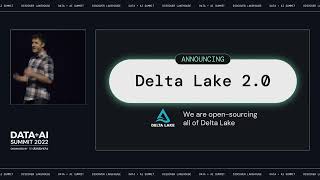
Day 2 Morning Keynote |  Data + AI Summit 2022

Day 2 Morning Keynote | Data + AI Summit 2022 Production Machine Learning | Patrick Wendell MLflow 2.0 | Kasey Uhlenhuth Revolutionizing agriculture with AI: Delivering smart industrial solutions built upon a Lakehouse architecture | Ganesh Jayaram Intuit’s Data Journey to the Lakehouse: Developing Smart, Personalized Financial Products for 100M+ Consumers & Small Businesses | Alon Amit and Manish Amde Workflows | Stacy Kerkela Delta Live Tables | Michael Armbrust AI and creativity, and building data products where there's no quantitative metric for success, such as in games, or web-scale search, or content discovery | Hilary Mason What to Know about Data Science and Machine Learning in 2022 | Peter Norvig Data-centric AI development: From Big Data to Good Data | Andrew Ng

Connect with us: Website: https://databricks.com Facebook: https://www.facebook.com/databricksinc Twitter: https://twitter.com/databricks LinkedIn: https://www.linkedin.com/company/data... Instagram: https://www.instagram.com/databricksinc/

The Azure Data Lakehouse Toolkit: Building and Scaling Data Lakehouses on Azure with Delta Lake, Apache Spark, Databricks, Synapse Analytics, and Snowflake

Design and implement a modern data lakehouse on the Azure Data Platform using Delta Lake, Apache Spark, Azure Databricks, Azure Synapse Analytics, and Snowflake. This book teaches you the intricate details of the Data Lakehouse Paradigm and how to efficiently design a cloud-based data lakehouse using highly performant and cutting-edge Apache Spark capabilities using Azure Databricks, Azure Synapse Analytics, and Snowflake. You will learn to write efficient PySpark code for batch and streaming ELT jobs on Azure. And you will follow along with practical, scenario-based examples showing how to apply the capabilities of Delta Lake and Apache Spark to optimize performance, and secure, share, and manage a high volume, high velocity, and high variety of data in your lakehouse with ease. The patterns of success that you acquire from reading this book will help you hone your skills to build high-performing and scalable ACID-compliant lakehouses using flexible and cost-efficient decoupled storage and compute capabilities. Extensive coverage of Delta Lake ensures that you are aware of and can benefit from all that this new, open source storage layer can offer. In addition to the deep examples on Databricks in the book, there is coverage of alternative platforms such as Synapse Analytics and Snowflake so that you can make the right platform choice for your needs. After reading this book, you will be able to implement Delta Lake capabilities, including Schema Evolution, Change Feed, Live Tables, Sharing, and Clones to enable better business intelligence and advanced analytics on your data within the Azure Data Platform. What You Will Learn Implement the Data Lakehouse Paradigm on Microsoft’s Azure cloud platform Benefit from the new Delta Lake open-source storage layer for data lakehouses Take advantage of schema evolution, change feeds, live tables, and more Writefunctional PySpark code for data lakehouse ELT jobs Optimize Apache Spark performance through partitioning, indexing, and other tuning options Choose between alternatives such as Databricks, Synapse Analytics, and Snowflake Who This Book Is For Data, analytics, and AI professionals at all levels, including data architect and data engineer practitioners. Also for data professionals seeking patterns of success by which to remain relevant as they learn to build scalable data lakehouses for their organizations and customers who are migrating into the modern Azure Data Platform.

Summary Building a data platform is an iterative and evolutionary process that requires collaboration with internal stakeholders to ensure that their needs are being met. Yotpo has been on a journey to evolve and scale their data platform to continue serving the needs of their organization as it increases the scale and sophistication of data usage. In this episode Doron Porat and Liran Yogev explain how they arrived at their current architecture, the capabilities that they are optimizing for, and the complex process of identifying and evaluating new components to integrate into their systems. This is an excellent exploration of the decisions and tradeoffs that need to be made while building such a complex system.

Announcements

Hello and welcome to the Data Engineering Podcast, the show about modern data management When you’re ready to build your next pipeline, or want to test out the projects you hear about on the show, you’ll need somewhere to deploy it, so check out our friends at Linode. With their managed Kubernetes platform it’s now even easier to deploy and scale your workflows, or try out the latest Helm charts from tools like Pulsar and Pachyderm. With simple pricing, fast networking, object storage, and worldwide data centers, you’ve got everything you need to run a bulletproof data platform. Go to dataengineeringpodcast.com/linode today and get a $100 credit to try out a Kubernetes cluster of your own. And don’t forget to thank them for their continued support of this show! This episode is brought to you by Acryl Data, the company behind DataHub, the leading developer-friendly data catalog for the modern data stack. Open Source DataHub is running in production at several companies like Peloton, Optum, Udemy, Zynga and others. Acryl Data provides DataHub as an easy to consume SaaS product which has been adopted by several companies. Signup for the SaaS product at dataengineeringpodcast.com/acryl RudderStack helps you build a customer data platform on your warehouse or data lake. Instead of trapping data in a black box, they enable you to easily collect customer data from the entire stack and build an identity graph on your warehouse, giving you full visibility and control. Their SDKs make event streaming from any app or website easy, and their state-of-the-art reverse ETL pipelines enable you to send enriched data to any cloud tool. Sign up free… or just get the free t-shirt for being a listener of the Data Engineering Podcast at dataengineeringpodcast.com/rudder. The most important piece of any data project is the data itself, which is why it is critical that your data source is high quality. PostHog is your all-in-one product analytics suite including product analysis, user funnels, feature flags, experimentation, and it’s open source so you can host it yourself or let them do it for you! You have full control over your data and their plugin system lets you integrate with all of your other data tools, including data warehouses and SaaS platforms. Give it a try today with their generous free tier at dataengineeringpodcast.com/posthog Your host is Tobias Macey and today I’m interviewing Doron Porat and Liran Yogev about their experiences designing and implementing a self-serve data platform at Yotpo

Interview

Introduction How did you get involved in the area of data management? Can you describe what Yotpo is and the role that data plays in the organization? What are the core data types and sources that you are working with?

What kinds of data assets are being produced and how do those get consumed and re-integrated into the business?

What are the user personas that you are supporting and what are the interfaces that they are comfortable interacting with?

What is the size of your team and how is it structured?

You recently posted about the current architecture of your data platform. What was the starting point on your platform journey?

What did the early stages of feature and platform evolution look like? What was the catalyst for making a concerted effort to integrate your systems into a cohesive platform?

What was the scope and directive of the project for building a platform?

What are the metrics and capabilities that you are optimizing for in the structure of your data platform? What are the organizational or regulatory constraints that you needed to account for?

What are some of the early decisions that affected your available choices in later stages of the project? What does the current state of your architecture look like?

How long did it take to get to where you are today?

What were the factors that you considered in the various build vs. buy decisions?

How did you manage cost modeling to understand the true savings on either side of that decision?

If you were to start from scratch on a new data platform today what might you do differently? What are the decisions that proved helpful in the later stages of your platform development? What are the most interesting, innovative, or unexpected ways that you have seen your platform used? What are the most interesting, unexpected, or challenging lessons that you have learned while working on designing and implementing your platform? What do you have planned for the future of your platform infrastructure?

Contact Info

Doron

LinkedIn

Liran

LinkedIn

Parting Question

From your perspective, what is the biggest gap in the tooling or technology for data management today?

Closing Announcements

Thank you for listening! Don’t forget to check out our other show, Podcast.init to learn about the Python language, its community, and the innovative ways it is being used. Visit the site to subscribe to the show, sign up for the mailing list, and read the show notes. If you’ve learned something or tried out a project from the show then tell us about it! Email [email protected]) with your story. To help other people find the show please leave a review on iTunes and tell your friends and co-workers

Links

Yotpo

Data Platform Architecture Blog Post

Greenplum Databricks Metorikku Apache Hive CDC == Change Data Capture Debezium

Podcast Episode

Apache Hudi

Podcast Episode

Upsolver

Podcast Episode

Spark PrestoDB Snowflake

Podcast Episode

Druid Rockset

Podcast Episode

dbt

Podcast Episode

Acryl

Podcast Episode

Atlan

Podcast Episode

OpenLineage

Podcast Episode

Okera Shopify Data Warehouse Episode Redshift Delta Lake

Podcast Episode

Iceberg

Podcast Episode

Outbox Pattern Backstage Roadie Nomad Kubernetes Deequ Great Expectations

Podcast Episode

LakeFS

Podcast Episode

2021 Recap Episode Monte Carlo

The intro and outro music is from The Hug by The Freak Fandango Orchestra / CC BY-SA

a…

With the Omicron wave upon us, it would be Pollyannaish to get overly enthused about the economy's prospects in the new year. But if the economy's performance last year is a guide, we should not be too pessimistic either. Despite being hit hard by the Delta wave of the virus, the economy grew like gangbusters in 2021. It will not grow as strongly in 2022, but inflation, which took off in recent months, will come back to earth. Having said this, how good a year the economy will have depends on the pandemic's path and how well policymakers respond.  Webinar Slides

Questions or Comments, please email us at [email protected]. We would love to hear from you.    To stay informed and follow the insights of Moody's Analytics economists, visit Economic View.

Optimizing Databricks Workloads

Unlock the full potential of Apache Spark on the Databricks platform with "Optimizing Databricks Workloads". This book equips you with must-know techniques to effectively configure, manage, and optimize big data processing pipelines. Dive into real-world scenarios and learn practical approaches to reduce costs and improve performance in your data engineering processes. What this Book will help me do Understand and apply optimization techniques for Databricks workloads. Choose the right cluster configurations to maximize efficiency and minimize costs. Leverage Delta Lake for performance-boosted data processing and optimization. Develop skills for managing Spark DataFrames and core functionalities in Databricks. Gain insights into real-world scenarios to effectively improve workload performance. Author(s) Anirudh Kala and the co-authors are experienced practitioners in the fields of data engineering and analytics. With years of professional expertise in leveraging Apache Spark and Databricks, they bring real-world insight into performance optimization. Their approach blends practical instruction with actionable strategies, making this book an essential guide for data engineers aiming to excel in this domain. Who is it for? This book is tailored for data engineers, data scientists, and cloud architects looking to elevate their skills in managing Databricks workloads. Ideal for readers with basic knowledge of Spark and Databricks, it helps them get hands-on with optimization techniques. If you are aiming to enhance your Spark-based data processing systems, this book offers the guidance you need.

Data Engineering with Apache Spark, Delta Lake, and Lakehouse

Data Engineering with Apache Spark, Delta Lake, and Lakehouse is a comprehensive guide packed with practical knowledge for building robust and scalable data pipelines. Throughout this book, you will explore the core concepts and applications of Apache Spark and Delta Lake, and learn how to design and implement efficient data engineering workflows using real-world examples. What this Book will help me do Master the core concepts and components of Apache Spark and Delta Lake. Create scalable and secure data pipelines for efficient data processing. Learn best practices and patterns for building enterprise-grade data lakes. Discover how to operationalize data models into production-ready pipelines. Gain insights into deploying and monitoring data pipelines effectively. Author(s) None Kukreja is a seasoned data engineer with over a decade of experience working with big data platforms. He specializes in implementing efficient and scalable data solutions to meet the demands of modern analytics and data science. Writing with clarity and a practical approach, he aims to provide actionable insights that professionals can apply to their projects. Who is it for? This book is tailored for aspiring data engineers and data analysts who wish to delve deeper into building scalable data platforms. It is suitable for those with basic knowledge of Python, Spark, and SQL, and seeking to learn Delta Lake and advanced data engineering concepts. Readers should be eager to develop practical skills for tackling real-world data engineering challenges.

The Delta-variant of COVID-19 has damaged the economic recovery, but we remain optimistic the economy is on track to return to full employment by spring 2023. What could derail this optimism? Could the economy perform better than anticipated? What is the long-term economic fallout of the pandemic? The episode's slides can be found here.

Questions or Comments, please email us at [email protected]. We would love to hear from you.    To stay informed and follow the insights of Moody's Analytics economists, visit Economic View.

Hosted by Simplecast, an AdsWizz company. See pcm.adswizz.com for information about our collection and use of personal data for advertising.

Mark, Ryan, and Cris discuss unemployment insurance benefits, Delta variant, and what happened this week in Washington, DC. The main topic is the long-term economic consequences of the pandemic. Also, Mark reveals his favorite movie. Full episode transcript can be found here.

Questions or Comments, please email us at [email protected]. We would love to hear from you.    To stay informed and follow the insights of Moody's Analytics economists, visit Economic View.

Hosted by Simplecast, an AdsWizz company. See pcm.adswizz.com for information about our collection and use of personal data for advertising.

Azure Databricks Cookbook

Azure Databricks is a robust analytics platform that leverages Apache Spark and seamlessly integrates with Azure services. In the Azure Databricks Cookbook, you'll find hands-on recipes to ingest data, build modern data pipelines, and perform real-time analytics while learning to optimize and secure your solutions. What this Book will help me do Design advanced data workflows integrating Azure Synapse, Cosmos DB, and streaming sources with Databricks. Gain proficiency in using Delta Tables and Spark for efficient data storage and analysis. Learn to create, deploy, and manage real-time dashboards with Databricks SQL. Master CI/CD pipelines for automating deployments of Databricks solutions. Understand security best practices for restricting access and monitoring Azure Databricks. Author(s) None Raj and None Jaiswal are experienced professionals in the field of big data and analytics. They are well-versed in implementing Azure Databricks solutions for real-world problems. Their collaborative writing approach ensures clarity and practical focus. Who is it for? This book is tailored for data engineers, scientists, and big data professionals who want to apply Azure Databricks and Apache Spark to their analytics workflows. A basic familiarity with Spark and Azure is recommended to make the best use of the recipes provided. If you're looking to scale and optimize your analytics pipelines, this book is for you.

podcast_episode
by Aaron Klein (Brookings Institution) , Cris deRitis , Mark Zandi (Moody's Analytics) , Ryan Sweet

Aaron Klein, Senior Fellow in economic studies at Brookings Institute, joins Mark, Cris, and Ryan to discuss the current state and future of crypto currencies. Recommended Reads: Natural Disasters From Coast to Coast

Questions or Comments, please email us at [email protected]. We would love to hear from you.    To stay informed and follow the insights of Moody's Analytics economists, visit Economic View.

Hosted by Simplecast, an AdsWizz company. See pcm.adswizz.com for information about our collection and use of personal data for advertising.

podcast_episode
by Mark Zandi (Moody's Analytics) , Adam Kamins (Moody's Analytics) , Ryan Sweet

Mark and Ryan welcome back Adam Kamins, Director of Regional Economics at Moody's Analytics, to discuss the August job numbers, the Delta variant, and economic costs of Hurricane Ida. Full episode transcript can be found here.

Questions or Comments, please email us at [email protected]. We would love to hear from you.    To stay informed and follow the insights of Moody's Analytics economists, visit Economic View.

Hosted by Simplecast, an AdsWizz company. See pcm.adswizz.com for information about our collection and use of personal data for advertising.

Summary The Presto project has become the de facto option for building scalable open source analytics in SQL for the data lake. In recent months the community has focused their efforts on making it the fastest possible option for running your analytics in the cloud. In this episode Dipti Borkar discusses the work that she and her team are doing at Ahana to simplify the work of running your own PrestoDB environment in the cloud. She explains how they are optimizin the runtime to reduce latency and increase query throughput, the ways that they are contributing back to the open source community, and the exciting improvements that are in the works to make Presto an even more powerful option for all of your analytics.

Announcements

Hello and welcome to the Data Engineering Podcast, the show about modern data management When you’re ready to build your next pipeline, or want to test out the projects you hear about on the show, you’ll need somewhere to deploy it, so check out our friends at Linode. With their managed Kubernetes platform it’s now even easier to deploy and scale your workflows, or try out the latest Helm charts from tools like Pulsar and Pachyderm. With simple pricing, fast networking, object storage, and worldwide data centers, you’ve got everything you need to run a bulletproof data platform. Go to dataengineeringpodcast.com/linode today and get a $100 credit to try out a Kubernetes cluster of your own. And don’t forget to thank them for their continued support of this show! Schema changes, missing data, and volume anomalies caused by your data sources can happen without any advanced notice if you lack visibility into your data-in-motion. That leaves DataOps reactive to data quality issues and can make your consumers lose confidence in your data. By connecting to your pipeline orchestrator like Apache Airflow and centralizing your end-to-end metadata, Databand.ai lets you identify data quality issues and their root causes from a single dashboard. With Databand.ai, you’ll know whether the data moving from your sources to your warehouse will be available, accurate, and usable when it arrives. Go to dataengineeringpodcast.com/databand to sign up for a free 30-day trial of Databand.ai and take control of your data quality today. Atlan is a collaborative workspace for data-driven teams, like Github for engineering or Figma for design teams. By acting as a virtual hub for data assets ranging from tables and dashboards to SQL snippets & code, Atlan enables teams to create a single source of truth for all their data assets, and collaborate across the modern data stack through deep integrations with tools like Snowflake, Slack, Looker and more. Go to dataengineeringpodcast.com/atlan today and sign up for a free trial. If you’re a data engineering podcast listener, you get credits worth $3000 on an annual subscription Your host is Tobias Macey and today I’m interviewing Dipti Borkar, cofounder Ahana about Presto and Ahana, SaaS managed service for Presto

Interview

Introduction How did you get involved in the area of data management? Can you describe what Ahana is and the story behind it? There has been a lot of recent activity in the Presto community. Can you give an overview of the options that are available for someone wanting to use its SQL engine for querying their data?

What is Ahana’s role in the community/ecosystem? (happy to skip this question if it’s too contentious) What are some of the notable differences that have emerged over the past couple of years between the Trino (formerly PrestoSQL) and PrestoDB projects?

Another area that has been seeing a lot of activity is data lakes and projects to make them more manageable and feature complete (e.g. Hudi, Delta Lake, Iceberg, Nessie, LakeFS, etc.). How has that influenced your product focus and capabilities?

How does this activity change the calculus for organizations who are deciding on a lake or warehouse for their data architecture?

Can y

podcast_episode
by Marisa Di Natale (Moody's Analytics) , Cris deRitis , Mark Zandi (Moody's Analytics) , Ryan Sweet

Mark, Ryan, and Cris welcome back Marisa Di Natale, Senior Director at Moody's Analytics to discuss the impact of the Delta variant of COVID-19 on the U.S. economy. The big topic is the health of the American household balance sheet. Full episode transcript can be found here: https://about.moodys.io/podcast-episodes/delta-and-debt

Questions or Comments, please email us at [email protected]. We would love to hear from you.    To stay informed and follow the insights of Moody's Analytics economists, visit Economic View.

Hosted by Simplecast, an AdsWizz company. See pcm.adswizz.com for information about our collection and use of personal data for advertising.

podcast_episode
by Dante DeAntonio (Moody's Analytics) , Cris deRitis , Mark Zandi (Moody's Analytics) , Ryan Sweet

Mark, Ryan, and Cris welcome back their first repeat appearance guest - Dante DeAntonio, Senior Economist at Moodys Analytics. They breakdown the numbers in the July Employment Report and discuss the labor force and productivity in great detail. They also touch on the Delta Variant and its impact on the economy. Slides talked about in today's episode can be found here. Full episode transcript.

Questions or Comments, please email us at [email protected]. We would love to hear from you.    To stay informed and follow the insights of Moody's Analytics economists, visit Economic View.

Hosted by Simplecast, an AdsWizz company. See pcm.adswizz.com for information about our collection and use of personal data for advertising.

Summary Data lake architectures have largely been biased toward batch processing workflows due to the volume of data that they are designed for. With more real-time requirements and the increasing use of streaming data there has been a struggle to merge fast, incremental updates with large, historical analysis. Vinoth Chandar helped to create the Hudi project while at Uber to address this challenge. By adding support for small, incremental inserts into large table structures, and building support for arbitrary update and delete operations the Hudi project brings the best of both worlds together. In this episode Vinoth shares the history of the project, how its architecture allows for building more frequently updated analytical queries, and the work being done to add a more polished experience to the data lake paradigm.

Announcements

Hello and welcome to the Data Engineering Podcast, the show about modern data management You listen to this show to learn about all of the latest tools, patterns, and practices that power data engineering projects across every domain. Now there’s a book that captures the foundational lessons and principles that underly everything that you hear about here. I’m happy to announce I collected wisdom from the community to help you in your journey as a data engineer and worked with O’Reilly to publish it as 97 Things Every Data Engineer Should Know. Go to dataengineeringpodcast.com/97things today to get your copy! When you’re ready to build your next pipeline, or want to test out the projects you hear about on the show, you’ll need somewhere to deploy it, so check out our friends at Linode. With their managed Kubernetes platform it’s now even easier to deploy and scale your workflows, or try out the latest Helm charts from tools like Pulsar and Pachyderm. With simple pricing, fast networking, object storage, and worldwide data centers, you’ve got everything you need to run a bulletproof data platform. Go to dataengineeringpodcast.com/linode today and get a $100 credit to try out a Kubernetes cluster of your own. And don’t forget to thank them for their continued support of this show! RudderStack’s smart customer data pipeline is warehouse-first. It builds your customer data warehouse and your identity graph on your data warehouse, with support for Snowflake, Google BigQuery, Amazon Redshift, and more. Their SDKs and plugins make event streaming easy, and their integrations with cloud applications like Salesforce and ZenDesk help you go beyond event streaming. With RudderStack you can use all of your customer data to answer more difficult questions and then send those insights to your whole customer data stack. Sign up free at dataengineeringpodcast.com/rudder today. We’ve all been asked to help with an ad-hoc request for data by the sales and marketing team. Then it becomes a critical report that they need updated every week or every day. Then what do you do? Send a CSV via email? Write some Python scripts to automate it? But what about incremental sync, API quotas, error handling, and all of the other details that eat up your time? Today, there is a better way. With Census, just write SQL or plug in your dbt models and start syncing your cloud warehouse to SaaS applications like Salesforce, Marketo, Hubspot, and many more. Go to dataengineeringpodcast.com/census today to get a free 14-day trial. Your host is Tobias Macey and today I’m interviewing Vinoth Chandar about Apache Hudi, a data lake management layer for supporting fast and incremental updates to your tables.

Interview

Introduction How did you get involved in the area of data management? Can you describe what Hudi is and the story behind it? What are the use cases that it is focused on supporting? There have been a number of alternative table formats introduced for data lakes recently. How does Hudi compare to projects like Iceberg, Delta Lake, Hive, etc.? Can you describe how Hudi is architected?

How have the goals and design of Hudi changed or evolved since you first began working on it? If you were to start the whole project over today, what would you do differently?

Can you talk through the lifecycle of a data record as it is ingested, compacted, and queried in a Hudi deployment? One of the capabilities that is interesting to explore is support for arbitrary record deletion. Can you talk through why this is a challenging operation in data lake architectures?

How does Hudi make that a tractable problem?

What are the data platform components that are needed to support an installation of Hudi? What is involved in migrating an existing data lake to use Hudi?

How would someone approach supporting heterogeneous table formats in their lake?

As someone who has invested a lot of time in technologies for supporting data lakes, what are your thoughts on the tradeoffs of data lake vs data warehouse and the current trajectory of the ecosystem? What are the most interesting, innovative, or unexpected ways that you have seen Hudi used? What are the most interesting, unexpected, or challenging lessons that you have learned while working on Hudi? When is Hudi the wrong choice? What do you have planned for the future of Hudi?

Contact Info

Linkedin Twitter

Parting Question

From your perspective, what is the biggest gap in the tooling or technology for data management today?

Closing Announcements

Thank you for listening! Don’t forget to check out our other show, Podcast.init to learn about the Python language, its community, and the innovative ways it is being used. Visit the site to subscribe to the show, sign up for the mailing list, and read the show notes. If you’ve learned something or tried out a project from the show then tell us about it! Email [email protected]) with your story. To help other people find the show please leave a review on iTunes and tell your friends and co-workers Join the community in the new Zulip chat workspace at dataengineeringpodcast.com/chat

Links

Hudi Docs Hudi Design & Architecture Incremental Processing CDC == Change Data Capture

Podcast Episodes

Oracle GoldenGate Voldemort Kafka Hadoop Spark HBase Parquet Iceberg Table Format

Data Engineering Episode

Hive ACID Apache Kudu

Podcast Episode

Vertica Delta Lake

Podcast Episode

Optimistic Concurrency Control MVCC == Multi-Version Concurrency Control Presto Flink

Podcast Episode

Trino

Podcast Episode

Gobblin LakeFS

Podcast Episode

Nessie

The intro and outro music is from The Hug by The Freak Fandango Orchestra / CC BY-SA

Support Data Engineering Podcast

Distributed Data Systems with Azure Databricks

In 'Distributed Data Systems with Azure Databricks', you will explore the capabilities of Microsoft Azure Databricks as a platform for building and managing big data pipelines. Learn how to process, transform, and analyze data at scale while developing expertise in training distributed machine learning models and integrating them into enterprise workflows. What this Book will help me do Design and implement Extract, Transform, Load (ETL) pipelines using Azure Databricks. Conduct distributed training of machine learning models using TensorFlow and Horovod. Integrate Azure Databricks with Azure Data Factory for optimized data pipeline orchestration. Utilize Delta Engine for efficient querying and analysis of data within Delta Lake. Employ Databricks Structured Streaming to manage real-time production-grade data flows. Author(s) None Palacio is an experienced data engineer and cloud computing specialist, with extensive knowledge of the Microsoft Azure platform. With years of practical application of Databricks in enterprise settings, Palacio provides clear, actionable insights through relatable examples. They bring a passion for innovative solutions to the field of big data automation. Who is it for? This book is ideal for data engineers, machine learning engineers, and software developers looking to master Azure Databricks for large-scale data processing and analysis. Readers should have basic familiarity with cloud platforms, understanding of data pipelines, and a foundational grasp of Python and machine learning concepts. It is perfect for those wanting to create scalable and manageable data workflows.

Learning Spark, 2nd Edition

Data is bigger, arrives faster, and comes in a variety of formatsâ??and it all needs to be processed at scale for analytics or machine learning. But how can you process such varied workloads efficiently? Enter Apache Spark. Updated to include Spark 3.0, this second edition shows data engineers and data scientists why structure and unification in Spark matters. Specifically, this book explains how to perform simple and complex data analytics and employ machine learning algorithms. Through step-by-step walk-throughs, code snippets, and notebooks, youâ??ll be able to: Learn Python, SQL, Scala, or Java high-level Structured APIs Understand Spark operations and SQL Engine Inspect, tune, and debug Spark operations with Spark configurations and Spark UI Connect to data sources: JSON, Parquet, CSV, Avro, ORC, Hive, S3, or Kafka Perform analytics on batch and streaming data using Structured Streaming Build reliable data pipelines with open source Delta Lake and Spark Develop machine learning pipelines with MLlib and productionize models using MLflow

Summary Building clean datasets with reliable and reproducible ingestion pipelines is completely useless if it’s not possible to find them and understand their provenance. The solution to discoverability and tracking of data lineage is to incorporate a metadata repository into your data platform. The metadata repository serves as a data catalog and a means of reporting on the health and status of your datasets when it is properly integrated into the rest of your tools. At WeWork they needed a system that would provide visibility into their Airflow pipelines and the outputs produced. In this episode Julien Le Dem and Willy Lulciuc explain how they built Marquez to serve that need, how it is architected, and how it compares to other options that you might be considering. Even if you already have a metadata repository this is worth a listen to learn more about the value that visibility of your data can bring to your organization.

Announcements

Hello and welcome to the Data Engineering Podcast, the show about modern data management When you’re ready to build your next pipeline, or want to test out the projects you hear about on the show, you’ll need somewhere to deploy it, so check out our friends at Linode. With 200Gbit private networking, scalable shared block storage, and a 40Gbit public network, you’ve got everything you need to run a fast, reliable, and bullet-proof data platform. If you need global distribution, they’ve got that covered too with world-wide datacenters including new ones in Toronto and Mumbai. And for your machine learning workloads, they just announced dedicated CPU instances. Go to dataengineeringpodcast.com/linode today to get a $20 credit and launch a new server in under a minute. And don’t forget to thank them for their continued support of this show! You work hard to make sure that your data is clean, reliable, and reproducible throughout the ingestion pipeline, but what happens when it gets to the data warehouse? Dataform picks up where your ETL jobs leave off, turning raw data into reliable analytics. Their web based transformation tool with built in collaboration features lets your analysts own the full lifecycle of data in your warehouse. Featuring built in version control integration, real-time error checking for their SQL code, data quality tests, scheduling, and a data catalog with annotation capabilities it’s everything you need to keep your data warehouse in order. Sign up for a free trial today at dataengineeringpodcast.com/dataform and email [email protected] with the subject "Data Engineering Podcast" to get a hands-on demo from one of their data experts. You listen to this show to learn and stay up to date with what’s happening in databases, streaming platforms, big data, and everything else you need to know about modern data management. For even more opportunities to meet, listen, and learn from your peers you don’t want to miss out on this year’s conference season. We have partnered with organizations such as O’Reilly Media, Corinium Global Intelligence, ODSC, and Data Council. Upcoming events include the Software Architecture Conference, the Strata Data conference, and PyCon US. Go to dataengineeringpodcast.com/conferences to learn more about these and other events, and take advantage of our partner discounts to save money when you register today. Your host is Tobias Macey and today I’m interviewing Willy Lulciuc and Julien Le Dem about Marquez, an open source platform to collect, aggregate, and visualize a data ecosystem’s metadata

Interview

Introduction How did you get involved in the area of data management? Can you start by describing what Marquez is?

What was missing in existing metadata management platforms that necessitated the creation of Marquez?

How do the capabilities of Marquez compare with tools and services that bill themselves as data catalogs?

How does it compare to the Amundsen platform that Lyft recently released?

What are some of the tools or platforms that are currently integrated with Marquez and what additional integrations would you like to see? What are some of the capabilities that are unique to Marquez and how are you using them at WeWork? What are the primary resource types that you support in Marquez?

What are some of the lowest common denominator attributes that are necessary and useful to track in a metadata repository?

Can you explain how Marquez is architected and how the design has evolved since you first began working on it?

Many metadata management systems are simply a service layer on top of a separate data storage engine. What are the benefits of using PostgreSQL as the system of record for Marquez?

What are some of the complexities that arise from relying on a relational engine as opposed to a document store or graph database?

How is the metadata itself stored and managed in Marquez?

How much up-front data modeling is necessary and what types of schema representations are supported?

Can you talk through the overall workflow of someone using Marquez in their environment?

What is involved in registering and updating datasets? How do you define and track the health of a given dataset? What are some of the interesting questions that can be answered from the information stored in Marquez?

What were your assumptions going into this project and how have they been challenged or updated as you began using it for production use cases? For someone who is interested in using Marquez what is involved in deploying and maintaining an installation of it? What have you found to be the most challenging or unanticipated aspects of building and maintaining a metadata repository and data discovery platform? When is Marquez the wrong choice for a metadata repository? What do you have planned for the future of Marquez?

Contact Info

Julien Le Dem

@J_ on Twitter Email julienledem on GitHub

Willy

LinkedIn @wslulciuc on Twitter wslulciuc on GitHub

Parting Question

From your perspective, what is the biggest gap in the tooling or technology for data management today?

Closing Announcements

Thank you for listening! Don’t forget to check out our other show, Podcast.init to learn about the Python language, its community, and the innovative ways it is being used. Visit the site to subscribe to the show, sign up for the mailing list, and read the show notes. If you’ve learned something or tried out a project from the show then tell us about it! Email [email protected]) with your story. To help other people find the show please leave a review on iTunes and tell your friends and co-workers Join the community in the new Zulip chat workspace at dataengineeringpodcast.com/chat

Links

Marquez

DataEngConf Presentation

WeWork Canary Yahoo Dremio Hadoop Pig Parquet

Podcast Episode

Airflow Apache Atlas Amundsen

Podcast Episode

Uber DataBook LinkedIn DataHub Iceberg Table Format

Podcast Episode

Delta Lake

Podcast Episode

Great Expectations data pipeline unit testing framework

Podcast.init Episode

Redshift SnowflakeDB

Podcast Episode

Apache Kafka Schema Registry

Podcast Episode

Open Tracing Jaeger Zipkin DropWizard Java framework Marquez UI Cayley Graph Database Kubernetes Marquez Helm Chart Marquez Docker Container Dagster

Podcast Episode

Luigi DBT

Podcast Episode

Thrift Protocol Buffers

The intro and outro music is from a href="http://freemusicarchive.org/music/The_Freak_Fandango_Orchestra/Love_death_and_a_drunken_monkey/04_-_The_Hug?utm_source=rss&utm_medium=rss"…

Highlights  Fake streams! Playlist manipulation! Fake artists! There’s a lot of buzz about it, but what does this look like in the data?Mission   Good morning, it’s Jason here at Chartmetric with your 3-minute Data Dump where we upload charts, artists and playlists into your brain so you can stay up on the latest in the music data world.DateThis is your Data Dump for Friday, June 28th, 2019.Enter the World of Streaming ManipulationLast week’s streaming code of conduct was signed by more than 20 major companies across the industry to combat streaming fraud, which is good for artist compensation and more forthcoming to the fans.How can we think about this prickly topic from a music data perspective? And when we say “this”, it’s not just fake streams. It’s also playlist manipulation and fake artist accounts.For sure, we are in very murky waters, and there is little actual data on the phenomenon.Recently American indie label Hopeless Records estimated 3-4 percent of global streams could be fraudulent.But a 2015 MBW article mentions how 60% or more Twitter followers on top artist accounts could also be fake.Granted, these are different types of fraudulent behavior, but it’s also a huge delta to try to account for.What we can do though is search for red flags in the music data available to us.For example: if we look at playlist manipulation, here’s one way to look at the data to try to identify potentially iffy behavior:We scanned the playlist charts looking for abnormally high 28-day follower increases, and found a non-editorial hip-hop genre playlist with a 262% increase in followers in the past month.While that could just be great marketing, currently having 110K followers-an impressive number-its max artist monthly listeners, however, is only ~470, which doesn’t seem to match up.This means that the only artist on the playlist that gets a lot of its unique listeners from here is getting less than 1% of its supposed followers actually listening to them.Again, possible, especially since the playlist has about 100 current tracks on it, but it’s ranked in the first third of the playlist, so it’s not likely.That artist, which only has a little over 200 followers, is playlisted among high-profile artists like Eminem, Kanye West and Cardi B, presumably to draw traffic, which would be smart marketing if done legitimately, but if so many followers are not streaming the actual tracks...it smells a little fishy.If that weren’t enough, there’s a three-piece pop band with only 16 followers, and two other rap artists who have 4 and 17 Spotify followers, respectively.All three have their listed label as a series of numbers, then “Records DK” or “DK2”, which is a default label for the distributor DistroKid, if left untouched.DistroKid is one of the most popular digital distributors available to independent artists and an official partner distributor with Spotify.If that still isn’t enough, all the playlist album artwork looks like carbon copies of official Spotify playlist album art. Again, good marketing tactic...or borderline deception?So while it’s admittedly an analytical leap, it is very possible that a playlist curator is buying illegitimate playlist followers to make themselves look good, they dupe unknowing artists into thinking they are getting amazing exposure, and the curator gets paid accordingly and in our opinion, unfairly.We could be completely 100% wrong on this, but the point is, there are certain ways you can look at the music data to try to suss out what’s likely real, and what at least should raise some red flags.We’ll try to unpack some other types of illegitimate activity from a data perspective next week.Outro That’s it for your Daily Data Dump for Friday, June 28th, 2019. This is Jason from Chartmetric.Do you know how NPR does their ask for donations every so often? That’s what we’re about to do now! But we’re just asking for an Apple Podcasts rating.Rutger and I put at least a few hours a day into each episode, researching, writing, editing, recording, editing again, publishing to multiple platforms, checking analytics...and it’d be really cool for us to get some feedback on how we’re doing: the good/bad/ugly. So it’d only takes a few thumb swipes out of your day, and you’d be sending us so much joy: we’d appreciate it.As always, free accounts are at chartmetric.comAnd article links and show notes are at: podcast.chartmetric.comHappy Friday, have a great weekend, and see you on Monday!