talk-data.com talk-data.com

Topic

Spark

Apache Spark

big_data distributed_computing analytics

581

tagged

Activity Trend

71 peak/qtr
2020-Q1 2026-Q1

Activities

581 activities · Newest first

Spark: The Definitive Guide

Learn how to use, deploy, and maintain Apache Spark with this comprehensive guide, written by the creators of the open-source cluster-computing framework. With an emphasis on improvements and new features in Spark 2.0, authors Bill Chambers and Matei Zaharia break down Spark topics into distinct sections, each with unique goals. Youâ??ll explore the basic operations and common functions of Sparkâ??s structured APIs, as well as Structured Streaming, a new high-level API for building end-to-end streaming applications. Developers and system administrators will learn the fundamentals of monitoring, tuning, and debugging Spark, and explore machine learning techniques and scenarios for employing MLlib, Sparkâ??s scalable machine-learning library. Get a gentle overview of big data and Spark Learn about DataFrames, SQL, and Datasetsâ??Sparkâ??s core APIsâ??through worked examples Dive into Sparkâ??s low-level APIs, RDDs, and execution of SQL and DataFrames Understand how Spark runs on a cluster Debug, monitor, and tune Spark clusters and applications Learn the power of Structured Streaming, Sparkâ??s stream-processing engine Learn how you can apply MLlib to a variety of problems, including classification or recommendation

Summary

As communications between machines become more commonplace the need to store the generated data in a time-oriented manner increases. The market for timeseries data stores has many contenders, but they are not all built to solve the same problems or to scale in the same manner. In this episode the founders of TimescaleDB, Ajay Kulkarni and Mike Freedman, discuss how Timescale was started, the problems that it solves, and how it works under the covers. They also explain how you can start using it in your infrastructure and their plans for the future.

Preamble

Hello and welcome to the Data Engineering Podcast, the show about modern data infrastructure When you’re ready to launch your next project you’ll need somewhere to deploy it. Check out Linode at dataengineeringpodcast.com/linode and get a $20 credit to try out their fast and reliable Linux virtual servers for running your data pipelines or trying out the tools you hear about on the show. Go to dataengineeringpodcast.com to subscribe to the show, sign up for the newsletter, read the show notes, and get in touch. You can help support the show by checking out the Patreon page which is linked from the site. To help other people find the show you can leave a review on iTunes, or Google Play Music, and tell your friends and co-workers Your host is Tobias Macey and today I’m interviewing Ajay Kulkarni and Mike Freedman about Timescale DB, a scalable timeseries database built on top of PostGreSQL

Interview

Introduction How did you get involved in the area of data management? Can you start by explaining what Timescale is and how the project got started? The landscape of time series databases is extensive and oftentimes difficult to navigate. How do you view your position in that market and what makes Timescale stand out from the other options? In your blog post that explains the design decisions for how Timescale is implemented you call out the fact that the inserted data is largely append only which simplifies the index management. How does Timescale handle out of order timestamps, such as from infrequently connected sensors or mobile devices? How is Timescale implemented and how has the internal architecture evolved since you first started working on it?

What impact has the 10.0 release of PostGreSQL had on the design of the project? Is timescale compatible with systems such as Amazon RDS or Google Cloud SQL?

For someone who wants to start using Timescale what is involved in deploying and maintaining it? What are the axes for scaling Timescale and what are the points where that scalability breaks down?

Are you aware of anyone who has deployed it on top of Citus for scaling horizontally across instances?

What has been the most challenging aspect of building and marketing Timescale? When is Timescale the wrong tool to use for time series data? One of the use cases that you call out on your website is for systems metrics and monitoring. How does Timescale fit into that ecosystem and can it be used along with tools such as Graphite or Prometheus? What are some of the most interesting uses of Timescale that you have seen? Which came first, Timescale the business or Timescale the database, and what is your strategy for ensuring that the open source project and the company around it both maintain their health? What features or improvements do you have planned for future releases of Timescale?

Contact Info

Ajay

LinkedIn @acoustik on Twitter Timescale Blog

Mike

Website LinkedIn @michaelfreedman on Twitter Timescale Blog

Timescale

Website @timescaledb on Twitter GitHub

Parting Question

From your perspective, what is the biggest gap in the tooling or technology for data management today?

Links

Timescale PostGreSQL Citus Timescale Design Blog Post MIT NYU Stanford SDN Princeton Machine Data Timeseries Data List of Timeseries Databases NoSQL Online Transaction Processing (OLTP) Object Relational Mapper (ORM) Grafana Tableau Kafka When Boring Is Awesome PostGreSQL RDS Google Cloud SQL Azure DB Docker Continuous Aggregates Streaming Replication PGPool II Kubernetes Docker Swarm Citus Data

Website Data Engineering Podcast Interview

Database Indexing B-Tree Index GIN Index GIST Index STE Energy Redis Graphite Prometheus pg_prometheus OpenMetrics Standard Proposal Timescale Parallel Copy Hadoop PostGIS KDB+ DevOps Internet of Things MongoDB Elastic DataBricks Apache Spark Confluent New Enterprise Associates MapD Benchmark Ventures Hortonworks 2σ Ventures CockroachDB Cloudflare EMC Timescale Blog: Why SQL is beating NoSQL, and what this means for the future of data

The intro and outro music is from a href="http://freemusicarchive.org/music/The_Freak_Fandango_Orchestra/Love_death_and_a_drunken_monkey/04_-_The_Hug?utm_source=rss&utm_medium=rss" target="_blank"…

Complete Guide to Open Source Big Data Stack

See a Mesos-based big data stack created and the components used. You will use currently available Apache full and incubating systems. The components are introduced by example and you learn how they work together. In the Complete Guide to Open Source Big Data Stack, the author begins by creating a private cloud and then installs and examines Apache Brooklyn. After that, he uses each chapter to introduce one piece of the big data stack—sharing how to source the software and how to install it. You learn by simple example, step by step and chapter by chapter, as a real big data stack is created. The book concentrates on Apache-based systems and shares detailed examples of cloud storage, release management, resource management, processing, queuing, frameworks, data visualization, and more. What You’ll Learn Install a private cloud onto the local cluster using Apache cloud stack Source, install, and configure Apache: Brooklyn, Mesos, Kafka, and Zeppelin See how Brooklyn can be used to install Mule ESB on a cluster and Cassandra in the cloud Install and use DCOS for big data processing Use Apache Spark for big data stack data processing Who This Book Is For Developers, architects, IT project managers, database administrators, and others charged with developing or supporting a big data system. It is also for anyone interested in Hadoop or big data, and those experiencing problems with data size.

Practical Big Data Analytics

Practical Big Data Analytics is your ultimate guide to harnessing Big Data technologies for enterprise analytics and machine learning. By leveraging tools like Hadoop, Spark, NoSQL databases, and frameworks such as R, this book equips you with the skills to implement robust data solutions that drive impactful business insights. Gain practical expertise in handling data at scale and uncover the value behind the numbers. What this Book will help me do Master the fundamental concepts of Big Data storage, processing, and analytics. Gain practical skills in using tools like Hadoop, Spark, and NoSQL databases for large-scale data handling. Develop and deploy machine learning models and dashboards with R and R Shiny. Learn strategies for creating cost-efficient and scalable enterprise data analytics solutions. Understand and implement effective approaches to combining Big Data technologies for actionable insights. Author(s) None Dasgupta is an expert in Big Data analytics, statistical methodologies, and enterprise data solutions. With years of experience consulting on enterprise data platforms and working with leading industry technologies, Dasgupta brings a wealth of practical knowledge to help readers navigate and succeed in the field of Big Data. Through this book, Dasgupta shares an accessible and systematic way to learn and apply key Big Data concepts. Who is it for? This book is ideal for professionals eager to delve into Big Data analytics, regardless of their current level of expertise. It accommodates both aspiring analysts and seasoned IT professionals looking to enhance their knowledge in data-driven decision making. Individuals with a technical inclination and a drive to build Big Data architectures will find this book particularly beneficial. No prior knowledge of Big Data is required, although familiarity with programming concepts will enhance the learning experience.

Apache Kafka 1.0 Cookbook

Dive into the essential resource for mastering Apache Kafka with this cookbook of practical recipes. You'll explore the dynamic features of Kafka 1.0, integrate it with enterprise data solutions, and confidently manage messaging and streaming data in real-time. What this Book will help me do Effectively install and configure Apache Kafka in a professional environment. Implement Kafka producers and consumers to manage real-time data streams. Utilize Confluent platforms and Kafka streams for advanced data processing. Monitor Kafka clusters with tools like Graphite and Ganglia for optimal performance. Integrate Kafka seamlessly with tools such as Hadoop, Spark, and Elasticsearch. Author(s) None Estrada and None Zinoviev have extensive experience in enterprise data systems and have been dedicated contributors to the Apache Kafka ecosystem. Their combined expertise encompasses developing robust, real-time distributed systems and delivering insightful technical guidance. Through this book, they share their vast knowledge and practical solutions, tailored for both developers and administrators. Who is it for? This book is tailored for developers and administrators looking to enhance their expertise in Apache Kafka. Developers should be comfortable with Java or Scala to fully utilize examples, while administrators benefit from prior knowledge of Kafka operations. Ideal readers are those seeking actionable techniques to efficiently manage and integrate Kafka into their enterprise systems.

Expert Apache Cassandra Administration

Follow this handbook to build, configure, tune, and secure Apache Cassandra databases. Start with the installation of Cassandra and move on to the creation of a single instance, and then a cluster of Cassandra databases. Cassandra is increasingly a key player in many big data environments, and this book shows you how to use Cassandra with Apache Spark, a popular big data processing framework. Also covered are day-to-day topics of importance such as the backup and recovery of Cassandra databases, using the right compression and compaction strategies, and loading and unloading data. Expert Apache Cassandra Administration provides numerous step-by-step examples starting with the basics of a Cassandra database, and going all the way through backup and recovery, performance optimization, and monitoring and securing the data. The book serves as an authoritative and comprehensive guide to the building and management of simpleto complex Cassandra databases. The book: Takes you through building a Cassandra database from installation of the software and creation of a single database, through to complex clusters and data centers Provides numerous examples of actual commands in a real-life Cassandra environment that show how to confidently configure, manage, troubleshoot, and tune Cassandra databases Shows how to use the Cassandra configuration properties to build a highly stable, available, and secure Cassandra database that always operates at peak efficiency What You'll Learn Install the Cassandra software and create your first database Understand the Cassandra data model, and the internal architecture of a Cassandra database Create your own Cassandra cluster, step-by-step Run a Cassandra cluster on Docker Work with Apache Spark by connecting to a Cassandra database Deploy Cassandra clusters in your data center, or on Amazon EC2 instances Back up and restore mission-critical Cassandra databases Monitor, troubleshoot, and tune production Cassandra databases, and cut your spending on resources such as memory, servers, and storage Who This Book Is For Database administrators, developers, and architects who are looking for an authoritative and comprehensive single volume for all their Cassandra administration needs. Also for administrators who are tasked with setting up and maintaining highly reliable and high-performing Cassandra databases. An excellent choice for big data administrators, database administrators, architects, and developers who use Cassandra as their key data store, to support high volume online transactions, or as a decentralized, elastic data store.

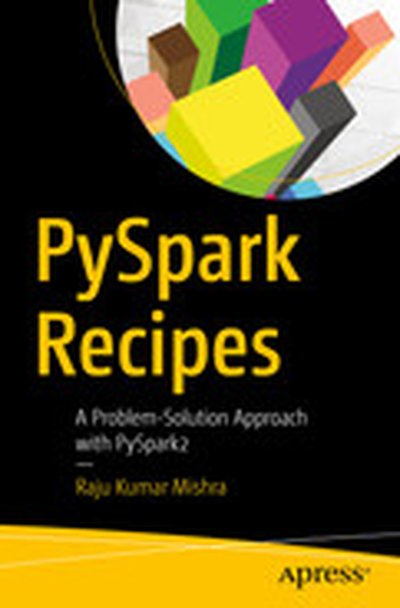
PySpark Recipes: A Problem-Solution Approach with PySpark2

Quickly find solutions to common programming problems encountered while processing big data. Content is presented in the popular problem-solution format. Look up the programming problem that you want to solve. Read the solution. Apply the solution directly in your own code. Problem solved! PySpark Recipes covers Hadoop and its shortcomings. The architecture of Spark, PySpark, and RDD are presented. You will learn to apply RDD to solve day-to-day big data problems. Python and NumPy are included and make it easy for new learners of PySpark to understand and adopt the model. What You Will Learn Understand the advanced features of PySpark2 and SparkSQL Optimize your code Program SparkSQL with Python Use Spark Streaming and Spark MLlib with Python Perform graph analysis with GraphFrames Who This Book Is For Data analysts, Python programmers, big data enthusiasts

I sat down with Ali Ghodsi, CEO and found of Databricks, and John Chirapurath, GM for Data Platform Marketing at Microsoft related to the recent announcement of Azure Databricks. When I heard about the announcement, my first thoughts were two-fold.  First, the possibility of optimized integrations with existing Azure services.  This would be a big benefit to heavy Azure users who also want to use Spark.  Second, the benefits of active directory to control Databricks access for large enterprise. Hear Ali and JG's thoughts and comments on what makes Azure Databricks a novel offering.  

Summary With the wealth of formats for sending and storing data it can be difficult to determine which one to use. In this episode Doug Cutting, creator of Avro, and Julien Le Dem, creator of Parquet, dig into the different classes of serialization formats, what their strengths are, and how to choose one for your workload. They also discuss the role of Arrow as a mechanism for in-memory data sharing and how hardware evolution will influence the state of the art for data formats.

Preamble

Hello and welcome to the Data Engineering Podcast, the show about modern data infrastructure When you’re ready to launch your next project you’ll need somewhere to deploy it. Check out Linode at dataengineeringpodcast.com/linode and get a $20 credit to try out their fast and reliable Linux virtual servers for running your data pipelines or trying out the tools you hear about on the show. Continuous delivery lets you get new features in front of your users as fast as possible without introducing bugs or breaking production and GoCD is the open source platform made by the people at Thoughtworks who wrote the book about it. Go to dataengineeringpodcast.com/gocd to download and launch it today. Enterprise add-ons and professional support are available for added peace of mind. Go to dataengineeringpodcast.com to subscribe to the show, sign up for the newsletter, read the show notes, and get in touch. You can help support the show by checking out the Patreon page which is linked from the site. To help other people find the show you can leave a review on iTunes, or Google Play Music, and tell your friends and co-workers This is your host Tobias Macey and today I’m interviewing Julien Le Dem and Doug Cutting about data serialization formats and how to pick the right one for your systems.

Interview

Introduction How did you first get involved in the area of data management? What are the main serialization formats used for data storage and analysis? What are the tradeoffs that are offered by the different formats? How have the different storage and analysis tools influenced the types of storage formats that are available? You’ve each developed a new on-disk data format, Avro and Parquet respectively. What were your motivations for investing that time and effort? Why is it important for data engineers to carefully consider the format in which they transfer their data between systems?

What are the switching costs involved in moving from one format to another after you have started using it in a production system?

What are some of the new or upcoming formats that you are each excited about? How do you anticipate the evolving hardware, patterns, and tools for processing data to influence the types of storage formats that maintain or grow their popularity?

Contact Information

Doug:

cutting on GitHub Blog @cutting on Twitter

Julien

Email @J_ on Twitter Blog julienledem on GitHub

Links

Apache Avro Apache Parquet Apache Arrow Hadoop Apache Pig Xerox Parc Excite Nutch Vertica Dremel White Paper

Twitter Blog on Release of Parquet

CSV XML Hive Impala Presto Spark SQL Brotli ZStandard Apache Drill Trevni Apache Calcite

The intro and outro music is from The Hug by The Freak Fandango Orchestra / CC BY-SA

Support Data Engineering Podcast

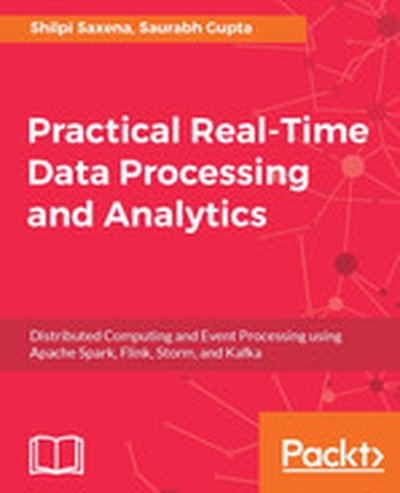
Practical Real-time Data Processing and Analytics

This book provides a comprehensive guide to real-time data processing and analytics using modern frameworks like Apache Spark, Flink, Storm, and Kafka. Through practical examples and in-depth explanations, you will learn how to implement efficient, scalable, real-time processing pipelines. What this Book will help me do Understand real-time data processing essentials and the technology stack Learn integration of components like Apache Spark and Kafka Master the concepts of stream processing with detailed case studies Gain expertise in developing monitoring and alerting solutions for real-time systems Prepare to implement production-grade real-time data solutions Author(s) Shilpi Saxena and Saurabh Gupta, the authors, are experienced professionals in distributed systems and data engineering, focusing on practical applications of real-time computing. They bring their extensive industry experience to this book, helping readers understand the complexities of real-time data solutions in an approachable and hands-on manner. Who is it for? This book is ideal for software engineers and data engineers with a background in Java who seek to develop real-time data solutions. It is suitable for readers familiar with concepts of real-time data processing, and enhances knowledge in frameworks like Spark, Flink, Storm, and Kafka. Target audience includes learners building production data solutions and those designing distributed analytics engines.

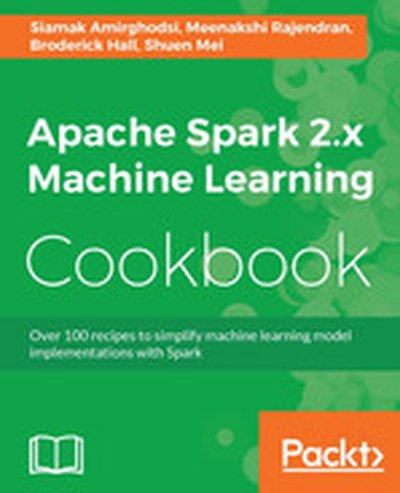
Apache Spark 2.x Machine Learning Cookbook

This book is your gateway to mastering machine learning with Apache Spark 2.x. Through detailed hands-on recipes, you'll delve into building scalable ML models, optimizing big data processes, and enhancing project efficiency. Gain practical knowledge and explore real-world applications of recommendations, clustering, analytics, and more with Spark's powerful capabilities. What this Book will help me do Understand how to integrate Scala and Spark for effective machine learning development. Learn to create scalable recommendation engines using Spark. Master the development of clustering systems to organize unlabelled data at scale. Explore Spark libraries to implement efficient text analytics and search engines. Optimize large-scale data operations, tackling high-dimensional issues with Spark. Author(s) The team of authors brings expertise in machine learning, data science, and Spark technologies. Their combined industry experience and academic knowledge ensure the book is grounded in practical applications while offering theoretical insights. With clear explanations and a step-by-step approach, they aim to simplify complex concepts for developers and data scientists. Who is it for? This book is crafted for Scala developers familiar with machine learning concepts but seeking practical applications with Spark. If you have been implementing models but want to scale them and leverage Spark's robust ecosystem, this guide will serve you well. It is ideal for professionals seeking to deepen their skills in Spark and data science.

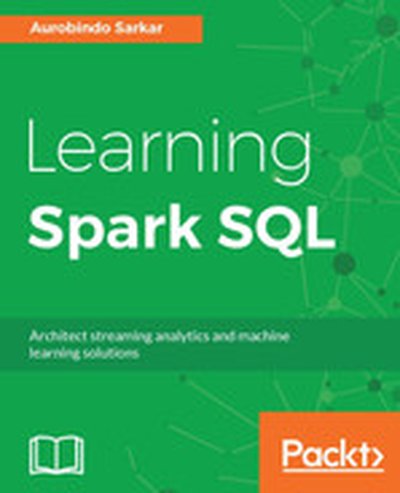
Learning Spark SQL

"Learning Spark SQL" takes you from data exploration to designing scalable applications with Apache Spark SQL. Through hands-on examples, you will comprehend real-world use cases and gain practical skills crucial for working with Spark SQL APIs, data frames, streaming data, and optimizing Spark applications. What this Book will help me do Understand the principles of Spark SQL and its APIs for building scalable distributed applications. Gain hands-on experience performing data wrangling and visualization using Spark SQL and real-world datasets. Learn how to design and optimize applications for performance and scalability with Spark SQL. Develop the skills to integrate Spark SQL with other frameworks like Apache Kafka for streaming analytics. Master the techniques required to architect machine learning and deep learning solutions using Spark SQL. Author(s) None Sarkar is an experienced technologist and trainer specializing in big data, streaming analytics, and scalable architectures using Apache Spark. With years of practical experience in implementing Spark solutions, Sarkar draws from real-world projects to provide readers with valuable insights. Sarkar's approachable and detailed writing style ensures readers grasp both the theory and the practice of Spark SQL. Who is it for? This book is ideal for software developers, data engineers, and architects aspiring to harness Apache Spark for robust, scalable applications. It suits readers with some SQL querying experience and a basic knowledge of programming in languages like Scala, Java, or Python. Whether you're a Spark newcomer or advancing your capabilities in scalable data processing, this resource will accelerate your learning journey.

Building Data Streaming Applications with Apache Kafka

Learn how to design and build efficient real-time streaming applications using Apache Kafka, a leading distributed streaming platform. This book provides comprehensive guidance on setting up Kafka clusters, developing producers and consumers, and integrating with frameworks like Spark, Storm, and Heron. By the end, you'll master the skills needed to create enterprise-grade data streaming solutions. What this Book will help me do Grasp the core concepts and components of Apache Kafka and its ecosystem. Develop robust Kafka producers and consumers to process real-time data streams. Design and implement streaming applications using Spark, Storm, and Heron. Plan Kafka deployments with a focus on scalability, capacity, and fault tolerance. Ensure secure data streaming with best practices for securing Apache Kafka. Author(s) The authors, None Singh and None Kumar, bring years of expertise in data engineering and distributed systems. Having worked extensively with streaming technologies like Apache Kafka, they aim to share their in-depth knowledge through practical examples and real-world scenarios. Their approach to teaching focuses on making complex concepts easily understandable. Who is it for? This book is ideal for software developers and data engineers who are eager to learn Apache Kafka for building streaming applications. Some experience with programming, particularly Java, will help readers get the most out of the material. If you are working on data-processing systems or looking to enhance your skills in real-time data handling, this book caters to your needs.

Deep Learning

Although interest in machine learning has reached a high point, lofty expectations often scuttle projects before they get very far. How can machine learning—especially deep neural networks—make a real difference in your organization? This hands-on guide not only provides the most practical information available on the subject, but also helps you get started building efficient deep learning networks. Authors Adam Gibson and Josh Patterson provide theory on deep learning before introducing their open-source Deeplearning4j (DL4J) library for developing production-class workflows. Through real-world examples, you’ll learn methods and strategies for training deep network architectures and running deep learning workflows on Spark and Hadoop with DL4J. Dive into machine learning concepts in general, as well as deep learning in particular Understand how deep networks evolved from neural network fundamentals Explore the major deep network architectures, including Convolutional and Recurrent Learn how to map specific deep networks to the right problem Walk through the fundamentals of tuning general neural networks and specific deep network architectures Use vectorization techniques for different data types with DataVec, DL4J’s workflow tool Learn how to use DL4J natively on Spark and Hadoop

Summary

Building a data pipeline that is reliable and flexible is a difficult task, especially when you have a small team. Astronomer is a platform that lets you skip straight to processing your valuable business data. Ry Walker, the CEO of Astronomer, explains how the company got started, how the platform works, and their commitment to open source.

Preamble

Hello and welcome to the Data Engineering Podcast, the show about modern data infrastructure When you’re ready to launch your next project you’ll need somewhere to deploy it. Check out Linode at www.dataengineeringpodcast.com/linode?utm_source=rss&utm_medium=rss and get a $20 credit to try out their fast and reliable Linux virtual servers for running your data pipelines or trying out the tools you hear about on the show. Go to dataengineeringpodcast.com to subscribe to the show, sign up for the newsletter, read the show notes, and get in touch. You can help support the show by checking out the Patreon page which is linked from the site. To help other people find the show you can leave a review on iTunes, or Google Play Music, and tell your friends and co-workers This is your host Tobias Macey and today I’m interviewing Ry Walker, CEO of Astronomer, the platform for data engineering.

Interview

Introduction How did you first get involved in the area of data management? What is Astronomer and how did it get started? Regulatory challenges of processing other people’s data What does your data pipelining architecture look like? What are the most challenging aspects of building a general purpose data management environment? What are some of the most significant sources of technical debt in your platform? Can you share some of the failures that you have encountered while architecting or building your platform and company and how you overcame them? There are certain areas of the overall data engineering workflow that are well defined and have numerous tools to choose from. What are some of the unsolved problems in data management? What are some of the most interesting or unexpected uses of your platform that you are aware of?

Contact Information

Email @rywalker on Twitter

Links

Astronomer Kiss Metrics Segment Marketing tools chart Clickstream HIPAA FERPA PCI Mesos Mesos DC/OS Airflow SSIS Marathon Prometheus Grafana Terraform Kafka Spark ELK Stack React GraphQL PostGreSQL MongoDB Ceph Druid Aries Vault Adapter Pattern Docker Kinesis API Gateway Kong AWS Lambda Flink Redshift NOAA Informatica SnapLogic Meteor

The intro and outro music is from The Hug by The Freak Fandango Orchestra / CC BY-SA Support Data Engineering Podcast

Apache Spark 2.x for Java Developers

Delve into mastering big data processing with 'Apache Spark 2.x for Java Developers.' This book provides a practical guide to implementing Apache Spark using the Java APIs, offering a unique opportunity for Java developers to leverage Spark's powerful framework without transitioning to Scala. What this Book will help me do Learn how to process data from formats like XML, JSON, CSV using Spark Core. Implement real-time analytics using Spark Streaming and third-party tools like Kafka. Understand data querying with Spark SQL and master SQL schema processing. Apply machine learning techniques with Spark MLlib to real-world scenarios. Explore graph processing and analytics using Spark GraphX. Author(s) None Kumar and None Gulati, experienced professionals in Java development and big data, bring their wealth of practical experience and passion for teaching to this book. With a clear and concise writing style, they aim to simplify Spark for Java developers, making big data approachable. Who is it for? This book is perfect for Java developers who are eager to expand their skillset into big data processing with Apache Spark. Whether you are a seasoned Spark user or first diving into big data concepts, this book meets you at your level. With practical examples and straightforward explanations, you can unlock the potential of Spark in real-world scenarios.

Mastering Apache Spark 2.x - Second Edition

Mastering Apache Spark 2.x is the essential guide to harnessing the power of big data processing. Dive into real-time data analytics, machine learning, and cluster computing using Apache Spark's advanced features and modules like Spark SQL and MLlib. What this Book will help me do Gain proficiency in Spark's batch and real-time data processing with SparkSQL. Master techniques for machine learning and deep learning using SparkML and SystemML. Understand the principles of Spark's graph processing with GraphX and GraphFrames. Learn to deploy Apache Spark efficiently on platforms like Kubernetes and IBM Cloud. Optimize Spark cluster performance by configuring parameters effectively. Author(s) Romeo Kienzler is a seasoned professional in big data and machine learning technologies. With years of experience in cloud-based distributed systems, Romeo brings practical insights into leveraging Apache Spark. He combines his deep technical expertise with a clear and engaging writing style. Who is it for? This book is tailored for intermediate Apache Spark users eager to deepen their knowledge in Spark 2.x's advanced features. Ideal for data engineers and big data professionals seeking to enhance their analytics pipelines with Spark. A basic understanding of Spark and Scala is necessary. If you're aiming to optimize Spark for real-world applications, this book is crafted for you.

Moving Hadoop to the Cloud

Until recently, Hadoop deployments existed on hardware owned and run by organizations. Now, of course, you can acquire the computing resources and network connectivity to run Hadoop clusters in the cloud. But there’s a lot more to deploying Hadoop to the public cloud than simply renting machines. This hands-on guide shows developers and systems administrators familiar with Hadoop how to install, use, and manage cloud-born clusters efficiently. You’ll learn how to architect clusters that work with cloud-provider features—not just to avoid pitfalls, but also to take full advantage of these services. You’ll also compare the Amazon, Google, and Microsoft clouds, and learn how to set up clusters in each of them. Learn how Hadoop clusters run in the cloud, the problems they can help you solve, and their potential drawbacks Examine the common concepts of cloud providers, including compute capabilities, networking and security, and storage Build a functional Hadoop cluster on cloud infrastructure, and learn what the major providers require Explore use cases for high availability, relational data with Hive, and complex analytics with Spark Get patterns and practices for running cloud clusters, from designing for price and security to dealing with maintenance

Streaming Data

Streaming Data introduces the concepts and requirements of streaming and real-time data systems. The book is an idea-rich tutorial that teaches you to think about how to efficiently interact with fast-flowing data. About the Technology As humans, we're constantly filtering and deciphering the information streaming toward us. In the same way, streaming data applications can accomplish amazing tasks like reading live location data to recommend nearby services, tracking faults with machinery in real time, and sending digital receipts before your customers leave the shop. Recent advances in streaming data technology and techniques make it possible for any developer to build these applications if they have the right mindset. This book will let you join them. About the Book Streaming Data is an idea-rich tutorial that teaches you to think about efficiently interacting with fast-flowing data. Through relevant examples and illustrated use cases, you'll explore designs for applications that read, analyze, share, and store streaming data. Along the way, you'll discover the roles of key technologies like Spark, Storm, Kafka, Flink, RabbitMQ, and more. This book offers the perfect balance between big-picture thinking and implementation details. What's Inside The right way to collect real-time data Architecting a streaming pipeline Analyzing the data Which technologies to use and when About the Reader Written for developers familiar with relational database concepts. No experience with streaming or real-time applications required. About the Author Andrew Psaltis is a software engineer focused on massively scalable real-time analytics. Quotes The definitive book if you want to master the architecture of an enterprise-grade streaming application. - Sergio Fernandez Gonzalez, Accenture A thorough explanation and examination of the different systems, strategies, and tools for streaming data implementations. - Kosmas Chatzimichalis, Mach 7x A well-structured way to learn about streaming data and how to put it into practice in modern real-time systems. - Giuliano Araujo Bertoti, FATEC This book is all you need to understand what streaming is all about! - Carlos Curotto, Globant

Frank Kane's Taming Big Data with Apache Spark and Python

This book introduces you to the world of Big Data processing using Apache Spark and Python. You will learn to set up and run Spark on different systems, process massive datasets, and create solutions to real-world Big Data challenges with over 15 hands-on examples included. What this Book will help me do Understand the basics of Apache Spark and its ecosystem. Learn how to process large datasets with Spark RDDs using Python. Implement machine learning models with Spark's MLlib library. Master real-time data processing with Spark Streaming modules. Deploy and run Spark jobs on cloud clusters using AWS EMR. Author(s) Frank Kane spent 9 years working at Amazon and IMDb, handling and solving real-world machine learning and Big Data problems. Today, as an instructional designer and educator, he brings his wealth of experience to learners around the globe by creating accessible, practical learning resources. His teaching is clear, engaging, and designed to prepare students for real-world applications. Who is it for? This book is ideal for data scientists or data analysts seeking to delve into Big Data processing with Apache Spark. Readers who have foundational knowledge of Python, as well as some understanding of data processing principles, will find this book useful to sharpen their skills further. It is designed for those eager to learn the practical applications of Big Data tools in today's industry environments. By the end of this book, you should feel confident tackling Big Data challenges using Spark and Python.