talk-data.com talk-data.com

Topic

SQL

Structured Query Language (SQL)

database_language data_manipulation data_definition programming_language

780

tagged

Activity Trend

107 peak/qtr
2020-Q1 2026-Q1

Activities

Showing filtered results

Filtering by: O'Reilly Data Engineering Books ×
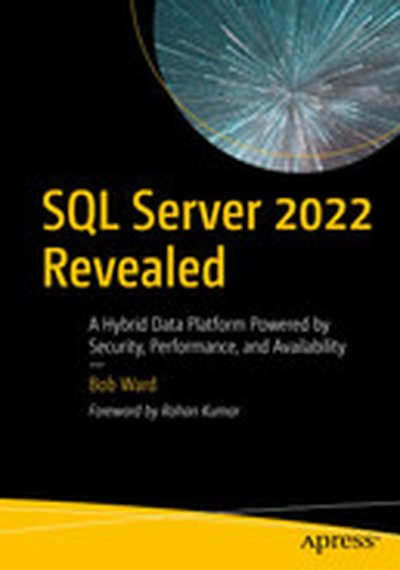
SQL Server 2022 Revealed: A Hybrid Data Platform Powered by Security, Performance, and Availability

Know how to use the new capabilities and cloud integrations in SQL Server 2022. This book covers the many innovative integrations with the Azure Cloud that make SQL Server 2022 the most cloud-connected edition ever. The book covers cutting-edge features such as the blockchain-based Ledger for creating a tamper-evident record of changes to data over time that you can rely on to be correct and reliable. You'll learn about built-in Query Intelligence capabilities to help you to upgrade with confidence that your applications will perform at least as fast after the upgrade than before. In fact, you'll probably see an increase in performance from the upgrade, with no code changes needed. Also covered are innovations such as contained availability groups and data virtualization with S3 object storage. New cloud integrations covered in this book include Microsoft Azure Purview and the use of Azure SQL for high availability and disaster recovery. The bookcovers Azure Synapse Link with its built-in capabilities to take changes and put them into Synapse automatically. Anyone building their career around SQL Server will want this book for the valuable information it provides on building SQL skills from edge to the cloud. ​ What You Will Learn Know how to use all of the new capabilities and cloud integrations in SQL Server 2022 Connect to Azure for disaster recovery, near real-time analytics, and security Leverage the Ledger to create a tamper-evident record of data changes over time Upgrade from prior releases and achieve faster and more consistent performance with no code changes Access data and storage in different and new formats, such as Parquet and S3, without moving the data and using your existing T-SQL skills Explore new application scenarios using innovations with T-SQL in areassuch as JSON and time series Who This Book Is For SQL Server professionals who want to upgrade their skills to the latest edition of SQL Server; those wishing to take advantage of new integrations with Microsoft Azure Purview (governance), Azure Synapse (analytics), and Azure SQL (HA and DR); and those in need of the increased performance and security offered by Query Intelligence and the new Ledger
Proactive Early Threat Detection and Securing SQL Database With IBM QRadar and IBM Spectrum Copy Data Management Using IBM FlashSystem Safeguarded Copy

This IBM® blueprint publication focuses on early threat detection within a database environment by using IBM QRadar®. It also highlights how to proactively start a cyber resilience workflow in response to a cyberattack or potential malicious user actions. The workflow that is presented here uses IBM Spectrum® Copy Data Management as orchestration software to start IBM FlashSystem® Safeguarded Copy functions. The Safeguarded Copy creates an immutable copy of the data in an air-gapped form on the same IBM FlashSystem for isolation and eventual quick recovery. This document describes how to enable and forward SQL database user activities to IBM QRadar. This document also describes how to create various rules to determine a threat, and configure and start a suitable response to the detected threat in IBM QRadar. Finally, this document outlines the steps that are involved to create a Scheduled Job by using IBM Spectrum® Copy Data Management with various actions.

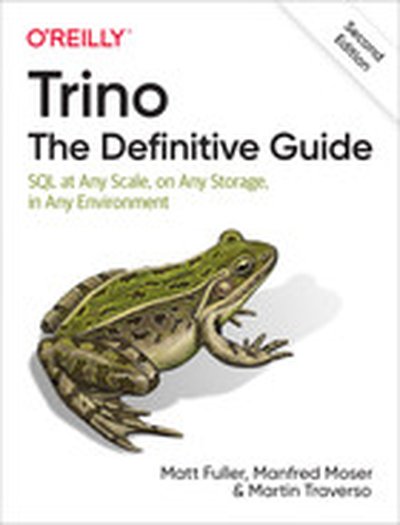
Trino: The Definitive Guide, 2nd Edition

Perform fast interactive analytics against different data sources using the Trino high-performance distributed SQL query engine. In the second edition of this practical guide, you'll learn how to conduct analytics on data where it lives, whether it's a data lake using Hive, a modern lakehouse with Iceberg or Delta Lake, a different system like Cassandra, Kafka, or SingleStore, or a relational database like PostgreSQL or Oracle. Analysts, software engineers, and production engineers learn how to manage, use, and even develop with Trino and make it a critical part of their data platform. Authors Matt Fuller, Manfred Moser, and Martin Traverso show you how a single Trino query can combine data from multiple sources to allow for analytics across your entire organization. Explore Trino's use cases, and learn about tools that help you connect to Trino for querying and processing huge amounts of data Learn Trino's internal workings, including how to connect to and query data sources with support for SQL statements, operators, functions, and more Deploy and secure Trino at scale, monitor workloads, tune queries, and connect more applications Learn how other organizations apply Trino successfully

Practical Database Auditing for Microsoft SQL Server and Azure SQL: Troubleshooting, Regulatory Compliance, and Governance

Know how to track changes and key events in your SQL Server databases in support of application troubleshooting, regulatory compliance, and governance. This book shows how to use key features in SQL Server ,such as SQL Server Audit and Extended Events, to track schema changes, permission changes, and changes to your data. You’ll even learn how to track queries run against specific tables in a database. Not all changes and events can be captured and tracked using SQL Server Audit and Extended Events, and the book goes beyond those features to also show what can be captured using common criteria compliance, change data capture, temporal tables, or querying the SQL Server log. You will learn how to audit just what you need to audit, and how to audit pretty much anything that happens on a SQL Server instance. This book will also help you set up cloud auditing with an emphasis on Azure SQL Database, Azure SQL Managed Instance, and AWS RDS SQL Server. You don’t need expensive, third-party auditing tools to make auditing work for you, and to demonstrate and provide value back to your business. This book will help you set up an auditing solution that works for you and your needs. It shows how to collect the audit data that you need, centralize that data for easy reporting, and generate audit reports using built-in SQL Server functionality for use by your own team, developers, and organization’s auditors. What You Will Learn Understand why auditing is important for troubleshooting, compliance, and governance Track changes and key events using SQL Server Audit and Extended Events Track SQL Server configuration changes for governance and troubleshooting Utilize change data capture and temporal tables to track data changes in SQL Server tables Centralize auditing data from all yourdatabases for easy querying and reporting Configure auditing on Azure SQL, Azure SQL Managed Instance, and AWS RDS SQL Server Who This Book Is For Database administrators who need to know what’s changing on their database servers, and those who are making the changes; database-savvy DevOps engineers and developers who are charged with troubleshooting processes and applications; developers and administrators who are responsible for generating reports in support of regulatory compliance reporting and auditing

Practical CockroachDB: Building Fault-Tolerant Distributed SQL Databases

Get a practical introduction to CockroachDB. This book starts with installation and foundational concepts and takes you through to creating clusters that are ready for production environments. You will learn how to create, optimize, and operate CockroarchDB clusters in single and multi-region environments. You will encounter anti-patterns to avoid, as well as testing techniques for integration and load testing. The book explains why CockroachDB exists, goes over its major benefits, and quickly transitions into installing and configuring CockroachDB. Just as quickly, you’ll be creating databases, getting data into those databases, and querying that data from your applications. You’ll progress to data privacy laws such as GDPR and CCPA, and learn how CockroachDB’s global distribution features can help you comply with ever-shifting data sovereignty regulations. From there, you’ll move into deployment topologies, guidance on integration testing and load testing, best practices, and a readiness checklist for production deployments. What You Will Learn Deploy and interact with CockroachDB Design and optimize databases and tables Choose the correct data types for modeling your data Protect data with database and table encryption Achieve compliance with international data privacy regulations Scale your databases in a way that enhances their performance Monitor changes to the data and health of your databases Who This Book Is For Developers and database administrators who want to provide a secure, reliable, and effortlessly distributed home for their data; those who wish to use a modern tool to tackle the kinds of scaling challenges that have previously required dedicated teams of people to solve; anyone who wants to leverage their database to solve non-trivial, real-world challenges while protecting their data and users

Snowflake: The Definitive Guide

Snowflake's ability to eliminate data silos and run workloads from a single platform creates opportunities to democratize data analytics, allowing users at all levels within an organization to make data-driven decisions. Whether you're an IT professional working in data warehousing or data science, a business analyst or technical manager, or an aspiring data professional wanting to get more hands-on experience with the Snowflake platform, this book is for you. You'll learn how Snowflake users can build modern integrated data applications and develop new revenue streams based on data. Using hands-on SQL examples, you'll also discover how the Snowflake Data Cloud helps you accelerate data science by avoiding replatforming or migrating data unnecessarily. You'll be able to: Efficiently capture, store, and process large amounts of data at an amazing speed Ingest and transform real-time data feeds in both structured and semistructured formats and deliver meaningful data insights within minutes Use Snowflake Time Travel and zero-copy cloning to produce a sensible data recovery strategy that balances system resilience with ongoing storage costs Securely share data and reduce or eliminate data integration costs by accessing ready-to-query datasets available in the Snowflake Marketplace

Pro Database Migration to Azure: Data Modernization for the Enterprise

Migrate your existing, on-premises applications into the Microsoft Azure cloud platform. This book covers the best practices to plan, implement, and operationalize the migration of a database application from your organization’s data center to Microsoft’s Azure cloud platform. Data modernization and migration is a technologically complex endeavor that can also be taxing from a leadership and operational standpoint. This book covers not only the technology, but also the most important aspects of organization culture, communication, and politics that so frequently derail such projects. You will learn the most important steps to ensuring a successful migration and see battle-tested wisdom from industry veterans. From executive sponsorship, to executing the migration, to the important steps following migration, you will learn how to effectively conduct future migrations and ensure that your team and your database application delivers on the expected business value of the project. This book is unlike any other currently in the market. It takes you through the most critical business and technical considerations and workflows for moving your data and databases into the cloud, with special attention paid to those who are deploying to the Microsoft Data Platform in Azure, especially SQL Server. Although this book focuses on migrating on-premises SQL Server enterprises to hybrid or fully cloud-based Azure SQL Database and Azure SQL Managed Instances, it also cover topics involving migrating non-SQL Server database platforms such as Oracle, MySQL, and PostgreSQL applications to Microsoft Azure. What You Will Learn Plan a database migration that ensures smooth project progress, optimal performance, low operating cost, and minimal downtime Properly analyze and manage non-technical considerations, such as legal compliance, privacy, and team execution Perform athorough architectural analysis to select the best Azure services, performance tiers, and cost-containment features Avoid pitfalls and common reasons for failure relating to corporate culture, intra-office politics, and poor communications Secure the proper executive champions who can execute the business planning needed for success Apply proven criteria to determine your future-state architecture and your migration method Execute your migration using a process proven by the authors over years of successful projects Who This Book Is For IT leadership, strategic IT decision makers, project owners and managers, and enterprise and application architects. For anyone looking toward cloud migration projects as the next stage of growth in their careers. Also useful for enterprise DBAs and consultants who might be involved in such projects. Readers should have experience and be competent in designing, coding, implementing, and supporting database applications in an on-premises environment.

Simplifying Data Engineering and Analytics with Delta

This book will guide you through mastering Delta, a robust and versatile protocol for data engineering and analytics. You'll discover how Delta simplifies data workflows, supports both batch and streaming data, and is optimized for analytics applications in various industries. By the end, you will know how to create high-performing, analytics-ready data pipelines. What this Book will help me do Understand Delta's unique offering for unifying batch and streaming data processing. Learn approaches to address data governance, reliability, and scalability challenges. Gain technical expertise in building data pipelines optimized for analytics and machine learning use. Master core concepts like data modeling, distributed computing, and Delta's schema evolution features. Develop and deploy production-grade data engineering solutions leveraging Delta for business intelligence. Author(s) Anindita Mahapatra is an experienced data engineer and author with years of expertise in working on Delta and data-driven solutions. Her hands-on approach to explaining complex data concepts makes this book an invaluable resource for professionals in data engineering and analytics. Who is it for? Ideal for data engineers, data analysts, and anyone involved in AI/BI workflows, this book suits learners with some basic knowledge of SQL and Python. Whether you're an experienced professional or looking to upgrade your skills with Delta, this book will provide practical insights and actionable knowledge.

Learn dbatools in a Month of Lunches

If you work with SQL Server, dbatools is a lifesaver. This book will show you how to use this free and open source PowerShell module to automate just about every SQL server task you can imagine—all in just one month! In Learn dbatools in a Month of Lunches you will learn how to: Perform instance-to-instance and customized migrations Automate security audits, tempdb configuration, alerting, and reporting Schedule and monitor PowerShell tasks in SQL Server Agent Bulk-import any type of data into SQL Server Install dbatools in secure environments Written by a group of expert authors including dbatools creator Chrissy LeMaire, Learn dbatools in a Month of Lunches teaches you techniques that will make you more effective—and efficient—than you ever thought possible. In twenty-eight lunchbreak lessons, you’ll learn the most important use cases of dbatools and the favorite functions of its core developers. Stabilize and standardize your SQL server environment, and simplify your tasks by building automation, alerting, and reporting with this powerful tool. About the Technology For SQL Server DBAs, automation is the key to efficiency. Using the open-source dbatools PowerShell module, you can easily execute tasks on thousands of database servers at once—all from the command line. dbatools gives you over 500 pre-built commands, with countless new options for managing SQL Server at scale. There’s nothing else like it. About the Book Learn dbatools in a Month of Lunches teaches you how to automate SQL Server using the dbatools PowerShell module. Each 30-minute lesson introduces a new automation that will make your daily duties easier. Following the expert advice of dbatools creator Chrissy LeMaire and other top community contributors, you’ll learn to script everything from backups to disaster recovery. What's Inside Performing instance-to-instance and customized migrations Automating security audits, best practices, and standardized configurations Administering SQL Server Agent including running PowerShell scripts effectively Bulk-importing many types of data into SQL Server Executing advanced tasks and increasing efficiency for everyday administration About the Reader For DBAs, accidental DBAs, and systems engineers who manage SQL Server. About the Authors Chrissy LeMaire is a GitHub Star and the creator of dbatools. Rob Sewell is a data engineer and a passionate automator. Jess Pomfret and Cláudio Silva are data platform architects. All are Microsoft MVPs. Quotes All SQL Server professionals should learn dbatools. With its combination of knowledge transfer, anecdotes, and hands-on labs, this book is the perfect way. - From the Foreword by Anna Hoffman, Databases Product Management, Microsoft Excellent guide for dbatools with lots of practical tips! Required reading for anyone interested in dbatools. - Ruben Vandeginste, PeopleWare A must-have for any SQL server developer. - Raushan Kumar Jha, Microsoft If you want to automate all vital aspects of SQL Server, wait no more! Learn dbatools in a month, with guidance from the best minds in the business. - Ranjit Sahai, RAM Consulting

Advanced SQL with SAS

This book introduces advanced techniques for using PROC SQL in SAS. If you are a SAS programmer, analyst, or student who has mastered the basics of working with SQL, Advanced SQL with SAS® will help take your skills to the next level. Filled with practical examples with detailed explanations, this book demonstrates how to improve performance and speed for large data sets. Although the book addresses advanced topics, it is designed to progress from the simple and manageable to the complex and sophisticated. In addition to numerous tuning techniques, this book also touches on implicit and explicit pass-throughs, presents alternative SAS grid- and cloud-based processing environments, and compares SAS programming languages and approaches including FedSQL, CAS, DS2, and hash programming. Other topics include: Missing values and data quality with audit trails “Blind spots” like how missing values can affect even the simplest calculations and table joins SAS macro language and SAS macro programs SAS functions Integrity constraints SAS Dictionaries SAS Compute Server

The MySQL Workshop

The MySQL Workshop is your comprehensive, hands-on guide to learning and mastering MySQL database management. This book covers everything from setting up a database to working with SQL queries, managing data, and securing your databases. With practical exercises and real-world scenarios, you'll quickly gain the confidence and skills to handle MySQL databases effectively. What this Book will help me do Understand and implement the core concepts of relational databases. Write, execute, and optimize SQL queries for data management. Connect MySQL databases to applications like MS Access and Excel. Secure databases by managing user roles and permissions effectively. Perform database backups and restores to maintain data integrity. Author(s) Thomas Pettit and Scott Cosentino are experienced professionals in database management and MySQL technologies. With years of industry experience, they bring a wealth of knowledge to their writing. They focus on breaking down complex topics into digestible lessons, ensuring practical learning outcomes. Who is it for? This book is ideal for tech professionals and students looking to learn MySQL. Beginners will find a gentle introduction, while those with some SQL background will deepen their understanding and cover gaps in knowledge. It suits professionals dealing with data who want actionable MySQL skills for work and projects.

CockroachDB: The Definitive Guide

Get the lowdown on CockroachDB, the distributed SQL database built to handle the demands of today's data-driven cloud applications. In this hands-on guide, software developers, architects, and DevOps/SRE teams will learn how to use CockroachDB to create applications that scale elastically and provide seamless delivery for end users while remaining indestructible. Teams will also learn how to migrate existing applications to CockroachDB's performant, cloud native data architecture. If you're familiar with distributed systems, you'll quickly discover the benefits of strong data correctness and consistency guarantees as well as optimizations for delivering ultra low latencies to globally distributed end users. You'll learn how to: Design and build applications for distributed infrastructure, including data modeling and schema design Migrate data into CockroachDB Read and write data and run ACID transactions across distributed infrastructure Plan a CockroachDB deployment for resiliency across single region and multi-region clusters Secure, monitor, and optimize your CockroachDB deployment

Modern Data Engineering with Apache Spark: A Hands-On Guide for Building Mission-Critical Streaming Applications

Leverage Apache Spark within a modern data engineering ecosystem. This hands-on guide will teach you how to write fully functional applications, follow industry best practices, and learn the rationale behind these decisions. With Apache Spark as the foundation, you will follow a step-by-step journey beginning with the basics of data ingestion, processing, and transformation, and ending up with an entire local data platform running Apache Spark, Apache Zeppelin, Apache Kafka, Redis, MySQL, Minio (S3), and Apache Airflow. Apache Spark applications solve a wide range of data problems from traditional data loading and processing to rich SQL-based analysis as well as complex machine learning workloads and even near real-time processing of streaming data. Spark fits well as a central foundation for any data engineering workload. This book will teach you to write interactive Spark applications using Apache Zeppelin notebooks, write and compilereusable applications and modules, and fully test both batch and streaming. You will also learn to containerize your applications using Docker and run and deploy your Spark applications using a variety of tools such as Apache Airflow, Docker and Kubernetes. ​Reading this book will empower you to take advantage of Apache Spark to optimize your data pipelines and teach you to craft modular and testable Spark applications. You will create and deploy mission-critical streaming spark applications in a low-stress environment that paves the way for your own path to production. ​ What You Will Learn Simplify data transformation with Spark Pipelines and Spark SQL Bridge data engineering with machine learning Architect modular data pipeline applications Build reusable application components and libraries Containerize your Spark applications for consistency and reliability Use Docker and Kubernetes to deploy your Spark applications Speed up application experimentation using Apache Zeppelin and Docker Understand serializable structured data and data contracts Harness effective strategies for optimizing data in your data lakes Build end-to-end Spark structured streaming applications using Redis and Apache Kafka Embrace testing for your batch and streaming applications Deploy and monitor your Spark applications Who This Book Is For Professional software engineers who want to take their current skills and apply them to new and exciting opportunities within the data ecosystem, practicing data engineers who are looking for a guiding light while traversing the many challenges of moving from batch to streaming modes, data architects who wish to provide clear and concise direction for how best to harness anduse Apache Spark within their organization, and those interested in the ins and outs of becoming a modern data engineer in today's fast-paced and data-hungry world

Getting Started with CockroachDB

"Getting Started with CockroachDB" provides an in-depth introduction to CockroachDB, a modern, distributed SQL database designed for cloud-native applications. Through this guide, you'll learn how to deploy, manage, and optimize CockroachDB to build highly reliable, scalable database solutions tailored for demanding and distributed workloads. What this Book will help me do Understand the architecture and design principles of CockroachDB and its fault-tolerant model. Learn how to set up and manage CockroachDB clusters for high availability and automatic scaling. Discover the concepts of data distribution and geo-partitioning to achieve low-latency global interactions. Explore indexing mechanisms in CockroachDB to optimize query performance for fast data retrieval. Master operational strategies, security configuration, and troubleshooting techniques for database management. Author(s) Kishen Das Kondabagilu Rajanna is an experienced software developer and database expert with a deep interest in distributed architectures. With hands-on experience working with CockroachDB and other database technologies, Kishen is passionate about sharing actionable insights with readers. His approach focuses on equipping developers with practical skills to excel in building and managing scalable, efficient database services. Who is it for? This book is ideal for software developers, database administrators, and database engineers seeking to learn CockroachDB for building robust, scalable database systems. If you're new to CockroachDB but possess basic database knowledge, this guide will equip you with the practical skills to leverage CockroachDB's capabilities effectively.

Analytics Optimization with Columnstore Indexes in Microsoft SQL Server: Optimizing OLAP Workloads

Meet the challenge of storing and accessing analytic data in SQL Server in a fast and performant manner. This book illustrates how columnstore indexes can provide an ideal solution for storing analytic data that leads to faster performing analytic queries and the ability to ask and answer business intelligence questions with alacrity. The book provides a complete walk through of columnstore indexing that encompasses an introduction, best practices, hands-on demonstrations, explanations of common mistakes, and presents a detailed architecture that is suitable for professionals of all skill levels. With little or no knowledge of columnstore indexing you can become proficient with columnstore indexes as used in SQL Server, and apply that knowledge in development, test, and production environments. This book serves as a comprehensive guide to the use of columnstore indexes and provides definitive guidelines. You will learn when columnstore indexes shouldbe used, and the performance gains that you can expect. You will also become familiar with best practices around architecture, implementation, and maintenance. Finally, you will know the limitations and common pitfalls to be aware of and avoid. As analytic data can become quite large, the expense to manage it or migrate it can be high. This book shows that columnstore indexing represents an effective storage solution that saves time, money, and improves performance for any applications that use it. You will see that columnstore indexes are an effective performance solution that is included in all versions of SQL Server, with no additional costs or licensing required. What You Will Learn Implement columnstore indexes in SQL Server Know best practices for the use and maintenance of analytic data in SQL Server Use metadata to fully understand the size and shape of data stored in columnstore indexes Employ optimal ways to load, maintain, and delete data from large analytic tables Know how columnstore compression saves storage, memory, and time Understand when a columnstore index should be used instead of a rowstore index Be familiar with advanced features and analytics Who This Book Is For Database developers, administrators, and architects who are responsible for analytic data, especially for those working with very large data sets who are looking for new ways to achieve high performance in their queries, and those with immediate or future challenges to analytic data and query performance who want a methodical and effective solution

What Is Distributed SQL?

Globally available resources have become the status quo. They're accessible, distributed, and resilient. Our traditional SQL database options haven't kept up. Centralized SQL databases, even those with read replicas in the cloud, put all the transactional load on a central system. The further away that a transaction happens from the user, the more the user experience suffers. If the transactional data powering the application is greatly slowed down, fast-loading web pages mean nothing. In this report, Paul Modderman, Jim Walker, and Charles Custer explain how distributed SQL fits all applications and eliminates complex challenges like sharding from traditional RDBMS systems. You'll learn how distributed SQL databases can reach global scale without introducing the consistency trade-offs found in NoSQL solutions. These databases come to life through cloud computing, while legacy databases simply can't rise to meet the elastic and ubiquitous new paradigm. You'll learn: Key concepts driving this new technology, including the CAP theorem, the Raft consensus algorithm, multiversion concurrency control, and Google Spanner How distributed SQL databases meet enterprise requirements, including management, security, integration, and Everything as a Service (XaaS) The impact that distributed SQL has already made in the telecom, retail, and gaming industries Why serverless computing is an ideal fit for distributed SQL How distributed SQL can help you expand your company's strategic plan

PHP & MySQL: Novice to Ninja, 7th Edition

PHP & MySQL: Novice to Ninja, 7th Edition is a hands-on guide to learning all the tools, principles, and techniques needed to build a professional web application using PHP & MySQL. Comprehensively updated to cover PHP 8 and modern best practice, this highly practical and fun book covers everything from installation through to creating a complete online content management system. Gain a thorough understanding of PHP syntax Master database design principles and SQL Write robust, maintainable, best practice code Build a working content management system (CMS) And much more!

Apache Pulsar in Action

Deliver lightning fast and reliable messaging for your distributed applications with the flexible and resilient Apache Pulsar platform. In Apache Pulsar in Action you will learn how to: Publish from Apache Pulsar into third-party data repositories and platforms Design and develop Apache Pulsar functions Perform interactive SQL queries against data stored in Apache Pulsar Apache Pulsar in Action is a comprehensive and practical guide to building high-traffic applications with Pulsar. You’ll learn to use this mature and battle-tested platform to deliver extreme levels of speed and durability to your messaging. Apache Pulsar committer David Kjerrumgaard teaches you to apply Pulsar’s seamless scalability through hands-on case studies, including IOT analytics applications and a microservices app based on Pulsar functions. About the Technology Reliable server-to-server messaging is the heart of a distributed application. Apache Pulsar is a flexible real-time messaging platform built to run on Kubernetes and deliver the scalability and resilience required for cloud-based systems. Pulsar supports both streaming and message queuing, and unlike other solutions, it can communicate over multiple protocols including MQTT, AMQP, and Kafka’s binary protocol. About the Book Apache Pulsar in Action teaches you to build scalable streaming messaging systems using Pulsar. You’ll start with a rapid introduction to enterprise messaging and discover the unique benefits of Pulsar. Following crystal-clear explanations and engaging examples, you’ll use the Pulsar Functions framework to develop a microservices-based application. Real-world case studies illustrate how to implement the most important messaging design patterns. What's Inside Publish from Pulsar into third-party data repositories and platforms Design and develop Apache Pulsar functions Create an event-driven food delivery application About the Reader Written for experienced Java developers. No prior knowledge of Pulsar required. About the Author David Kjerrumgaard is a committer on the Apache Pulsar project. He currently serves as a Developer Advocate for StreamNative, where he develops Pulsar best practices and solutions. Quotes Apache Pulsar in Action is able to seamlessly mix the theory and abstract concepts with the clarity of practical step-by-step examples. I’d recommend to anyone! - Matteo Merli, co-creator of Apache Pulsar Gives readers insights into how the ‘magic’ works… Definitely recommended. - Henry Saputra, Splunk A complete, practical, fun-filled book. - Satej Kumar Sahu, Honeywell A definitive guide that will help you scale your applications. - Alessandro Campeis, Vimar The best book to start working with Pulsar. - Emanuele Piccinelli, Empirix

Efficient MySQL Performance

You'll find several books on basic or advanced MySQL performance, but nothing in between. That's because explaining MySQL performance without addressing its complexity is difficult. This practical book bridges the gap by teaching software engineers mid-level MySQL knowledge beyond the fundamentals, but well shy of deep-level internals required by database administrators (DBAs). Daniel Nichter shows you how to apply the best practices and techniques that directly affect MySQL performance. You'll learn how to improve performance by analyzing query execution, indexing for common SQL clauses and table joins, optimizing data access, and understanding the most important MySQL metrics. You'll also discover how replication, transactions, row locking, and the cloud influenceMySQL performance. Understand why query response time is the North Star of MySQL performance Learn query metrics in detail, including aggregation, reporting, and analysis See how to index effectively for common SQL clauses and table joins Explore the most important server metrics and what they reveal about performance Dive into transactions and row locking to gain deep, actionable insight Achieve remarkable MySQL performance at any scale

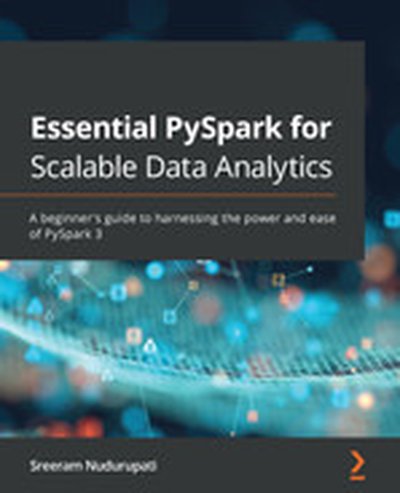
Essential PySpark for Scalable Data Analytics

Dive into the world of scalable data processing with 'Essential PySpark for Scalable Data Analytics'. This book is a comprehensive guide that helps beginners understand and utilize PySpark to process, analyze, and draw insights from large datasets effectively. With hands-on tutorials and clear explanations, you will gain the confidence to tackle big data analytics challenges. What this Book will help me do Understand and apply the distributed computing paradigm for big data. Learn to perform scalable data ingestion, cleansing, and preparation using PySpark. Create and utilize data lakes and the Lakehouse paradigm for efficient data storage and access. Develop and deploy machine learning models with scalability in mind. Master real-time analytics pipelines and create impactful data visualizations. Author(s) None Nudurupati is an experienced data engineer and educator, specializing in distributed systems and big data technologies. With years of practical experience in the field, None brings a clear and approachable teaching style to technical topics. Passionate about empowering readers, the author has designed this book to be both practical and inspirational for aspiring data practitioners. Who is it for? This book is ideal for data professionals including data scientists, engineers, and analysts looking to scale their data analytics processes. It assumes familiarity with basic data science concepts and Python, as well as some experience with SQL-like data analysis. This is particularly suitable for individuals aiming to expand their knowledge in distributed computing and PySpark to handle big data challenges. Achieving scalable and efficient data solutions is at the core of this guide.