talk-data.com talk-data.com

Topic

GitHub

version_control collaboration code_hosting

661

tagged

Activity Trend

79 peak/qtr
2020-Q1 2026-Q1

Activities

661 activities · Newest first

Summary The financial industry has long been driven by data, requiring a mature and robust capacity for discovering and integrating valuable sources of information. Citadel is no exception, and in this episode Michael Watson and Robert Krzyzanowski share their experiences managing and leading the data engineering teams that power the business. They shared helpful insights into some of the challenges associated with working in a regulated industry, organizing teams to deliver value rapidly and reliably, and how they approach career development for data engineers. This was a great conversation for an inside look at how to build and maintain a data driven culture.

Announcements

Hello and welcome to the Data Engineering Podcast, the show about modern data management When you’re ready to build your next pipeline, or want to test out the projects you hear about on the show, you’ll need somewhere to deploy it, so check out our friends at Linode. With 200Gbit private networking, scalable shared block storage, and a 40Gbit public network, you’ve got everything you need to run a fast, reliable, and bullet-proof data platform. If you need global distribution, they’ve got that covered too with world-wide datacenters including new ones in Toronto and Mumbai. And for your machine learning workloads, they just announced dedicated CPU instances. Go to dataengineeringpodcast.com/linode today to get a $20 credit and launch a new server in under a minute. And don’t forget to thank them for their continued support of this show! You listen to this show to learn and stay up to date with what’s happening in databases, streaming platforms, big data, and everything else you need to know about modern data management. For even more opportunities to meet, listen, and learn from your peers you don’t want to miss out on this year’s conference season. We have partnered with organizations such as O’Reilly Media, Dataversity, Corinium Global Intelligence, Alluxio, and Data Council. Go to dataengineeringpodcast.com/conferences to learn more about these and other events, and take advantage of our partner discounts to save money when you register today. Your host is Tobias Macey and today I’m interviewing Michael Watson and Robert Krzyzanowski about the technical and organizational challenges that he and his team are working on at Citadel

Interview

Introduction How did you get involved in the area of data management? Can you start by describing the size and structure of the data engineering teams at Citadel?

How have the scope and nature of responsibilities for data engineers evolved over the past few years at Citadel as more and better tools and platforms have been made available in the space and machine learning techniques have grown more sophisticated?

Can you describe the types of data that you are working with at Citadel?

What is the process for identifying, evaluating, and ingesting new sources of data?

What are some of the common core aspects of your data infrastructure?

What are some of the ways that it differs across teams or projects?

How involved are data engineers in the overall product design and delivery lifecycle? For someone who joins your team as a data engineer, what are some of the options available to them for a career path? What are some of the challenges that you are currently facing in managing the data lifecycle for projects at Citadel? What are some tools or practices that you are excited to try out?

Contact Info

Michael

LinkedIn @detroitcoder on Twitter detroitcoder on GitHub

Parting Question

From your perspective, what is the biggest gap in the tooling or technology for data management today?

Closing Announcements

Thank you for listening! Don’t forget to check out our other show, Podcast.init to learn about the Python language, its community, and the innovative ways it is being used. Visit the site to subscribe to the show, sign up for the mailing list, and read the show notes. If you’v
Summary The team at Sentry has built a platform for anyone in the world to send software errors and events. As they scaled the volume of customers and data they began running into the limitations of their initial architecture. To address the needs of their business and continue to improve their capabilities they settled on Clickhouse as the new storage and query layer to power their business. In this episode James Cunningham and Ted Kaemming describe the process of rearchitecting a production system, what they learned in the process, and some useful tips for anyone else evaluating Clickhouse.

Announcements

Hello and welcome to the Data Engineering Podcast, the show about modern data management When you’re ready to build your next pipeline, or want to test out the projects you hear about on the show, you’ll need somewhere to deploy it, so check out our friends at Linode. With 200Gbit private networking, scalable shared block storage, and a 40Gbit public network, you’ve got everything you need to run a fast, reliable, and bullet-proof data platform. If you need global distribution, they’ve got that covered too with world-wide datacenters including new ones in Toronto and Mumbai. And for your machine learning workloads, they just announced dedicated CPU instances. Go to dataengineeringpodcast.com/linode today to get a $20 credit and launch a new server in under a minute. And don’t forget to thank them for their continued support of this show! You listen to this show to learn and stay up to date with what’s happening in databases, streaming platforms, big data, and everything else you need to know about modern data management. For even more opportunities to meet, listen, and learn from your peers you don’t want to miss out on this year’s conference season. We have partnered with organizations such as O’Reilly Media, Dataversity, Corinium Global Intelligence, Alluxio, and Data Council. Go to dataengineeringpodcast.com/conferences to learn more about these and other events, and take advantage of our partner discounts to save money when you register today. Your host is Tobias Macey and today I’m interviewing Ted Kaemming and James Cunningham about Snuba, the new open source search service at Sentry implemented on top of Clickhouse

Interview

Introduction How did you get involved in the area of data management? Can you start by describing the internal and user-facing issues that you were facing at Sentry with the existing search capabilities?

What did the previous system look like?

What was your design criteria for building a new platform?

What was your initial list of possible system components and what was your evaluation process that resulted in your selection of Clickhouse?

Can you describe the system architecture of Snuba and some of the ways that it differs from your initial ideas of how it would work?

What have been some of the sharp edges of Clickhouse that you have had to engineer around? How have you found the operational aspects of Clickhouse?

How did you manage the introduction of this new piece of infrastructure to a business that was already handling massive amounts of real-time data? What are some of the downstream benefits of using Clickhouse for managing event data at Sentry? For someone who is interested in using Snuba for their own purposes, how flexible is it for different domain contexts? What are some of the other data challenges that you are currently facing at Sentry?

What is your next highest priority for evolving or rebuilding to address technical or business challenges?

Contact Info

James

@JTCunning on Twitter JTCunning on GitHub

Ted

tkaemming on GitHub Website @tkaemming on Twitter

Parting Question

From your perspective, what is the biggest gap in the tooling or technology for data management today?

Closing Announcements

Thank you for listening! Don’t forget to check out our other show, Podcast.init to learn about the Python language, its community, and t

The modern deep learning approaches to natural language processing are voracious in their demands for large corpora to train on.  Folk wisdom estimates used to be around 100k documents were required for effective training.  The availability of broadly trained, general-purpose models like BERT has made it possible to do transfer learning to achieve novel results on much smaller corpora. Thanks to these advancements, an NLP researcher might get value out of fewer examples since they can use the transfer learning to get a head start and focus on learning the nuances of the language specifically relevant to the task at hand.  Thus, small specialized corpora are both useful and practical to create. In this episode, Kyle speaks with Mor Geva, lead author on the recent paper Are We Modeling the Task or the Annotator? An Investigation of Annotator Bias in Natural Language Understanding Datasets, which explores some unintended consequences of the typical procedure followed for generating corpora. Source code for the paper available here: https://github.com/mega002/annotator_bias  

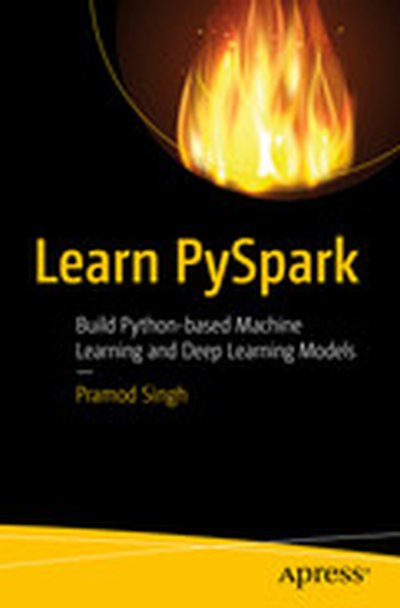
Learn PySpark: Build Python-based Machine Learning and Deep Learning Models

Leverage machine and deep learning models to build applications on real-time data using PySpark. This book is perfect for those who want to learn to use this language to perform exploratory data analysis and solve an array of business challenges. You'll start by reviewing PySpark fundamentals, such as Spark’s core architecture, and see how to use PySpark for big data processing like data ingestion, cleaning, and transformations techniques. This is followed by building workflows for analyzing streaming data using PySpark and a comparison of various streaming platforms. You'll then see how to schedule different spark jobs using Airflow with PySpark and book examine tuning machine and deep learning models for real-time predictions. This book concludes with a discussion on graph frames and performing network analysis using graph algorithms in PySpark. All the code presented in the book will be available in Python scripts on Github. What You'll Learn Develop pipelines for streaming data processing using PySpark Build Machine Learning & Deep Learning models using PySpark latest offerings Use graph analytics using PySpark Create Sequence Embeddings from Text data Who This Book is For Data Scientists, machine learning and deep learning engineers who want to learn and use PySpark for real time analysis on streaming data.

Video annotation is an expensive and time-consuming process. As a consequence, the available video datasets are useful but small. The availability of machine transcribed explainer videos offers a unique opportunity to rapidly develop a useful, if dirty, corpus of videos that are "self annotating", as hosts explain the actions they are taking on the screen. This episode is a discussion of the HowTo100m dataset - a project which has assembled a video corpus of 136M video clips with captions covering 23k activities. Related Links The paper will be presented at ICCV 2019 @antoine77340 Antoine on Github Antoine's homepage

Summary In recent years the traditional approach to building data warehouses has shifted from transforming records before loading, to transforming them afterwards. As a result, the tooling for those transformations needs to be reimagined. The data build tool (dbt) is designed to bring battle tested engineering practices to your analytics pipelines. By providing an opinionated set of best practices it simplifies collaboration and boosts confidence in your data teams. In this episode Drew Banin, creator of dbt, explains how it got started, how it is designed, and how you can start using it today to create reliable and well-tested reports in your favorite data warehouse.

Announcements

Hello and welcome to the Data Engineering Podcast, the show about modern data management When you’re ready to build your next pipeline, or want to test out the projects you hear about on the show, you’ll need somewhere to deploy it, so check out our friends at Linode. With 200Gbit private networking, scalable shared block storage, and a 40Gbit public network, you’ve got everything you need to run a fast, reliable, and bullet-proof data platform. If you need global distribution, they’ve got that covered too with world-wide datacenters including new ones in Toronto and Mumbai. And for your machine learning workloads, they just announced dedicated CPU instances. Go to dataengineeringpodcast.com/linode today to get a $20 credit and launch a new server in under a minute. And don’t forget to thank them for their continued support of this show! Understanding how your customers are using your product is critical for businesses of any size. To make it easier for startups to focus on delivering useful features Segment offers a flexible and reliable data infrastructure for your customer analytics and custom events. You only need to maintain one integration to instrument your code and get a future-proof way to send data to over 250 services with the flip of a switch. Not only does it free up your engineers’ time, it lets your business users decide what data they want where. Go to dataengineeringpodcast.com/segmentio today to sign up for their startup plan and get $25,000 in Segment credits and $1 million in free software from marketing and analytics companies like AWS, Google, and Intercom. On top of that you’ll get access to Analytics Academy for the educational resources you need to become an expert in data analytics for measuring product-market fit. You listen to this show to learn and stay up to date with what’s happening in databases, streaming platforms, big data, and everything else you need to know about modern data management. For even more opportunities to meet, listen, and learn from your peers you don’t want to miss out on this year’s conference season. We have partnered with organizations such as O’Reilly Media, Dataversity, and the Open Data Science Conference. Go to dataengineeringpodcast.com/conferences to learn more and take advantage of our partner discounts when you register. Go to dataengineeringpodcast.com to subscribe to the show, sign up for the mailing list, read the show notes, and get in touch. To help other people find the show please leave a review on iTunes and tell your friends and co-workers Join the community in the new Zulip chat workspace at dataengineeringpodcast.com/chat Your host is Tobias Macey and today I’m interviewing Drew Banin about DBT, the Data Build Tool, a toolkit for building analytics the way that developers build applications

Interview

Introduction How did you get involved in the area of data management? Can you start by explaining what DBT is and your motivation for creating it? Where does it fit in the overall landscape of data tools and the lifecycle of data in an analytics pipeline? Can you talk through the workflow for someone using DBT? One of the useful features of DBT for stability of analytics is the ability to write and execute tests. Can you explain how those are implemented? The packaging capabilities are beneficial for enabling collaboration. Can you talk through how the packaging system is implemented?

Are these packages driven by Fishtown Analytics or the dbt community?

What are the limitations of modeling everything as a SELECT statement? Making SQL code reusable is notoriously difficult. How does the Jinja templating of DBT address this issue and what are the shortcomings?

What are your thoughts on higher level approaches to SQL that compile down to the specific statements?

Can you explain how DBT is implemented and how the design has evolved since you first began working on it? What are some of the features of DBT that are often overlooked which you find particularly useful? What are some of the most interesting/unexpected/innovative ways that you have seen DBT used? What are the additional features that the commercial version of DBT provides? What are some of the most useful or challenging lessons that you have learned in the process of building and maintaining DBT? When is it the wrong choice? What do you have planned for the future of DBT?

Contact Info

Email @drebanin on Twitter drebanin on GitHub

Parting Question

From your perspective, what is the biggest gap in the tooling or technology for data management today?

Links

DBT Fishtown Analytics 8Tracks Internet Radio Redshift Magento Stitch Data Fivetran Airflow Business Intelligence Jinja template language BigQuery Snowflake Version Control Git Continuous Integration Test Driven Development Snowplow Analytics

Podcast Episode

dbt-utils We Can Do Better Than SQL blog post from EdgeDB EdgeDB Looker LookML

Podcast Interview

Presto DB

Podcast Interview

Spark SQL Hive Azure SQL Data Warehouse Data Warehouse Data Lake Data Council Conference Slowly Changing Dimensions dbt Archival Mode Analytics Periscope BI dbt docs dbt repository

The intro and outro music is from The Hug by The Freak Fandango Orchestra / CC BY-SA

Support Data Engineering Podcast

Summary One of the biggest challenges for any business trying to grow and reach customers globally is how to scale their data storage. FaunaDB is a cloud native database built by the engineers behind Twitter’s infrastructure and designed to serve the needs of modern systems. Evan Weaver is the co-founder and CEO of Fauna and in this episode he explains the unique capabilities of Fauna, compares the consensus and transaction algorithm to that used in other NewSQL systems, and describes the ways that it allows for new application design patterns. One of the unique aspects of Fauna that is worth drawing attention to is the first class support for temporality that simplifies querying of historical states of the data. It is definitely worth a good look for anyone building a platform that needs a simple to manage data layer that will scale with your business.

Announcements

Hello and welcome to the Data Engineering Podcast, the show about modern data management When you’re ready to build your next pipeline, or want to test out the projects you hear about on the show, you’ll need somewhere to deploy it, so check out our friends at Linode. With 200Gbit private networking, scalable shared block storage, and a 40Gbit public network, you’ve got everything you need to run a fast, reliable, and bullet-proof data platform. If you need global distribution, they’ve got that covered too with world-wide datacenters including new ones in Toronto and Mumbai. And for your machine learning workloads, they just announced dedicated CPU instances. Go to dataengineeringpodcast.com/linode today to get a $20 credit and launch a new server in under a minute. And don’t forget to thank them for their continued support of this show! Alluxio is an open source, distributed data orchestration layer that makes it easier to scale your compute and your storage independently. By transparently pulling data from underlying silos, Alluxio unlocks the value of your data and allows for modern computation-intensive workloads to become truly elastic and flexible for the cloud. With Alluxio, companies like Barclays, JD.com, Tencent, and Two Sigma can manage data efficiently, accelerate business analytics, and ease the adoption of any cloud. Go to dataengineeringpodcast.com/alluxio today to learn more and thank them for their support. Understanding how your customers are using your product is critical for businesses of any size. To make it easier for startups to focus on delivering useful features Segment offers a flexible and reliable data infrastructure for your customer analytics and custom events. You only need to maintain one integration to instrument your code and get a future-proof way to send data to over 250 services with the flip of a switch. Not only does it free up your engineers’ time, it lets your business users decide what data they want where. Go to dataengineeringpodcast.com/segmentio today to sign up for their startup plan and get $25,000 in Segment credits and $1 million in free software from marketing and analytics companies like AWS, Google, and Intercom. On top of that you’ll get access to Analytics Academy for the educational resources you need to become an expert in data analytics for measuring product-market fit. You listen to this show to learn and stay up to date with what’s happening in databases, streaming platforms, big data, and everything else you need to know about modern data management. For even more opportunities to meet, listen, and learn from your peers you don’t want to miss out on this year’s conference season. We have partnered with organizations such as O’Reilly Media, Dataversity, and the Open Data Science Conference. Go to dataengineeringpodcast.com/conferences to learn more and take advantage of our partner discounts when you register. Go to dataengineeringpodcast.com to subscribe to the show, sign up for the mailing list, read the show notes, and get in touch. To help other people find the show please leave a review on iTunes and tell your friends and co-workers Join the community in the new Zulip chat workspace at dataengineeringpodcast.com/chat Your host is Tobias Macey and today I’m interviewing Evan Weaver about FaunaDB, a modern operational data platform built for your cloud

Interview

Introduction How did you get involved in the area of data management? Can you start by explaining what FaunaDB is and how it got started? What are some of the main use cases that FaunaDB is targeting?

How does it compare to some of the other global scale databases that have been built in recent years such as CockroachDB?

Can you describe the architecture of FaunaDB and how it has evolved? The consensus and replication protocol in Fauna is intriguing. Can you talk through how it works?

What are some of the edge cases that users should be aware of? How are conflicts managed in Fauna?

What is the underlying storage layer?

How is the query layer designed to allow for different query patterns and model representations?

How does data modeling in Fauna compare to that of relational or document databases?

Can you describe the query format? What are some of the common difficulties or points of confusion around interacting with data in Fauna?

What are some application design patterns that are enabled by using Fauna as the storage layer? Given the ability to replicate globally, how do you mitigate latency when interacting with the database? What are some of the most interesting or unexpected ways that you have seen Fauna used? When is it the wrong choice? What have been some of the most interesting/unexpected/challenging aspects of building the Fauna database and company? What do you have in store for the future of Fauna?

Contact Info

@evan on Twitter LinkedIn

Parting Question

From your perspective, what is the biggest gap in the tooling or technology for data management today?

Links

Fauna Ruby on Rails CNET GitHub Twitter NoSQL Cassandra InnoDB Redis Memcached Timeseries Spanner Paper DynamoDB Paper Percolator ACID Calvin Protocol Daniel Abadi LINQ LSM Tree (Log-structured Merge-tree) Scala Change Data Capture GraphQL

Podcast.init Interview About Graphene

Fauna Query Language (FQL) CQL == Cassandra Query Language Object-Relational Databases LDAP == Lightweight Directory Access Protocol Auth0 OLAP == Online Analytical Processing Jepsen distributed systems safety research

The intro and outro music is from The Hug by The Freak Fandango Orchestra / CC BY-SA

Support Data Engineering Podcast

podcast_episode
by Sean Law (TD Ameritrade) , Hugo (DataCamp)

This week, Hugo speaks with Sean Law about data science research and development at TD Ameritrade. Sean’s work on the Exploration team uses cutting edge theories and tools to build proofs of concept. At TD Ameritrade they think about a wide array of questions from conversational agents that can help customers quickly get to information that they need and going beyond chatbots. They use modern time series analysis and more advanced techniques like recurrent neural networks to predict the next time a customer might call and what they might be calling about, as well as helping investors leverage alternative data sets and make more informed decisions.

What does this proof of concept work on the edge of data science look like at TD Ameritrade and how does it differ from building prototypes and products? And How does exploration differ from production? Stick around to find out.

LINKS FROM THE SHOW

DATAFRAMED GUEST SUGGESTIONS

DataFramed Guest Suggestions (who do you want to hear on DataFramed?)

FROM THE INTERVIEW

Sean on TwitterSean's WebsiteTD Ameritrade Careers PagePyData Ann Arbor MeetupPyData Ann Arbor YouTube Channel (Videos)TDA Github Account (Time Series Pattern Matching repo to be open sourced in the coming months)Aura Shows Human Fingerprint on Global Air Quality

FROM THE SEGMENTS

Guidelines for A/B Testing (with Emily Robinson ~19:20)

Guidelines for A/B Testing (By Emily Robinson)10 Guidelines for A/B Testing Slides (By Emily Robinson)

Data Science Best Practices (with Ben Skrainka ~34:50)

Debugging (By David J. Agans)Basic Debugging With GDB (By Ben Skrainka)Sneaky Bugs and How to Find Them (with git bisect) (By Wiktor Czajkowski)Good logging practice in Python (By Victor Lin)

Original music and sounds by The Sticks.

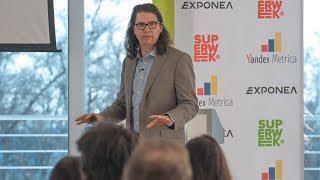
DIGITAL ANALYTICS MEETS DATA SCIENCE: USE CASES FOR GOOGLE ANALYTICS

Past attendees of Superweek have ridden along with Tim as he explored R, and then as he dove deeper into some of the fundamental concepts of statistics. In this session, he will provide the latest update on that journey: how he is putting his exploration into the various dimensions of data science to use with real data and real clients. The statistical methods will be real, the code will be R (and available on GitHub), and the data will only be lightly obfuscated. So, you will be able to head back to your room at the next break and try one or more of the examples out on your own data! (But, don't do that -- the food and conversation at the breaks is too good to miss!)

Summary

The past year has been an active one for the timeseries market. New products have been launched, more businesses have moved to streaming analytics, and the team at Timescale has been keeping busy. In this episode the TimescaleDB CEO Ajay Kulkarni and CTO Michael Freedman stop by to talk about their 1.0 release, how the use cases for timeseries data have proliferated, and how they are continuing to simplify the task of processing your time oriented events.

Introduction

Hello and welcome to the Data Engineering Podcast, the show about modern data management When you’re ready to build your next pipeline, or want to test out the projects you hear about on the show, you’ll need somewhere to deploy it, so check out Linode. With 200Gbit private networking, scalable shared block storage, and a 40Gbit public network, you’ve got everything you need to run a fast, reliable, and bullet-proof data platform. If you need global distribution, they’ve got that covered too with world-wide datacenters including new ones in Toronto and Mumbai. Go to dataengineeringpodcast.com/linode today to get a $20 credit and launch a new server in under a minute. Go to dataengineeringpodcast.com to subscribe to the show, sign up for the mailing list, read the show notes, and get in touch. To help other people find the show please leave a review on iTunes, or Google Play Music, tell your friends and co-workers, and share it on social media. Join the community in the new Zulip chat workspace at dataengineeringpodcast.com/chat Your host is Tobias Macey and today I’m welcoming Ajay Kulkarni and Mike Freedman back to talk about how TimescaleDB has grown and changed over the past year

Interview

Introduction How did you get involved in the area of data management? Can you refresh our memory about what TimescaleDB is? How has the market for timeseries databases changed since we last spoke? What has changed in the focus and features of the TimescaleDB project and company? Toward the end of 2018 you launched the 1.0 release of Timescale. What were your criteria for establishing that milestone?

What were the most challenging aspects of reaching that goal?

In terms of timeseries workloads, what are some of the factors that differ across varying use cases?

How do those differences impact the ways in which Timescale is used by the end user, and built by your team?

What are some of the initial assumptions that you made while first launching Timescale that have held true, and which have been disproven? How have the improvements and new features in the recent releases of PostgreSQL impacted the Timescale product?

Have you been able to leverage some of the native improvements to simplify your implementation? Are there any use cases for Timescale that would have been previously impractical in vanilla Postgres that would now be reasonable without the help of Timescale?

What is in store for the future of the Timescale product and organization?

Contact Info

Ajay

@acoustik on Twitter LinkedIn

Mike

LinkedIn Website @michaelfreedman on Twitter

Timescale

Website Documentation Careers timescaledb on GitHub @timescaledb on Twitter

Parting Question

From your perspective, what is the biggest gap in the tooling or technology for data management today?

Links

TimescaleDB Original Appearance on the Data Engineering Podcast 1.0 Release Blog Post PostgreSQL

Podcast Interview

RDS DB-Engines MongoDB IOT (Internet Of Things) AWS Timestream Kafka Pulsar

Podcast Episode

Spark

Podcast Episode

Flink

Podcast Episode

Hadoop DevOps PipelineDB

Podcast Interview

Grafana Tableau Prometheus OLTP (Online Transaction Processing) Oracle DB Data Lake

The intro and outro music is from The Hug by The Freak Fandango Orchestra / CC BY-SA Support Data Engineering Podcast

Github is many things besides source control. It's a social network, even though not everyone realizes it. It's a vast repository of code. It's a ticketing and project management system. And of course, it has search as well. In this episode, Kyle interviews Hamel Husain about his research into semantic code search.

Summary

The Hadoop platform is purpose built for processing large, slow moving data in long-running batch jobs. As the ecosystem around it has grown, so has the need for fast data analytics on fast moving data. To fill this need the Kudu project was created with a column oriented table format that was tuned for high volumes of writes and rapid query execution across those tables. For a perfect pairing, they made it easy to connect to the Impala SQL engine. In this episode Brock Noland and Jordan Birdsell from PhData explain how Kudu is architected, how it compares to other storage systems in the Hadoop orbit, and how to start integrating it into you analytics pipeline.

Preamble

Hello and welcome to the Data Engineering Podcast, the show about modern data management When you’re ready to build your next pipeline, or want to test out the projects you hear about on the show, you’ll need somewhere to deploy it, so check out Linode. With 200Gbit private networking, scalable shared block storage, and a 40Gbit public network, you’ve got everything you need to run a fast, reliable, and bullet-proof data platform. If you need global distribution, they’ve got that covered too with world-wide datacenters including new ones in Toronto and Mumbai. Go to dataengineeringpodcast.com/linode today to get a $20 credit and launch a new server in under a minute. Go to dataengineeringpodcast.com to subscribe to the show, sign up for the mailing list, read the show notes, and get in touch. To help other people find the show please leave a review on iTunes, or Google Play Music, tell your friends and co-workers, and share it on social media. Join the community in the new Zulip chat workspace at dataengineeringpodcast.com/chat Your host is Tobias Macey and today I’m interviewing Brock Noland and Jordan Birdsell about Apache Kudu and how it is able to provide fast analytics on fast data in the Hadoop ecosystem

Interview

Introduction How did you get involved in the area of data management? Can you start by explaining what Kudu is and the motivation for building it?

How does it fit into the Hadoop ecosystem? How does it compare to the work being done on the Iceberg table format?

What are some of the common application and system design patterns that Kudu supports? How is Kudu architected and how has it evolved over the life of the project? There are many projects in and around the Hadoop ecosystem that rely on Zookeeper as a building block for consensus. What was the reasoning for using Raft in Kudu? How does the storage layer in Kudu differ from what would be found in systems like Hive or HBase?

What are the implementation details in the Kudu storage interface that have had the greatest impact on its overall speed and performance?

A number of the projects built for large scale data processing were not initially built with a focus on operational simplicity. What are the features of Kudu that simplify deployment and management of production infrastructure? What was the motivation for using C++ as the language target for Kudu?

If you were to start the project over today what would you do differently?

What are some situations where you would advise against using Kudu? What have you found to be the most interesting/unexpected/challenging lessons learned in the process of building and maintaining Kudu? What are you most excited about for the future of Kudu?

Contact Info

Brock

LinkedIn @brocknoland on Twitter

Jordan

LinkedIn @jordanbirdsell jbirdsell on GitHub

PhData

Website phdata on GitHub @phdatainc on Twitter

Parting Question

From your perspective, what is the biggest gap in the tooling or technology for data management today?

Links

Kudu PhData Getting Started with Apache Kudu Thomson Reuters Hadoop Oracle Exadata Slowly Changing Dimensions HDFS S3 Azure Blob Storage State Farm Stanly Black & Decker ETL (Extract, Transform, Load) Parquet

Podcast Episode

ORC HBase Spark

Podcast Episode

Summary

As more companies and organizations are working to gain a real-time view of their business, they are increasingly turning to stream processing technologies to fullfill that need. However, the storage requirements for continuous, unbounded streams of data are markedly different than that of batch oriented workloads. To address this shortcoming the team at Dell EMC has created the open source Pravega project. In this episode Tom Kaitchuk explains how Pravega simplifies storage and processing of data streams, how it integrates with processing engines such as Flink, and the unique capabilities that it provides in the area of exactly once processing and transactions. And if you listen at approximately the half-way mark, you can hear as the hosts mind is blown by the possibilities of treating everything, including schema information, as a stream.

Preamble

Hello and welcome to the Data Engineering Podcast, the show about modern data management When you’re ready to build your next pipeline, or want to test out the projects you hear about on the show, you’ll need somewhere to deploy it, so check out Linode. With 200Gbit private networking, scalable shared block storage, and a 40Gbit public network, you’ve got everything you need to run a fast, reliable, and bullet-proof data platform. If you need global distribution, they’ve got that covered too with world-wide datacenters including new ones in Toronto and Mumbai. Go to dataengineeringpodcast.com/linode today to get a $20 credit and launch a new server in under a minute. Go to dataengineeringpodcast.com to subscribe to the show, sign up for the mailing list, read the show notes, and get in touch. To help other people find the show please leave a review on iTunes, or Google Play Music, tell your friends and co-workers, and share it on social media. Join the community in the new Zulip chat workspace at dataengineeringpodcast.com/chat Your host is Tobias Macey and today I’m interviewing Tom Kaitchuck about Pravega, an open source data storage platform optimized for persistent streams

Interview

Introduction How did you get involved in the area of data management? Can you start by explaining what Pravega is and the story behind it? What are the use cases for Pravega and how does it fit into the data ecosystem?

How does it compare with systems such as Kafka and Pulsar for ingesting and persisting unbounded data?

How do you represent a stream on-disk?

What are the benefits of using this format for persisted streams?

One of the compelling aspects of Pravega is the automatic sharding and resource allocation for variations in data patterns. Can you describe how that operates and the benefits that it provides? I am also intrigued by the automatic tiering of the persisted storage. How does that work and what options exist for managing the lifecycle of the data in the cluster? For someone who wants to build an application on top of Pravega, what interfaces does it provide and what architectural patterns does it lend itself toward? What are some of the unique system design patterns that are made possible by Pravega? How is Pravega architected internally? What is involved in integrating engines such as Spark, Flink, or Storm with Pravega? A common challenge for streaming systems is exactly once semantics. How does Pravega approach that problem?

Does it have any special capabilities for simplifying processing of out-of-order events?

For someone planning a deployment of Pravega, what is involved in building and scaling a cluster?

What are some of the operational edge cases that users should be aware of?

What are some of the most interesting, useful, or challenging experiences that you have had while building Pravega? What are some cases where you would recommend against using Pravega? What is in store for the future of Pravega?

Contact Info

tkaitchuk on GitHub LinkedIn

Parting Question

From your perspective, what is the biggest gap in the tooli

Summary

Processing high velocity time-series data in real-time is a complex challenge. The team at PipelineDB has built a continuous query engine that simplifies the task of computing aggregates across incoming streams of events. In this episode Derek Nelson and Usman Masood explain how it is architected, strategies for designing your data flows, how to scale it up and out, and edge cases to be aware of.

Preamble

Hello and welcome to the Data Engineering Podcast, the show about modern data management When you’re ready to build your next pipeline, or want to test out the projects you hear about on the show, you’ll need somewhere to deploy it, so check out Linode. With 200Gbit private networking, scalable shared block storage, and a 40Gbit public network, you’ve got everything you need to run a fast, reliable, and bullet-proof data platform. If you need global distribution, they’ve got that covered too with world-wide datacenters including new ones in Toronto and Mumbai. Go to dataengineeringpodcast.com/linode today to get a $20 credit and launch a new server in under a minute. Go to dataengineeringpodcast.com to subscribe to the show, sign up for the mailing list, read the show notes, and get in touch. Join the community in the new Zulip chat workspace at dataengineeringpodcast.com/chat Your host is Tobias Macey and today I’m interviewing Usman Masood and Derek Nelson about PipelineDB, an open source continuous query engine for PostgreSQL

Interview

Introduction How did you get involved in the area of data management? Can you start by explaining what PipelineDB is and the motivation for creating it?

What are the major use cases that it enables? What are some example applications that are uniquely well suited to the capabilities of PipelineDB?

What are the major concepts and components that users of PipelineDB should be familiar with? Given the fact that it is a plugin for PostgreSQL, what level of compatibility exists between PipelineDB and other plugins such as Timescale and Citus? What are some of the common patterns for populating data streams? What are the options for scaling PipelineDB systems, both vertically and horizontally?

How much elasticity does the system support in terms of changing volumes of inbound data? What are some of the limitations or edge cases that users should be aware of?

Given that inbound data is not persisted to disk, how do you guard against data loss?

Is it possible to archive the data in a stream, unaltered, to a separate destination table or other storage location? Can a separate table be used as an input stream?

Since the data being processed by the continuous queries is potentially unbounded, how do you approach checkpointing or windowing the data in the continuous views? What are some of the features that you have found to be the most useful which users might initially overlook? What would be involved in generating an alert or notification on an aggregate output that was in some way anomalous? What are some of the most challenging aspects of building continuous aggregates on unbounded data? What have you found to be some of the most interesting, complex, or challenging aspects of building and maintaining PipelineDB? What are some of the most interesting or unexpected ways that you have seen PipelineDB used? When is PipelineDB the wrong choice? What do you have planned for the future of PipelineDB now that you have hit the 1.0 milestone?

Contact Info

Derek

derekjn on GitHub LinkedIn

Usman

@usmanm on Twitter Website

Parting Question

From your perspective, what is the biggest gap in the tooling or technology for data management today?

Links

PipelineDB Stride PostgreSQL

Podcast Episode

AdRoll Probabilistic Data Structures TimescaleDB

[Podcast Episode](

Hive Redshift Kafka Kinesis ZeroMQ Nanomsg HyperLogLog Bloom Filter

The intro and outro music is from The Hug by The Freak Fandango Orchestra / CC BY-SA Support Data Engineerin

Summary

Every business needs a pipeline for their critical data, even if it is just pasting into a spreadsheet. As the organization grows and gains more customers, the requirements for that pipeline will change. In this episode Christian Heinzmann, Head of Data Warehousing at Grubhub, discusses the various requirements for data pipelines and how the overall system architecture evolves as more data is being processed. He also covers the changes in how the output of the pipelines are used, how that impacts the expectations for accuracy and availability, and some useful advice on build vs. buy for the components of a data platform.

Preamble

Hello and welcome to the Data Engineering Podcast, the show about modern data management When you’re ready to build your next pipeline, or want to test out the projects you hear about on the show, you’ll need somewhere to deploy it, so check out Linode. With 200Gbit private networking, scalable shared block storage, and a 40Gbit public network, you’ve got everything you need to run a fast, reliable, and bullet-proof data platform. If you need global distribution, they’ve got that covered too with world-wide datacenters including new ones in Toronto and Mumbai. Go to dataengineeringpodcast.com/linode today to get a $20 credit and launch a new server in under a minute. Go to dataengineeringpodcast.com to subscribe to the show, sign up for the mailing list, read the show notes, and get in touch. Join the community in the new Zulip chat workspace at dataengineeringpodcast.com/chat Your host is Tobias Macey and today I’m interviewing Christian Heinzmann about how data pipelines evolve as your business grows

Interview

Introduction How did you get involved in the area of data management? Can you start by sharing your definition of a data pipeline?

At what point in the life of a project or organization should you start thinking about building a pipeline?

In the early stages when the scale of the data and business are still small, what are some of the design characteristics that you should be targeting for your pipeline?

What metrics/use cases should you be optimizing for at this point?

What are some of the indicators that you look for to signal that you are reaching the next order of magnitude in terms of scale?

How do the design requirements for a data pipeline change as you reach this stage? What are some of the challenges and complexities that begin to present themselves as you build and run your pipeline at medium scale?

What are some of the changes that are necessary as you move to a large scale data pipeline? At each level of scale it is important to minimize the impact of the ETL process on the source systems. What are some strategies that you have employed to avoid degrading the performance of the application systems? In recent years there has been a shift to using data lakes as a staging ground before performing transformations. What are your thoughts on that approach? When performing transformations there is a potential for discarding information or losing fidelity. How have you worked to reduce the impact of this effect? Transformations of the source data can be brittle when the format or volume changes. How do you design the pipeline to be resilient to these types of changes? What are your selection criteria when determining what workflow or ETL engines to use in your pipeline?

How has your preference of build vs buy changed at different scales of operation and as new/different projects become available?

What are some of the dead ends or edge cases that you have had to deal with in your current role at Grubhub? What are some of the common mistakes or overlooked aspects of building a data pipeline that you have seen? What are your plans for improving your current pipeline at Grubhub? What are some references that you recommend for anyone who is designing a new data platform?

Contact Info

@sirchristian on Twitter Blog sirchristian on GitHub

Par

Summary

Apache Spark is a popular and widely used tool for a variety of data oriented projects. With the large array of capabilities, and the complexity of the underlying system, it can be difficult to understand how to get started using it. Jean George Perrin has been so impressed by the versatility of Spark that he is writing a book for data engineers to hit the ground running. In this episode he helps to make sense of what Spark is, how it works, and the various ways that you can use it. He also discusses what you need to know to get it deployed and keep it running in a production environment and how it fits into the overall data ecosystem.

Preamble

Hello and welcome to the Data Engineering Podcast, the show about modern data management When you’re ready to build your next pipeline, or want to test out the projects you hear about on the show, you’ll need somewhere to deploy it, so check out Linode. With 200Gbit private networking, scalable shared block storage, and a 40Gbit public network, you’ve got everything you need to run a fast, reliable, and bullet-proof data platform. If you need global distribution, they’ve got that covered too with world-wide datacenters including new ones in Toronto and Mumbai. Go to dataengineeringpodcast.com/linode today to get a $20 credit and launch a new server in under a minute. Go to dataengineeringpodcast.com to subscribe to the show, sign up for the mailing list, read the show notes, and get in touch. Join the community in the new Zulip chat workspace at dataengineeringpodcast.com/chat Your host is Tobias Macey and today I’m interviewing Jean Georges Perrin, author of the upcoming Manning book Spark In Action 2nd Edition, about the ways that Spark is used and how it fits into the data landscape

Interview

Introduction How did you get involved in the area of data management? Can you start by explaining what Spark is?

What are some of the main use cases for Spark? What are some of the problems that Spark is uniquely suited to address? Who uses Spark?

What are the tools offered to Spark users? How does it compare to some of the other streaming frameworks such as Flink, Kafka, or Storm? For someone building on top of Spark what are the main software design paradigms?

How does the design of an application change as you go from a local development environment to a production cluster?

Once your application is written, what is involved in deploying it to a production environment? What are some of the most useful strategies that you have seen for improving the efficiency and performance of a processing pipeline? What are some of the edge cases and architectural considerations that engineers should be considering as they begin to scale their deployments? What are some of the common ways that Spark is deployed, in terms of the cluster topology and the supporting technologies? What are the limitations of the Spark programming model?

What are the cases where Spark is the wrong choice?

What was your motivation for writing a book about Spark?

Who is the target audience?

What have been some of the most interesting or useful lessons that you have learned in the process of writing a book about Spark? What advice do you have for anyone who is considering or currently using Spark?

Contact Info

@jgperrin on Twitter Blog

Parting Question

From your perspective, what is the biggest gap in the tooling or technology for data management today?

Book Discount

Use the code poddataeng18 to get 40% off of all of Manning’s products at manning.com

Links

Apache Spark Spark In Action Book code examples in GitHub Informix International Informix Users Group MySQL Microsoft SQL Server ETL (Extract, Transform, Load) Spark SQL and Spark In Action‘s chapter 11 Spark ML and Spark In Action‘s chapter 18 Spark Streaming (structured) and Spark In Action‘s chapter 10 Spark GraphX Hadoop Jupyter

Podcast Interview

Zeppelin Databricks IBM Watson Studio Kafka Flink

P

Summary

When your data lives in multiple locations, belonging to at least as many applications, it is exceedingly difficult to ask complex questions of it. The default way to manage this situation is by crafting pipelines that will extract the data from source systems and load it into a data lake or data warehouse. In order to make this situation more manageable and allow everyone in the business to gain value from the data the folks at Dremio built a self service data platform. In this episode Tomer Shiran, CEO and co-founder of Dremio, explains how it fits into the modern data landscape, how it works under the hood, and how you can start using it today to make your life easier.

Preamble

Hello and welcome to the Data Engineering Podcast, the show about modern data management When you’re ready to build your next pipeline, or want to test out the projects you hear about on the show, you’ll need somewhere to deploy it, so check out Linode. With 200Gbit private networking, scalable shared block storage, and a 40Gbit public network, you’ve got everything you need to run a fast, reliable, and bullet-proof data platform. If you need global distribution, they’ve got that covered too with world-wide datacenters including new ones in Toronto and Mumbai. Go to dataengineeringpodcast.com/linode today to get a $20 credit and launch a new server in under a minute. Go to dataengineeringpodcast.com to subscribe to the show, sign up for the mailing list, read the show notes, and get in touch. Join the community in the new Zulip chat workspace at dataengineeringpodcast.com/chat Your host is Tobias Macey and today I’m interviewing Tomer Shiran about Dremio, the open source data as a service platform

Interview

Introduction How did you get involved in the area of data management? Can you start by explaining what Dremio is and how the project and business got started?

What was the motivation for keeping your primary product open source? What is the governance model for the project?

How does Dremio fit in the current landscape of data tools?

What are some use cases that Dremio is uniquely equipped to support? Do you think that Dremio obviates the need for a data warehouse or large scale data lake?

How is Dremio architected internally?

How has that architecture evolved from when it was first built?

There are a large array of components (e.g. governance, lineage, catalog) built into Dremio that are often found in dedicated products. What are some of the strategies that you have as a business and development team to manage and integrate the complexity of the product?

What are the benefits of integrating all of those capabilities into a single system? What are the drawbacks?

One of the useful features of Dremio is the granular access controls. Can you discuss how those are implemented and controlled? For someone who is interested in deploying Dremio to their environment what is involved in getting it installed?

What are the scaling factors?

What are some of the most exciting features that have been added in recent releases? When is Dremio the wrong choice? What have been some of the most challenging aspects of building, maintaining, and growing the technical and business platform of Dremio? What do you have planned for the future of Dremio?

Contact Info

Tomer

@tshiran on Twitter LinkedIn

Dremio

Website @dremio on Twitter dremio on GitHub

Parting Question

From your perspective, what is the biggest gap in the tooling or technology for data management today?

Links

Dremio MapR Presto Business Intelligence Arrow Tableau Power BI Jupyter OLAP Cube Apache Foundation Hadoop Nikon DSLR Spark ETL (Extract, Transform, Load) Parquet Avro K8s Helm Yarn Gandiva Initiative for Apache Arrow LLVM TLS

The intro and outro music is from The Hug by The Freak Fandango Orchestra / CC BY-SA Support Data Engineering Podcast

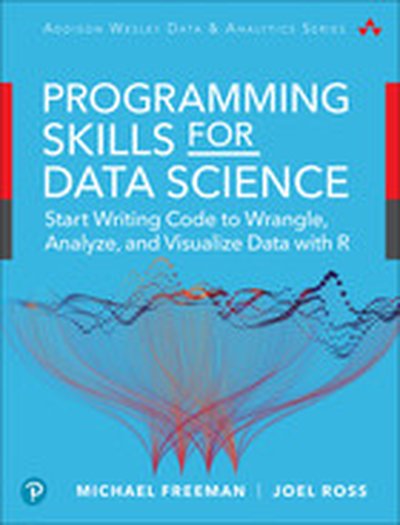
Programming Skills for Data Science: Start Writing Code to Wrangle, Analyze, and Visualize Data with R, First Edition

The Foundational Hands-On Skills You Need to Dive into Data Science “Freeman and Ross have created the definitive resource for new and aspiring data scientists to learn foundational programming skills.” –From the foreword by Jared Lander, series editor Using data science techniques, you can transform raw data into actionable insights for domains ranging from urban planning to precision medicine. brings together all the foundational skills you need to get started, even if you have no programming or data science experience. Programming Skills for Data Science Leading instructors Michael Freeman and Joel Ross guide you through installing and configuring the tools you need to solve professional-level data science problems, including the widely used R language and Git version-control system. They explain how to wrangle your data into a form where it can be easily used, analyzed, and visualized so others can see the patterns you've uncovered. Step by step, you'll master powerful R programming techniques and troubleshooting skills for probing data in new ways, and at larger scales. Freeman and Ross teach through practical examples and exercises that can be combined into complete data science projects. Everything's focused on real-world application, so you can quickly start analyzing your own data and getting answers you can act upon. Learn to Install your complete data science environment, including R and RStudio Manage projects efficiently, from version tracking to documentation Host, manage, and collaborate on data science projects with GitHub Master R language fundamentals: syntax, programming concepts, and data structures Load, format, explore, and restructure data for successful analysis Interact with databases and web APIs Master key principles for visualizing data accurately and intuitively Produce engaging, interactive visualizations with ggplot and other R packages Transform analyses into sharable documents and sites with R Markdown Create interactive web data science applications with Shiny Collaborate smoothly as part of a data science team Register your book for convenient access to downloads, updates, and/or corrections as they become available. See inside book for details.

Summary

Modern applications and data platforms aspire to process events and data in real time at scale and with low latency. Apache Flink is a true stream processing engine with an impressive set of capabilities for stateful computation at scale. In this episode Fabian Hueske, one of the original authors, explains how Flink is architected, how it is being used to power some of the world’s largest businesses, where it sits in the lanscape of stream processing tools, and how you can start using it today.

Preamble

Hello and welcome to the Data Engineering Podcast, the show about modern data management When you’re ready to build your next pipeline, or want to test out the projects you hear about on the show, you’ll need somewhere to deploy it, so check out Linode. With 200Gbit private networking, scalable shared block storage, and a 40Gbit public network, you’ve got everything you need to run a fast, reliable, and bullet-proof data platform. If you need global distribution, they’ve got that covered too with world-wide datacenters including new ones in Toronto and Mumbai. Go to dataengineeringpodcast.com/linode today to get a $20 credit and launch a new server in under a minute. Go to dataengineeringpodcast.com to subscribe to the show, sign up for the mailing list, read the show notes, and get in touch. Join the community in the new Zulip chat workspace at dataengineeringpodcast.com/chat Your host is Tobias Macey and today I’m interviewing Fabian Hueske, co-author of the upcoming O’Reilly book Stream Processing With Apache Flink, about his work on Apache Flink, the stateful streaming engine

Interview

Introduction How did you get involved in the area of data management? Can you start by describing what Flink is and how the project got started? What are some of the primary ways that Flink is used? How does Flink compare to other streaming engines such as Spark, Kafka, Pulsar, and Storm?

What are some use cases that Flink is uniquely qualified to handle?

Where does Flink fit into the current data landscape? How is Flink architected?

How has that architecture evolved? Are there any aspects of the current design that you would do differently if you started over today?

How does scaling work in a Flink deployment?

What are the scaling limits? What are some of the failure modes that users should be aware of?

How is the statefulness of a cluster managed?

What are the mechanisms for managing conflicts? What are the limiting factors for the volume of state that can be practically handled in a cluster and for a given purpose? Can state be shared across processes or tasks within a Flink cluster?

What are the comparative challenges of working with bounded vs unbounded streams of data? How do you handle out of order events in Flink, especially as the delay for a given event increases? For someone who is using Flink in their environment, what are the primary means of interacting with and developing on top of it? What are some of the most challenging or complicated aspects of building and maintaining Flink? What are some of the most interesting or unexpected ways that you have seen Flink used? What are some of the improvements or new features that are planned for the future of Flink? What are some features or use cases that you are explicitly not planning to support? For people who participate in the training sessions that you offer through Data Artisans, what are some of the concepts that they are challenged by?

What do they find most interesting or exciting?

Contact Info

LinkedIn @fhueske on Twitter fhueske on GitHub

Parting Question

From your perspective, what is the biggest gap in the tooling or technology for data management today?

Links

Flink Data Artisans IBM DB2 Technische Universität Berlin Hadoop Relational Database Google Cloud Dataflow Spark Cascading Java RocksDB Flink Checkpoints Flink Savepoints Kafka Pulsar Storm Scala LINQ (Language INtegrated Query) SQL Backpressure

Summary

A data lake can be a highly valuable resource, as long as it is well built and well managed. Unfortunately, that can be a complex and time-consuming effort, requiring specialized knowledge and diverting resources from your primary business. In this episode Yoni Iny, CTO of Upsolver, discusses the various components that are necessary for a successful data lake project, how the Upsolver platform is architected, and how modern data lakes can benefit your organization.

Preamble

Hello and welcome to the Data Engineering Podcast, the show about modern data management When you’re ready to build your next pipeline you’ll need somewhere to deploy it, so check out Linode. With private networking, shared block storage, node balancers, and a 40Gbit network, all controlled by a brand new API you’ve got everything you need to run a bullet-proof data platform. Go to dataengineeringpodcast.com/linode to get a $20 credit and launch a new server in under a minute. Go to dataengineeringpodcast.com to subscribe to the show, sign up for the mailing list, read the show notes, and get in touch. Join the community in the new Zulip chat workspace at dataengineeringpodcast.com/chat Your host is Tobias Macey and today I’m interviewing Yoni Iny about Upsolver, a data lake platform that lets developers integrate and analyze streaming data with ease

Interview

Introduction How did you get involved in the area of data management? Can you start by describing what Upsolver is and how it got started?

What are your goals for the platform?

There are a lot of opinions on both sides of the data lake argument. When is it the right choice for a data platform?

What are the shortcomings of a data lake architecture?

How is Upsolver architected?

How has that architecture changed over time? How do you manage schema validation for incoming data? What would you do differently if you were to start over today?

What are the biggest challenges at each of the major stages of the data lake? What is the workflow for a user of Upsolver and how does it compare to a self-managed data lake? When is Upsolver the wrong choice for an organization considering implementation of a data platform? Is there a particular scale or level of data maturity for an organization at which they would be better served by moving management of their data lake in house? What features or improvements do you have planned for the future of Upsolver?

Contact Info

Yoni

yoniiny on GitHub LinkedIn

Upsolver

Website @upsolver on Twitter LinkedIn Facebook

Parting Question

From your perspective, what is the biggest gap in the tooling or technology for data management today?

Links

Upsolver Data Lake Israeli Army Data Warehouse Data Engineering Podcast Episode About Data Curation Three Vs Kafka Spark Presto Drill Spot Instances Object Storage Cassandra Redis Latency Avro Parquet ORC Data Engineering Podcast Episode About Data Serialization Formats SSTables Run Length Encoding CSV (Comma Separated Values) Protocol Buffers Kinesis ETL DevOps Prometheus Cloudwatch DataDog InfluxDB SQL Pandas Confluent KSQL

The intro and outro music is from The Hug by The Freak Fandango Orchestra / CC BY-SA Support Data Engineering Podcast