talk-data.com talk-data.com

Topic

Spark

Apache Spark

big_data distributed_computing analytics

581

tagged

Activity Trend

71 peak/qtr
2020-Q1 2026-Q1

Activities

581 activities · Newest first

Summary A large fraction of data engineering work involves moving data from one storage location to another in order to support different access and query patterns. Singlestore aims to cut down on the number of database engines that you need to run so that you can reduce the amount of copying that is required. By supporting fast, in-memory row-based queries and columnar on-disk representation, it lets your transactional and analytical workloads run in the same database. In this episode SVP of engineering Shireesh Thota describes the impact on your overall system architecture that Singlestore can have and the benefits of using a cloud-native database engine for your next application.

Announcements

Hello and welcome to the Data Engineering Podcast, the show about modern data management When you’re ready to build your next pipeline, or want to test out the projects you hear about on the show, you’ll need somewhere to deploy it, so check out our friends at Linode. With their managed Kubernetes platform it’s now even easier to deploy and scale your workflows, or try out the latest Helm charts from tools like Pulsar and Pachyderm. With simple pricing, fast networking, object storage, and worldwide data centers, you’ve got everything you need to run a bulletproof data platform. Go to dataengineeringpodcast.com/linode today and get a $100 credit to try out a Kubernetes cluster of your own. And don’t forget to thank them for their continued support of this show! Atlan is a collaborative workspace for data-driven teams, like Github for engineering or Figma for design teams. By acting as a virtual hub for data assets ranging from tables and dashboards to SQL snippets & code, Atlan enables teams to create a single source of truth for all their data assets, and collaborate across the modern data stack through deep integrations with tools like Snowflake, Slack, Looker and more. Go to dataengineeringpodcast.com/atlan today and sign up for a free trial. If you’re a data engineering podcast listener, you get credits worth $3000 on an annual subscription So now your modern data stack is set up. How is everyone going to find the data they need, and understand it? Select Star is a data discovery platform that automatically analyzes & documents your data. For every table in Select Star, you can find out where the data originated, which dashboards are built on top of it, who’s using it in the company, and how they’re using it, all the way down to the SQL queries. Best of all, it’s simple to set up, and easy for both engineering and operations teams to use. With Select Star’s data catalog, a single source of truth for your data is built in minutes, even across thousands of datasets. Try it out for free and double the length of your free trial today at dataengineeringpodcast.com/selectstar. You’ll also get a swag package when you continue on a paid plan. Data teams are increasingly under pressure to deliver. According to a recent survey by Ascend.io, 95% in fact reported being at or over capacity. With 72% of data experts reporting demands on their team going up faster than they can hire, it’s no surprise they are increasingly turning to automation. In fact, while only 3.5% report having current investments in automation, 85% of data teams plan on investing in automation in the next 12 months. 85%!!! That’s where our friends at Ascend.io come in. The Ascend Data Automation Cloud provides a unified platform for data ingestion, transformation, orchestration, and observability. Ascend users love its declarative pipelines, powerful SDK, elegant UI, and extensible plug-in architecture, as well as its support for Python, SQL, Scala, and Java. Ascend automates workloads on Snowflake, Databricks, BigQuery, and open source Spark, and can be deployed in AWS, Azure, or GCP. Go to dataengineeringpodcast.com/ascend and sign up for a free trial. If you’re a data engineering podcast listener, you get credits worth $5,000 when you becom
Summary The interfaces and design cues that a tool offers can have a massive impact on who is able to use it and the tasks that they are able to perform. With an eye to making data workflows more accessible to everyone in an organization Raj Bains and his team at Prophecy designed a powerful and extensible low-code platform that lets technical and non-technical users scale data flows without forcing everyone into the same layers of abstraction. In this episode he explores the tension between code-first and no-code utilities and how he is working to balance the strengths without falling prey to their shortcomings.

Announcements

Hello and welcome to the Data Engineering Podcast, the show about modern data management When you’re ready to build your next pipeline, or want to test out the projects you hear about on the show, you’ll need somewhere to deploy it, so check out our friends at Linode. With their managed Kubernetes platform it’s now even easier to deploy and scale your workflows, or try out the latest Helm charts from tools like Pulsar and Pachyderm. With simple pricing, fast networking, object storage, and worldwide data centers, you’ve got everything you need to run a bulletproof data platform. Go to dataengineeringpodcast.com/linode today and get a $100 credit to try out a Kubernetes cluster of your own. And don’t forget to thank them for their continued support of this show! Atlan is a collaborative workspace for data-driven teams, like Github for engineering or Figma for design teams. By acting as a virtual hub for data assets ranging from tables and dashboards to SQL snippets & code, Atlan enables teams to create a single source of truth for all their data assets, and collaborate across the modern data stack through deep integrations with tools like Snowflake, Slack, Looker and more. Go to dataengineeringpodcast.com/atlan today and sign up for a free trial. If you’re a data engineering podcast listener, you get credits worth $3000 on an annual subscription So now your modern data stack is set up. How is everyone going to find the data they need, and understand it? Select Star is a data discovery platform that automatically analyzes & documents your data. For every table in Select Star, you can find out where the data originated, which dashboards are built on top of it, who’s using it in the company, and how they’re using it, all the way down to the SQL queries. Best of all, it’s simple to set up, and easy for both engineering and operations teams to use. With Select Star’s data catalog, a single source of truth for your data is built in minutes, even across thousands of datasets. Try it out for free and double the length of your free trial today at dataengineeringpodcast.com/selectstar. You’ll also get a swag package when you continue on a paid plan. Your host is Tobias Macey and today I’m interviewing Raj Bains about how improving the user experience for data tools can make your work as a data engineer better and easier

Interview

Introduction How did you get involved in the area of data management? What are the broad categories of data tool designs that are available currently and how does that impact what is possible with them?

What are the points of friction that are introduced by the tools? Can you share some of the types of workarounds or wasted effort that are made necessary by those design elements?

What are the core design principles that you have built into Prophecy to address these shortcomings?

How do those user experience changes improve the quality and speed of work for data engineers?

How has the Prophecy platform changed since we last spoke almost a year ago? What are the tradeoffs of low code systems for productivity vs. flexibility and creativity? What are the most interesting, innovative, or unexpected approaches to developer experience that you have seen for data tools? What are the most interesting, unexpected, or challenging lessons that you have learned while working on user experience optimization for data tooling at Prophecy? When is it more important to optimize for computational efficiency over developer productivity? What do you have planned for the future of Prophecy?

Contact Info

LinkedIn @_raj_bains on Twitter

Parting Question

From your perspective, what is the biggest gap in the tooling or technology for data management today?

Closing Announcements

Thank you for listening! Don’t forget to check out our other show, Podcast.init to learn about the Python language, its community, and the innovative ways it is being used. Visit the site to subscribe to the show, sign up for the mailing list, and read the show notes. If you’ve learned something or tried out a project from the show then tell us about it! Email [email protected]) with your story. To help other people find the show please leave a review on iTunes and tell your friends and co-workers

Links

Prophecy

Podcast Episode

CUDA Clustrix Hortonworks Apache Hive Compilerworks

Podcast Episode

Airflow Databricks Fivetran

Podcast Episode

Airbyte

Podcast Episode

Streamsets Change Data Capture Apache Pig Spark Scala Ab Initio Type 2 Slowly Changing Dimensions AWS Deequ Matillion

Podcast Episode

Prophecy SaaS

The intro and outro music is from The Hug by The Freak Fandango Orchestra / CC BY-SA

Support Data Engineering Podcast

We talked about:

Jeff’s background Getting feedback to become a better teacher Going from engineering to teaching Jeff on becoming a curriculum writer Creating a curriculum that reinforces learning Jeff on starting his own data engineering bootcamp Shifting from teaching ML and data science to teaching data engineering Making sure that students get hired Screening bootcamp applicants Knowing when it’s time to apply for jobs The curriculum of JigsawLabs.io The market demand of Spark, Kafka, and Kubernetes (or lack thereof) Advice for data analysts that want to move into data engineering The market demand of ETL/ELT and DBT (or lack thereof) The importance of Python, SQL, and data modeling for data engineering roles Interview expectations How to get started in teaching The challenges of being a one-person company Teaching fundamentals vs the “shiny new stuff” JigsawLabs.io Finding Jeff online

Links: 

Jigsaw Labs: https://www.jigsawlabs.io/free Teaching my mom to code: https://www.youtube.com/watch?v=OfWwfTXGjBM Getting a Data Engineering Job Webinar with Jeff Katz: https://www.eventbrite.de/e/getting-a-data-engineering-job-tickets-310270877547

MLOps Zoomcamp: https://github.com/DataTalksClub/mlops-zoomcamp

Join DataTalks.Club: https://datatalks.club/slack.html

Our events: https://datatalks.club/events.html

Summary Building a data platform is an iterative and evolutionary process that requires collaboration with internal stakeholders to ensure that their needs are being met. Yotpo has been on a journey to evolve and scale their data platform to continue serving the needs of their organization as it increases the scale and sophistication of data usage. In this episode Doron Porat and Liran Yogev explain how they arrived at their current architecture, the capabilities that they are optimizing for, and the complex process of identifying and evaluating new components to integrate into their systems. This is an excellent exploration of the decisions and tradeoffs that need to be made while building such a complex system.

Announcements

Hello and welcome to the Data Engineering Podcast, the show about modern data management When you’re ready to build your next pipeline, or want to test out the projects you hear about on the show, you’ll need somewhere to deploy it, so check out our friends at Linode. With their managed Kubernetes platform it’s now even easier to deploy and scale your workflows, or try out the latest Helm charts from tools like Pulsar and Pachyderm. With simple pricing, fast networking, object storage, and worldwide data centers, you’ve got everything you need to run a bulletproof data platform. Go to dataengineeringpodcast.com/linode today and get a $100 credit to try out a Kubernetes cluster of your own. And don’t forget to thank them for their continued support of this show! This episode is brought to you by Acryl Data, the company behind DataHub, the leading developer-friendly data catalog for the modern data stack. Open Source DataHub is running in production at several companies like Peloton, Optum, Udemy, Zynga and others. Acryl Data provides DataHub as an easy to consume SaaS product which has been adopted by several companies. Signup for the SaaS product at dataengineeringpodcast.com/acryl RudderStack helps you build a customer data platform on your warehouse or data lake. Instead of trapping data in a black box, they enable you to easily collect customer data from the entire stack and build an identity graph on your warehouse, giving you full visibility and control. Their SDKs make event streaming from any app or website easy, and their state-of-the-art reverse ETL pipelines enable you to send enriched data to any cloud tool. Sign up free… or just get the free t-shirt for being a listener of the Data Engineering Podcast at dataengineeringpodcast.com/rudder. The most important piece of any data project is the data itself, which is why it is critical that your data source is high quality. PostHog is your all-in-one product analytics suite including product analysis, user funnels, feature flags, experimentation, and it’s open source so you can host it yourself or let them do it for you! You have full control over your data and their plugin system lets you integrate with all of your other data tools, including data warehouses and SaaS platforms. Give it a try today with their generous free tier at dataengineeringpodcast.com/posthog Your host is Tobias Macey and today I’m interviewing Doron Porat and Liran Yogev about their experiences designing and implementing a self-serve data platform at Yotpo

Interview

Introduction How did you get involved in the area of data management? Can you describe what Yotpo is and the role that data plays in the organization? What are the core data types and sources that you are working with?

What kinds of data assets are being produced and how do those get consumed and re-integrated into the business?

What are the user personas that you are supporting and what are the interfaces that they are comfortable interacting with?

What is the size of your team and how is it structured?

You recently posted about the current architecture of your data platform. What was the starting point on your platform journey?

What did the early stages of feature and platform evolution look like? What was the catalyst for making a concerted effort to integrate your systems into a cohesive platform?

What was the scope and directive of the project for building a platform?

What are the metrics and capabilities that you are optimizing for in the structure of your data platform? What are the organizational or regulatory constraints that you needed to account for?

What are some of the early decisions that affected your available choices in later stages of the project? What does the current state of your architecture look like?

How long did it take to get to where you are today?

What were the factors that you considered in the various build vs. buy decisions?

How did you manage cost modeling to understand the true savings on either side of that decision?

If you were to start from scratch on a new data platform today what might you do differently? What are the decisions that proved helpful in the later stages of your platform development? What are the most interesting, innovative, or unexpected ways that you have seen your platform used? What are the most interesting, unexpected, or challenging lessons that you have learned while working on designing and implementing your platform? What do you have planned for the future of your platform infrastructure?

Contact Info

Doron

LinkedIn

Liran

LinkedIn

Parting Question

From your perspective, what is the biggest gap in the tooling or technology for data management today?

Closing Announcements

Thank you for listening! Don’t forget to check out our other show, Podcast.init to learn about the Python language, its community, and the innovative ways it is being used. Visit the site to subscribe to the show, sign up for the mailing list, and read the show notes. If you’ve learned something or tried out a project from the show then tell us about it! Email [email protected]) with your story. To help other people find the show please leave a review on iTunes and tell your friends and co-workers

Links

Yotpo

Data Platform Architecture Blog Post

Greenplum Databricks Metorikku Apache Hive CDC == Change Data Capture Debezium

Podcast Episode

Apache Hudi

Podcast Episode

Upsolver

Podcast Episode

Spark PrestoDB Snowflake

Podcast Episode

Druid Rockset

Podcast Episode

dbt

Podcast Episode

Acryl

Podcast Episode

Atlan

Podcast Episode

OpenLineage

Podcast Episode

Okera Shopify Data Warehouse Episode Redshift Delta Lake

Podcast Episode

Iceberg

Podcast Episode

Outbox Pattern Backstage Roadie Nomad Kubernetes Deequ Great Expectations

Podcast Episode

LakeFS

Podcast Episode

2021 Recap Episode Monte Carlo

The intro and outro music is from The Hug by The Freak Fandango Orchestra / CC BY-SA

a…

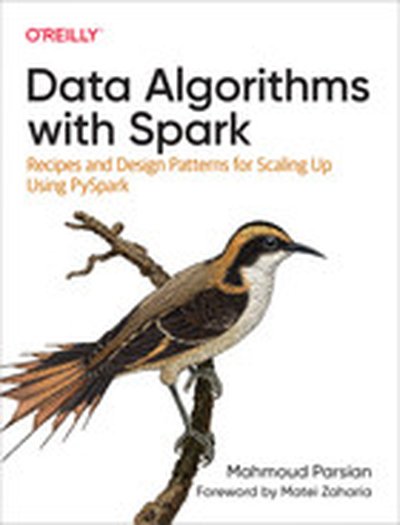
Data Algorithms with Spark

Apache Spark's speed, ease of use, sophisticated analytics, and multilanguage support makes practical knowledge of this cluster-computing framework a required skill for data engineers and data scientists. With this hands-on guide, anyone looking for an introduction to Spark will learn practical algorithms and examples using PySpark. In each chapter, author Mahmoud Parsian shows you how to solve a data problem with a set of Spark transformations and algorithms. You'll learn how to tackle problems involving ETL, design patterns, machine learning algorithms, data partitioning, and genomics analysis. Each detailed recipe includes PySpark algorithms using the PySpark driver and shell script. With this book, you will: Learn how to select Spark transformations for optimized solutions Explore powerful transformations and reductions including reduceByKey(), combineByKey(), and mapPartitions() Understand data partitioning for optimized queries Build and apply a model using PySpark design patterns Apply motif-finding algorithms to graph data Analyze graph data by using the GraphFrames API Apply PySpark algorithms to clinical and genomics data Learn how to use and apply feature engineering in ML algorithms Understand and use practical and pragmatic data design patterns

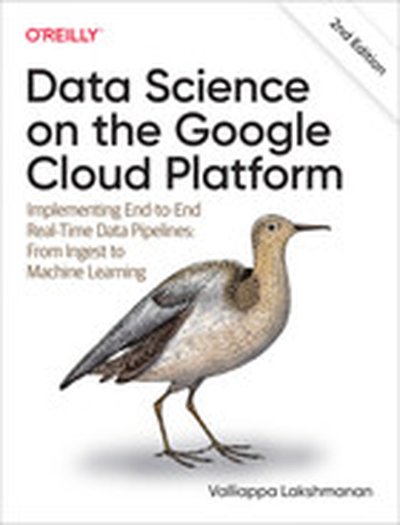
Data Science on the Google Cloud Platform, 2nd Edition

Learn how easy it is to apply sophisticated statistical and machine learning methods to real-world problems when you build using Google Cloud Platform (GCP). This hands-on guide shows data engineers and data scientists how to implement an end-to-end data pipeline with cloud native tools on GCP. Throughout this updated second edition, you'll work through a sample business decision by employing a variety of data science approaches. Follow along by building a data pipeline in your own project on GCP, and discover how to solve data science problems in a transformative and more collaborative way. You'll learn how to: Employ best practices in building highly scalable data and ML pipelines on Google Cloud Automate and schedule data ingest using Cloud Run Create and populate a dashboard in Data Studio Build a real-time analytics pipeline using Pub/Sub, Dataflow, and BigQuery Conduct interactive data exploration with BigQuery Create a Bayesian model with Spark on Cloud Dataproc Forecast time series and do anomaly detection with BigQuery ML Aggregate within time windows with Dataflow Train explainable machine learning models with Vertex AI Operationalize ML with Vertex AI Pipelines

Grokking Streaming Systems

A friendly, framework-agnostic tutorial that will help you grok how streaming systems work—and how to build your own! In Grokking Streaming Systems you will learn how to: Implement and troubleshoot streaming systems Design streaming systems for complex functionalities Assess parallelization requirements Spot networking bottlenecks and resolve back pressure Group data for high-performance systems Handle delayed events in real-time systems Grokking Streaming Systems is a simple guide to the complex concepts behind streaming systems. This friendly and framework-agnostic tutorial teaches you how to handle real-time events, and even design and build your own streaming job that’s a perfect fit for your needs. Each new idea is carefully explained with diagrams, clear examples, and fun dialogue between perplexed personalities! About the Technology Streaming systems minimize the time between receiving and processing event data, so they can deliver responses in real time. For applications in finance, security, and IoT where milliseconds matter, streaming systems are a requirement. And streaming is hot! Skills on platforms like Spark, Heron, and Kafka are in high demand. About the Book Grokking Streaming Systems introduces real-time event streaming applications in clear, reader-friendly language. This engaging book illuminates core concepts like data parallelization, event windows, and backpressure without getting bogged down in framework-specific details. As you go, you’ll build your own simple streaming tool from the ground up to make sure all the ideas and techniques stick. The helpful and entertaining illustrations make streaming systems come alive as you tackle relevant examples like real-time credit card fraud detection and monitoring IoT services. What's Inside Implement and troubleshoot streaming systems Design streaming systems for complex functionalities Spot networking bottlenecks and resolve backpressure Group data for high-performance systems About the Reader No prior experience with streaming systems is assumed. Examples in Java. About the Authors Josh Fischer and Ning Wang are Apache Committers, and part of the committee for the Apache Heron distributed stream processing engine. Quotes Very well-written and enjoyable. I recommend this book to all software engineers working on data processing. - Apoorv Gupta, Facebook Finally, a much-needed introduction to streaming systems—a must-read for anyone interested in this technology. - Anupam Sengupta, Red Hat Tackles complex topics in a very approachable manner. - Marc Roulleau, GIRO A superb resource for helping you grasp the fundamentals of open-source streaming systems. - Simon Verhoeven, Cronos Explains all the main streaming concepts in a friendly way. Start with this one! - Cicero Zandona, Calypso Technologies

Simplify Big Data Analytics with Amazon EMR

Simplify Big Data Analytics with Amazon EMR is a thorough guide to harnessing Amazon's EMR service for big data processing and analytics. From distributed computation pipelines to real-time streaming analytics, this book provides hands-on knowledge and actionable steps for implementing data solutions efficiently. What this Book will help me do Understand the architecture and key components of Amazon EMR and how to deploy it effectively. Learn to configure and manage distributed data processing pipelines using Amazon EMR. Implement security and data governance best practices within the Amazon EMR ecosystem. Master batch ETL and real-time analytics techniques using technologies like Apache Spark. Apply optimization and cost-saving strategies to scalable data solutions. Author(s) Sakti Mishra is a seasoned data professional with extensive expertise in deploying scalable analytics solutions on cloud platforms like AWS. With a background in big data technologies and a passion for teaching, Sakti ensures practical insights accompany every concept. Readers will find his approach thorough, hands-on, and highly informative. Who is it for? This book is perfect for data engineers, data scientists, and other professionals looking to leverage Amazon EMR for scalable analytics. If you are familiar with Python, Scala, or Java and have some exposure to Hadoop or AWS ecosystems, this book will empower you to design and implement robust data pipelines efficiently.

Modern Data Engineering with Apache Spark: A Hands-On Guide for Building Mission-Critical Streaming Applications

Leverage Apache Spark within a modern data engineering ecosystem. This hands-on guide will teach you how to write fully functional applications, follow industry best practices, and learn the rationale behind these decisions. With Apache Spark as the foundation, you will follow a step-by-step journey beginning with the basics of data ingestion, processing, and transformation, and ending up with an entire local data platform running Apache Spark, Apache Zeppelin, Apache Kafka, Redis, MySQL, Minio (S3), and Apache Airflow. Apache Spark applications solve a wide range of data problems from traditional data loading and processing to rich SQL-based analysis as well as complex machine learning workloads and even near real-time processing of streaming data. Spark fits well as a central foundation for any data engineering workload. This book will teach you to write interactive Spark applications using Apache Zeppelin notebooks, write and compilereusable applications and modules, and fully test both batch and streaming. You will also learn to containerize your applications using Docker and run and deploy your Spark applications using a variety of tools such as Apache Airflow, Docker and Kubernetes. ​Reading this book will empower you to take advantage of Apache Spark to optimize your data pipelines and teach you to craft modular and testable Spark applications. You will create and deploy mission-critical streaming spark applications in a low-stress environment that paves the way for your own path to production. ​ What You Will Learn Simplify data transformation with Spark Pipelines and Spark SQL Bridge data engineering with machine learning Architect modular data pipeline applications Build reusable application components and libraries Containerize your Spark applications for consistency and reliability Use Docker and Kubernetes to deploy your Spark applications Speed up application experimentation using Apache Zeppelin and Docker Understand serializable structured data and data contracts Harness effective strategies for optimizing data in your data lakes Build end-to-end Spark structured streaming applications using Redis and Apache Kafka Embrace testing for your batch and streaming applications Deploy and monitor your Spark applications Who This Book Is For Professional software engineers who want to take their current skills and apply them to new and exciting opportunities within the data ecosystem, practicing data engineers who are looking for a guiding light while traversing the many challenges of moving from batch to streaming modes, data architects who wish to provide clear and concise direction for how best to harness anduse Apache Spark within their organization, and those interested in the ins and outs of becoming a modern data engineer in today's fast-paced and data-hungry world

Data Analysis with Python and PySpark

Think big about your data! PySpark brings the powerful Spark big data processing engine to the Python ecosystem, letting you seamlessly scale up your data tasks and create lightning-fast pipelines. In Data Analysis with Python and PySpark you will learn how to: Manage your data as it scales across multiple machines Scale up your data programs with full confidence Read and write data to and from a variety of sources and formats Deal with messy data with PySpark’s data manipulation functionality Discover new data sets and perform exploratory data analysis Build automated data pipelines that transform, summarize, and get insights from data Troubleshoot common PySpark errors Creating reliable long-running jobs Data Analysis with Python and PySpark is your guide to delivering successful Python-driven data projects. Packed with relevant examples and essential techniques, this practical book teaches you to build pipelines for reporting, machine learning, and other data-centric tasks. Quick exercises in every chapter help you practice what you’ve learned, and rapidly start implementing PySpark into your data systems. No previous knowledge of Spark is required. About the Technology The Spark data processing engine is an amazing analytics factory: raw data comes in, insight comes out. PySpark wraps Spark’s core engine with a Python-based API. It helps simplify Spark’s steep learning curve and makes this powerful tool available to anyone working in the Python data ecosystem. About the Book Data Analysis with Python and PySpark helps you solve the daily challenges of data science with PySpark. You’ll learn how to scale your processing capabilities across multiple machines while ingesting data from any source—whether that’s Hadoop clusters, cloud data storage, or local data files. Once you’ve covered the fundamentals, you’ll explore the full versatility of PySpark by building machine learning pipelines, and blending Python, pandas, and PySpark code. What's Inside Organizing your PySpark code Managing your data, no matter the size Scale up your data programs with full confidence Troubleshooting common data pipeline problems Creating reliable long-running jobs About the Reader Written for data scientists and data engineers comfortable with Python. About the Author As a ML director for a data-driven software company, Jonathan Rioux uses PySpark daily. He teaches the software to data scientists, engineers, and data-savvy business analysts. Quotes A clear and in-depth introduction for truly tackling big data with Python. - Gustavo Patino, Oakland University William Beaumont School of Medicine The perfect way to learn how to analyze and master huge datasets. - Gary Bake, Brambles Covers both basic and more advanced topics of PySpark, with a good balance between theory and hands-on. - Philippe Van Bergenl, P² Consulting For beginner to pro, a well-written book to help understand PySpark. - Raushan Kumar Jha, Microsoft

Summary The modern data stack is a constantly moving target which makes it difficult to adopt without prior experience. In order to accelerate the time to deliver useful insights at organizations of all sizes that are looking to take advantage of these new and evolving architectures Tarush Aggarwal founded 5X Data. In this episode he explains how he works with these companies to deploy the technology stack and pairs them with an experienced engineer who assists with the implementation and training to let them realize the benefits of this architecture. He also shares his thoughts on the current state of the ecosystem for modern data vendors and trends to watch as we move into the future.

Announcements

Hello and welcome to the Data Engineering Podcast, the show about modern data management When you’re ready to build your next pipeline, or want to test out the projects you hear about on the show, you’ll need somewhere to deploy it, so check out our friends at Linode. With their managed Kubernetes platform it’s now even easier to deploy and scale your workflows, or try out the latest Helm charts from tools like Pulsar and Pachyderm. With simple pricing, fast networking, object storage, and worldwide data centers, you’ve got everything you need to run a bulletproof data platform. Go to dataengineeringpodcast.com/linode today and get a $100 credit to try out a Kubernetes cluster of your own. And don’t forget to thank them for their continued support of this show! Today’s episode is Sponsored by Prophecy.io – the low-code data engineering platform for the cloud. Prophecy provides an easy-to-use visual interface to design & deploy data pipelines on Apache Spark & Apache Airflow. Now all the data users can use software engineering best practices – git, tests and continuous deployment with a simple to use visual designer. How does it work? – You visually design the pipelines, and Prophecy generates clean Spark code with tests on git; then you visually schedule these pipelines on Airflow. You can observe your pipelines with built in metadata search and column level lineage. Finally, if you have existing workflows in AbInitio, Informatica or other ETL formats that you want to move to the cloud, you can import them automatically into Prophecy making them run productively on Spark. Create your free account today at dataengineeringpodcast.com/prophecy. So now your modern data stack is set up. How is everyone going to find the data they need, and understand it? Select Star is a data discovery platform that automatically analyzes & documents your data. For every table in Select Star, you can find out where the data originated, which dashboards are built on top of it, who’s using it in the company, and how they’re using it, all the way down to the SQL queries. Best of all, it’s simple to set up, and easy for both engineering and operations teams to use. With Select Star’s data catalog, a single source of truth for your data is built in minutes, even across thousands of datasets. Try it out for free and double the length of your free trial today at dataengineeringpodcast.com/selectstar. You’ll also get a swag package when you continue on a paid plan. Your host is Tobias Macey and today I’m interviewing Tarush Agarwal about how he and his team are helping organizations streamline adoption of the modern data stack

Interview

Introduction How did you get involved in the area of data management? Can you describe what you are doing at 5x and the story behind it? How has your focus and operating model shifted since we spoke a year ago?

What are the biggest shifts in the market for data management that you have seen in that time?

What are the main challenges that your customers are facing when they start working with you? What are the components that you are relying on to build repeatable data platforms for your customers?

What are the sharp edges that you have had to smooth out to scale your implementation of those

Summary Databases are an important component of application architectures, but they are often difficult to work with. HarperDB was created with the core goal of being a developer friendly database engine. In the process they ended up creating a scalable distributed engine that works across edge and datacenter environments to support a variety of novel use cases. In this episode co-founder and CEO Stephen Goldberg shares the history of the project, how it is architected to achieve their goals, and how you can start using it today.

Announcements

Hello and welcome to the Data Engineering Podcast, the show about modern data management When you’re ready to build your next pipeline, or want to test out the projects you hear about on the show, you’ll need somewhere to deploy it, so check out our friends at Linode. With their managed Kubernetes platform it’s now even easier to deploy and scale your workflows, or try out the latest Helm charts from tools like Pulsar and Pachyderm. With simple pricing, fast networking, object storage, and worldwide data centers, you’ve got everything you need to run a bulletproof data platform. Go to dataengineeringpodcast.com/linode today and get a $100 credit to try out a Kubernetes cluster of your own. And don’t forget to thank them for their continued support of this show! Today’s episode is Sponsored by Prophecy.io – the low-code data engineering platform for the cloud. Prophecy provides an easy-to-use visual interface to design & deploy data pipelines on Apache Spark & Apache Airflow. Now all the data users can use software engineering best practices – git, tests and continuous deployment with a simple to use visual designer. How does it work? – You visually design the pipelines, and Prophecy generates clean Spark code with tests on git; then you visually schedule these pipelines on Airflow. You can observe your pipelines with built in metadata search and column level lineage. Finally, if you have existing workflows in AbInitio, Informatica or other ETL formats that you want to move to the cloud, you can import them automatically into Prophecy making them run productively on Spark. Create your free account today at dataengineeringpodcast.com/prophecy. So now your modern data stack is set up. How is everyone going to find the data they need, and understand it? Select Star is a data discovery platform that automatically analyzes & documents your data. For every table in Select Star, you can find out where the data originated, which dashboards are built on top of it, who’s using it in the company, and how they’re using it, all the way down to the SQL queries. Best of all, it’s simple to set up, and easy for both engineering and operations teams to use. With Select Star’s data catalog, a single source of truth for your data is built in minutes, even across thousands of datasets. Try it out for free and double the length of your free trial today at dataengineeringpodcast.com/selectstar. You’ll also get a swag package when you continue on a paid plan. Are you looking for a structured and battle-tested approach for learning data engineering? Would you like to know how you can build proper data infrastructures that are built to last? Would you like to have a seasoned industry expert guide you and answer all your questions? Join Pipeline Academy, the worlds first data engineering bootcamp. Learn in small groups with likeminded professionals for 9 weeks part-time to level up in your career. The course covers the most relevant and essential data and software engineering topics that enable you to start your journey as a professional data engineer or analytics engineer. Plus we have AMAs with world-class guest speakers every week! The next cohort starts in April 2022. Visit dataengineeringpodcast.com/academy and apply now! Your host is Tobias Macey and today I’m interviewing Stephen Goldberg about HarperDB, a developer-friendly distributed database engine designed to scale acros

Summary There are a wealth of options for managing structured and textual data, but unstructured binary data assets are not as well supported across the ecosystem. As organizations start to adopt cloud technologies they need a way to manage the distribution, discovery, and collaboration of data across their operating environments. To help solve this complicated challenge Krishna Subramanian and her co-founders at Komprise built a system that allows you to treat use and secure your data wherever it lives, and track copies across environments without requiring manual intervention. In this episode she explains the difficulties that everyone faces as they scale beyond a single operating environment, and how the Komprise platform reduces the burden of managing large and heterogeneous collections of unstructured files.

Announcements

Hello and welcome to the Data Engineering Podcast, the show about modern data management When you’re ready to build your next pipeline, or want to test out the projects you hear about on the show, you’ll need somewhere to deploy it, so check out our friends at Linode. With their managed Kubernetes platform it’s now even easier to deploy and scale your workflows, or try out the latest Helm charts from tools like Pulsar and Pachyderm. With simple pricing, fast networking, object storage, and worldwide data centers, you’ve got everything you need to run a bulletproof data platform. Go to dataengineeringpodcast.com/linode today and get a $100 credit to try out a Kubernetes cluster of your own. And don’t forget to thank them for their continued support of this show! Today’s episode is Sponsored by Prophecy.io – the low-code data engineering platform for the cloud. Prophecy provides an easy-to-use visual interface to design & deploy data pipelines on Apache Spark & Apache Airflow. Now all the data users can use software engineering best practices – git, tests and continuous deployment with a simple to use visual designer. How does it work? – You visually design the pipelines, and Prophecy generates clean Spark code with tests on git; then you visually schedule these pipelines on Airflow. You can observe your pipelines with built in metadata search and column level lineage. Finally, if you have existing workflows in AbInitio, Informatica or other ETL formats that you want to move to the cloud, you can import them automatically into Prophecy making them run productively on Spark. Create your free account today at dataengineeringpodcast.com/prophecy. So now your modern data stack is set up. How is everyone going to find the data they need, and understand it? Select Star is a data discovery platform that automatically analyzes & documents your data. For every table in Select Star, you can find out where the data originated, which dashboards are built on top of it, who’s using it in the company, and how they’re using it, all the way down to the SQL queries. Best of all, it’s simple to set up, and easy for both engineering and operations teams to use. With Select Star’s data catalog, a single source of truth for your data is built in minutes, even across thousands of datasets. Try it out for free and double the length of your free trial today at dataengineeringpodcast.com/selectstar. You’ll also get a swag package when you continue on a paid plan. Your host is Tobias Macey and today I’m interviewing Krishna Subramanian about her work at Komprise to generate value from unstructured file and object data across storage formats and locations

Interview

Introduction How did you get involved in the area of data management? Can you describe what Komprise is and the story behind it? Who are the target customers of the Komprise platform?

What are the core use cases that you are focused on supporting?

How would you characterize the common approaches to managing file storage solutions for hybrid cloud environments?

What are some of the shortcomings of the enterprise storage providers’ met

Summary Python has grown to be one of the top languages used for all aspects of data, from collection and cleaning, to analysis and machine learning. Along with that growth has come an explosion of tools and engines that help power these workflows, which introduces a great deal of complexity when scaling from single machines and exploratory development to massively parallel distributed computation. In answer to that challenge the Fugue project offers an interface to automatically translate across Pandas, Spark, and Dask execution environments without having to modify your logic. In this episode core contributor Kevin Kho explains how the slight differences in the underlying engines can lead to big problems, how Fugue works to hide those differences from the developer, and how you can start using it in your own work today.

Announcements

Hello and welcome to the Data Engineering Podcast, the show about modern data management When you’re ready to build your next pipeline, or want to test out the projects you hear about on the show, you’ll need somewhere to deploy it, so check out our friends at Linode. With their managed Kubernetes platform it’s now even easier to deploy and scale your workflows, or try out the latest Helm charts from tools like Pulsar and Pachyderm. With simple pricing, fast networking, object storage, and worldwide data centers, you’ve got everything you need to run a bulletproof data platform. Go to dataengineeringpodcast.com/linode today and get a $100 credit to try out a Kubernetes cluster of your own. And don’t forget to thank them for their continued support of this show! Atlan is a collaborative workspace for data-driven teams, like Github for engineering or Figma for design teams. By acting as a virtual hub for data assets ranging from tables and dashboards to SQL snippets & code, Atlan enables teams to create a single source of truth for all their data assets, and collaborate across the modern data stack through deep integrations with tools like Snowflake, Slack, Looker and more. Go to dataengineeringpodcast.com/atlan today and sign up for a free trial. If you’re a data engineering podcast listener, you get credits worth $3000 on an annual subscription The only thing worse than having bad data is not knowing that you have it. With Bigeye’s data observability platform, if there is an issue with your data or data pipelines you’ll know right away and can get it fixed before the business is impacted. Bigeye let’s data teams measure, improve, and communicate the quality of your data to company stakeholders. With complete API access, a user-friendly interface, and automated yet flexible alerting, you’ve got everything you need to establish and maintain trust in your data. Go to dataengineeringpodcast.com/bigeye today to sign up and start trusting your analyses. Every data project starts with collecting the information that will provide answers to your questions or inputs to your models. The web is the largest trove of information on the planet and Oxylabs helps you unlock its potential. With the Oxylabs scraper APIs you can extract data from even javascript heavy websites. Combined with their residential proxies you can be sure that you’ll have reliable and high quality data whenever you need it. Go to dataengineeringpodcast.com/oxylabs today and use code DEP25 to get your special discount on residential proxies. Your host is Tobias Macey and today I’m interviewing Kevin Kho about Fugue, a library that offers a unified interface for distributed computing that lets users execute Python, pandas, and SQL code on Spark and Dask without rewrites

Interview

Introduction How did you get involved in the area of data management? Can you describe what Fugue is and the story behind it? What are the core goals of the Fugue project? Who are the target users for Fugue and how does that influence the feature priorities and API design? How does Fugue compare to projects such as Modin, etc. for abst

Summary The life sciences as an industry has seen incredible growth in scale and sophistication, along with the advances in data technology that make it possible to analyze massive amounts of genomic information. In this episode Guy Yachdav, director of software engineering for ImmunAI, shares the complexities that are inherent to managing data workflows for bioinformatics. He also explains how he has architected the systems that ingest, process, and distribute the data that he is responsible for and the requirements that are introduced when collaborating with researchers, domain experts, and machine learning developers.

Announcements

Hello and welcome to the Data Engineering Podcast, the show about modern data management When you’re ready to build your next pipeline, or want to test out the projects you hear about on the show, you’ll need somewhere to deploy it, so check out our friends at Linode. With their managed Kubernetes platform it’s now even easier to deploy and scale your workflows, or try out the latest Helm charts from tools like Pulsar and Pachyderm. With simple pricing, fast networking, object storage, and worldwide data centers, you’ve got everything you need to run a bulletproof data platform. Go to dataengineeringpodcast.com/linode today and get a $100 credit to try out a Kubernetes cluster of your own. And don’t forget to thank them for their continued support of this show! RudderStack’s smart customer data pipeline is warehouse-first. It builds your customer data warehouse and your identity graph on your data warehouse, with support for Snowflake, Google BigQuery, Amazon Redshift, and more. Their SDKs and plugins make event streaming easy, and their integrations with cloud applications like Salesforce and ZenDesk help you go beyond event streaming. With RudderStack you can use all of your customer data to answer more difficult questions and then send those insights to your whole customer data stack. Sign up free at dataengineeringpodcast.com/rudder today. Today’s episode is Sponsored by Prophecy.io – the low-code data engineering platform for the cloud. Prophecy provides an easy-to-use visual interface to design & deploy data pipelines on Apache Spark & Apache Airflow. Now all the data users can use software engineering best practices – git, tests and continuous deployment with a simple to use visual designer. How does it work? – You visually design the pipelines, and Prophecy generates clean Spark code with tests on git; then you visually schedule these pipelines on Airflow. You can observe your pipelines with built in metadata search and column level lineage. Finally, if you have existing workflows in AbInitio, Informatica or other ETL formats that you want to move to the cloud, you can import them automatically into Prophecy making them run productively on Spark. Create your free account today at dataengineeringpodcast.com/prophecy. Your host is Tobias Macey and today I’m interviewing Guy Yachdav, Director of Software Engineering at Immunai, about his work at Immunai to wrangle biological data for advancing research into the human immune system.

Interview

Introduction (see Guy’s bio below) How did you get involved in the area of data management? Can you describe what Immunai is and the story behind it? What are some of the categories of information that you are working with?

What kinds of insights are you trying to power/questions that you are trying to answer with that data?

Who are the stakeholders that you are working with and how does that influence your approach to the integration/transformation/presentation of the data? What are some of the challenges unique to the biological data domain that you have had to address?

What are some of the limitations in the off-the-shelf tools when applied to biological data? How have you approached the selection of tools/techniques/technologies to make your work maintainable for your engineers and accessible for your end users?

Can

Summary Collecting, integrating, and activating data are all challenging activities. When that data pertains to your customers it can become even more complex. To simplify the work of managing the full flow of your customer data and keep you in full control the team at Rudderstack created their eponymous open source platform that allows you to work with first and third party data, as well as build and manage reverse ETL workflows. In this episode CEO and founder Soumyadeb Mitra explains how Rudderstack compares to the various other tools and platforms that share some overlap, how to set it up for your own data needs, and how it is architected to scale to meet demand.

Announcements

Hello and welcome to the Data Engineering Podcast, the show about modern data management When you’re ready to build your next pipeline, or want to test out the projects you hear about on the show, you’ll need somewhere to deploy it, so check out our friends at Linode. With their managed Kubernetes platform it’s now even easier to deploy and scale your workflows, or try out the latest Helm charts from tools like Pulsar and Pachyderm. With simple pricing, fast networking, object storage, and worldwide data centers, you’ve got everything you need to run a bulletproof data platform. Go to dataengineeringpodcast.com/linode today and get a $100 credit to try out a Kubernetes cluster of your own. And don’t forget to thank them for their continued support of this show! Today’s episode is Sponsored by Prophecy.io – the low-code data engineering platform for the cloud. Prophecy provides an easy-to-use visual interface to design & deploy data pipelines on Apache Spark & Apache Airflow. Now all the data users can use software engineering best practices – git, tests and continuous deployment with a simple to use visual designer. How does it work? – You visually design the pipelines, and Prophecy generates clean Spark code with tests on git; then you visually schedule these pipelines on Airflow. You can observe your pipelines with built in metadata search and column level lineage. Finally, if you have existing workflows in AbInitio, Informatica or other ETL formats that you want to move to the cloud, you can import them automatically into Prophecy making them run productively on Spark. Create your free account today at dataengineeringpodcast.com/prophecy. The only thing worse than having bad data is not knowing that you have it. With Bigeye’s data observability platform, if there is an issue with your data or data pipelines you’ll know right away and can get it fixed before the business is impacted. Bigeye let’s data teams measure, improve, and communicate the quality of your data to company stakeholders. With complete API access, a user-friendly interface, and automated yet flexible alerting, you’ve got everything you need to establish and maintain trust in your data. Go to dataengineeringpodcast.com/bigeye today to sign up and start trusting your analyses. Your host is Tobias Macey and today I’m interviewing Soumyadeb Mitra about his experience as the founder of Rudderstack and its role in your data platform

Interview

Introduction How did you get involved in the area of data management? Can you describe what Rudderstack is and the story behind it? What are the main use cases that Rudderstack is designed to support? Who are the target users of Rudderstack?

How does the availability of the managed cloud service change the user profiles that you can target? How do these user profiles influence your focus and prioritization of features and user experience?

How would you characterize the position of Rudderstack in the current data ecosystem?

What other tools/systems might you replace with Rudderstack?

How do you think about the application of Rudderstack compared to tools for data integration (e.g. Singer, Stitch, Fivetran) and reverse ETL (e.g. Grouparoo, Hightouch, Census)? Can you describe how the Rudderstack platform is desig

Summary There are many dimensions to the work of protecting the privacy of users in our data. When you need to share a data set with other teams, departments, or businesses then it is of utmost importance that you eliminate or obfuscate personal information. In this episode Will Thompson explores the many ways that sensitive data can be leaked, re-identified, or otherwise be at risk, as well as the different strategies that can be employed to mitigate those attack vectors. He also explains how he and his team at Privacy Dynamics are working to make those strategies more accessible to organizations so that you can focus on all of the other tasks required of you.

Announcements

Hello and welcome to the Data Engineering Podcast, the show about modern data management When you’re ready to build your next pipeline, or want to test out the projects you hear about on the show, you’ll need somewhere to deploy it, so check out our friends at Linode. With their managed Kubernetes platform it’s now even easier to deploy and scale your workflows, or try out the latest Helm charts from tools like Pulsar and Pachyderm. With simple pricing, fast networking, object storage, and worldwide data centers, you’ve got everything you need to run a bulletproof data platform. Go to dataengineeringpodcast.com/linode today and get a $100 credit to try out a Kubernetes cluster of your own. And don’t forget to thank them for their continued support of this show! Today’s episode is Sponsored by Prophecy.io – the low-code data engineering platform for the cloud. Prophecy provides an easy-to-use visual interface to design & deploy data pipelines on Apache Spark & Apache Airflow. Now all the data users can use software engineering best practices – git, tests and continuous deployment with a simple to use visual designer. How does it work? – You visually design the pipelines, and Prophecy generates clean Spark code with tests on git; then you visually schedule these pipelines on Airflow. You can observe your pipelines with built in metadata search and column level lineage. Finally, if you have existing workflows in AbInitio, Informatica or other ETL formats that you want to move to the cloud, you can import them automatically into Prophecy making them run productively on Spark. Create your free account today at dataengineeringpodcast.com/prophecy. The only thing worse than having bad data is not knowing that you have it. With Bigeye’s data observability platform, if there is an issue with your data or data pipelines you’ll know right away and can get it fixed before the business is impacted. Bigeye let’s data teams measure, improve, and communicate the quality of your data to company stakeholders. With complete API access, a user-friendly interface, and automated yet flexible alerting, you’ve got everything you need to establish and maintain trust in your data. Go to dataengineeringpodcast.com/bigeye today to sign up and start trusting your analyses. Your host is Tobias Macey and today I’m interviewing Will Thompson about managing data privacy concerns for data sets used in analytics and machine learning

Interview

Introduction How did you get involved in the area of data management? Data privacy is a multi-faceted problem domain. Can you start by enumerating the different categories of privacy concern that are involved in analytical use cases? Can you describe what Privacy Dynamics is and the story behind it?

Which categor(y|ies) are you focused on addressing?

What are some of the best practices in the definition, protection, and enforcement of data privacy policies?

Is there a data security/privacy equivalent to the OWASP top 10?

What are some of the techniques that are available for anonymizing data while maintaining statistical utility/significance?

What are some of the engineering/systems capabilities that are required for data (platform) engineers to incorporate these practices in their platforms?

What are the tradeoffs of encryption vs. obfuscation when anonymizing data? What are some of the types of PII that are non-obvious? What are the risks associated with data re-identification, and what are some of the vectors that might be exploited to achieve that?

How can privacy risks mitigation be maintained as new data sources are introduced that might contribute to these re-identification vectors?

Can you describe how Privacy Dynamics is implemented?

What are the most challenging engineering problems that you are dealing with?

How do you approach validation of a data set’s privacy? What have you found to be useful heuristics for identifying private data?

What are the risks of false positives vs. false negatives?

Can you describe what is involved in integrating the Privacy Dynamics system into an existing data platform/warehouse?

What would be required to integrate with systems such as Presto, Clickhouse, Druid, etc.?

What are the most interesting, innovative, or unexpected ways that you have seen Privacy Dynamics used? What are the most interesting, unexpected, or challenging lessons that you have learned while working on Privacy Dynamics? When is Privacy Dynamics the wrong choice? What do you have planned for the future of Privacy Dynamics?

Contact Info

LinkedIn @willseth on Twitter

Parting Question

From your perspective, what is the biggest gap in the tooling or technology for data management today?

Closing Announcements

Thank you for listening! Don’t forget to check out our other show, Podcast.init to learn about the Python language, its community, and the innovative ways it is being used. Visit the site to subscribe to the show, sign up for the mailing list, and read the show notes. If you’ve learned something or tried out a project from the show then tell us about it! Email [email protected]) with your story. To help other people find the show please leave a review on iTunes and tell your friends and co-workers

Links

Privacy Dynamics Pandas

Podcast Episode – Pandas For Data Engineering

Homomorphic Encryption Differential Privacy Immuta

Podcast Episode

The intro and outro music is from The Hug by The Freak Fandango Orchestra / CC BY-SA

Support Data Engineering Podcast

Summary Pandas is a powerful tool for cleaning, transforming, manipulating, or enriching data, among many other potential uses. As a result it has become a standard tool for data engineers for a wide range of applications. Matt Harrison is a Python expert with a long history of working with data who now spends his time on consulting and training. He recently wrote a book on effective patterns for Pandas code, and in this episode he shares advice on how to write efficient data processing routines that will scale with your data volumes, while being understandable and maintainable.

Announcements

Hello and welcome to the Data Engineering Podcast, the show about modern data management When you’re ready to build your next pipeline, or want to test out the projects you hear about on the show, you’ll need somewhere to deploy it, so check out our friends at Linode. With their managed Kubernetes platform it’s now even easier to deploy and scale your workflows, or try out the latest Helm charts from tools like Pulsar and Pachyderm. With simple pricing, fast networking, object storage, and worldwide data centers, you’ve got everything you need to run a bulletproof data platform. Go to dataengineeringpodcast.com/linode today and get a $100 credit to try out a Kubernetes cluster of your own. And don’t forget to thank them for their continued support of this show! Today’s episode is Sponsored by Prophecy.io – the low-code data engineering platform for the cloud. Prophecy provides an easy-to-use visual interface to design & deploy data pipelines on Apache Spark & Apache Airflow. Now all the data users can use software engineering best practices – git, tests and continuous deployment with a simple to use visual designer. How does it work? – You visually design the pipelines, and Prophecy generates clean Spark code with tests on git; then you visually schedule these pipelines on Airflow. You can observe your pipelines with built in metadata search and column level lineage. Finally, if you have existing workflows in AbInitio, Informatica or other ETL formats that you want to move to the cloud, you can import them automatically into Prophecy making them run productively on Spark. Create your free account today at dataengineeringpodcast.com/prophecy. The only thing worse than having bad data is not knowing that you have it. With Bigeye’s data observability platform, if there is an issue with your data or data pipelines you’ll know right away and can get it fixed before the business is impacted. Bigeye let’s data teams measure, improve, and communicate the quality of your data to company stakeholders. With complete API access, a user-friendly interface, and automated yet flexible alerting, you’ve got everything you need to establish and maintain trust in your data. Go to dataengineeringpodcast.com/bigeye today to sign up and start trusting your analyses. Your host is Tobias Macey and today I’m interviewing Matt Harrison about useful tips for using Pandas for data engineering projects

Interview

Introduction How did you get involved in the area of data management? What are the main tasks that you have seen Pandas used for in a data engineering context? What are some of the common mistakes that can lead to poor performance when scaling to large data sets? What are some of the utility features that you have found most helpful for data processing? One of the interesting add-ons to Pandas is its integration with Arrow. What are some of the considerations for how and when to use the Arrow capabilities vs. out-of-the-box Pandas? Pandas is a tool that spans data processing and data science. What are some of the ways that data engineers should think about writing their code to make it accessible to data scientists for supporting collaboration across data workflows? Pandas is often used for transformation logic. What are some of the ways that engineers should approach the design of their code to make it understandable and maint

Summary Data engineering is a relatively young and rapidly expanding field, with practitioners having a wide array of experiences as they navigate their careers. Ashish Mrig currently leads the data analytics platform for Wayfair, as well as running a local data engineering meetup. In this episode he shares his career journey, the challenges related to management of data professionals, and the platform design that he and his team have built to power analytics at a large company. He also provides some excellent insights into the factors that play into the build vs. buy decision at different organizational sizes.

Announcements

Hello and welcome to the Data Engineering Podcast, the show about modern data management When you’re ready to build your next pipeline, or want to test out the projects you hear about on the show, you’ll need somewhere to deploy it, so check out our friends at Linode. With their managed Kubernetes platform it’s now even easier to deploy and scale your workflows, or try out the latest Helm charts from tools like Pulsar and Pachyderm. With simple pricing, fast networking, object storage, and worldwide data centers, you’ve got everything you need to run a bulletproof data platform. Go to dataengineeringpodcast.com/linode today and get a $100 credit to try out a Kubernetes cluster of your own. And don’t forget to thank them for their continued support of this show! Today’s episode is Sponsored by Prophecy.io – the low-code data engineering platform for the cloud. Prophecy provides an easy-to-use visual interface to design & deploy data pipelines on Apache Spark & Apache Airflow. Now all the data users can use software engineering best practices – git, tests and continuous deployment with a simple to use visual designer. How does it work? – You visually design the pipelines, and Prophecy generates clean Spark code with tests on git; then you visually schedule these pipelines on Airflow. You can observe your pipelines with built in metadata search and column level lineage. Finally, if you have existing workflows in AbInitio, Informatica or other ETL formats that you want to move to the cloud, you can import them automatically into Prophecy making them run productively on Spark. Create your free account today at dataengineeringpodcast.com/prophecy. The only thing worse than having bad data is not knowing that you have it. With Bigeye’s data observability platform, if there is an issue with your data or data pipelines you’ll know right away and can get it fixed before the business is impacted. Bigeye let’s data teams measure, improve, and communicate the quality of your data to company stakeholders. With complete API access, a user-friendly interface, and automated yet flexible alerting, you’ve got everything you need to establish and maintain trust in your data. Go to dataengineeringpodcast.com/bigeye today to sign up and start trusting your analyses. Your host is Tobias Macey and today I’m interviewing Ashish Mrig about his path as a data engineer

Interview

Introduction How did you get involved in the area of data management? You currently lead a data engineering team at a relatively large company. What are the topics that account for the majority of your time and energy? What are some of the most valuable lessons that you’ve learned about managing and motivating teams of data professionals? What has been your most consistent challenge across the different generations of the data ecosystem? How is your current data platform architected? Given the current state of the technology and services landscape, how would you approach the design and implementation of a greenfield rebuild of your platform? What are some of the pitfalls that you have seen data teams encounter most frequently? You are running a data engineering meetup for your local community in the Boston area. What have been some of the recurring themes that are discussed in those events?

Contact Info

Medium Blog LinkedIn

Cassandra: The Definitive Guide, (Revised) Third Edition, 3rd Edition

Imagine what you could do if scalability wasn't a problem. With this hands-on guide, you'll learn how the Cassandra database management system handles hundreds of terabytes of data while remaining highly available across multiple data centers. This revised third edition--updated for Cassandra 4.0 and new developments in the Cassandra ecosystem, including deployments in Kubernetes with K8ssandra--provides technical details and practical examples to help you put this database to work in a production environment. Authors Jeff Carpenter and Eben Hewitt demonstrate the advantages of Cassandra's nonrelational design, with special attention to data modeling. Developers, DBAs, and application architects looking to solve a database scaling issue or future-proof an application will learn how to harness Cassandra's speed and flexibility. Understand Cassandra's distributed and decentralized structure Use the Cassandra Query Language (CQL) and cqlsh (the CQL shell) Create a working data model and compare it with an equivalent relational model Design and develop applications using client drivers Explore cluster topology and learn how nodes exchange data Maintain a high level of performance in your cluster Deploy Cassandra onsite, in the cloud, or with Docker and Kubernetes Integrate Cassandra with Spark, Kafka, Elasticsearch, Solr, and Lucene