talk-data.com talk-data.com

Topic

DWH

Data Warehouse

analytics business_intelligence data_storage

568

tagged

Activity Trend

35 peak/qtr
2020-Q1 2026-Q1

Activities

568 activities · Newest first

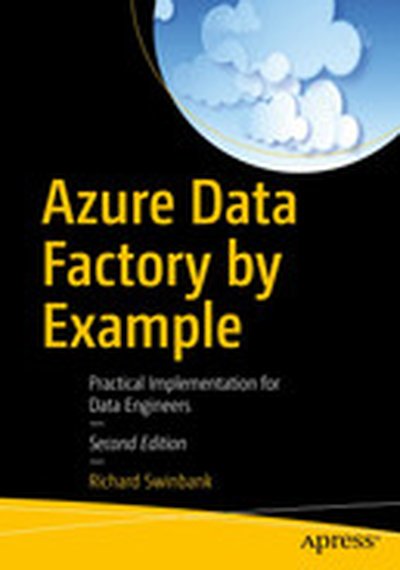
Azure Data Factory by Example: Practical Implementation for Data Engineers

Data engineers who need to hit the ground running will use this book to build skills in Azure Data Factory v2 (ADF). The tutorial-first approach to ADF taken in this book gets you working from the first chapter, explaining key ideas naturally as you encounter them. From creating your first data factory to building complex, metadata-driven nested pipelines, the book guides you through essential concepts in Microsoft’s cloud-based ETL/ELT platform. It introduces components indispensable for the movement and transformation of data in the cloud. Then it demonstrates the tools necessary to orchestrate, monitor, and manage those components. This edition, updated for 2024, includes the latest developments to the Azure Data Factory service: Enhancements to existing pipeline activities such as Execute Pipeline, along with the introduction of new activities such as Script, and activities designed specifically to interact with Azure Synapse Analytics. Improvements to flow control provided by activity deactivation and the Fail activity. The introduction of reusable data flow components such as user-defined functions and flowlets. Extensions to integration runtime capabilities including Managed VNet support. The ability to trigger pipelines in response to custom events. Tools for implementing boilerplate processes such as change data capture and metadata-driven data copying. What You Will Learn Create pipelines, activities, datasets, and linked services Build reusable components using variables, parameters, and expressions Move data into and around Azure services automatically Transform data natively using ADF data flows and Power Query data wrangling Master flow-of-control and triggers for tightly orchestrated pipeline execution Publish and monitor pipelines easily and with confidence Who This Book Is For Data engineers and ETL developers taking their first steps in Azure Data Factory, SQL Server Integration Services users making the transition toward doing ETL in Microsoft’s Azure cloud, and SQL Server database administrators involved in data warehousing and ETL operations
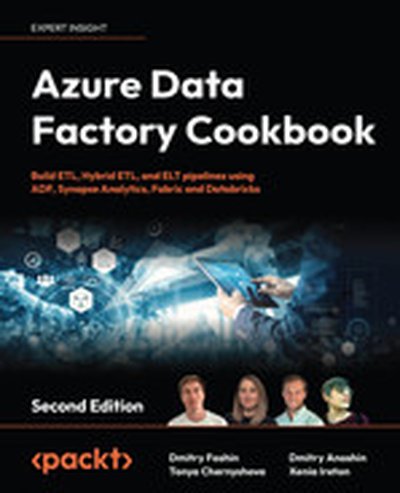
Azure Data Factory Cookbook - Second Edition

This comprehensive guide to Azure Data Factory shows you how to create robust data pipelines and workflows to handle both cloud and on-premises data solutions. Through practical recipes, you will learn to build, manage, and optimize ETL, hybrid ETL, and ELT processes. The book offers detailed explanations to help you integrate technologies like Azure Synapse, Data Lake, and Databricks into your projects. What this Book will help me do Master building and managing data pipelines using Azure Data Factory's latest versions and features. Leverage Azure Synapse and Azure Data Lake for streamlined data integration and analytics workflows. Enhance your ETL/ELT solutions with Microsoft Fabric, Databricks, and Delta tables. Employ debugging tools and workflows in Azure Data Factory to identify and solve data processing issues efficiently. Implement industry-grade best practices for reliable and efficient data orchestration and integration pipelines. Author(s) Dmitry Foshin, Tonya Chernyshova, Dmitry Anoshin, and Xenia Ireton collectively bring years of expertise in data engineering and cloud-based solutions. They are recognized professionals in the Azure ecosystem, dedicated to sharing their knowledge through detailed and actionable content. Their collaborative approach ensures that this book provides practical insights for technical audiences. Who is it for? This book is ideal for data engineers, ETL developers, and professional architects who work with cloud and hybrid environments. If you're looking to upskill in Azure Data Factory or expand your knowledge into related technologies like Synapse Analytics or Databricks, this is for you. Readers should have a foundational understanding of data warehousing concepts to fully benefit from the material.

We’ve heard so much about the value and capabilities of generative AI over the past year, and we’ve all become accustomed to the chat interfaces of our preferred models. One of the main concerns many of us have had has been privacy. Is OpenAI keeping the data and information I give to ChatGPT secure? One of the touted solutions to this problem is running LLMs locally on your own machine, but with the hardware cost that comes with it, running LLMs locally has not been possible for many of us. That might now be starting to change. Nuri Canyaka is VP of AI Marketing at Intel. Prior to Intel, Nuri spent 16 years at Microsoft, starting out as a Technical Evangelist, and leaving the organization as the Senior Director of Product Marketing. He ran the GTM team that helped generate adoption of GPT in Microsoft Azure products. La Tiffaney Santucci is Intel’s AI Marketing Director, specializing in their Edge and Client products. La Tiffaney has spent over a decade at Intel, focussing on partnerships with Dell, Google Amazon and Microsoft.  In the episode, Richie, Nuri and La Tiffaney explore AI’s impact on marketing analytics, the adoptions of AI in the enterprise, how AI is being integrated into existing products, the workflow for implementing AI into business processes and the challenges that come with it, the importance of edge AI for instant decision-making in uses-cases like self-driving cars, the emergence of AI engineering as a distinct field of work, the democratization of AI, what the state of AGI might look like in the near future and much more.  About the AI and the Modern Data Stack DataFramed Series This week we’re releasing 4 episodes focused on how AI is changing the modern data stack and the analytics profession at large. The modern data stack is often an ambiguous and all-encompassing term, so we intentionally wanted to cover the impact of AI on the modern data stack from different angles. Here’s what you can expect: Why the Future of AI in Data will be Weird with Benn Stancil, CTO at Mode & Field CTO at ThoughtSpot — Covering how AI will change analytics workflows and tools How Databricks is Transforming Data Warehousing and AI with Ari Kaplan, Head Evangelist & Robin Sutara, Field CTO at Databricks — Covering Databricks, data intelligence and how AI tools are changing data democratizationAdding AI to the Data Warehouse with Sridhar Ramaswamy, CEO at Snowflake — Covering Snowflake and its uses, how generative AI is changing the attitudes of leaders towards data, and how to improve your data managementAccelerating AI Workflows with Nuri Cankaya, VP of AI Marketing & La Tiffaney Santucci, AI Marketing Director at Intel — Covering AI’s impact on marketing analytics, how AI is being integrated into existing products, and the democratization of AI Links Mentioned in the Show: Intel OpenVINO™ toolkitIntel Developer Clouds for Accelerated ComputingAWS Re:Invent[Course] Implementing AI Solutions in BusinessRelated Episode: Intel CTO Steve Orrin on How Governments Can Navigate the Data & AI RevolutionSign up to a href="https://www.datacamp.com/radar-analytics-edition"...

Snowflake has been foundational in the data space for years. In the mid-2010s, the platform was a major driver of moving data to the cloud. More recently, it's become apparent that combining data and AI in the cloud is key to accelerating innovation. Snowflake has been rapidly adding AI features to provide value to the modern data stack, but what’s really been going on under the hood? At the time of recording, Sridhar Ramaswamy was the SVP of AI at Snowflake, being appointed CEO at Snowflake in February 2024. Sridhar was formerly Co-Founder of Neeva, acquired in 2023 by Snowflake. Before founding Neeva, Ramaswamy oversaw Google's advertising products, including search, display, video advertising, analytics, shopping, payments, and travel. He joined Google in 2003 and was part of the growth of AdWords and Google's overall advertising business. He spent more than 15 years at Google, where he started as a software engineer and rose to SVP of Ads & Commerce.  In the episode, Richie and Sridhar explore Snowflake and its uses, how generative AI is changing the attitudes of leaders towards data, how NLP and AI have impacted enterprise business operations as well as new applications of AI in an enterprise environment, the challenges of enterprise search, the importance of data quality, management and the role of semantic layers in the effective use of AI, a look into Snowflakes products including Snowpilot and Cortex, the collaboration required for successful data and AI projects, advice for organizations looking to improve their data management and much more.     About the AI and the Modern Data Stack DataFramed Series This week we’re releasing 4 episodes focused on how AI is changing the modern data stack and the analytics profession at large. The modern data stack is often an ambiguous and all-encompassing term, so we intentionally wanted to cover the impact of AI on the modern data stack from different angles. Here’s what you can expect: Why the Future of AI in Data will be Weird with Benn Stancil, CTO at Mode & Field CTO at ThoughtSpot — Covering how AI will change analytics workflows and tools How Databricks is Transforming Data Warehousing and AI with Ari Kaplan, Head Evangelist & Robin Sutara, Field CTO at Databricks — Covering Databricks, data intelligence and how AI tools are changing data democratizationAdding AI to the Data Warehouse with Sridhar Ramaswamy, CEO at Snowflake — Covering Snowflake and its uses, how generative AI is changing the attitudes of leaders towards data, and how to improve your data managementAccelerating AI Workflows with Nuri Cankaya, VP of AI Marketing & La Tiffaney Santucci, AI Marketing Director at Intel — Covering AI’s impact on marketing analytics, how AI is being integrated into existing products, and the democratization of AI Links Mentioned in the Show: SnowflakeSnowflake acquires Neeva to accelerate search in the Data Cloud through generative AIUse AI in Seconds with Snowflake Cortex[Course] Introduction to SnowflakeRelated Episode: Why AI will Change Everything—with Former Snowflake CEO, Bob MugliaSign up to a...

Mastering Microsoft Fabric: SAASification of Analytics

Learn and explore the capabilities of Microsoft Fabric, the latest evolution in cloud analytics suites. This book will help you understand how users can leverage Microsoft Office equivalent experience for performing data management and advanced analytics activity. The book starts with an overview of the analytics evolution from on premises to cloud infrastructure as a service (IaaS), platform as a service (PaaS), and now software as a service (SaaS version) and provides an introduction to Microsoft Fabric. You will learn how to provision Microsoft Fabric in your tenant along with the key capabilities of SaaS analytics products and the advantage of using Fabric in the enterprise analytics platform. OneLake and Lakehouse for data engineering is discussed as well as OneLake for data science. Author Ghosh teaches you about data warehouse offerings inside Microsoft Fabric and the new data integration experience which brings Azure Data Factory and Power Query Editor of Power BI together in a single platform. Also demonstrated is Real-Time Analytics in Fabric, including capabilities such as Kusto query and database. You will understand how the new event stream feature integrates with OneLake and other computations. You also will know how to configure the real-time alert capability in a zero code manner and go through the Power BI experience in the Fabric workspace. Fabric pricing and its licensing is also covered. After reading this book, you will understand the capabilities of Microsoft Fabric and its Integration with current and upcoming Azure OpenAI capabilities. What You Will Learn Build OneLake for all data like OneDrive for Microsoft Office Leverage shortcuts for cross-cloud data virtualization in Azure and AWS Understand upcoming OpenAI integration Discover new event streaming and Kusto query inside Fabric real-time analytics Utilize seamless tooling for machine learning and data science Who This Book Is For Citizen users and experts in the data engineering and data science fields, along with chief AI officers

Databricks started out as a platform for using Spark, a big data analytics engine, but it's grown a lot since then. Databricks now allows users to leverage their data and AI projects in the same place, ensuring ease of use and consistency across operations. The Databricks platform is converging on the idea of data intelligence, but what does this mean, how will it help data teams and organizations, and where does AI fit in the picture? Ari is Databricks’ Head of Evangelism and "The Real Moneyball Guy" - the popular movie was partly based on his analytical innovations in Major League Baseball. He is a leading influencer in analytics, artificial intelligence, data science, and high-growth business innovation. Ari was previously the Global AI Evangelist at DataRobot, Nielsen’s regional VP of Analytics, Caltech Alumni of the Decade, President Emeritus of the worldwide Independent Oracle Users Group, on Intel’s AI Board of Advisors, Sports Illustrated Top Ten GM Candidate, an IBM Watson Celebrity Data Scientist, and on the Crain’s Chicago 40 Under 40. He's also written 5 books on analytics, databases, and baseball. Robin is the Field CTO at Databricks. She has consulted with hundreds of organizations on data strategy, data culture, and building diverse data teams. Robin has had an eclectic career path in technical and business functions with more than two decades in tech companies, including Microsoft and Databricks. She also has achieved multiple academic accomplishments from her juris doctorate to a masters in law to engineering leadership. From her first technical role as an entry-level consumer support engineer to her current role in the C-Suite, Robin supports creating an inclusive workplace and is the current co-chair of Women in Data Safety Committee. She was also recognized in 2023 as a Top 20 Women in Data and Tech, as well as DataIQ 100 Most Influential People in Data. In the episode, Richie, Ari, and Robin explore Databricks, the application of generative AI in improving services operations and providing data insights, data intelligence, and lakehouse technology, the wide-ranging applications of generative AI, how AI tools are changing data democratization, the challenges of data governance and management and how tools like Databricks can help, how jobs in data and AI are changing and much more.  About the AI and the Modern Data Stack DataFramed Series This week we’re releasing 4 episodes focused on how AI is changing the modern data stack and the analytics profession at large. The modern data stack is often an ambiguous and all-encompassing term, so we intentionally wanted to cover the impact of AI on the modern data stack from different angles. Here’s what you can expect: Why the Future of AI in Data will be Weird with Benn Stancil, CTO at Mode & Field CTO at ThoughtSpot — Covering how AI will change analytics workflows and tools How Databricks is Transforming Data Warehousing and AI with Ari Kaplan, Head Evangelist & Robin Sutara, Field CTO at Databricks — Covering Databricks, data intelligence and how AI tools are changing data democratizationAdding AI to the Data Warehouse with Sridhar Ramaswamy, CEO at Snowflake — Covering Snowflake and its uses, how generative AI is changing the attitudes of leaders towards data, and how to improve your data managementAccelerating AI Workflows with Nuri Cankaya, VP of AI Marketing & La Tiffaney Santucci, AI Marketing Director at Intel — Covering AI’s impact on marketing analytics, how AI is being integrated into existing products, and the democratization of AI Links Mentioned in the Show: DatabricksDelta Lakea href="https://mlflow.org/" rel="noopener...

One of the biggest surprises of the generative AI revolution over the past 2 years lies in the counter-intuitiveness of its most successful use cases. Counter to most predictions made about AI years ago, AI-assisted coding, specifically AI-assisted data work, has been surprisingly one of the biggest killer apps of generative AI tools and copilots. However, what happens when we take this notion even further? How will analytics workflows look like when generative AI tools can also assist us in problem-solving? What type of analytics use cases can we expect to operationalize, and what tools can we expect to work with when AI systems can provide scalable qualitative data instead of relying on imperfect quantitative proxies? Today’s guest calls this future “weird”.  Benn Stancil is the Field CTO at ThoughtSpot. He joined ThoughtSpot in 2023 as part of its acquisition of Mode, where he was a Co-Founder and CTO. While at Mode, Benn held roles leading Mode’s data, product, marketing, and executive teams. He regularly writes about data and technology at benn.substack.com. Prior to founding Mode, Benn worked on analytics teams at Microsoft and Yammer. Throughout the episode, Benn and Adel talk about the nature of AI-assisted analytics workflows, the potential for generative AI in assisting problem-solving, how he imagines analytics workflows to look in the future, and a lot more.  About the AI and the Modern Data Stack DataFramed Series This week we’re releasing 4 episodes focused on how AI is changing the modern data stack and the analytics profession at large. The modern data stack is often an ambiguous and all-encompassing term, so we intentionally wanted to cover the impact of AI on the modern data stack from different angles. Here’s what you can expect: Why the Future of AI in Data will be Weird with Benn Stancil, CTO at Mode & Field CTO at ThoughtSpot — Covering how AI will change analytics workflows and tools How Databricks is Transforming Data Warehousing and AI with Ari Kaplan, Head Evangelist & Robin Sutara, Field CTO at Databricks — Covering Databricks, data intelligence and how AI tools are changing data democratizationAdding AI to the Data Warehouse with Sridhar Ramaswamy, CEO at Snowflake — Covering Snowflake and its uses, how generative AI is changing the attitudes of leaders towards data, and how to improve your data managementAccelerating AI Workflows with Nuri Cankaya, VP of AI Marketing & La Tiffaney Santucci, AI Marketing Director at Intel — Covering AI’s impact on marketing analytics, how AI is being integrated into existing products, and the democratization of AI Links Mentioned in the Show: Mode AnalyticsThoughtSpot acquires Mode: Empowering data teams to bring Generative AI to BIEverybody Lies: Big Data, New Data, and What the Internet Can Tell Us About Who We Really Are[Course] Generative AI for Business[Skill Track] SQL FundamentalsRelated Episode: The Future of Marketing Analytics with Cory Munchbach, CEO at...

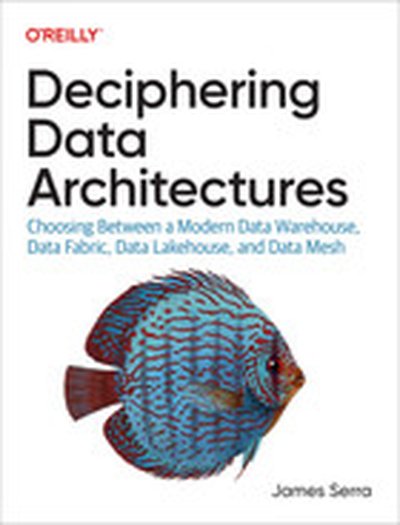
Deciphering Data Architectures

Data fabric, data lakehouse, and data mesh have recently appeared as viable alternatives to the modern data warehouse. These new architectures have solid benefits, but they're also surrounded by a lot of hyperbole and confusion. This practical book provides a guided tour of these architectures to help data professionals understand the pros and cons of each. James Serra, big data and data warehousing solution architect at Microsoft, examines common data architecture concepts, including how data warehouses have had to evolve to work with data lake features. You'll learn what data lakehouses can help you achieve, as well as how to distinguish data mesh hype from reality. Best of all, you'll be able to determine the most appropriate data architecture for your needs. With this book, you'll: Gain a working understanding of several data architectures Learn the strengths and weaknesses of each approach Distinguish data architecture theory from reality Pick the best architecture for your use case Understand the differences between data warehouses and data lakes Learn common data architecture concepts to help you build better solutions Explore the historical evolution and characteristics of data architectures Learn essentials of running an architecture design session, team organization, and project success factors Free from product discussions, this book will serve as a timeless resource for years to come.

Summary

Stream processing systems have long been built with a code-first design, adding SQL as a layer on top of the existing framework. RisingWave is a database engine that was created specifically for stream processing, with S3 as the storage layer. In this episode Yingjun Wu explains how it is architected to power analytical workflows on continuous data flows, and the challenges of making it responsive and scalable.

Announcements

Hello and welcome to the Data Engineering Podcast, the show about modern data management Data lakes are notoriously complex. For data engineers who battle to build and scale high quality data workflows on the data lake, Starburst powers petabyte-scale SQL analytics fast, at a fraction of the cost of traditional methods, so that you can meet all your data needs ranging from AI to data applications to complete analytics. Trusted by teams of all sizes, including Comcast and Doordash, Starburst is a data lake analytics platform that delivers the adaptability and flexibility a lakehouse ecosystem promises. And Starburst does all of this on an open architecture with first-class support for Apache Iceberg, Delta Lake and Hudi, so you always maintain ownership of your data. Want to see Starburst in action? Go to dataengineeringpodcast.com/starburst and get $500 in credits to try Starburst Galaxy today, the easiest and fastest way to get started using Trino. Dagster offers a new approach to building and running data platforms and data pipelines. It is an open-source, cloud-native orchestrator for the whole development lifecycle, with integrated lineage and observability, a declarative programming model, and best-in-class testability. Your team can get up and running in minutes thanks to Dagster Cloud, an enterprise-class hosted solution that offers serverless and hybrid deployments, enhanced security, and on-demand ephemeral test deployments. Go to dataengineeringpodcast.com/dagster today to get started. Your first 30 days are free! Your host is Tobias Macey and today I'm interviewing Yingjun Wu about the RisingWave database and the intricacies of building a stream processing engine on S3

Interview

Introduction How did you get involved in the area of data management? Can you describe what RisingWave is and the story behind it? There are numerous stream processing engines, near-real-time database engines, streaming SQL systems, etc. What is the specific niche that RisingWave addresses?

What are some of the platforms/architectures that teams are replacing with RisingWave?

What are some of the unique capabilities/use cases that RisingWave provides over other offerings in the current ecosystem? Can you describe how RisingWave is architected and implemented?

How have the design and goals/scope changed since you first started working on it? What are the core design philosophies that you rely on to prioritize the ongoing development of the project?

What are the most complex engineering challenges that you have had to address in the creation of RisingWave? Can you describe a typical workflow for teams that are building on top of RisingWave?

What are the user/developer experience elements that you have prioritized most highly?

What are the situations where RisingWave can/should be a system of record vs. a point-in-time view of data in transit, with a data warehouse/lakehouse as the longitudinal storage and query engine? What are the most interesting, innovative, or unexpected ways that you have seen RisingWave used? What are the most interesting, unexpected, or challenging lessons that you have learned while working on RisingWave? When is RisingWave the wrong choice? What do you have planned for the future of RisingWave?

Contact Info

yingjunwu on GitHub Personal Website LinkedIn

Parting Question

From your perspective, what is the biggest gap in the tooling or technology for data management today?

Closing Announcements

Thank you for listening! Don't forget to check out our other shows.

With GA4 putting web and behavioural data in a data warehouse into the hands of more analysts than ever before, you may be wondering how to get the best from your data in BigQuery (or any data warehouse), keep costs manageable, and how to give your users the best performance possible. This talk will cover different approaches to data modelling, the trade-offs associated with each approach, and how the dashboard/BI tool you’re using (whether it be Looker or Looker Studio, Tableau, Power BI etc) impacts your data modelling.

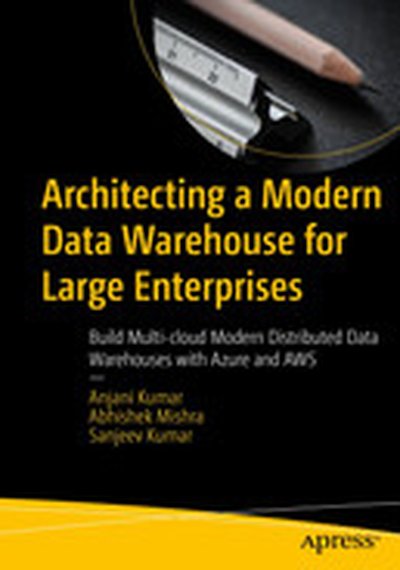
Architecting a Modern Data Warehouse for Large Enterprises: Build Multi-cloud Modern Distributed Data Warehouses with Azure and AWS

Design and architect new generation cloud-based data warehouses using Azure and AWS. This book provides an in-depth understanding of how to build modern cloud-native data warehouses, as well as their history and evolution. The book starts by covering foundational data warehouse concepts, and introduces modern features such as distributed processing, big data storage, data streaming, and processing data on the cloud. You will gain an understanding of the synergy, relevance, and usage data warehousing standard practices in the modern world of distributed data processing. The authors walk you through the essential concepts of Data Mesh, Data Lake, Lakehouse, and Delta Lake. And they demonstrate the services and offerings available on Azure and AWS that deal with data orchestration, data democratization, data governance, data security, and business intelligence. After completing this book, you will be ready to design and architect enterprise-grade, cloud-based modern data warehouses using industry best practices and guidelines. What You Will Learn Understand the core concepts underlying modern data warehouses Design and build cloud-native data warehousesGain a practical approach to architecting and building data warehouses on Azure and AWS Implement modern data warehousing components such as Data Mesh, Data Lake, Delta Lake, and Lakehouse Process data through pandas and evaluate your model’s performance using metrics such as F1-score, precision, and recall Apply deep learning to supervised, semi-supervised, and unsupervised anomaly detection tasks for tabular datasets and time series applications Who This Book Is For Experienced developers, cloud architects, and technology enthusiasts looking to build cloud-based modern data warehouses using Azure and AWS

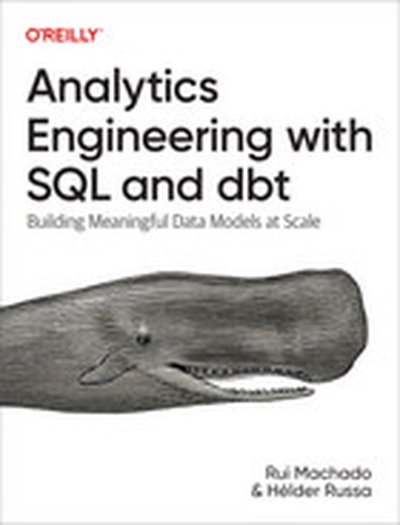
Analytics Engineering with SQL and dbt

With the shift from data warehouses to data lakes, data now lands in repositories before it's been transformed, enabling engineers to model raw data into clean, well-defined datasets. dbt (data build tool) helps you take data further. This practical book shows data analysts, data engineers, BI developers, and data scientists how to create a true self-service transformation platform through the use of dynamic SQL. Authors Rui Machado from Monstarlab and Hélder Russa from Jumia show you how to quickly deliver new data products by focusing more on value delivery and less on architectural and engineering aspects. If you know your business well and have the technical skills to model raw data into clean, well-defined datasets, you'll learn how to design and deliver data models without any technical influence. With this book, you'll learn: What dbt is and how a dbt project is structured How dbt fits into the data engineering and analytics worlds How to collaborate on building data models The main tools and architectures for building useful, functional data models How to fit dbt into data warehousing and laking architecture How to build tests for data transformations

Maciej Marek: Peer Beneath the Surface of the Earth

Explore the depths of subsurface analysis with Maciej Marek as he unveils 'Peer Beneath the Surface of the Earth.' 🌍📡 Discover Widmo's innovative Spectral Ground Penetrating Radar and their journey from single to multi-cloud solutions, facing challenges along the way. Join the session to learn about data warehousing, Infrastructure as Code, and the role of AI in automation! 💡🛠️ #SubsurfaceAnalysis #Innovation #MultiCloud

Effective data management has become a cornerstone of success in our digital era. It involves not just collecting and storing information but also organizing, securing, and leveraging data to drive progress and innovation. Many organizations turn to tools like Snowflake for advanced data warehousing capabilities. However, while Snowflake enhances data storage and access, it's not a complete solution for all data management challenges. To address this, tools like Capital One’s Slingshot can be used alongside Snowflake, helping to optimize costs and refine data management strategies. Salim Syed is a VP, Head of engineering for Capital One Slingshot product. He led Capital One’s data warehouse migration to AWS and is a specialist in deploying Snowflake to a large enterprise. Salim’s expertise lies in developing Big Data (Lake) and Data Warehouse strategy on the public cloud. He leads an organization of more than 100 data engineers, support engineers, DBAs and full stack developers in driving enterprise data lake, data warehouse, data management and visualization platform services. Salim has more than 25 years of experience in the data ecosystem. His career started in data engineering where he built data pipelines and then moved into maintenance and administration of large database servers using multi-tier replication architecture in various remote locations. He then worked at CodeRye as a database architect and at 3M Health Information Systems as an enterprise data architect. Salim has been at Capital One for the past six years. In this episode, Adel and Salim explore cloud data management and the evolution of Slingshot into a major multi-tenant SaaS platform, the shift from on-premise to cloud-based data governance, the role of centralized tooling, strategies for effective cloud data management, including data governance, cost optimization, and waste reduction as well as insights into navigating the complexities of data infrastructure, security, and scalability in the modern digital era. Links Mentioned in the Show: Capital One SlingshotSnowflakeCourse: Introduction to Data WarehousingCourse: Introduction to Snowflake

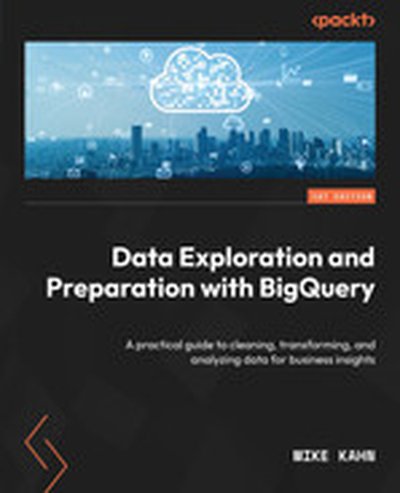
Data Exploration and Preparation with BigQuery

In "Data Exploration and Preparation with BigQuery," Michael Kahn provides a hands-on guide to understanding and utilizing Google's powerful data warehouse solution, BigQuery. This comprehensive book equips you with the skills needed to clean, transform, and analyze large datasets for actionable business insights. What this Book will help me do Master the process of exploring and assessing the quality of datasets. Learn SQL for performing efficient and advanced data transformations in BigQuery. Optimize the performance of BigQuery queries for speed and cost-effectiveness. Discover best practices for setting up and managing BigQuery resources. Apply real-world case studies to analyze data and derive meaningful insights. Author(s) Michael Kahn is an experienced data engineer and author specializing in big data solutions and technologies. With years of hands-on experience working with Google Cloud Platform and BigQuery, he has assisted organizations in optimizing their data pipelines for effective decision-making. His accessible writing style ensures complex topics become approachable, enabling readers of various skill levels to succeed. Who is it for? This book is tailored for data analysts, data engineers, and data scientists who want to learn how to effectively use BigQuery for data exploration and preparation. Whether you're new to BigQuery or looking to deepen your expertise in working with large datasets, this book provides clear guidance and practical examples to achieve your goals.

If Data Vault is a new term for you, it's a data modeling design pattern. We're joined by Brandon Taylor, a senior data architect at Guild, and Michael Olschimke, who is the CEO of Scalefree—the consulting firm whose co-founder Dan Lindstedt is credited as the designer of the data vault architecture.  In this conversation with Tristan and Julia, Michael and Brandon explore the Data Vault approach among data warehouse design methodologies. They discuss Data Vault's adoption in Europe, its alignment with data mesh architecture, and the ongoing debate over Data Vault vs. Kimball methods.  For full show notes and to read 6+ years of back issues of the podcast's companion newsletter, head to https://roundup.getdbt.com. The Analytics Engineering Podcast is sponsored by dbt Labs.

Enterprise MDS deployment at scale: dbt & DevOps - Coalesce 2023

Behind any good DataOps within a Modern Data Stack (MDS) architecture is a solid DevOps design! This is particularly pressing when building an MDS solution at scale, as reliability, quality and availability of data requires a very high degree of process automation while remaining fast, agile and resilient to change when addressing business needs.

While DevOps in Data Engineering is nothing new - for a broad-spectrum solution that includes data warehouse, BI, etc seemed either a bit out of reach due to overall complexity and cost - or simply overlooked due to perceived issues around scaling often attributed to the challenges of automation in CI/CD processes. However, this has been fast changing with tools such as dbt having super cool features which allow a very high degree of autonomy in the CI/CD processes with relative ease, with flexible and cutting edge features around pre-commits, Slim CI, etc.

In this session, Datatonic covers the challenges around building and deploying enterprise-grade MDS solutions for analytics at scale and how they have used dbt to address those - especially around near-complete autonomy to the CI/CD processes!

Speaker: Ash Sultan, Lead Data Architect, Datatonic

Register for Coalesce at https://coalesce.getdbt.com

Demystifying Data Vault with dbt - Coalesce 2023

In this session, Alex Higgs unveils the potential of Data Vault 2.0, an often overlooked but powerful data warehousing method. Discover how it offers scalability, agility, and flexibility to your data solutions.

Key Highlights: - Explore the origins and essence of Data Vault 2.0 - Learn how Data Vault 2.0 streamlines big data solutions for scalability. - See how it integrates with dbt via AutomateDV for faster time to value. - Understand how AutomateDV simplifies Data Vault 2.0 data warehouses, freeing data teams from intricate SQL.

Speaker: Alex Higgs, Senior Consultant Data Engineer, Datavault

Register for Coalesce at https://coalesce.getdbt.com