talk-data.com talk-data.com

Topic

Python

programming_language data_science web_development

1446

tagged

Activity Trend

185 peak/qtr
2020-Q1 2026-Q1

Activities

1446 activities · Newest first

Summary Data warehouses have gone through many transformations, from standard relational databases on powerful hardware, to column oriented storage engines, to the current generation of cloud-native analytical engines. SnowflakeDB has been leading the charge to take advantage of cloud services that simplify the separation of compute and storage. In this episode Kent Graziano, chief technical evangelist for SnowflakeDB, explains how it is differentiated from other managed platforms and traditional data warehouse engines, the features that allow you to scale your usage dynamically, and how it allows for a shift in your workflow from ETL to ELT. If you are evaluating your options for building or migrating a data platform, then this is definitely worth a listen.

Announcements

Hello and welcome to the Data Engineering Podcast, the show about modern data management When you’re ready to build your next pipeline, or want to test out the projects you hear about on the show, you’ll need somewhere to deploy it, so check out our friends at Linode. With 200Gbit private networking, scalable shared block storage, and a 40Gbit public network, you’ve got everything you need to run a fast, reliable, and bullet-proof data platform. If you need global distribution, they’ve got that covered too with world-wide datacenters including new ones in Toronto and Mumbai. And for your machine learning workloads, they just announced dedicated CPU instances. Go to dataengineeringpodcast.com/linode today to get a $20 credit and launch a new server in under a minute. And don’t forget to thank them for their continued support of this show! You listen to this show to learn and stay up to date with what’s happening in databases, streaming platforms, big data, and everything else you need to know about modern data management. For even more opportunities to meet, listen, and learn from your peers you don’t want to miss out on this year’s conference season. We have partnered with organizations such as O’Reilly Media and the Python Software Foundation. Upcoming events include the Software Architecture Conference in NYC and PyCOn US in Pittsburgh. Go to dataengineeringpodcast.com/conferences to learn more about these and other events, and take advantage of our partner discounts to save money when you register today. Your host is Tobias Macey and today I’m interviewing Kent Graziano about SnowflakeDB, the cloud-native data warehouse

Interview

Introduction How did you get involved in the area of data management? Can you start by explaining what SnowflakeDB is for anyone who isn’t familiar with it?

How does it compare to the other available platforms for data warehousing? How does it differ from traditional data warehouses?

How does the performance and flexibility affect the data modeling requirements?

Snowflake is one of the data stores that is enabling the shift from an ETL to an ELT workflow. What are the features that allow for that approach and what are some of the challenges that it introduces? Can you describe how the platform is architected and some of the ways that it has evolved as it has grown in popularity?

What are some of the current limitations that you are struggling with?

For someone getting started with Snowflake what is involved with loading data into the platform?

What is their workflow for allocating and scaling compute capacity and running anlyses?

One of the interesting features enabled by your architecture is data sharing. What are some of the most interesting or unexpected uses of that capability that you have seen? What are some other features or use cases for Snowflake that are not as well known or publicized which you think users should know about? When is SnowflakeDB the wrong choice? What are some of the plans for the future of SnowflakeDB?

Contact Info

LinkedIn Website @KentGraziano on Twitter

Parting Question

From your perspective, what is the biggest gap in the tooling or technology for data management today?

Links

SnowflakeDB

Free Trial Stack Overflow

Data Warehouse Oracle DB MPP == Massively Parallel Processing Shared Nothing Architecture Multi-Cluster Shared Data Architecture Google BigQuery AWS Redshift AWS Redshift Spectrum Presto

Podcast Episode

SnowflakeDB Semi-Structured Data Types Hive ACID == Atomicity, Consistency, Isolation, Durability 3rd Normal Form Data Vault Modeling Dimensional Modeling JSON AVRO Parquet SnowflakeDB Virtual Warehouses CRM == Customer Relationship Management Master Data Management

Podcast Episode

FoundationDB

Podcast Episode

Apache Spark

Podcast Episode

SSIS == SQL Server Integration Services Talend Informatica Fivetran

Podcast Episode

Matillion Apache Kafka Snowpipe Snowflake Data Exchange OLTP == Online Transaction Processing GeoJSON Snowflake Documentation SnowAlert Splunk Data Catalog

The intro and outro music is from The Hug by The Freak Fandango Orchestra / CC BY-SA

Support Data Engineering Podcast
Summary The financial industry has long been driven by data, requiring a mature and robust capacity for discovering and integrating valuable sources of information. Citadel is no exception, and in this episode Michael Watson and Robert Krzyzanowski share their experiences managing and leading the data engineering teams that power the business. They shared helpful insights into some of the challenges associated with working in a regulated industry, organizing teams to deliver value rapidly and reliably, and how they approach career development for data engineers. This was a great conversation for an inside look at how to build and maintain a data driven culture.

Announcements

Hello and welcome to the Data Engineering Podcast, the show about modern data management When you’re ready to build your next pipeline, or want to test out the projects you hear about on the show, you’ll need somewhere to deploy it, so check out our friends at Linode. With 200Gbit private networking, scalable shared block storage, and a 40Gbit public network, you’ve got everything you need to run a fast, reliable, and bullet-proof data platform. If you need global distribution, they’ve got that covered too with world-wide datacenters including new ones in Toronto and Mumbai. And for your machine learning workloads, they just announced dedicated CPU instances. Go to dataengineeringpodcast.com/linode today to get a $20 credit and launch a new server in under a minute. And don’t forget to thank them for their continued support of this show! You listen to this show to learn and stay up to date with what’s happening in databases, streaming platforms, big data, and everything else you need to know about modern data management. For even more opportunities to meet, listen, and learn from your peers you don’t want to miss out on this year’s conference season. We have partnered with organizations such as O’Reilly Media, Dataversity, Corinium Global Intelligence, Alluxio, and Data Council. Go to dataengineeringpodcast.com/conferences to learn more about these and other events, and take advantage of our partner discounts to save money when you register today. Your host is Tobias Macey and today I’m interviewing Michael Watson and Robert Krzyzanowski about the technical and organizational challenges that he and his team are working on at Citadel

Interview

Introduction How did you get involved in the area of data management? Can you start by describing the size and structure of the data engineering teams at Citadel?

How have the scope and nature of responsibilities for data engineers evolved over the past few years at Citadel as more and better tools and platforms have been made available in the space and machine learning techniques have grown more sophisticated?

Can you describe the types of data that you are working with at Citadel?

What is the process for identifying, evaluating, and ingesting new sources of data?

What are some of the common core aspects of your data infrastructure?

What are some of the ways that it differs across teams or projects?

How involved are data engineers in the overall product design and delivery lifecycle? For someone who joins your team as a data engineer, what are some of the options available to them for a career path? What are some of the challenges that you are currently facing in managing the data lifecycle for projects at Citadel? What are some tools or practices that you are excited to try out?

Contact Info

Michael

LinkedIn @detroitcoder on Twitter detroitcoder on GitHub

Parting Question

From your perspective, what is the biggest gap in the tooling or technology for data management today?

Closing Announcements

Thank you for listening! Don’t forget to check out our other show, Podcast.init to learn about the Python language, its community, and the innovative ways it is being used. Visit the site to subscribe to the show, sign up for the mailing list, and read the show notes. If you’v

Summary The team at Sentry has built a platform for anyone in the world to send software errors and events. As they scaled the volume of customers and data they began running into the limitations of their initial architecture. To address the needs of their business and continue to improve their capabilities they settled on Clickhouse as the new storage and query layer to power their business. In this episode James Cunningham and Ted Kaemming describe the process of rearchitecting a production system, what they learned in the process, and some useful tips for anyone else evaluating Clickhouse.

Announcements

Hello and welcome to the Data Engineering Podcast, the show about modern data management When you’re ready to build your next pipeline, or want to test out the projects you hear about on the show, you’ll need somewhere to deploy it, so check out our friends at Linode. With 200Gbit private networking, scalable shared block storage, and a 40Gbit public network, you’ve got everything you need to run a fast, reliable, and bullet-proof data platform. If you need global distribution, they’ve got that covered too with world-wide datacenters including new ones in Toronto and Mumbai. And for your machine learning workloads, they just announced dedicated CPU instances. Go to dataengineeringpodcast.com/linode today to get a $20 credit and launch a new server in under a minute. And don’t forget to thank them for their continued support of this show! You listen to this show to learn and stay up to date with what’s happening in databases, streaming platforms, big data, and everything else you need to know about modern data management. For even more opportunities to meet, listen, and learn from your peers you don’t want to miss out on this year’s conference season. We have partnered with organizations such as O’Reilly Media, Dataversity, Corinium Global Intelligence, Alluxio, and Data Council. Go to dataengineeringpodcast.com/conferences to learn more about these and other events, and take advantage of our partner discounts to save money when you register today. Your host is Tobias Macey and today I’m interviewing Ted Kaemming and James Cunningham about Snuba, the new open source search service at Sentry implemented on top of Clickhouse

Interview

Introduction How did you get involved in the area of data management? Can you start by describing the internal and user-facing issues that you were facing at Sentry with the existing search capabilities?

What did the previous system look like?

What was your design criteria for building a new platform?

What was your initial list of possible system components and what was your evaluation process that resulted in your selection of Clickhouse?

Can you describe the system architecture of Snuba and some of the ways that it differs from your initial ideas of how it would work?

What have been some of the sharp edges of Clickhouse that you have had to engineer around? How have you found the operational aspects of Clickhouse?

How did you manage the introduction of this new piece of infrastructure to a business that was already handling massive amounts of real-time data? What are some of the downstream benefits of using Clickhouse for managing event data at Sentry? For someone who is interested in using Snuba for their own purposes, how flexible is it for different domain contexts? What are some of the other data challenges that you are currently facing at Sentry?

What is your next highest priority for evolving or rebuilding to address technical or business challenges?

Contact Info

James

@JTCunning on Twitter JTCunning on GitHub

Ted

tkaemming on GitHub Website @tkaemming on Twitter

Parting Question

From your perspective, what is the biggest gap in the tooling or technology for data management today?

Closing Announcements

Thank you for listening! Don’t forget to check out our other show, Podcast.init to learn about the Python language, its community, and t

Summary With the constant evolution of technology for data management it can seem impossible to make an informed decision about whether to build a data warehouse, or a data lake, or just leave your data wherever it currently rests. What’s worse is that any time you have to migrate to a new architecture, all of your analytical code has to change too. Thankfully it’s possible to add an abstraction layer to eliminate the churn in your client code, allowing you to evolve your data platform without disrupting your downstream data users. In this episode AtScale co-founder and CTO Matthew Baird describes how the data virtualization and data engineering automation capabilities that are built into the platform free up your engineers to focus on your business needs without having to waste cycles on premature optimization. This was a great conversation about the power of abstractions and appreciating the value of increasing the efficiency of your data team.

Announcements

Hello and welcome to the Data Engineering Podcast, the show about modern data management When you’re ready to build your next pipeline, or want to test out the projects you hear about on the show, you’ll need somewhere to deploy it, so check out our friends at Linode. With 200Gbit private networking, scalable shared block storage, and a 40Gbit public network, you’ve got everything you need to run a fast, reliable, and bullet-proof data platform. If you need global distribution, they’ve got that covered too with world-wide datacenters including new ones in Toronto and Mumbai. And for your machine learning workloads, they just announced dedicated CPU instances. Go to dataengineeringpodcast.com/linode today to get a $20 credit and launch a new server in under a minute. And don’t forget to thank them for their continued support of this show! This week’s episode is also sponsored by Datacoral, an AWS-native, serverless, data infrastructure that installs in your VPC. Datacoral helps data engineers build and manage the flow of data pipelines without having to manage any infrastructure, meaning you can spend your time invested in data transformations and business needs, rather than pipeline maintenance. Raghu Murthy, founder and CEO of Datacoral built data infrastructures at Yahoo! and Facebook, scaling from terabytes to petabytes of analytic data. He started Datacoral with the goal to make SQL the universal data programming language. Visit dataengineeringpodcast.com/datacoral today to find out more. Having all of your logs and event data in one place makes your life easier when something breaks, unless that something is your Elastic Search cluster because it’s storing too much data. CHAOSSEARCH frees you from having to worry about data retention, unexpected failures, and expanding operating costs. They give you a fully managed service to search and analyze all of your logs in S3, entirely under your control, all for half the cost of running your own Elastic Search cluster or using a hosted platform. Try it out for yourself at dataengineeringpodcast.com/chaossearch and don’t forget to thank them for supporting the show! You listen to this show to learn and stay up to date with what’s happening in databases, streaming platforms, big data, and everything else you need to know about modern data management. For even more opportunities to meet, listen, and learn from your peers you don’t want to miss out on this year’s conference season. We have partnered with organizations such as O’Reilly Media, Dataversity, Corinium Global Intelligence, Alluxio, and Data Council. Upcoming events include the combined events of the Data Architecture Summit and Graphorum, the Data Orchestration Summit, and Data Council in NYC. Go to dataengineeringpodcast.com/conferences to learn more about these and other events, and take advantage of our partner discounts to save money when you register today. Your host is Tobias Macey and today I’m interviewing Matt Baird about AtScale, a platform that

Interview

Introduction How did you get involved in the area of data management? Can you start by describing the AtScale platform and how it fits in the ecosystem of data tools? What was your motivation for building the platform and what were some of the early challenges that you faced in achieving your current level of success? How is the AtScale platform architected and what have been some of the main areas of evolution and change since you first began building it?

How has the surrounding data ecosystem changed since AtScale was founded? How are current industry trends influencing your product focus?

Can you talk through the workflow for someone implementing AtScale? What are some of the main use cases that benefit from data virtualization capabilities?

How does it influence the relevancy of data warehouses or data lakes?

What are some of the types of tools or patterns that AtScale replaces in a data platform? What are some of the most interesting or unexpected ways that you have seen AtScale used? What have been some of the most challenging aspects of building and growing the platform? When is AtScale the wrong choice? What do you have planned for the future of the platform and business?

Contact Info

LinkedIn @zetty on Twitter

Parting Question

From your perspective, what is the biggest gap in the tooling or technology for data management today?

Closing Announcements

Thank you for listening! Don’t forget to check out our other show, Podcast.init to learn about the Python language, its community, and the innovative ways it is being used. Visit the site to subscribe to the show, sign up for the mailing list, and read the show notes. If you’ve learned something or tried out a project from the show then tell us about it! Email [email protected]) with your story. To help other people find the show please leave a review on iTunes and tell your friends and co-workers Join the community in the new Zulip chat workspace at dataengineeringpodcast.com/chat

Links

AtScale PeopleSoft Oracle Hadoop PrestoDB Impala Apache Kylin Apache Druid Go Language Scala

The intro and outro music is from The Hug by The Freak Fandango Orchestra / CC BY-SA

Support Data Engineering Podcast
Data Mining for Business Analytics

Data Mining for Business Analytics: Concepts, Techniques, and Applications in Python presents an applied approach to data mining concepts and methods, using Python software for illustration Readers will learn how to implement a variety of popular data mining algorithms in Python (a free and open-source software) to tackle business problems and opportunities. This is the sixth version of this successful text, and the first using Python. It covers both statistical and machine learning algorithms for prediction, classification, visualization, dimension reduction, recommender systems, clustering, text mining and network analysis. It also includes: A new co-author, Peter Gedeck, who brings both experience teaching business analytics courses using Python, and expertise in the application of machine learning methods to the drug-discovery process A new section on ethical issues in data mining Updates and new material based on feedback from instructors teaching MBA, undergraduate, diploma and executive courses, and from their students More than a dozen case studies demonstrating applications for the data mining techniques described End-of-chapter exercises that help readers gauge and expand their comprehension and competency of the material presented A companion website with more than two dozen data sets, and instructor materials including exercise solutions, PowerPoint slides, and case solutions Data Mining for Business Analytics: Concepts, Techniques, and Applications in Python is an ideal textbook for graduate and upper-undergraduate level courses in data mining, predictive analytics, and business analytics. This new edition is also an excellent reference for analysts, researchers, and practitioners working with quantitative methods in the fields of business, finance, marketing, computer science, and information technology. “This book has by far the most comprehensive review of business analytics methods that I have ever seen, covering everything from classical approaches such as linear and logistic regression, through to modern methods like neural networks, bagging and boosting, and even much more business specific procedures such as social network analysis and text mining. If not the bible, it is at the least a definitive manual on the subject.” —Gareth M. James, University of Southern California and co-author (with Witten, Hastie and Tibshirani) of the best-selling book An Introduction to Statistical Learning, with Applications in R

Spatial Analysis Using Big Data

Spatial Analysis Using Big Data: Methods and Urban Applications helps readers understand the most powerful, state-of-the-art spatial econometric methods, focusing particularly on urban research problems. The methods represent a cluster of potentially transformational socio-economic modeling tools that allow researchers to capture real-time and high-resolution information to potentially reveal new socioeconomic dynamics within urban populations. Each method, written by leading exponents of the discipline, uses real-time urban big data to solve research problems in spatial science. Urban applications of these methods are provided in unsurpassed depth, with chapters on surface temperature mapping, view value analysis, community clustering and spatial-social networks, among many others. Reviews some of the most powerful and challenging modern methods to study big data problems in spatial science Provides computer codes written in R, MATLAB and Python to help implement methods Applies these methods to common problems observed in urban and regional economics

Mastering pandas - Second Edition

Mastering pandas is the ultimate guide to harnessing the power of the pandas library for data analysis. Covering everything from installation to advanced techniques, this book provides comprehensive instructions and examples to help you perform efficient data manipulation and visualization. Explore key features of pandas, such as multi-indexing and time series analysis, and become proficient in actionable analytics. What this Book will help me do Master importing and managing datasets of various formats using pandas. Expertly handle missing data and clean datasets for robust analysis. Create powerful visualizations and reports using pandas and Jupyter notebooks. Leverage advanced indexing and grouping techniques to derive insights. Utilize pandas for time series analysis to analyze trends and patterns. Author(s) None Kumar is an experienced data scientist specializing in data analysis and visualization using Python. With a deep understanding of the pandas library, None has been helping professionals and enthusiasts alike to make data-driven decisions. Known for an example-driven teaching style, None bridges complex theoretical concepts with practical applications in data science. Who is it for? If you're a data scientist, analyst, or Python developer seeking to enhance your data analysis capabilities, this book is for you. Prior knowledge of Python is beneficial but not mandatory, as foundational concepts are explained. This guide spans beginner to advanced topics, accommodating users looking to deepen their skills and those aiming to start with pandas.

Summary The scale and complexity of the systems that we build to satisfy business requirements is increasing as the available tools become more sophisticated. In order to bridge the gap between legacy infrastructure and evolving use cases it is necessary to create a unifying set of components. In this episode Dipti Borkar explains how the emerging category of data orchestration tools fills this need, some of the existing projects that fit in this space, and some of the ways that they can work together to simplify projects such as cloud migration and hybrid cloud environments. It is always useful to get a broad view of new trends in the industry and this was a helpful perspective on the need to provide mechanisms to decouple physical storage from computing capacity.

Announcements

Hello and welcome to the Data Engineering Podcast, the show about modern data management When you’re ready to build your next pipeline, or want to test out the projects you hear about on the show, you’ll need somewhere to deploy it, so check out our friends at Linode. With 200Gbit private networking, scalable shared block storage, and a 40Gbit public network, you’ve got everything you need to run a fast, reliable, and bullet-proof data platform. If you need global distribution, they’ve got that covered too with world-wide datacenters including new ones in Toronto and Mumbai. And for your machine learning workloads, they just announced dedicated CPU instances. Go to dataengineeringpodcast.com/linode today to get a $20 credit and launch a new server in under a minute. And don’t forget to thank them for their continued support of this show! This week’s episode is also sponsored by Datacoral, an AWS-native, serverless, data infrastructure that installs in your VPC. Datacoral helps data engineers build and manage the flow of data pipelines without having to manage any infrastructure, meaning you can spend your time invested in data transformations and business needs, rather than pipeline maintenance. Raghu Murthy, founder and CEO of Datacoral built data infrastructures at Yahoo! and Facebook, scaling from terabytes to petabytes of analytic data. He started Datacoral with the goal to make SQL the universal data programming language. Visit dataengineeringpodcast.com/datacoral today to find out more. You listen to this show to learn and stay up to date with what’s happening in databases, streaming platforms, big data, and everything else you need to know about modern data management. For even more opportunities to meet, listen, and learn from your peers you don’t want to miss out on this year’s conference season. We have partnered with organizations such as O’Reilly Media, Dataversity, Corinium Global Intelligence, Alluxio, and Data Council. Upcoming events include the combined events of the Data Architecture Summit and Graphorum, the Data Orchestration Summit, and Data Council in NYC. Go to dataengineeringpodcast.com/conferences to learn more about these and other events, and take advantage of our partner discounts to save money when you register today. Your host is Tobias Macey and today I’m interviewing Dipti Borkark about data orchestration and how it helps in migrating data workloads to the cloud

Interview

Introduction How did you get involved in the area of data management? Can you start by describing what you mean by the term "Data Orchestration"?

How does it compare to the concept of "Data Virtualization"? What are some of the tools and platforms that fit under that umbrella?

What are some of the motivations for organizations to use the cloud for their data oriented workloads?

What are they giving up by using cloud resources in place of on-premises compute?

For businesses that have invested heavily in their own datacenters, what are some ways that they can begin to replicate some of the benefits of cloud environments? What are some of the common patterns for cloud migration projects and what challenges do they present?

Do you have advice on useful metrics to track for determining project completion or success criteria?

How do businesses approach employee education for designing and implementing effective systems for achieving their migration goals? Can you talk through some of the ways that different data orchestration tools can be composed together for a cloud migration effort?

What are some of the common pain points that organizations encounter when working on hybrid implementations?

What are some of the missing pieces in the data orchestration landscape?

Are there any efforts that you are aware of that are aiming to fill those gaps?

Where is the data orchestration market heading, and what are some industry trends that are driving it?

What projects are you most interested in or excited by?

For someone who wants to learn more about data orchestration and the benefits the technologies can provide, what are some resources that you would recommend?

Contact Info

LinkedIn @dborkar on Twitter

Parting Question

From your perspective, what is the biggest gap in the tooling or technology for data management today?

Closing Announcements

Thank you for listening! Don’t forget to check out our other show, Podcast.init to learn about the Python language, its community, and the innovative ways it is being used. Visit the site to subscribe to the show, sign up for the mailing list, and read the show notes. If you’ve learned something or tried out a project from the show then tell us about it! Email [email protected]) with your story. To help other people find the show please leave a review on iTunes and tell your friends and co-workers Join the community in the new Zulip chat workspace at dataengineeringpodcast.com/chat

Links

Alluxio

Podcast Episode

UC San Diego Couchbase Presto

Podcast Episode

Spark SQL Data Orchestration Data Virtualization PyTorch

Podcast.init Episode

Rook storage orchestration PySpark MinIO

Podcast Episode

Kubernetes Openstack Hadoop HDFS Parquet Files

Podcast Episode

ORC Files Hive Metastore Iceberg Table Format

Podcast Episode

Data Orchestration Summit Star Schema Snowflake Schema Data Warehouse Data Lake Teradata

The intro and outro music is from The Hug by The Freak Fandango Orchestra / CC BY-SA

Support Data Engineering Podcast
Practical Time Series Analysis

Time series data analysis is increasingly important due to the massive production of such data through the internet of things, the digitalization of healthcare, and the rise of smart cities. As continuous monitoring and data collection become more common, the need for competent time series analysis with both statistical and machine learning techniques will increase. Covering innovations in time series data analysis and use cases from the real world, this practical guide will help you solve the most common data engineering and analysis challengesin time series, using both traditional statistical and modern machine learning techniques. Author Aileen Nielsen offers an accessible, well-rounded introduction to time series in both R and Python that will have data scientists, software engineers, and researchers up and running quickly. You’ll get the guidance you need to confidently: Find and wrangle time series data Undertake exploratory time series data analysis Store temporal data Simulate time series data Generate and select features for a time series Measure error Forecast and classify time series with machine or deep learning Evaluate accuracy and performance

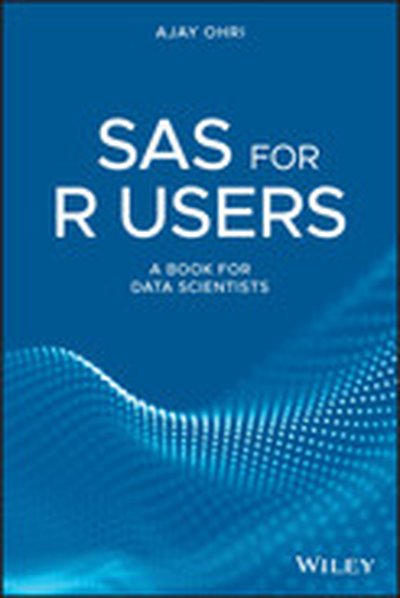
SAS for R Users

BRIDGES THE GAP BETWEEN SAS AND R, ALLOWING USERS TRAINED IN ONE LANGUAGE TO EASILY LEARN THE OTHER SAS and R are widely-used, very different software environments. Prized for its statistical and graphical tools, R is an open-source programming language that is popular with statisticians and data miners who develop statistical software and analyze data. SAS (Statistical Analysis System) is the leading corporate software in analytics thanks to its faster data handling and smaller learning curve. SAS for R Users enables entry-level data scientists to take advantage of the best aspects of both tools by providing a cross-functional framework for users who already know R but may need to work with SAS. Those with knowledge of both R and SAS are of far greater value to employers, particularly in corporate settings. Using a clear, step-by-step approach, this book presents an analytics workflow that mirrors that of the everyday data scientist. This up-to-date guide is compatible with the latest R packages as well as SAS University Edition. Useful for anyone seeking employment in data science, this book: Instructs both practitioners and students fluent in one language seeking to learn the other Provides command-by-command translations of R to SAS and SAS to R Offers examples and applications in both R and SAS Presents step-by-step guidance on workflows, color illustrations, sample code, chapter quizzes, and more Includes sections on advanced methods and applications Designed for professionals, researchers, and students, SAS for R Users is a valuable resource for those with some knowledge of coding and basic statistics who wish to enter the realm of data science and business analytics. AJAY OHRI is the founder of analytics startup Decisionstats.com. His research interests include spreading open source analytics, analyzing social media manipulation with mechanism design, simpler interfaces to cloud computing, investigating climate change, and knowledge flows. He currently advises startups in analytics off shoring, analytics services, and analytics. He is the author of Python for R Users: A Data Science Approach (Wiley), R for Business Analytics, and R for Cloud Computing.

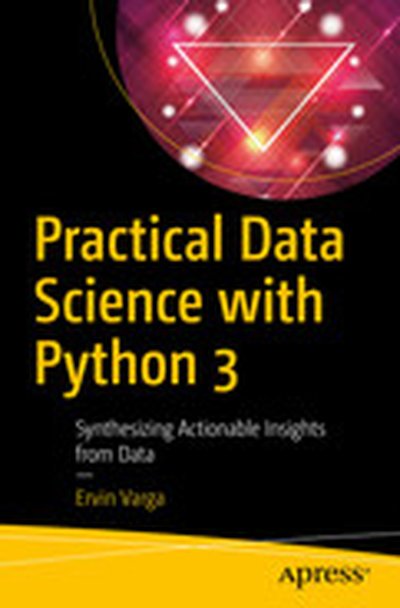
Practical Data Science with Python 3: Synthesizing Actionable Insights from Data

Gain insight into essential data science skills in a holistic manner using data engineering and associated scalable computational methods. This book covers the most popular Python 3 frameworks for both local and distributed (in premise and cloud based) processing. Along the way, you will be introduced to many popular open-source frameworks, like, SciPy, scikitlearn, Numba, Apache Spark, etc. The book is structured around examples, so you will grasp core concepts via case studies and Python 3 code. As data science projects gets continuously larger and more complex, software engineering knowledge and experience is crucial to produce evolvable solutions. You'll see how to create maintainable software for data science and how to document data engineering practices. This book is a good starting point for people who want to gain practical skills to perform data science. All the code willbe available in the form of IPython notebooks and Python 3 programs, which allow you to reproduce all analyses from the book and customize them for your own purpose. You'll also benefit from advanced topics like Machine Learning, Recommender Systems, and Security in Data Science. Practical Data Science with Python will empower you analyze data, formulate proper questions, and produce actionable insights, three core stages in most data science endeavors. What You'll Learn Play the role of a data scientist when completing increasingly challenging exercises using Python 3 Work work with proven data science techniques/technologies Review scalable software engineering practices to ramp up data analysis abilities in the realm of Big Data Apply theory of probability, statistical inference, and algebra to understand the data sciencepractices Who This Book Is For Anyone who would like to embark into the realm of data science using Python 3.

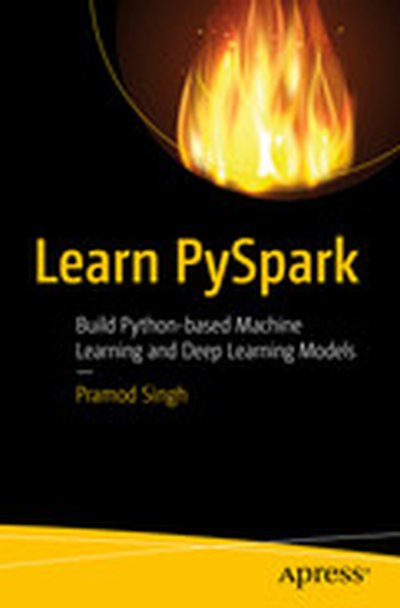
Learn PySpark: Build Python-based Machine Learning and Deep Learning Models

Leverage machine and deep learning models to build applications on real-time data using PySpark. This book is perfect for those who want to learn to use this language to perform exploratory data analysis and solve an array of business challenges. You'll start by reviewing PySpark fundamentals, such as Spark’s core architecture, and see how to use PySpark for big data processing like data ingestion, cleaning, and transformations techniques. This is followed by building workflows for analyzing streaming data using PySpark and a comparison of various streaming platforms. You'll then see how to schedule different spark jobs using Airflow with PySpark and book examine tuning machine and deep learning models for real-time predictions. This book concludes with a discussion on graph frames and performing network analysis using graph algorithms in PySpark. All the code presented in the book will be available in Python scripts on Github. What You'll Learn Develop pipelines for streaming data processing using PySpark Build Machine Learning & Deep Learning models using PySpark latest offerings Use graph analytics using PySpark Create Sequence Embeddings from Text data Who This Book is For Data Scientists, machine learning and deep learning engineers who want to learn and use PySpark for real time analysis on streaming data.

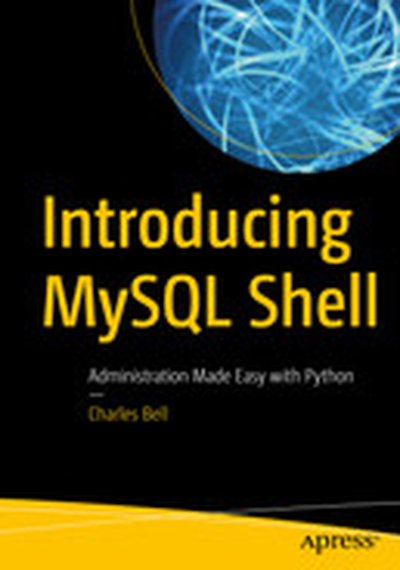
Introducing MySQL Shell: Administration Made Easy with Python

Use MySQL Shell, the first modern and advanced client for connecting to and interacting with MySQL. It supports SQL, Python, and JavaScript. That’s right! You can write Python scripts and execute them within the shell interactively, or in batch mode. The level of automation available from Python combined with batch mode is especially helpful to those practicing DevOps methods in their database environments. Introducing MySQL Shell covers everything you need to know about MySQL Shell. You will learn how to use the shell for SQL, as well as the new application programming interfaces for working with a document store and even automating your management of MySQL servers using Python. The book includes a look at the supporting technologies and concepts such as JSON, schema-less documents, NoSQL, MySQL Replication, Group Replication, InnoDB Cluster, and more. MySQL Shell is the client that developers and databaseadministrators have been waiting for. Far more powerful than the legacy client, MySQL Shell enables levels of automation that are useful not only for MySQL, but in the broader context of your career as well. Automate your work and build skills in one of the most in-demand languages. With MySQL Shell, you can do both! What You'll Learn Use MySQL Shell with the newest features in MySQL 8 Discover what a Document Store is and how to manage it with MySQL Shell Configure Group Replication and InnoDB Cluster from MySQL Shell Understand the new MySQL Python application programming interfaces Write Python scripts for managing your data and the MySQL high availability features Who This Book Is For Developers and database professionals who want to automate their work and remain on the cutting edge of what MySQLhas to offer. Anyone not happy with the limited automation capabilities of the legacy command-line client will find much to like in this book on the MySQL Shell that supports powerful automation through the Python scripting language.

Summary Data professionals are working in a domain that is rapidly evolving. In order to stay current we need access to deeply technical presentations that aren’t burdened by extraneous marketing. To fulfill that need Pete Soderling and his team have been running the Data Council series of conferences and meetups around the world. In this episode Pete discusses his motivation for starting these events, how they serve to bring the data community together, and the observations that he has made about the direction that we are moving. He also shares his experiences as an investor in developer oriented startups and his views on the importance of empowering engineers to launch their own companies.

Announcements

Hello and welcome to the Data Engineering Podcast, the show about modern data management When you’re ready to build your next pipeline, or want to test out the projects you hear about on the show, you’ll need somewhere to deploy it, so check out our friends at Linode. With 200Gbit private networking, scalable shared block storage, and a 40Gbit public network, you’ve got everything you need to run a fast, reliable, and bullet-proof data platform. If you need global distribution, they’ve got that covered too with world-wide datacenters including new ones in Toronto and Mumbai. And for your machine learning workloads, they just announced dedicated CPU instances. Go to dataengineeringpodcast.com/linode today to get a $20 credit and launch a new server in under a minute. And don’t forget to thank them for their continued support of this show! Listen, I’m sure you work for a ‘data driven’ company – who doesn’t these days? Does your company use Amazon Redshift? Have you ever groaned over slow queries or are just afraid that Amazon Redshift is gonna fall over at some point? Well, you’ve got to talk to the folks over at intermix.io. They have built the “missing” Amazon Redshift console – it’s an amazing analytics product for data engineers to find and re-write slow queries and gives actionable recommendations to optimize data pipelines. WeWork, Postmates, and Medium are just a few of their customers. Go to dataengineeringpodcast.com/intermix today and use promo code DEP at sign up to get a $50 discount! You listen to this show to learn and stay up to date with what’s happening in databases, streaming platforms, big data, and everything else you need to know about modern data management.For even more opportunities to meet, listen, and learn from your peers you don’t want to miss out on this year’s conference season. We have partnered with organizations such as O’Reilly Media, Dataversity, Corinium Global Intelligence, and Data Council. Upcoming events include the O’Reilly AI conference, the Strata Data conference, the combined events of the Data Architecture Summit and Graphorum, and Data Council in Barcelona. Go to dataengineeringpodcast.com/conferences to learn more about these and other events, and take advantage of our partner discounts to save money when you register today. Your host is Tobias Macey and today I’m interviewing Pete Soderling about his work to build and grow a community for data professionals with the Data Council conferences and meetups, as well as his experiences as an investor in data oriented companies

Interview

Introduction How did you get involved in the area of data management? What was your original reason for focusing your efforts on fostering a community of data engineers?

What was the state of recognition in the industry for that role at the time that you began your efforts?

The current manifestation of your community efforts is in the form of the Data Council conferences and meetups. Previously they were known as Data Eng Conf and before that was Hakka Labs. Can you discuss the evolution of your efforts to grow this community?

How has the community itself changed and grown over the past few years?

Communities form around a huge variety of focal points. What are some of the complexities or challenges in building one based on something as nebulous as data? Where do you draw inspiration and direction for how to manage such a large and distributed community?

What are some of the most interesting/challenging/unexpected aspects of community management that you have encountered?

What are some ways that you have been surprised or delighted in your interactions with the data community? How do you approach sustainability of the Data Council community and the organization itself? The tagline that you have focused on for Data Council events is that they are no fluff, juxtaposing them against larger business oriented events. What are your guidelines for fulfilling that promise and why do you think that is an important distinction? In addition to your community building you are also an investor. How did you get involved in that side of your business and how does it fit into your overall mission? You also have a stated mission to help engineers build their own companies. In your opinion, how does an engineer led business differ from one that may be founded or run by a business oriented individual and why do you think that we need more of them?

What are the ways that you typically work to empower engineering founders or encourage them to create their own businesses?

What are some of the challenges that engineering founders face and what are some common difficulties or misunderstandings related to business?

What are your opinions on venture-backed vs. "lifestyle" or bootstrapped businesses?

What are the characteristics of a data business that you look at when evaluating a potential investment? What are some of the current industry trends that you are most excited by?

What are some that you find concerning?

What are your goals and plans for the future of Data Council?

Contact Info

@petesoder on Twitter LinkedIn @petesoder on Medium

Parting Question

From your perspective, what is the biggest gap in the tooling or technology for data management today?

Closing Announcements

Thank you for listening! Don’t forget to check out our other show, Podcast.init to learn about the Python language, its community, and the innovative ways it is being used. Visit the site to subscribe to the show, sign up for the mailing list, and read the show notes. If you’ve learned something or tried out a project from the show then tell us about it! Email [email protected]) with your story. To help other people find the show please leave a review on iTunes and tell your friends and co-workers Join the community in the new Zulip chat workspace at dataengineeringpodcast.com/chat

Links

Data Council Database Design For Mere Mortals Bloomberg Garmin 500 Startups Geeks On A Plane Data Council NYC 2019 Track Summary Pete’s Angel List Syndicate DataOps

Data Kitchen Episode DataOps Vs DevOps Episode

Great Expectations

Podcast.init Interview

Elementl Dagster

Data Council Presentation

Data Council Call For Proposals

The intro and outro music is from The Hug by The Freak Fandango Orchestra / CC BY-SA

Support Data Engineering Podcast
Learn Python by Building Data Science Applications

Learn Python by Building Data Science Applications takes a hands-on approach to teaching Python programming by guiding you through building engaging real-world data science projects. This book introduces Python's rich ecosystem and equips you with the skills to analyze data, train models, and deploy them as efficient applications. What this Book will help me do Get proficient in Python programming by learning core topics like data structures, loops, and functions. Explore data science libraries such as NumPy, Pandas, and scikit-learn to analyze and process data. Learn to create visualizations with Matplotlib and Altair, simplifying data communication. Build and deploy machine learning models using Python and share them as web services. Understand development practices such as testing, packaging, and continuous integration for professional workflows. Author(s) None Kats and None Katz are seasoned Python developers with years of experience in teaching programming and deploying data science applications. Their expertise spans providing learners with practical knowledge and versatile skills. They combine clear explanations with engaging projects to ensure a rewarding learning experience. Who is it for? This book is ideal for individuals new to programming or data science who want to learn Python through practical projects. Researchers, analysts, and ambitious students with minimal coding background but a keen interest in data analysis and application development will find this book beneficial. It's a perfect choice for anyone eager to explore and leverage Python for real-world solutions.

Mastering SQL Server 2017

Leverage the power of SQL Server 2017 Integration Services to build data integration solutions with ease Key Features Work with temporal tables to access information stored in a table at any time Get familiar with the latest features in SQL Server 2017 Integration Services Program and extend your packages to enhance their functionality Book Description Microsoft SQL Server 2017 uses the power of R and Python for machine learning and containerization-based deployment on Windows and Linux. By learning how to use the features of SQL Server 2017 effectively, you can build scalable apps and easily perform data integration and transformation. You'll start by brushing up on the features of SQL Server 2017. This Learning Path will then demonstrate how you can use Query Store, columnstore indexes, and In-Memory OLTP in your apps. You'll also learn to integrate Python code in SQL Server and graph database implementations for development and testing. Next, you'll get up to speed with designing and building SQL Server Integration Services (SSIS) data warehouse packages using SQL server data tools. Toward the concluding chapters, you'll discover how to develop SSIS packages designed to maintain a data warehouse using the data flow and other control flow tasks. By the end of this Learning Path, you'll be equipped with the skills you need to design efficient, high-performance database applications with confidence. This Learning Path includes content from the following Packt books: SQL Server 2017 Developer's Guide by Milos Radivojevic, Dejan Sarka, et. al SQL Server 2017 Integration Services Cookbook by Christian Cote, Dejan Sarka, et. al What you will learn Use columnstore indexes to make storage and performance improvements Extend database design solutions using temporal tables Exchange JSON data between applications and SQL Server Migrate historical data to Microsoft Azure by using Stretch Database Design the architecture of a modern Extract, Transform, and Load (ETL) solution Implement ETL solutions using Integration Services for both on-premise and Azure data Who this book is for This Learning Path is for database developers and solution architects looking to develop ETL solutions with SSIS, and explore the new features in SSIS 2017. Advanced analysis practitioners, business intelligence developers, and database consultants dealing with performance tuning will also find this book useful. Basic understanding of database concepts and T-SQL is required to get the best out of this Learning Path.

Hands-On Data Analysis with Pandas

Hands-On Data Analysis with Pandas provides an intensive dive into mastering the pandas library for data science and analysis using Python. Through a combination of conceptual explanations and practical demonstrations, readers will learn how to manipulate, visualize, and analyze data efficiently. What this Book will help me do Understand and apply the pandas library for efficient data manipulation. Learn to perform data wrangling tasks such as cleaning and reshaping datasets. Create effective visualizations using pandas and libraries like matplotlib and seaborn. Grasp the basics of machine learning and implement solutions with scikit-learn. Develop reusable data analysis scripts and modules in Python. Author(s) Stefanie Molin is a seasoned data scientist and software engineer with extensive experience in Python and data analytics. She specializes in leveraging the latest data science techniques to solve real-world problems. Her engaging and detailed writing draws from her practical expertise, aiming to make complex concepts accessible to all. Who is it for? This book is ideal for data analysts and aspiring data scientists who are at the beginning stages of their careers or looking to enhance their toolset with pandas and Python. It caters to Python developers eager to delve into data analysis workflows. Readers should have some programming knowledge to fully benefit from the examples and exercises.

Data Science with Python and Dask

Dask is a native parallel analytics tool designed to integrate seamlessly with the libraries you’re already using, including Pandas, NumPy, and Scikit-Learn. With Dask you can crunch and work with huge datasets, using the tools you already have. And Data Science with Python and Dask is your guide to using Dask for your data projects without changing the way you work! About the Technology An efficient data pipeline means everything for the success of a data science project. Dask is a flexible library for parallel computing in Python that makes it easy to build intuitive workflows for ingesting and analyzing large, distributed datasets. Dask provides dynamic task scheduling and parallel collections that extend the functionality of NumPy, Pandas, and Scikit-learn, enabling users to scale their code from a single laptop to a cluster of hundreds of machines with ease. About the Book Data Science with Python and Dask teaches you to build scalable projects that can handle massive datasets. After meeting the Dask framework, you’ll analyze data in the NYC Parking Ticket database and use DataFrames to streamline your process. Then, you’ll create machine learning models using Dask-ML, build interactive visualizations, and build clusters using AWS and Docker. What's Inside Working with large, structured and unstructured datasets Visualization with Seaborn and Datashader Implementing your own algorithms Building distributed apps with Dask Distributed Packaging and deploying Dask apps About the Reader For data scientists and developers with experience using Python and the PyData stack. About the Author Jesse Daniel is an experienced Python developer. He taught Python for Data Science at the University of Denver and leads a team of data scientists at a Denver-based media technology company. We interviewed Jesse as a part of our Six Questions series. Check it out here. Quotes The most comprehensive coverage of Dask to date, with real-world examples that made a difference in my daily work. - Al Krinker, United States Patent and Trademark Office An excellent alternative to PySpark for those who are not on a cloud platform. The author introduces Dask in a way that speaks directly to an analyst. - Jeremy Loscheider, Panera Bread A greatly paced introduction to Dask with real-world datasets. - George Thomas, R&D Architecture Manhattan Associates The ultimate resource to quickly get up and running with Dask and parallel processing in Python. - Gustavo Patino, Oakland University William Beaumont School of Medicine

Hands-On Web Scraping with Python

This book, "Hands-On Web Scraping with Python", is your comprehensive guide to mastering web scraping techniques and tools. Harnessing the power of Python libraries like Scrapy, Beautiful Soup, and Selenium, you'll learn how to extract and analyze data from websites effectively and efficiently. What this Book will help me do Master the foundational concepts of web scraping using Python. Efficiently use libraries such as Scrapy, Beautiful Soup, and Selenium for data extraction. Handle advanced scenarios such as forms, logins, and dynamic content in scraping. Leverage XPath, CSS selectors, and Regex for precise data targeting and processing. Improve scraping reliability and manage challenges like cookies, API use, and web security. Author(s) None Chapagain is an accomplished Python programmer and an expert in web scraping methodologies. With years of experience in applying Python to solve practical data challenges, they bring a clear and insightful approach to teaching these skills. Readers appreciate their practical examples and ready-to-use guidance for real-world applications. Who is it for? This book is designed for Python developers and data enthusiasts eager to master web scraping. Whether you're a beginner looking to dep dive into new techniques or an analyst needing reliable data extraction methods, this book offers clear guidance. A basic understanding of Python is recommended to fully benefit from this text.

Big Data Simplified
"Big Data Simplified blends technology with strategy and delves into applications of big data in specialized areas, such as recommendation engines, data science and Internet of Things (IoT) and enables a practitioner to make the right technology choice. The steps to strategize a big data implementation are also discussed in detail. This book presents a holistic approach to the topic, covering a wide landscape of big

data technologies like Hadoop 2.0 and package implementations, such as Cloudera. In-depth discussion of associated technologies, such as MapReduce, Hive, Pig, Oozie, ApacheZookeeper, Flume, Kafka, Spark, Python and NoSQL databases like Cassandra, MongoDB, GraphDB, etc., is also included.