talk-data.com talk-data.com

Topic

Docker

containerization devops virtualization

109

tagged

Activity Trend

14 peak/qtr
2020-Q1 2026-Q1

Activities

109 activities · Newest first

Data Science with Python and Dask

Dask is a native parallel analytics tool designed to integrate seamlessly with the libraries you’re already using, including Pandas, NumPy, and Scikit-Learn. With Dask you can crunch and work with huge datasets, using the tools you already have. And Data Science with Python and Dask is your guide to using Dask for your data projects without changing the way you work! About the Technology An efficient data pipeline means everything for the success of a data science project. Dask is a flexible library for parallel computing in Python that makes it easy to build intuitive workflows for ingesting and analyzing large, distributed datasets. Dask provides dynamic task scheduling and parallel collections that extend the functionality of NumPy, Pandas, and Scikit-learn, enabling users to scale their code from a single laptop to a cluster of hundreds of machines with ease. About the Book Data Science with Python and Dask teaches you to build scalable projects that can handle massive datasets. After meeting the Dask framework, you’ll analyze data in the NYC Parking Ticket database and use DataFrames to streamline your process. Then, you’ll create machine learning models using Dask-ML, build interactive visualizations, and build clusters using AWS and Docker. What's Inside Working with large, structured and unstructured datasets Visualization with Seaborn and Datashader Implementing your own algorithms Building distributed apps with Dask Distributed Packaging and deploying Dask apps About the Reader For data scientists and developers with experience using Python and the PyData stack. About the Author Jesse Daniel is an experienced Python developer. He taught Python for Data Science at the University of Denver and leads a team of data scientists at a Denver-based media technology company. We interviewed Jesse as a part of our Six Questions series. Check it out here. Quotes The most comprehensive coverage of Dask to date, with real-world examples that made a difference in my daily work. - Al Krinker, United States Patent and Trademark Office An excellent alternative to PySpark for those who are not on a cloud platform. The author introduces Dask in a way that speaks directly to an analyst. - Jeremy Loscheider, Panera Bread A greatly paced introduction to Dask with real-world datasets. - George Thomas, R&D Architecture Manhattan Associates The ultimate resource to quickly get up and running with Dask and parallel processing in Python. - Gustavo Patino, Oakland University William Beaumont School of Medicine
Pro SQL Server on Linux: Including Container-Based Deployment with Docker and Kubernetes

Get SQL Server up and running on the Linux operating system and containers. No database professional managing or developing SQL Server on Linux will want to be without this deep and authoritative guide by one of the most respected experts on SQL Server in the industry. Get an inside look at how SQL Server for Linux works through the eyes of an engineer on the team that made it possible. Microsoft SQL Server is one of the leading database platforms in the industry, and SQL Server 2017 offers developers and administrators the ability to run a database management system on Linux, offering proven support for enterprise-level features and without onerous licensing terms. Organizations invested in Microsoft and open source technologies are now able to run a unified database platform across all their operating system investments. Organizations are further able to take full advantage of containerization through popular platforms such as Docker and Kubernetes. Pro SQL Server on Linux walks you through installing and configuring SQL Server on the Linux platform. The author is one of the principal architects of SQL Server for Linux, and brings a corresponding depth of knowledge that no database professional or developer on Linux will want to be without. Throughout this book are internals of how SQL Server on Linux works including an in depth look at the innovative architecture. The book covers day-to-day management and troubleshooting, including diagnostics and monitoring, the use of containers to manage deployments, and the use of self-tuning and the in-memory capabilities. Also covered are performance capabilities, high availability, and disaster recovery along with security and encryption. The book covers the product-specific knowledge to bring SQL Server and its powerful features to life on the Linux platform, including coverage of containerization through Docker and Kubernetes. What You'll Learn Learn about the history and internal of the unique SQL Server on Linux architecture. Install and configure Microsoft’s flagship database product on the Linux platform Manage your deployments using container technology through Docker and Kubernetes Know the basics of building databases, the T-SQL language, and developing applications against SQL Server on Linux Use tools and features to diagnose, manage, and monitor SQL Server on Linux Scale your application by learning the performance capabilities of SQL Server Deliver high availability and disaster recovery to ensure business continuity Secure your database from attack, and protect sensitive data through encryption Take advantage of powerful features such as Failover Clusters, Availability Groups, In-Memory Support, and SQL Server’sSelf-Tuning Engine Learn how to migrate your database from older releases of SQL Server and other database platforms such as Oracle and PostgreSQL Build and maintain schemas, and perform management tasks from both GUI and command line Who This Book Is For Developers and IT professionals who are new to SQL Server and wish to configure it on the Linux operating system. This book is also useful to those familiar with SQL Server on Windows who want to learn the unique aspects of managing SQL Server on the Linux platform and Docker containers. Readers should have a grasp of relational database concepts and be comfortable with the SQL language.

Database Benchmarking and Stress Testing: An Evidence-Based Approach to Decisions on Architecture and Technology

Provide evidence-based answers that can be measured and relied upon by your business. Database administrators will be able to make sound architectural decisions in a fast-changing landscape of virtualized servers and container-based solutions based on the empirical method presented in this book for answering “what if” questions about database performance. Today’s database administrators face numerous questions such as: What if we consolidate databases using multitenant features? What if we virtualize database servers as Docker containers? What if we deploy the latest in NVMe flash disks to speed up IO access? Do features such as compression, partitioning, and in-memory OLTP earn back their price? What if we move our databases to the cloud? As an administrator, do you know the answers or even how to test the assumptions? Database Benchmarking and Stress Testing introduces you to database benchmarking using industry-standard test suites such as the TCP series of benchmarks, which are the same benchmarks that vendors rely upon. You’ll learn to run these industry-standard benchmarks and collect results to use in answering questions about the performance impact of architectural changes, technology changes, and even down to the brand of database software. You’ll learn to measure performance and predict the specific impact of changes to your environment. You’ll know the limitations of the benchmarks and the crucial difference between benchmarking and workload capture/reply. This book teaches you how to create empirical evidence in support of business and technology decisions. It’s about not guessing when you should be measuring. Empirical testing is scientific testing that delivers measurable results. Begin with a hypothesis about the impact of a possible architecture or technology change. Then run the appropriate benchmarks to gather data and predict whether the change you’re exploring will be beneficial, and by what order of magnitude. Stop guessing. Start measuring. Let Database Benchmarking and Stress Testing show the way. What You'll Learn Understand the industry-standard database benchmarks, and when each is best used Prepare for a database benchmarking effort so reliable results can be achieved Perform database benchmarking for consolidation, virtualization, and cloud projects Recognize and avoid common mistakes in benchmarking database performance Measure and interpret results in a rational, concise manner for reliable comparisons Choose and provide advice on benchmarking tools based on their pros and cons Who This Book Is For Database administrators and professionals responsible for advising on architectural decisions such as whether to use cloud-based services, whether to consolidate and containerize, and who must make recommendations on storage or any other technology that impacts database performance

Summary

With the attention being paid to the systems that power large volumes of high velocity data it is easy to forget about the value of data collection at human scales. Ona is a company that is building technologies to support mobile data collection, analysis of the aggregated information, and user-friendly presentations. In this episode CTO Peter Lubell-Doughtie describes the architecture of the platform, the types of environments and use cases where it is being employed, and the value of small data.

Preamble

Hello and welcome to the Data Engineering Podcast, the show about modern data management When you’re ready to build your next pipeline you’ll need somewhere to deploy it, so check out Linode. With private networking, shared block storage, node balancers, and a 40Gbit network, all controlled by a brand new API you’ve got everything you need to run a bullet-proof data platform. Go to dataengineeringpodcast.com/linode to get a $20 credit and launch a new server in under a minute. Are you struggling to keep up with customer request and letting errors slip into production? Want to try some of the innovative ideas in this podcast but don’t have time? DataKitchen’s DataOps software allows your team to quickly iterate and deploy pipelines of code, models, and data sets while improving quality. Unlike a patchwork of manual operations, DataKitchen makes your team shine by providing an end to end DataOps solution with minimal programming that uses the tools you love. Join the DataOps movement and sign up for the newsletter at datakitchen.io/de today. After that learn more about why you should be doing DataOps by listening to the Head Chef in the Data Kitchen at dataengineeringpodcast.com/datakitchen Go to dataengineeringpodcast.com to subscribe to the show, sign up for the mailing list, read the show notes, and get in touch. Join the community in the new Zulip chat workspace at dataengineeringpodcast.com/chat Your host is Tobias Macey and today I’m interviewing Peter Lubell-Doughtie about using Ona for collecting data and processing it with Canopy

Interview

Introduction How did you get involved in the area of data management? What is Ona and how did the company get started?

What are some examples of the types of customers that you work with?

What types of data do you support in your collection platform? What are some of the mechanisms that you use to ensure the accuracy of the data that is being collected by users? Does your mobile collection platform allow for anyone to submit data without having to be associated with a given account or organization? What are some of the integration challenges that are unique to the types of data that get collected by mobile field workers? Can you describe the flow of the data from collection through to analysis? To help improve the utility of the data being collected you have started building Canopy. What was the tipping point where it became worth the time and effort to start that project?

What are the architectural considerations that you factored in when designing it? What have you found to be the most challenging or unexpected aspects of building an enterprise data warehouse for general users?

What are your plans for the future of Ona and Canopy?

Contact Info

Email pld on Github Website

Parting Question

From your perspective, what is the biggest gap in the tooling or technology for data management today?

Links

OpenSRP Ona Canopy Open Data Kit Earth Institute at Columbia University Sustainable Engineering Lab WHO Bill and Melinda Gates Foundation XLSForms PostGIS Kafka Druid Superset Postgres Ansible Docker Terraform

The intro and outro music is from The Hug by The Freak Fandango Orchestra / CC BY-SA Support Data Engineering Podcast

Summary

Data integration and routing is a constantly evolving problem and one that is fraught with edge cases and complicated requirements. The Apache NiFi project models this problem as a collection of data flows that are created through a self-service graphical interface. This framework provides a flexible platform for building a wide variety of integrations that can be managed and scaled easily to fit your particular needs. In this episode project members Kevin Doran and Andy LoPresto discuss the ways that NiFi can be used, how to start using it in your environment, and plans for future development. They also explained how it fits in the broad landscape of data tools, the interesting and challenging aspects of the project, and how to build new extensions.

Preamble

Hello and welcome to the Data Engineering Podcast, the show about modern data management When you’re ready to build your next pipeline you’ll need somewhere to deploy it, so check out Linode. With private networking, shared block storage, node balancers, and a 40Gbit network, all controlled by a brand new API you’ve got everything you need to run a bullet-proof data platform. Go to dataengineeringpodcast.com/linode to get a $20 credit and launch a new server in under a minute. Are you struggling to keep up with customer request and letting errors slip into production? Want to try some of the innovative ideas in this podcast but don’t have time? DataKitchen’s DataOps software allows your team to quickly iterate and deploy pipelines of code, models, and data sets while improving quality. Unlike a patchwork of manual operations, DataKitchen makes your team shine by providing an end to end DataOps solution with minimal programming that uses the tools you love. Join the DataOps movement and sign up for the newsletter at datakitchen.io/de today. After that learn more about why you should be doing DataOps by listening to the Head Chef in the Data Kitchen at dataengineeringpodcast.com/datakitchen Go to dataengineeringpodcast.com to subscribe to the show, sign up for the mailing list, read the show notes, and get in touch. Your host is Tobias Macey and today I’m interviewing Kevin Doran and Andy LoPresto about Apache NiFi

Interview

Introduction How did you get involved in the area of data management? Can you start by explaining what NiFi is? What is the motivation for building a GUI as the primary interface for the tool when the current trend is to represent everything as code? How did you get involved with the project?

Where does it sit in the broader landscape of data tools?

Does the data that is processed by NiFi flow through the servers that it is running on (á la Spark/Flink/Kafka), or does it orchestrate actions on other systems (á la Airflow/Oozie)?

How do you manage versioning and backup of data flows, as well as promoting them between environments?

One of the advertised features is tracking provenance for data flows that are managed by NiFi. How is that data collected and managed?

What types of reporting are available across this information?

What are some of the use cases or requirements that lend themselves well to being solved by NiFi?

When is NiFi the wrong choice?

What is involved in deploying and scaling a NiFi installation?

What are some of the system/network parameters that should be considered? What are the scaling limitations?

What have you found to be some of the most interesting, unexpected, and/or challenging aspects of building and maintaining the NiFi project and community? What do you have planned for the future of NiFi?

Contact Info

Kevin Doran

@kevdoran on Twitter Email

Andy LoPresto

@yolopey on Twitter Email

Parting Question

From your perspective, what is the biggest gap in the tooling or technology for data management today?

Links

NiFi HortonWorks DataFlow HortonWorks Apache Software Foundation Apple CSV XML JSON Perl Python Internet Scale Asset Management Documentum DataFlow NSA (National Security Agency) 24 (TV Show) Technology Transfer Program Agile Software Development Waterfall Spark Flink Kafka Oozie Luigi Airflow FluentD ETL (Extract, Transform, and Load) ESB (Enterprise Service Bus) MiNiFi Java C++ Provenance Kubernetes Apache Atlas Data Governance Kibana K-Nearest Neighbors DevOps DSL (Domain Specific Language) NiFi Registry Artifact Repository Nexus NiFi CLI Maven Archetype IoT Docker Backpressure NiFi Wiki TLS (Transport Layer Security) Mozilla TLS Observatory NiFi Flow Design System Data Lineage GDPR (General Data Protection Regulation)

The intro and outro music is from The Hug by The Freak Fandango Orchestra / CC BY-SA Support Data Engineering Podcast

Summary

Collaboration, distribution, and installation of software projects is largely a solved problem, but the same cannot be said of data. Every data team has a bespoke means of sharing data sets, versioning them, tracking related metadata and changes, and publishing them for use in the software systems that rely on them. The CEO and founder of Quilt Data, Kevin Moore, was sufficiently frustrated by this problem to create a platform that attempts to be the means by which data can be as collaborative and easy to work with as GitHub and your favorite programming language. In this episode he explains how the project came to be, how it works, and the many ways that you can start using it today.

Preamble

Hello and welcome to the Data Engineering Podcast, the show about modern data management When you’re ready to build your next pipeline you’ll need somewhere to deploy it, so check out Linode. With private networking, shared block storage, node balancers, and a 40Gbit network, all controlled by a brand new API you’ve got everything you need to run a bullet-proof data platform. Go to dataengineeringpodcast.com/linode to get a $20 credit and launch a new server in under a minute. Are you struggling to keep up with customer request and letting errors slip into production? Want to try some of the innovative ideas in this podcast but don’t have time? DataKitchen’s DataOps software allows your team to quickly iterate and deploy pipelines of code, models, and data sets while improving quality. Unlike a patchwork of manual operations, DataKitchen makes your team shine by providing an end to end DataOps solution with minimal programming that uses the tools you love. Join the DataOps movement and sign up for the newsletter at datakitchen.io/de today. After that learn more about why you should be doing DataOps by listening to the Head Chef in the Data Kitchen at dataengineeringpodcast.com/datakitchen Go to dataengineeringpodcast.com to subscribe to the show, sign up for the mailing list, read the show notes, and get in touch. Your host is Tobias Macey and today I’m interviewing Kevin Moore about Quilt Data, a platform and tooling for packaging, distributing, and versioning data

Interview

Introduction How did you get involved in the area of data management? What is the intended use case for Quilt and how did the project get started? Can you step through a typical workflow of someone using Quilt?

How does that change as you go from a single user to a team of data engineers and data scientists?

Can you describe the elements of what a data package consists of?

What was your criteria for the file formats that you chose?

How is Quilt architected and what have been the most significant changes or evolutions since you first started? How is the data registry implemented?

What are the limitations or edge cases that you have run into? What optimizations have you made to accelerate synchronization of the data to and from the repository?

What are the limitations in terms of data volume, format, or usage? What is your goal with the business that you have built around the project? What are your plans for the future of Quilt?

Contact Info

Email LinkedIn

Parting Question

From your perspective, what is the biggest gap in the tooling or technology for data management today?

Links

Quilt Data GitHub Jobs Reproducible Data Dependencies in Jupyter Reproducible Machine Learning with Jupyter and Quilt Allen Institute: Programmatic Data Access with Quilt Quilt Example: MissingNo Oracle Pandas Jupyter Ycombinator Data.World

Podcast Episode with CTO Bryon Jacob

Kaggle Parquet HDF5 Arrow PySpark Excel Scala Binder Merkle Tree Allen Institute for Cell Science Flask PostGreSQL Docker Airflow Quilt Teams Hive Hive Metastore PrestoDB

Podcast Episode

Netflix Iceberg Kubernetes Helm

The intro and outro music is from The Hug by The Freak Fandango Orchestra / CC BY-SA Support Data Engineering Podcast

Summary

With the increased ease of gaining access to servers in data centers across the world has come the need for supporting globally distributed data storage. With the first wave of cloud era databases the ability to replicate information geographically came at the expense of transactions and familiar query languages. To address these shortcomings the engineers at Cockroach Labs have built a globally distributed SQL database with full ACID semantics in Cockroach DB. In this episode Peter Mattis, the co-founder and VP of Engineering at Cockroach Labs, describes the architecture that underlies the database, the challenges they have faced along the way, and the ways that you can use it in your own environments today.

Preamble

Hello and welcome to the Data Engineering Podcast, the show about modern data management When you’re ready to build your next pipeline you’ll need somewhere to deploy it, so check out Linode. With private networking, shared block storage, node balancers, and a 40Gbit network, all controlled by a brand new API you’ve got everything you need to run a bullet-proof data platform. Go to dataengineeringpodcast.com/linode to get a $20 credit and launch a new server in under a minute. For complete visibility into the health of your pipeline, including deployment tracking, and powerful alerting driven by machine-learning, DataDog has got you covered. With their monitoring, metrics, and log collection agent, including extensive integrations and distributed tracing, you’ll have everything you need to find and fix performance bottlenecks in no time. Go to dataengineeringpodcast.com/datadog today to start your free 14 day trial and get a sweet new T-Shirt. Go to dataengineeringpodcast.com to subscribe to the show, sign up for the mailing list, read the show notes, and get in touch. Your host is Tobias Macey and today I’m interviewing Peter Mattis about CockroachDB, the SQL database for global cloud services

Interview

Introduction How did you get involved in the area of data management? What was the motivation for creating CockroachDB and building a business around it? Can you describe the architecture of CockroachDB and how it supports distributed ACID transactions?

What are some of the tradeoffs that are necessary to allow for georeplicated data with distributed transactions? What are some of the problems that you have had to work around in the RAFT protocol to provide reliable operation of the clustering mechanism?

Go is an unconventional language for building a database. What are the pros and cons of that choice? What are some of the common points of confusion that users of CockroachDB have when operating or interacting with it?

What are the edge cases and failure modes that users should be aware of?

I know that your SQL syntax is PostGreSQL compatible, so is it possible to use existing ORMs unmodified with CockroachDB?

What are some examples of extensions that are specific to CockroachDB?

What are some of the most interesting uses of CockroachDB that you have seen? When is CockroachDB the wrong choice? What do you have planned for the future of CockroachDB?

Contact Info

Peter

LinkedIn petermattis on GitHub @petermattis on Twitter

Cockroach Labs

@CockroackDB on Twitter Website cockroachdb on GitHub

Parting Question

From your perspective, what is the biggest gap in the tooling or technology for data management today?

Links

CockroachDB Cockroach Labs SQL Google Bigtable Spanner NoSQL RDBMS (Relational Database Management System) “Big Iron” (colloquial term for mainframe computers) RAFT Consensus Algorithm Consensus MVCC (Multiversion Concurrency Control) Isolation Etcd GDPR Golang C++ Garbage Collection Metaprogramming Rust Static Linking Docker Kubernetes CAP Theorem PostGreSQL ORM (Object Relational Mapping) Information Schema PG Catalog Interleaved Tables Vertica Spark Change Data Capture

The intro and outro music is from The Hug by The Freak Fandan

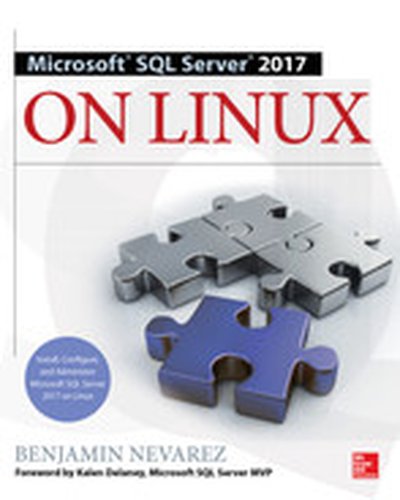
Microsoft SQL Server 2017 on Linux

Essential Microsoft® SQL Server® 2017 installation, configuration, and management techniques for Linux Foreword by Kalen Delaney, Microsoft SQL Server MVP This comprehensive guide shows, step-by-step, how to set up, configure, and administer SQL Server 2017 on Linux for high performance and high availability. Written by a SQL Server expert and respected author, Microsoft SQL Server 2017 on Linux teaches valuable Linux skills to Windows-based SQL Server professionals. You will get clear coverage of both Linux and SQL Server and complete explanations of the latest features, tools, and techniques. The book offers clear instruction on adaptive query processing, automatic tuning, disaster recovery, security, and much more. •Understand how SQL Server 2017 on Linux works •Install and configure SQL Server on Linux •Run SQL Server on Docker containers •Learn Linux Administration •Troubleshoot and tune query performance in SQL Server •Learn what is new in SQL Server 2017 •Work with adaptive query processing and automatic tuning techniques •Implement high availability and disaster recovery for SQL Server on Linux •Learn the security features available in SQL Server

Summary

Building an ETL pipeline is a common need across businesses and industries. It’s easy to get one started but difficult to manage as new requirements are added and greater scalability becomes necessary. Rather than duplicating the efforts of other engineers it might be best to use a hosted service to handle the plumbing so that you can focus on the parts that actually matter for your business. In this episode CTO and co-founder of Alooma, Yair Weinberger, explains how the platform addresses the common needs of data collection, manipulation, and storage while allowing for flexible processing. He describes the motivation for starting the company, how their infrastructure is architected, and the challenges of supporting multi-tenancy and a wide variety of integrations.

Preamble

Hello and welcome to the Data Engineering Podcast, the show about modern data management When you’re ready to build your next pipeline you’ll need somewhere to deploy it, so check out Linode. With private networking, shared block storage, node balancers, and a 40Gbit network, all controlled by a brand new API you’ve got everything you need to run a bullet-proof data platform. Go to dataengineeringpodcast.com/linode to get a $20 credit and launch a new server in under a minute. For complete visibility into the health of your pipeline, including deployment tracking, and powerful alerting driven by machine-learning, DataDog has got you covered. With their monitoring, metrics, and log collection agent, including extensive integrations and distributed tracing, you’ll have everything you need to find and fix performance bottlenecks in no time. Go to dataengineeringpodcast.com/datadog today to start your free 14 day trial and get a sweet new T-Shirt. Go to dataengineeringpodcast.com to subscribe to the show, sign up for the newsletter, read the show notes, and get in touch. Your host is Tobias Macey and today I’m interviewing Yair Weinberger about Alooma, a company providing data pipelines as a service

Interview

Introduction How did you get involved in the area of data management? What is Alooma and what is the origin story? How is the Alooma platform architected?

I want to go into stream VS batch here What are the most challenging components to scale?

How do you manage the underlying infrastructure to support your SLA of 5 nines? What are some of the complexities introduced by processing data from multiple customers with various compliance requirements?

How do you sandbox user’s processing code to avoid security exploits?

What are some of the potential pitfalls for automatic schema management in the target database? Given the large number of integrations, how do you maintain the

What are some challenges when creating integrations, isn’t it simply conforming with an external API?

For someone getting started with Alooma what does the workflow look like? What are some of the most challenging aspects of building and maintaining Alooma? What are your plans for the future of Alooma?

Contact Info

LinkedIn @yairwein on Twitter

Parting Question

From your perspective, what is the biggest gap in the tooling or technology for data management today?

Links

Alooma Convert Media Data Integration ESB (Enterprise Service Bus) Tibco Mulesoft ETL (Extract, Transform, Load) Informatica Microsoft SSIS OLAP Cube S3 Azure Cloud Storage Snowflake DB Redshift BigQuery Salesforce Hubspot Zendesk Spark The Log: What every software engineer should know about real-time data’s unifying abstraction by Jay Kreps RDBMS (Relational Database Management System) SaaS (Software as a Service) Change Data Capture Kafka Storm Google Cloud PubSub Amazon Kinesis Alooma Code Engine Zookeeper Idempotence Kafka Streams Kubernetes SOC2 Jython Docker Python Javascript Ruby Scala PII (Personally Identifiable Information) GDPR (General Data Protection Regulation) Amazon EMR (Elastic Map Reduce) Sequoia Capital Lightspeed Investors Redis Aerospike Cassandra MongoDB

The intro and outro music is from The Hug by The Freak Fandango Orchestra / CC BY-SA Support Data Engineering Podcast

Summary

As software lifecycles move faster, the database needs to be able to keep up. Practices such as version controlled migration scripts and iterative schema evolution provide the necessary mechanisms to ensure that your data layer is as agile as your application. Pramod Sadalage saw the need for these capabilities during the early days of the introduction of modern development practices and co-authored a book to codify a large number of patterns to aid practitioners, and in this episode he reflects on the current state of affairs and how things have changed over the past 12 years.

Preamble

Hello and welcome to the Data Engineering Podcast, the show about modern data infrastructure When you’re ready to launch your next project you’ll need somewhere to deploy it. Check out Linode at dataengineeringpodcast.com/linode and get a $20 credit to try out their fast and reliable Linux virtual servers for running your data pipelines or trying out the tools you hear about on the show. Go to dataengineeringpodcast.com to subscribe to the show, sign up for the newsletter, read the show notes, and get in touch. You can help support the show by checking out the Patreon page which is linked from the site. To help other people find the show you can leave a review on iTunes, or Google Play Music, and tell your friends and co-workers Your host is Tobias Macey and today I’m interviewing Pramod Sadalage about refactoring databases and integrating database design into an iterative development workflow

Interview

Introduction How did you get involved in the area of data management? You first co-authored Refactoring Databases in 2006. What was the state of software and database system development at the time and why did you find it necessary to write a book on this subject? What are the characteristics of a database that make them more difficult to manage in an iterative context? How does the practice of refactoring in the context of a database compare to that of software? How has the prevalence of data abstractions such as ORMs or ODMs impacted the practice of schema design and evolution? Is there a difference in strategy when refactoring the data layer of a system when using a non-relational storage system? How has the DevOps movement and the increased focus on automation affected the state of the art in database versioning and evolution? What have you found to be the most problematic aspects of databases when trying to evolve the functionality of a system? Looking back over the past 12 years, what has changed in the areas of database design and evolution?

How has the landscape of tooling for managing and applying database versioning changed since you first wrote Refactoring Databases? What do you see as the biggest challenges facing us over the next few years?

Contact Info

Website pramodsadalage on GitHub @pramodsadalage on Twitter

Parting Question

From your perspective, what is the biggest gap in the tooling or technology for data management today?

Links

Database Refactoring

Website Book

Thoughtworks Martin Fowler Agile Software Development XP (Extreme Programming) Continuous Integration

The Book Wikipedia

Test First Development DDL (Data Definition Language) DML (Data Modification Language) DevOps Flyway Liquibase DBMaintain Hibernate SQLAlchemy ORM (Object Relational Mapper) ODM (Object Document Mapper) NoSQL Document Database MongoDB OrientDB CouchBase CassandraDB Neo4j ArangoDB Unit Testing Integration Testing OLAP (On-Line Analytical Processing) OLTP (On-Line Transaction Processing) Data Warehouse Docker QA==Quality Assurance HIPAA (Health Insurance Portability and Accountability Act) PCI DSS (Payment Card Industry Data Security Standard) Polyglot Persistence Toplink Java ORM Ruby on Rails ActiveRecord Gem

The intro and outro music is from The Hug by The Freak Fandango Orchestra / CC BY-SA Support Data Engineering Podcast

Camel in Action, Second Edition

Camel in Action, Second Edition is the most complete Camel book on the market. Written by core developers of Camel and the authors of the highly acclaimed first edition, this book distills their experience and practical insights so that you can tackle integration tasks like a pro. About the Technology Apache Camel is a Java framework that implements enterprise integration patterns (EIPs) and comes with over 200 adapters to third-party systems. A concise DSL lets you build integration logic into your app with just a few lines of Java or XML. By using Camel, you benefit from the testing and experience of a large and vibrant open source community. About the Book Camel in Action, Second Edition is the definitive guide to the Camel framework. It starts with core concepts like sending, receiving, routing, and transforming data. It then goes in depth on many topics such as how to develop, debug, test, deal with errors, secure, scale, cluster, deploy, and monitor your Camel applications. The book also discusses how to run Camel with microservices, reactive systems, containers, and in the cloud. What's Inside Coverage of all relevant EIPs Camel microservices with Spring Boot Camel on Docker and Kubernetes Error handling, testing, security, clustering, monitoring, and deployment Hundreds of examples in Java and XML About the Reader Readers should be familiar with Java. This book is accessible to beginners and invaluable to experts. About the Authors Claus Ibsen is a senior principal engineer working for Red Hat specializing in cloud and integration. He has worked on Apache Camel for the last nine years where he heads the project. Claus lives in Denmark. Jonathan Anstey is an engineering manager at Red Hat and a core Camel contributor. He lives in Newfoundland, Canada. Quotes I highly recommend this book to anyone with even a passing interest in Apache Camel. Do take Camel for a ride...and don't get the hump! - From the Foreword by James Strachan, Creator of Apache Camel Claus and Jon are great writers, relying on figures and diagrams where needed and presenting lots of code snippets and worked examples. - From the Foreword by Dr. Mark Little, Technical Director of JBoss The second edition of this all-time classic is an indispensable companion for your Apache Camel rides. - Gregor Zurowski, Apache Camel Committer The absolute best way to learn and use Camel - top to bottom, front to back, and all the way through. Camel is a fantastic tool - every Java coder should have a copy of this book. - Rick Wagner, Red Hat An excellent book and the definite reference for experienced engineers. - Yan Guo, EventBrite

Summary

As communications between machines become more commonplace the need to store the generated data in a time-oriented manner increases. The market for timeseries data stores has many contenders, but they are not all built to solve the same problems or to scale in the same manner. In this episode the founders of TimescaleDB, Ajay Kulkarni and Mike Freedman, discuss how Timescale was started, the problems that it solves, and how it works under the covers. They also explain how you can start using it in your infrastructure and their plans for the future.

Preamble

Hello and welcome to the Data Engineering Podcast, the show about modern data infrastructure When you’re ready to launch your next project you’ll need somewhere to deploy it. Check out Linode at dataengineeringpodcast.com/linode and get a $20 credit to try out their fast and reliable Linux virtual servers for running your data pipelines or trying out the tools you hear about on the show. Go to dataengineeringpodcast.com to subscribe to the show, sign up for the newsletter, read the show notes, and get in touch. You can help support the show by checking out the Patreon page which is linked from the site. To help other people find the show you can leave a review on iTunes, or Google Play Music, and tell your friends and co-workers Your host is Tobias Macey and today I’m interviewing Ajay Kulkarni and Mike Freedman about Timescale DB, a scalable timeseries database built on top of PostGreSQL

Interview

Introduction How did you get involved in the area of data management? Can you start by explaining what Timescale is and how the project got started? The landscape of time series databases is extensive and oftentimes difficult to navigate. How do you view your position in that market and what makes Timescale stand out from the other options? In your blog post that explains the design decisions for how Timescale is implemented you call out the fact that the inserted data is largely append only which simplifies the index management. How does Timescale handle out of order timestamps, such as from infrequently connected sensors or mobile devices? How is Timescale implemented and how has the internal architecture evolved since you first started working on it?

What impact has the 10.0 release of PostGreSQL had on the design of the project? Is timescale compatible with systems such as Amazon RDS or Google Cloud SQL?

For someone who wants to start using Timescale what is involved in deploying and maintaining it? What are the axes for scaling Timescale and what are the points where that scalability breaks down?

Are you aware of anyone who has deployed it on top of Citus for scaling horizontally across instances?

What has been the most challenging aspect of building and marketing Timescale? When is Timescale the wrong tool to use for time series data? One of the use cases that you call out on your website is for systems metrics and monitoring. How does Timescale fit into that ecosystem and can it be used along with tools such as Graphite or Prometheus? What are some of the most interesting uses of Timescale that you have seen? Which came first, Timescale the business or Timescale the database, and what is your strategy for ensuring that the open source project and the company around it both maintain their health? What features or improvements do you have planned for future releases of Timescale?

Contact Info

Ajay

LinkedIn @acoustik on Twitter Timescale Blog

Mike

Website LinkedIn @michaelfreedman on Twitter Timescale Blog

Timescale

Website @timescaledb on Twitter GitHub

Parting Question

From your perspective, what is the biggest gap in the tooling or technology for data management today?

Links

Timescale PostGreSQL Citus Timescale Design Blog Post MIT NYU Stanford SDN Princeton Machine Data Timeseries Data List of Timeseries Databases NoSQL Online Transaction Processing (OLTP) Object Relational Mapper (ORM) Grafana Tableau Kafka When Boring Is Awesome PostGreSQL RDS Google Cloud SQL Azure DB Docker Continuous Aggregates Streaming Replication PGPool II Kubernetes Docker Swarm Citus Data

Website Data Engineering Podcast Interview

Database Indexing B-Tree Index GIN Index GIST Index STE Energy Redis Graphite Prometheus pg_prometheus OpenMetrics Standard Proposal Timescale Parallel Copy Hadoop PostGIS KDB+ DevOps Internet of Things MongoDB Elastic DataBricks Apache Spark Confluent New Enterprise Associates MapD Benchmark Ventures Hortonworks 2σ Ventures CockroachDB Cloudflare EMC Timescale Blog: Why SQL is beating NoSQL, and what this means for the future of data

The intro and outro music is from a href="http://freemusicarchive.org/music/The_Freak_Fandango_Orchestra/Love_death_and_a_drunken_monkey/04_-_The_Hug?utm_source=rss&utm_medium=rss" target="_blank"…

Summary

As we scale our systems to handle larger volumes of data, geographically distributed users, and varied data sources the requirement to distribute the computational resources for managing that information becomes more pronounced. In order to ensure that all of the distributed nodes in our systems agree with each other we need to build mechanisms to properly handle replication of data and conflict resolution. In this episode Christopher Meiklejohn discusses the research he is doing with Conflict-Free Replicated Data Types (CRDTs) and how they fit in with existing methods for sharing and sharding data. He also shares resources for systems that leverage CRDTs, how you can incorporate them into your systems, and when they might not be the right solution. It is a fascinating and informative treatment of a topic that is becoming increasingly relevant in a data driven world.

Preamble

Hello and welcome to the Data Engineering Podcast, the show about modern data infrastructure When you’re ready to launch your next project you’ll need somewhere to deploy it. Check out Linode at dataengineeringpodcast.com/linode and get a $20 credit to try out their fast and reliable Linux virtual servers for running your data pipelines or trying out the tools you hear about on the show. Go to dataengineeringpodcast.com to subscribe to the show, sign up for the newsletter, read the show notes, and get in touch. You can help support the show by checking out the Patreon page which is linked from the site. To help other people find the show you can leave a review on iTunes, or Google Play Music, and tell your friends and co-workers Your host is Tobias Macey and today I’m interviewing Christopher Meiklejohn about establishing consensus in distributed systems

Interview

Introduction How did you get involved in the area of data management? You have dealt with CRDTs with your work in industry, as well as in your research. Can you start by explaining what a CRDT is, how you first began working with them, and some of their current manifestations? Other than CRDTs, what are some of the methods for establishing consensus across nodes in a system and how does increased scale affect their relative effectiveness? One of the projects that you have been involved in which relies on CRDTs is LASP. Can you describe what LASP is and what your role in the project has been? Can you provide examples of some production systems or available tools that are leveraging CRDTs? If someone wants to take advantage of CRDTs in their applications or data processing, what are the available off-the-shelf options, and what would be involved in implementing custom data types? What areas of research are you most excited about right now? Given that you are currently working on your PhD, do you have any thoughts on the projects or industries that you would like to be involved in once your degree is completed?

Contact Info

Website cmeiklejohn on GitHub Google Scholar Citations

Parting Question

From your perspective, what is the biggest gap in the tooling or technology for data management today?

Links

Basho Riak Syncfree LASP CRDT Mesosphere CAP Theorem Cassandra DynamoDB Bayou System (Xerox PARC) Multivalue Register Paxos RAFT Byzantine Fault Tolerance Two Phase Commit Spanner ReactiveX Tensorflow Erlang Docker Kubernetes Erleans Orleans Atom Editor Automerge Martin Klepman Akka Delta CRDTs Antidote DB Kops Eventual Consistency Causal Consistency ACID Transactions Joe Hellerstein

The intro and outro music is from The Hug by The Freak Fandango Orchestra / CC BY-SA Support Data Engineering Podcast

Summary

Data oriented applications that need to operate on large, fast-moving sterams of information can be difficult to build and scale due to the need to manage their state. In this episode Sean T. Allen, VP of engineering for Wallaroo Labs, explains how Wallaroo was designed and built to reduce the cognitive overhead of building this style of project. He explains the motivation for building Wallaroo, how it is implemented, and how you can start using it today.

Preamble

Hello and welcome to the Data Engineering Podcast, the show about modern data infrastructure When you’re ready to launch your next project you’ll need somewhere to deploy it. Check out Linode at dataengineeringpodcast.com/linode and get a $20 credit to try out their fast and reliable Linux virtual servers for running your data pipelines or trying out the tools you hear about on the show. Continuous delivery lets you get new features in front of your users as fast as possible without introducing bugs or breaking production and GoCD is the open source platform made by the people at Thoughtworks who wrote the book about it. Go to dataengineeringpodcast.com/gocd to download and launch it today. Enterprise add-ons and professional support are available for added peace of mind. Go to dataengineeringpodcast.com to subscribe to the show, sign up for the newsletter, read the show notes, and get in touch. You can help support the show by checking out the Patreon page which is linked from the site. To help other people find the show you can leave a review on iTunes, or Google Play Music, and tell your friends and co-workers Your host is Tobias Macey and today I’m interviewing Sean T. Allen about Wallaroo, a framework for building and operating stateful data applications at scale

Interview

Introduction How did you get involved in the area of data engineering? What is Wallaroo and how did the project get started? What is the Pony language, and what features does it have that make it well suited for the problem area that you are focusing on? Why did you choose to focus first on Python as the language for interacting with Wallaroo and how is that integration implemented? How is Wallaroo architected internally to allow for distributed state management?

Is the state persistent, or is it only maintained long enough to complete the desired computation? If so, what format do you use for long term storage of the data?

What have been the most challenging aspects of building the Wallaroo platform? Which axes of the CAP theorem have you optimized for? For someone who wants to build an application on top of Wallaroo, what is involved in getting started? Once you have a working application, what resources are necessary for deploying to production and what are the scaling factors?

What are the failure modes that users of Wallaroo need to account for in their application or infrastructure?

What are some situations or problem types for which Wallaroo would be the wrong choice? What are some of the most interesting or unexpected uses of Wallaroo that you have seen? What do you have planned for the future of Wallaroo?

Contact Info

IRC Mailing List Wallaroo Labs Twitter Email Personal Twitter

Parting Question

From your perspective, what is the biggest gap in the tooling or technology for data management today?

Links

Wallaroo Labs Storm Applied Apache Storm Risk Analysis Pony Language Erlang Akka Tail Latency High Performance Computing Python Apache Software Foundation Beyond Distributed Transactions: An Apostate’s View Consistent Hashing Jepsen Lineage Driven Fault Injection Chaos Engineering QCon 2016 Talk Codemesh in London: How did I get here? CAP Theorem CRDT Sync Free Project Basho Wallaroo on GitHub Docker Puppet Chef Ansible SaltStack Kafka TCP Dask Data Engineering Episode About Dask Beowulf Cluster Redis Flink Haskell

The intro and outro music is from The Hug by The Freak Fandango Orchestra / CC BY-SA Support Data Engineering Podcast

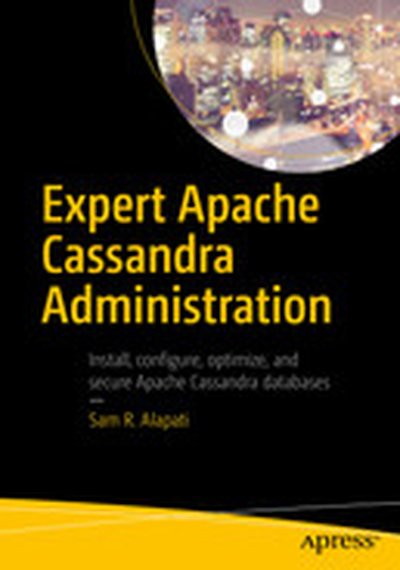
Expert Apache Cassandra Administration

Follow this handbook to build, configure, tune, and secure Apache Cassandra databases. Start with the installation of Cassandra and move on to the creation of a single instance, and then a cluster of Cassandra databases. Cassandra is increasingly a key player in many big data environments, and this book shows you how to use Cassandra with Apache Spark, a popular big data processing framework. Also covered are day-to-day topics of importance such as the backup and recovery of Cassandra databases, using the right compression and compaction strategies, and loading and unloading data. Expert Apache Cassandra Administration provides numerous step-by-step examples starting with the basics of a Cassandra database, and going all the way through backup and recovery, performance optimization, and monitoring and securing the data. The book serves as an authoritative and comprehensive guide to the building and management of simpleto complex Cassandra databases. The book: Takes you through building a Cassandra database from installation of the software and creation of a single database, through to complex clusters and data centers Provides numerous examples of actual commands in a real-life Cassandra environment that show how to confidently configure, manage, troubleshoot, and tune Cassandra databases Shows how to use the Cassandra configuration properties to build a highly stable, available, and secure Cassandra database that always operates at peak efficiency What You'll Learn Install the Cassandra software and create your first database Understand the Cassandra data model, and the internal architecture of a Cassandra database Create your own Cassandra cluster, step-by-step Run a Cassandra cluster on Docker Work with Apache Spark by connecting to a Cassandra database Deploy Cassandra clusters in your data center, or on Amazon EC2 instances Back up and restore mission-critical Cassandra databases Monitor, troubleshoot, and tune production Cassandra databases, and cut your spending on resources such as memory, servers, and storage Who This Book Is For Database administrators, developers, and architects who are looking for an authoritative and comprehensive single volume for all their Cassandra administration needs. Also for administrators who are tasked with setting up and maintaining highly reliable and high-performing Cassandra databases. An excellent choice for big data administrators, database administrators, architects, and developers who use Cassandra as their key data store, to support high volume online transactions, or as a decentralized, elastic data store.

Summary

Building a data pipeline that is reliable and flexible is a difficult task, especially when you have a small team. Astronomer is a platform that lets you skip straight to processing your valuable business data. Ry Walker, the CEO of Astronomer, explains how the company got started, how the platform works, and their commitment to open source.

Preamble

Hello and welcome to the Data Engineering Podcast, the show about modern data infrastructure When you’re ready to launch your next project you’ll need somewhere to deploy it. Check out Linode at www.dataengineeringpodcast.com/linode?utm_source=rss&utm_medium=rss and get a $20 credit to try out their fast and reliable Linux virtual servers for running your data pipelines or trying out the tools you hear about on the show. Go to dataengineeringpodcast.com to subscribe to the show, sign up for the newsletter, read the show notes, and get in touch. You can help support the show by checking out the Patreon page which is linked from the site. To help other people find the show you can leave a review on iTunes, or Google Play Music, and tell your friends and co-workers This is your host Tobias Macey and today I’m interviewing Ry Walker, CEO of Astronomer, the platform for data engineering.

Interview

Introduction How did you first get involved in the area of data management? What is Astronomer and how did it get started? Regulatory challenges of processing other people’s data What does your data pipelining architecture look like? What are the most challenging aspects of building a general purpose data management environment? What are some of the most significant sources of technical debt in your platform? Can you share some of the failures that you have encountered while architecting or building your platform and company and how you overcame them? There are certain areas of the overall data engineering workflow that are well defined and have numerous tools to choose from. What are some of the unsolved problems in data management? What are some of the most interesting or unexpected uses of your platform that you are aware of?

Contact Information

Email @rywalker on Twitter

Links

Astronomer Kiss Metrics Segment Marketing tools chart Clickstream HIPAA FERPA PCI Mesos Mesos DC/OS Airflow SSIS Marathon Prometheus Grafana Terraform Kafka Spark ELK Stack React GraphQL PostGreSQL MongoDB Ceph Druid Aries Vault Adapter Pattern Docker Kinesis API Gateway Kong AWS Lambda Flink Redshift NOAA Informatica SnapLogic Meteor

The intro and outro music is from The Hug by The Freak Fandango Orchestra / CC BY-SA Support Data Engineering Podcast

Summary

Do you wish that you could track the changes in your data the same way that you track the changes in your code? Pachyderm is a platform for building a data lake with a versioned file system. It also lets you use whatever languages you want to run your analysis with its container based task graph. This week Daniel Whitenack shares the story of how the project got started, how it works under the covers, and how you can get started using it today!

Preamble

Hello and welcome to the Data Engineering Podcast, the show about modern data infrastructure Go to dataengineeringpodcast.com to subscribe to the show, sign up for the newsletter, read the show notes, and get in touch. You can help support the show by checking out the Patreon page which is linked from the site. To help other people find the show you can leave a review on iTunes, or Google Play Music, and tell your friends and co-workers Your host is Tobias Macey and today I’m interviewing Daniel Whitenack about Pachyderm, a modern container based system for building and analyzing a versioned data lake.

Interview with Daniel Whitenack

Introduction How did you get started in the data engineering space? What is pachyderm and what problem were you trying to solve when the project was started? Where does the name come from? What are some of the competing projects in the space and what features does Pachyderm offer that would convince someone to choose it over the other options? Because of the fact that the analysis code and the data that it acts on are all versioned together it allows for tracking the provenance of the end result. Why is this such an important capability in the context of data engineering and analytics? What does Pachyderm use for the distribution and scaling mechanism of the file system? Given that you can version your data and track all of the modifications made to it in a manner that allows for traversal of those changesets, how much additional storage is necessary over and above the original capacity needed for the raw data? For a typical use of Pachyderm would someone keep all of the revisions in perpetuity or are the changesets primarily just useful in the context of an analysis workflow? Given that the state of the data is calculated by applying the diffs in sequence what impact does that have on processing speed and what are some of the ways of mitigating that? Another compelling feature of Pachyderm is the fact that it natively supports the use of any language for interacting with your data. Why is this such an important capability and why is it more difficult with alternative solutions?

How did you implement this feature so that it would be maintainable and easy to implement for end users?

Given that the intent of using containers is for encapsulating the analysis code from experimentation through to production, it seems that there is the potential for the implementations to run into problems as they scale. What are some things that users should be aware of to help mitigate this? The data pipeline and dependency graph tooling is a useful addition to the combination of file system and processing interface. Does that preclude any requirement for external tools such as Luigi or Airflow? I see that the docs mention using the map reduce pattern for analyzing the data in Pachyderm. Does it support other approaches such as streaming or tools like Apache Drill? What are some of the most interesting deployments and uses of Pachyderm that you have seen? What are some of the areas that you are looking for help from the community and are there any particular issues that the listeners can check out to get started with the project?

Keep in touch

Daniel

Twitter – @dwhitena

Pachyderm

Website

Free Weekend Project

GopherNotes

Links

AirBnB RethinkDB Flocker Infinite Project Git LFS Luigi Airflow Kafka Kubernetes Rkt SciKit Learn Docker Minikube General Fusion

The intro and outro music is from The Hug by The Freak Fandango Or

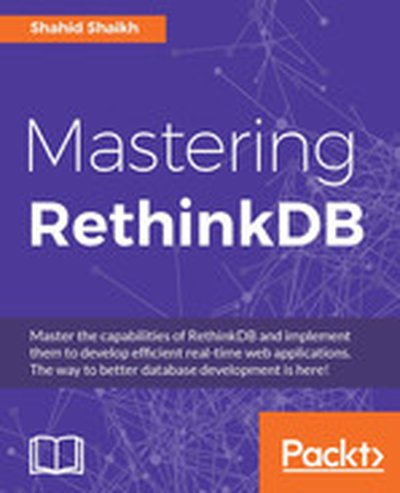
Mastering RethinkDB

Mastering RethinkDB offers a comprehensive guide to using the open-source, scalable database RethinkDB for real-time application development. Throughout this book, you'll gain practical knowledge on query management with ReQL, build dynamic web apps, and perform advanced database administration tasks. What this Book will help me do Gain expertise in managing and configuring RethinkDB clusters for optimal performance in real-time applications. Develop robust web applications using RethinkDB and integrate them seamlessly with Node.js. Leverage advanced querying features of ReQL, including geospatial and time-series queries. Enhance RethinkDB's capabilities with integration techniques for third-party libraries like ElasticSearch. Master deployment practices using platforms such as Docker and PaaS for production-grade applications. Author(s) None Shaikh, an expert in database technologies and real-time system design, brings years of hands-on experience working with open-source databases like RethinkDB. Known for writing practical technical books, None emphasizes real-world applications and clarity to help both novice and seasoned developers excel. Who is it for? This book is ideal for developers who are building real-time applications and want to adopt RethinkDB for their solutions. Readers should have a basic understanding of RethinkDB and Node.js to get the most benefit. It's particularly suited for programmers looking to deepen their database administration skills and enhance their real-time data handling expertise.

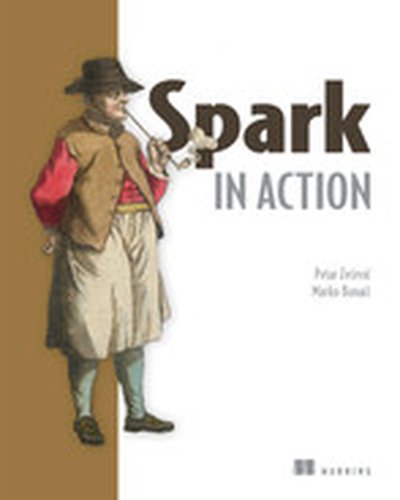
Spark in Action

Spark in Action teaches you the theory and skills you need to effectively handle batch and streaming data using Spark. Fully updated for Spark 2.0. About the Technology Big data systems distribute datasets across clusters of machines, making it a challenge to efficiently query, stream, and interpret them. Spark can help. It is a processing system designed specifically for distributed data. It provides easy-to-use interfaces, along with the performance you need for production-quality analytics and machine learning. Spark 2 also adds improved programming APIs, better performance, and countless other upgrades. About the Book Spark in Action teaches you the theory and skills you need to effectively handle batch and streaming data using Spark. You'll get comfortable with the Spark CLI as you work through a few introductory examples. Then, you'll start programming Spark using its core APIs. Along the way, you'll work with structured data using Spark SQL, process near-real-time streaming data, apply machine learning algorithms, and munge graph data using Spark GraphX. For a zero-effort startup, you can download the preconfigured virtual machine ready for you to try the book's code. What's Inside Updated for Spark 2.0 Real-life case studies Spark DevOps with Docker Examples in Scala, and online in Java and Python About the Reader Written for experienced programmers with some background in big data or machine learning. About the Authors Petar Zečević and Marko Bonaći are seasoned developers heavily involved in the Spark community. Quotes Dig in and get your hands dirty with one of the hottest data processing engines today. A great guide. - Jonathan Sharley, Pandora Media Must-have! Speed up your learning of Spark as a distributed computing framework. - Robert Ormandi, Yahoo! An easy-to-follow, step-by-step guide. - Gaurav Bhardwaj, 3Pillar Global An ambitiously comprehensive overview of Spark and its diverse ecosystem. - Jonathan Miller, Optensity

Big Data SMACK: A Guide to Apache Spark, Mesos, Akka, Cassandra, and Kafka

Learn how to integrate full-stack open source big data architecture and to choose the correct technology—Scala/Spark, Mesos, Akka, Cassandra, and Kafka—in every layer. Big data architecture is becoming a requirement for many different enterprises. So far, however, the focus has largely been on collecting, aggregating, and crunching large data sets in a timely manner. In many cases now, organizations need more than one paradigm to perform efficient analyses. Big Data SMACK explains each of the full-stack technologies and, more importantly, how to best integrate them. It provides detailed coverage of the practical benefits of these technologies and incorporates real-world examples in every situation. This book focuses on the problems and scenarios solved by the architecture, as well as the solutions provided by every technology. It covers the six main concepts of big data architecture and how integrate, replace, and reinforce every layer: What You'll Learn The language: Scala The engine: Spark (SQL, MLib, Streaming, GraphX) The container: Mesos, Docker The view: Akka The storage: Cassandra The message broker: Kafka What You Will Learn: Make big data architecture without using complex Greek letter architectures Build a cheap but effective cluster infrastructure Make queries, reports, and graphs that business demands Manage and exploit unstructured and No-SQL data sources Use tools to monitor the performance of your architecture Integrate all technologies and decide which ones replace and which ones reinforce Who This Book Is For Developers, data architects, and data scientists looking to integrate the most successful big data open stack architecture and to choose the correct technology in every layer